
In brief
- IPL works with broad-spectrum light, while the Spectra Inwave 4 laser uses a focused beam with four wavelengths: 755, 810, 940 and 1064 nm.
- IPL is cheaper and convenient for large areas, but less effective on light or fine hair and on very dark skin.
- IPL usually requires 8 treatments or more, while laser requires fewer sessions.
- The laser treats all hair types and skin tones, including tanned skin, with a power of 1800W and an advanced cooling system.
- The choice depends on what matters to you, and in a professional consultation your skin and hair type are assessed and the method is tailored.
In brief: IPL works with broad-spectrum light, and laser with a focused beam. The practical difference: IPL is cheaper and convenient for large areas, but less effective on light or fine hair and on dark skin, and usually requires 8 treatments or more. Laser with four wavelengths treats all hair types and skin tones, including tanned skin, and requires fewer sessions.
| IPL | Laser (Spectra Inwave 4) | |
|---|---|---|
| Type of light | Broad-spectrum light (Intense Pulsed Light) | Focused beam with four wavelengths: 755, 810, 940 and 1064 nm |
| Suitable hair | Less effective on light or fine hair | All hair types — dark, light, fine and even grey |
| Suitable skin tone | Requires contrast between hair and skin; less suitable for very dark skin | All skin tones, including tanned and dark skin |
| Number of treatments | Usually more — sometimes 8 treatments or more | Fewer treatments compared with IPL |
| Sensation during treatment | Slight tingling or warmth | Almost painless — 1800W power with an advanced cooling system |
| Main advantage | Relatively cheap, convenient for large areas, also available for home use | High precision and effectiveness, fast and lasting results |
Hair removal can become a daily nuisance: regular shaving, painful waxing or using an epilator that takes a long time. All these methods require effort, sometimes cause discomfort and give results that last only a short time. For those looking for a long-term solution, there are two technologies available: IPL hair removal and laser hair removal. Both promise significant results, but which one is more suitable for you? In this article we will explain everything you need to know so that you can choose the perfect method for long-term hair removal.
Hair removal with IPL technology
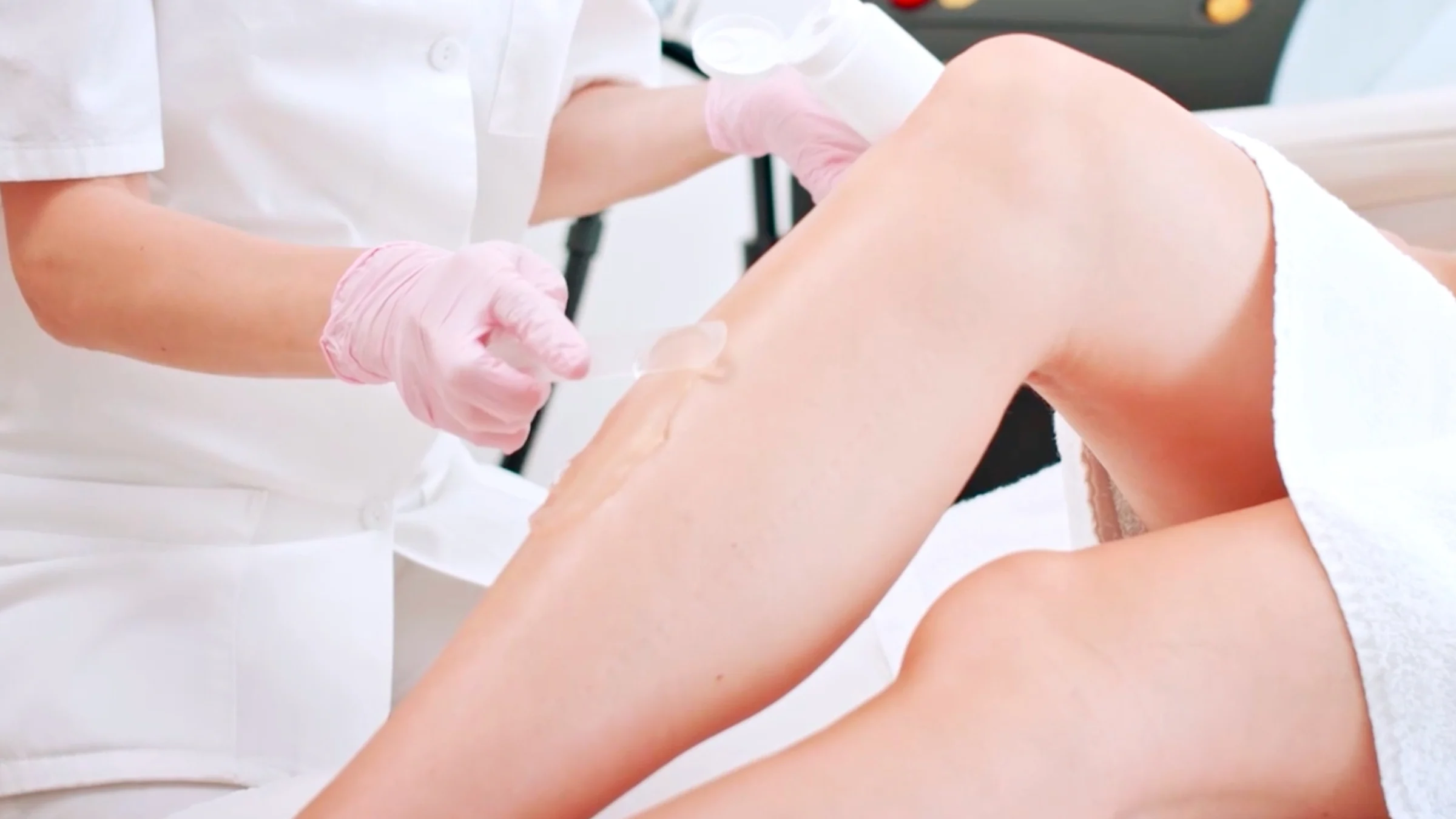
IPL technology, or Intense Pulsed Light, uses broad, powerful light to damage hair follicles and delay their regrowth. Unlike laser, which works on a single focused wavelength, IPL works with a broader spectrum of light. When the light is absorbed by melanin (the pigment in the hair), it turns into heat and damages the hair follicles. This method is very widespread thanks to its ability to treat large areas of the body such as the legs or arms, and it is considered convenient to use. Most people feel only a slight tingling or warmth on the skin during treatment.
However, IPL also has limitations. It is less effective on light or fine hair, and is also not particularly suitable for very dark skin, because the light focuses on melanin and requires good contrast between hair and skin colour. In addition, more sessions are usually needed to achieve full results – sometimes up to eight treatments or more, depending on hair and skin type.
Laser hair removal with the Spectra Inwave 4
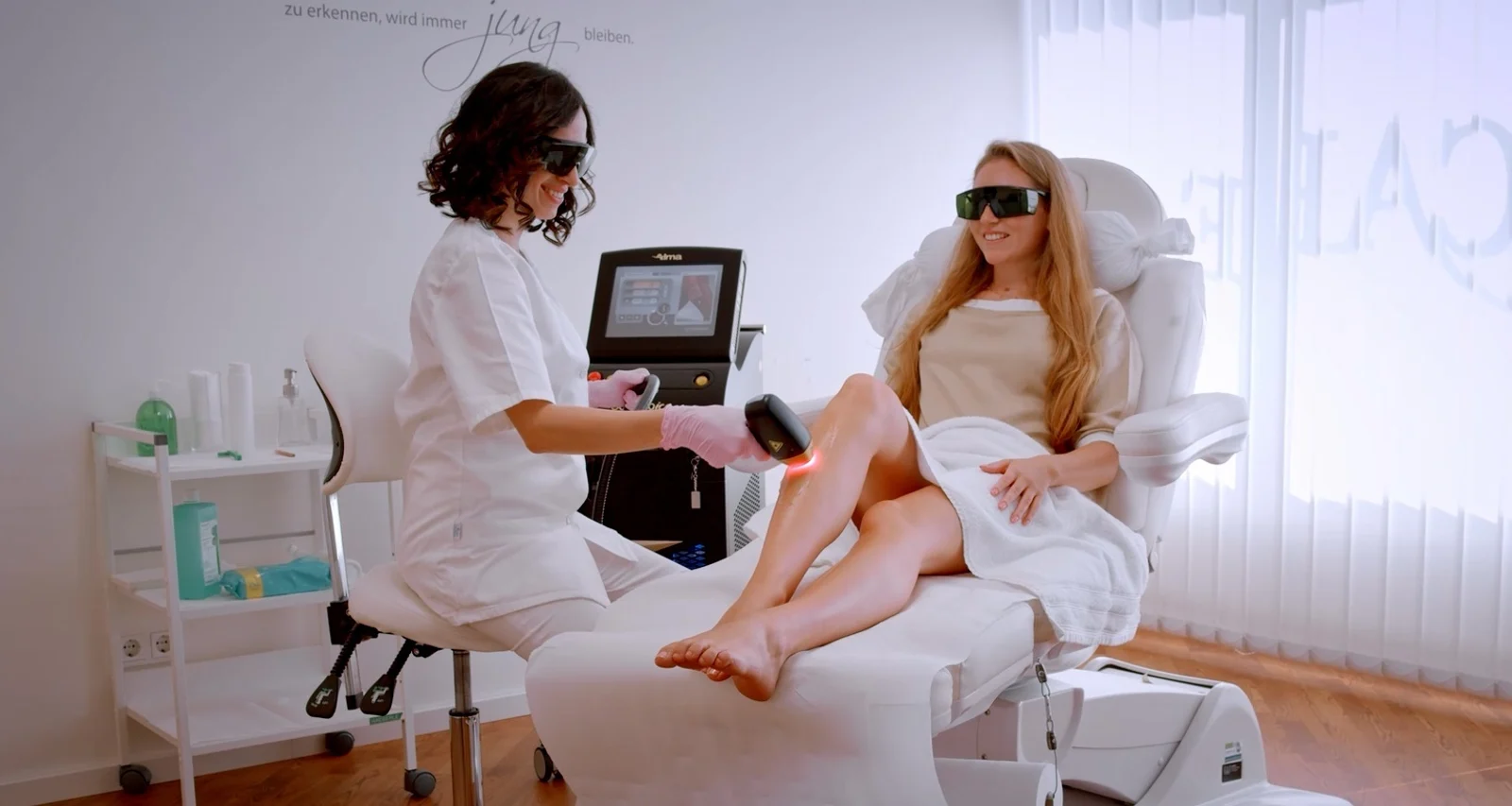
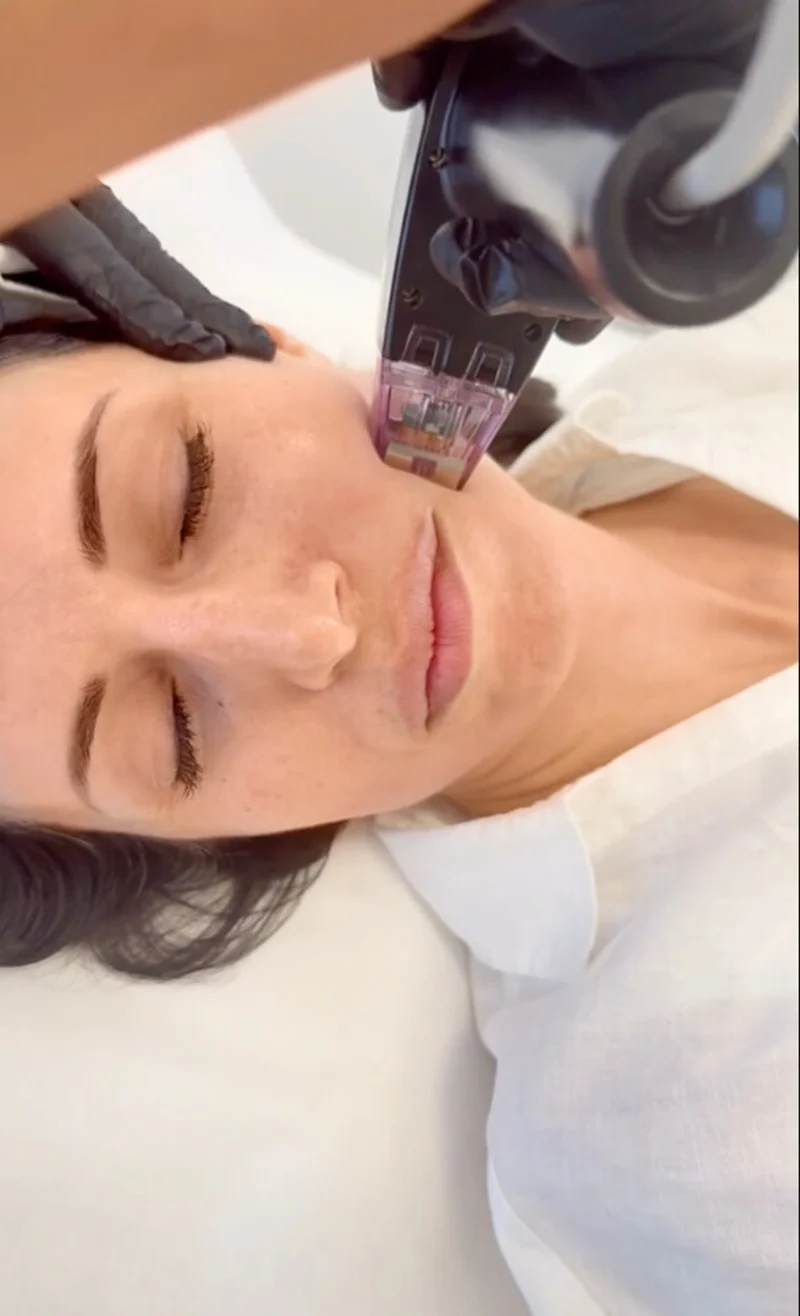
Laser hair removal uses a focused, uniform beam of light that targets the hair follicles directly, and it is considered one of the most effective methods available today. At the Dermacare clinic, we are proud to offer the Spectra Inwave 4 – an innovative laser device that combines a unique technology of four different wavelengths (755 nm, 810 nm, 940 nm and 1064 nm). This combination makes it possible to treat hair follicles at different depths of the skin simultaneously, which makes the treatment particularly effective for all hair types – including dark, light, fine and even grey hair. With double the power at 1800W and an advanced cooling system, the Spectra Inwave 4 ensures a comfortable, almost painless experience, even in sensitive areas such as the face or bikini area.
The unique technology of the Spectra Inwave 4 allows us to tailor the treatment to a wide range of skin tones, including tanned or darker skin, without worrying about side effects. The result? Precise, fast and long-lasting hair removal suitable for all areas of the body.
The advantages and disadvantages of both methods
Advantages of IPL: it is relatively cheaper, convenient for treating large areas and also available for home use or in salons. However, its effectiveness is more limited, and it requires patience and more sessions to achieve a full result. In contrast, laser hair removal with the Spectra Inwave 4 offers a higher level of precision and effectiveness. The device can also treat light or fine hair, penetrates deep into the skin and ensures fast, lasting results. It is suitable for all skin tones, including in the summer season, and requires fewer treatments compared with IPL.
In terms of sensation, both methods are considered very tolerable. With IPL the sensation of heat is minimal, while with Spectra Inwave 4 treatment the built-in cooling system makes the experience particularly pleasant, even for sensitive skin. In terms of speed, the laser allows more effective and faster treatment, thanks to its power and advanced technology, which treats large areas in a short time.
So which should you choose?
The decision depends on what matters to you. If you are looking for a convenient, economical solution for the shorter term, and you have dark hair, IPL may suit you. On the other hand, if you want fast, precise and long-lasting results that suit all hair and skin types, laser with the Spectra Inwave 4 is the leading choice. At the Dermacare clinic we offer advanced treatments tailored to all areas of the body – from the face, to the bikini area, to the legs.
The key to success is personalisation. We invite you to a professional consultation in which we will assess your skin and hair type and recommend the treatment that will bring you the best results. With the Spectra Inwave 4 and our skilled team, you can enjoy smooth, hair-free skin over time, with minimum effort and maximum comfort. Book a consultation today and discover how you can say goodbye to unwanted hair for good! Contact us by phone on 036127888 or email us at info@dermacare.co.il.
Frequently asked questions
Most people do not experience side effects. A normal reaction is redness of the skin immediately after the treatment. This reaction usually disappears within a few hours or, at most, within a few days.
The cost depends on the area of the body and the size of the treated area. We offer significant discounts when purchasing treatment packages or treating several areas.
The ideal interval between treatments is about 4-8 weeks, depending on the hair growth cycle.
Unlike traditional IPL and laser devices, the treatment involves almost no pain.
Since darker skin or tanned skin are no longer a problem, you are completely free to decide when to start laser hair removal. Blonde or greying hair can also be treated in most cases. The same is true for skin types. Whereas with IPL (intense pulsed light) or laser hair removal it was mainly relatively light skin types that could be treated, SHR technology now makes it possible to treat all skin types and almost all hair types without any problem. After a preliminary consultation and a thorough examination, we can choose the most suitable treatment method for you and build a personalised treatment plan. In general, the ideal conditions for treatment are dark hair and light skin. However, thanks to SHR technology, all skin types can now be treated. In cases of very light hair or exceptionally dark skin, we recommend a trial treatment, to test the effectiveness of the method and the response of the skin and hair.
With SHR technology, between 4 and 8 treatments are usually needed. Repeating the treatment is necessary because only about 12-15% of the hair on the body is in the growth phase (the anagen phase). Only hair in this phase is optimally suited to treatment, since only hair attached to the papilla (the area destroyed through denaturation during the treatment) can be fully disabled to prevent regrowth. The remaining hair follicles are in resting phases beneath the skin and can therefore be optimally removed only in later treatments. The number of treatments needed for hair removal cannot be accurately estimated in advance, since each person has different individual conditions that affect the success of the treatment.
For full information on the process, indications and prices: laser hair removal.