
Suitable for
- Eyebrows, including microblading
- Lip liner
- Upper and lower eyeliner and lash line
- Almost all permanent make-up shades
Pico laser · 4 wavelengths
5.0 · 104 Google reviews
Many people choose permanent make-up in order to save daily make-up time and to emphasise their natural beauty. But what happens when the result does not match expectations, or personal taste changes over time?
Suddenly, the permanent make-up that was once loved becomes a daily burden, and the wish to remove it only grows. This is where the Dermacare clinic comes in, offering a gentle and effective method for permanent make-up removal using advanced technology and unique lasers.
Would you like to know how permanent make-up can be removed safely and gently?
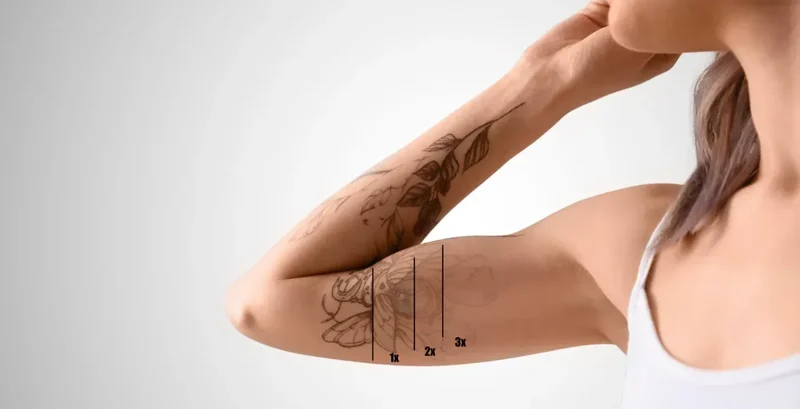
Drag the slider – real results from Dermacare patients.


Laser permanent make-up removal


Laser permanent make-up removal


Laser permanent make-up removal
Answer a few short questions, with a photo if you like, and receive a personal no-obligation initial assessment. Or book a consultation directly.
Which types of permanent make-up can be removed, how it is done, what colour change is and what to watch for afterwards.
Whether you want to remove unwanted or unsuccessful permanent make-up on the lips (lip lining) or eyebrows (brow line, microblading), a pico laser with four different wavelengths (532nm, 595nm, 660nm and 1064nm) works with maximum precision and, unlike other lasers, can gently treat almost every shade.
Thanks to this advanced technology, permanent make-up can be removed gently, with a low risk of scarring.
The number of treatments depends on several factors, including:
Laser treatment for permanent make-up removal is suitable for the following types of permanent make-up:
Want to remove permanent make-up effectively and safely?
Discover the benefits of permanent make-up removal at Dermacare! With advanced technology, we provide a precise and gentle treatment for removing pigment from the eyebrows, lips and eyes – with a low risk of scarring and a natural, even result.Book your first consultation at Dermacare today and discover how easily you can achieve a natural, clean look!
In general, the area treated with the laser should be protected for about a week. To speed up the healing process, it is recommended to use a suitable ointment, such as Bepanthen Plus. To prevent changes in pigmentation, it is important to avoid exposure to UV radiation for several weeks. Visits to a tanning studio should be avoided entirely before and after the treatment. As long as the area is cared for and protected from the sun, you can return to your routine immediately after the treatment.
During pico laser treatment, the laser beam acts for an extremely short period of time and at high intensity. This beam is absorbed by the pigments in the permanent make-up significantly more than by the surrounding skin. As a result, the colour particles are broken down and removed from the body through the lymphatic system or through the formation of scabs. The unique advantage of the pico laser, which operates at four different wavelengths (532nm, 595nm, 660nm and 1064nm), is the prevention of unexpected colour changes - a common problem in tattoo and permanent make-up removal. Sometimes red pigment can turn green during removal with a single-wavelength laser, which would require an additional treatment with a different wavelength. The use of four wavelengths allows even removal of most colours without residue, except for especially light shades such as yellow and white.
Since removing pigments of different colours requires the use of different laser wavelengths, it is possible that during treatment a tattoo or permanent make-up in red may turn green, which can make further removal more difficult. This phenomenon is called colour change. However, the pico laser, which is able to treat almost all pigment shades, makes it possible to deal effectively with colour changes and to avoid leaving pigments that cannot be removed.
The sensation of pain during treatment varies from person to person. While some patients feel nothing, others may experience a burning or stinging sensation during and after the treatment, symptoms that may also appear during the healing process. We recommend applying a numbing cream to the treated area before the treatment begins, in order to reduce sensitivity to pain. During the personal consultation, the professional team at Dermacare will give you a detailed explanation of the course of the treatment, which does not require anaesthesia or the use of medication.
For permanent make-up removal we use an advanced pico laser, which allows safe and effective removal. With our device, almost all colour shades can be removed.
Experience and precise control of the technology are key. Our entire professional team has undergone additional training and has many years of experience – reflected in satisfied clients and excellent permanent make-up and tattoo removal results.
In a comprehensive preliminary conversation, our professional team and doctors will discuss your wishes with you. You will receive a personal assessment of the expected success of the treatment, the costs, and everything you need to know about the process and aftercare.
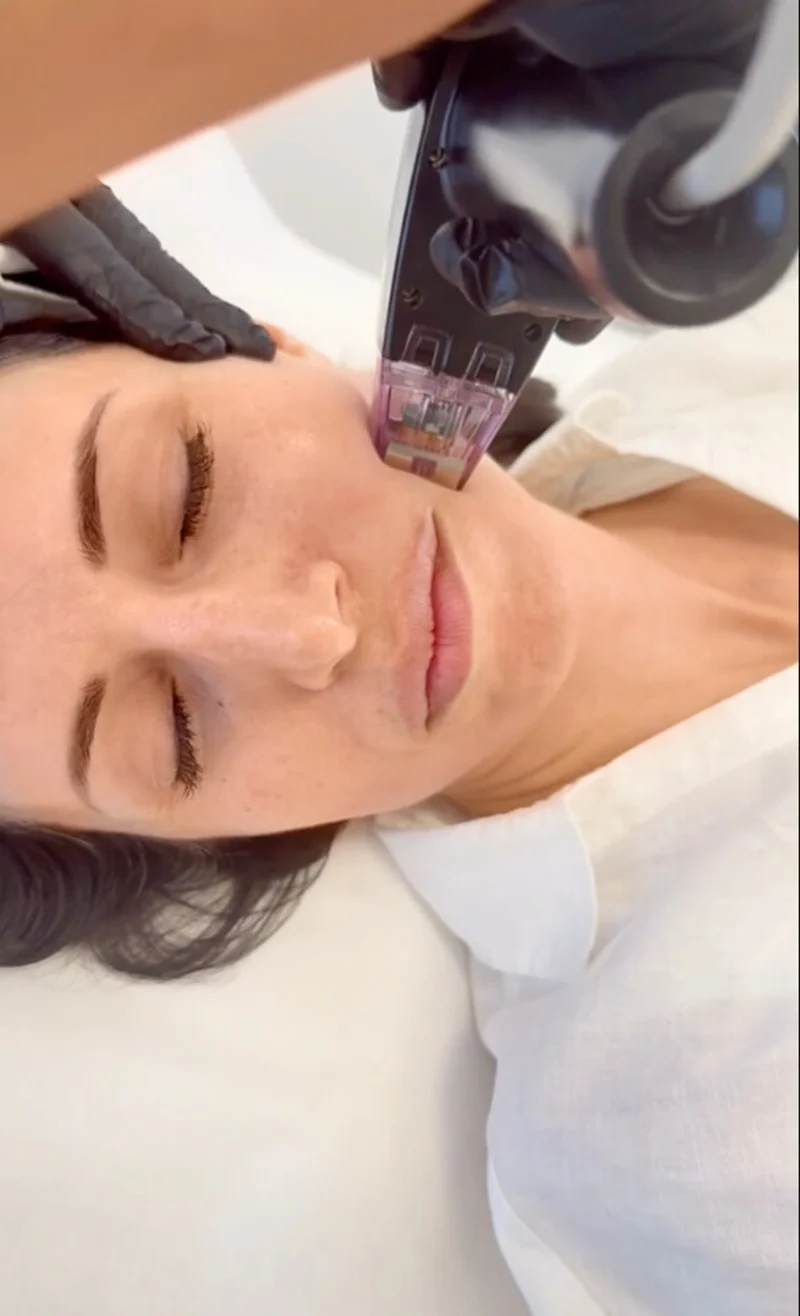
To make treatment more comfortable, the area is air-cooled. The treatment does not require anaesthesia.
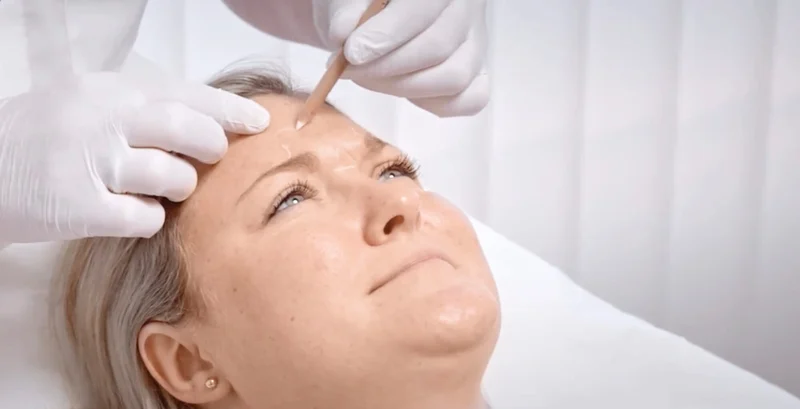
Before every treatment, a digital photograph of your permanent make-up is taken in order to document the progress of the treatment accurately.
After the area is disinfected, the laser treatment begins, which feels similar to the permanent make-up application process itself. If you would like to reduce the sensation to a minimum, it is recommended to apply a numbing cream beforehand.
The permanent make-up is then treated with a special Nd:YAG pico laser. To make the treatment more comfortable, the treated area is cooled with air.
To prevent inflammation, an antiseptic ointment is applied.
After the treatment, a cold compress should be placed on the treated area for 10 minutes.
As an immediate reaction of the skin to the treatment, slight redness and swelling may appear, which pass on their own. A thin layer of scab forms on the area treated with the laser. To care for the scab, you can use dedicated ointments and creams that support the skin's healing process.
The treating specialist will give you detailed instructions for after the treatment and for caring for the treated area, and will remain available for any question.
After the treatment, avoid exposure to UV radiation for several weeks, since such exposure may cause unwanted pigmentation.
After about 4 to 6 weeks you will see significant lightening of the permanent make-up, and the next treatment can be carried out.
Our clinic is in Petah Tikva. Choose a convenient time online, or leave your details in the form below and we will get back to you.
During Pico laser treatment, the laser beam acts for an extremely short time and at high intensity. This beam is absorbed by the pigments in the permanent make-up significantly more than by the surrounding skin. As a result, the colour particles break down and are removed from the body through the lymphatic system or through the formation of scabs.
The unique advantage of the Pico laser, which operates at four different wavelengths (532nm, 595nm, 660nm and 1064nm), is that it prevents unexpected colour changes – a common problem in tattoo and permanent make-up removal. Sometimes, a red pigment may turn green during removal with a single-wavelength laser, which would require further treatment at another wavelength. Using four wavelengths allows even removal of most colours without residue, except for extremely light shades such as yellow and white.
For complete removal of permanent make-up, we usually recommend four to six treatments, with 5 to 8 weeks between sessions. The number of treatments required depends on factors such as the type of pigment, its depth and the age of the permanent make-up, and is therefore determined during a personal consultation.
With each treatment, the laser gradually lightens the pigments, so initial results can be noticed as early as after the first treatment.
With the Pico laser, permanent make-up can be removed or corrected gently and effectively from various areas of the face, including the eyebrows (microblading), eyelids and lips. The number of treatments required depends on factors such as the shade of the pigment, its depth and the age of the permanent make-up, with the aim of lightening it completely until it becomes invisible.
The following can be removed:
The sensation of pain during treatment varies from person to person. While some patients feel nothing, others may experience a burning or stinging sensation during and after the treatment, symptoms that may also appear during the healing process.
We recommend applying a numbing cream to the treated area before the treatment begins, in order to reduce sensitivity to pain.
During the personal consultation, the professional team at Dermacare will give you a detailed explanation of the course of the treatment, which does not require anaesthesia or the use of medication.
Complete removal of permanent make-up usually requires 4 to 6 treatments, with 5 to 8 weeks between each treatment.
The number of treatments varies from person to person, depending on factors such as the colour of the pigment, its size, its depth and the age of the permanent make-up. During the personal consultation with our doctors, the permanent make-up will be assessed and a personal treatment plan will be tailored accordingly, including the number of treatments required, the intervals between them and the expected cost.
Complete removal of permanent make-up usually requires 4 to 6 treatments, with 5 to 8 weeks between each treatment. The exact number of treatments is determined individually, depending on factors such as the colour of the pigment, its size, its depth and the age of the permanent make-up. The waiting times between treatments also vary according to the skin's individual healing rate.
At the first follow-up session after the treatment, the progress of the skin's healing is checked. Because the pigments lighten gradually with each treatment, a significant change can be seen as early as after the first session.
Even when laser treatment is performed professionally, side effects may in rare cases appear, such as the formation of scabs or scars, changes in pigmentation, or temporary hypo/hyperpigmentation (lightening or darkening of the skin), which usually disappears on its own within 3–4 months.
If you are prone to pigmentation disorders or scarring, it is important to inform the practitioner in advance. During the personal consultation, you will receive a detailed explanation of the possible risks and side effects of the treatment.
In general, the area treated with laser should be protected for about a week. To speed up the healing process, it is recommended to use a suitable ointment, such as Bepanthen Plus. To prevent changes in pigmentation, it is important to avoid exposure to UV radiation for several weeks. Visits to a tanning studio should be avoided completely before and after the treatment.
As long as the area is cared for and protected from the sun, you can return to your routine immediately after the treatment.
During laser treatment, the permanent make-up pigments gradually lighten until they disappear completely. Initial results can be noticed just a few days after the first PicoSure laser treatment. However, complete removal of permanent make-up usually requires 4 to 6 treatments, with 5 to 8 weeks between each treatment.
The Instagram posts are loaded via an external service, which transfers data including your IP address. The images appear once you consent to the “Marketing” category.
Leave your details and we will get back to you by phone or email. No obligation – the decision is yours.
5.0 · 104 Google reviews


