

Suitable for
- Wrinkles and fine lines
- Uneven skin tone and pigmentation
- Acne, blemished skin and enlarged pores
- Acne scars and sun damage
Gentle chemical peel · Face, neck and décolletage
5.0 · 104 Google reviews
Tired of wrinkles and fine lines? Want smooth skin and a younger look? Our fruit acid peel could be the right solution for you. We offer a safe and effective treatment method that reduces wrinkles, improves skin texture and gives you a radiant, fresh look.
Answer a few short questions, with a photo if you like, and receive a personal no-obligation initial assessment. Or book a consultation directly.
What a fruit acid peel is, how it works, what its benefits are and how it differs from other peels.
To improve skin texture, it is recommended to have at least 5 treatments at intervals of 1-3 weeks between one treatment and the next.
At Dermacare we use high-quality products that are considered safe and highly tolerated by the skin. The treatment involves no recovery time, although redness or a burning sensation in the skin may appear afterwards, usually disappearing within a few hours. At the consultation you can get detailed information about the possible treatment results and the potential side effects.
The Dermacare team makes it a top priority that patients feel good in their skin. Our professional team provides personal and professional support, from the consultation until the end of the treatment. Even after the treatment, the team is available at any time to answer questions or help with anything else you need.
Book your first consultation at Dermacare today and receive a personalised recommendation for your skin.
The duration of the treatment depends mainly on the size of the treated area. The consultation lasts about 30 minutes, while the treatment itself takes between 30 and 60 minutes, and in some cases even longer.
The degree of pain depends on the type of peel and how long it acts. A superficial peel, such as a fruit acid peel, is usually felt only as a mild burning sensation. A PQAge peel, which acts on the middle layers of the skin, does not cause pain. During a TCA peel, which penetrates the deeper layers, a mild to moderate burning sensation may appear, but it usually subsides after a few minutes.
How long the effect of a peel lasts depends on the type of treatment and the intensity of the skin peeling process. The results can last from several months to several years. A PQAge peel gives a radiant effect and a youthful look after the very first treatment. In the long term, it helps improve the structure and texture of the skin.
In a chemical peel, fruit acids or other substances are applied to the skin and penetrate to different depths of the upper layers. They dissolve dead skin cells, encourage renewal of the epidermis and stimulate the production of collagen fibres, ground substance and elastin in the dermis, while increasing moisture binding in the skin. The result is a renewed skin structure, thicker and firmer, with a higher level of moisture. The skin becomes smoother, firmer and younger-looking, while sun damage, pigmentation and fine lines are reduced or disappear - as long as they are not too deep. The more active and aggressive the acid, the more significant the skin rejuvenation results, but the risk of side effects rises accordingly.
We place great emphasis on a detailed consultation. During the consultation, our professional team and doctors will provide personal, professional guidance. You will receive an individual assessment of the expected treatment outcome, the costs and everything you need to know about the process.
Our devices are equipped with the most advanced technology. For our clients, we invest only in the most up-to-date technology to ensure almost painless treatments, short treatment times and effective, impressive results.
Through dedicated professional training for our team, we ensure the highest quality of treatments. Medical treatments are performed by doctors with many years of experience in aesthetic medicine.
The treatment is carried out by Dermacare's professional team at our clinic in Petah Tikva.
Your treatment team
Our clinic is in Petah Tikva. Choose a convenient time online, or leave your details in the form below and we will get back to you.
The term "peel" refers to an external aesthetic-dermatological skin treatment performed using natural fruit acids, chemical acids or mechanical exfoliation.
A peel is suitable for improving or removing skin changes caused by sun exposure or the ageing process, as well as for reducing wrinkles, pigmentation spots and superficial acne scars, and it also helps tighten the skin. Since the improving properties of natural fruit acids were discovered, many peeling methods have been developed.
In chemical peeling, a distinction is usually made between a superficial peel (fruit acid peel), a medium-depth peel (PQAge peel) and a deep peel (TCA peel), according to the intensity of the effect on the skin and the degree of peeling. Mechanical peeling methods include dermabrasion and microdermabrasion. We tailor the type of peel to the desired result.
In a chemical peel, fruit acids or other substances are applied to the skin and penetrate the upper layers to different depths. They dissolve dead skin cells, encourage regeneration of the epidermis and stimulate the production of collagen fibres, ground substance and elastin in the dermis, while increasing the skin's moisture binding. The result is a renewed, thicker and firmer skin structure with a higher moisture level.
The skin becomes smoother, firmer and younger-looking, while sun damage, pigmentation and fine lines are reduced or disappear – as long as they are not too deep. The more active and aggressive the acid, the more significant the skin rejuvenation results, but the risk of side effects also rises accordingly.
A medical peel is a powerful and advanced treatment, unlike a peel done at home or at a beautician's. The acids used are far more concentrated and strong, so the skin must be gradually accustomed to them.
Before the treatment begins, preparation is carried out at home for several weeks. Then, depending on the skin type and the treatment method, you start with a solution at a concentration of 10-20% and gradually increase the concentration by 10% each week, up to about 50-70%.
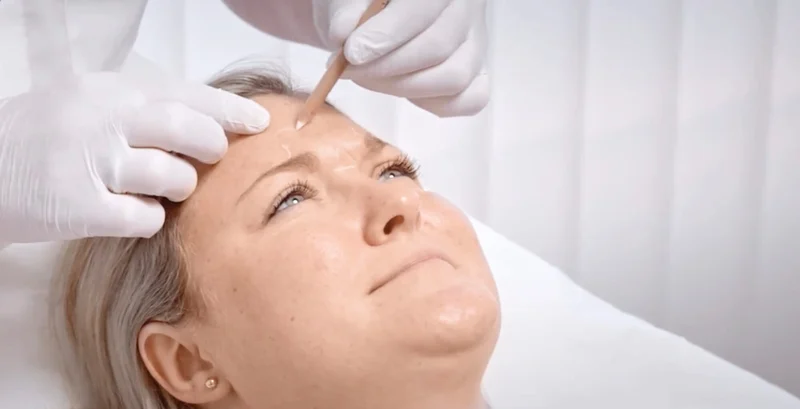
During the treatment itself, the skin is cleansed and its oil layer is removed. The peeling acid is then applied for a set time. At the end of the waiting time, the acid is washed off or neutralised. During and after the treatment, the skin may feel hot or stinging, but this sensation disappears after neutralisation.
From a few hours up to several days later, the skin undergoes peeling to varying degrees, a process that lasts several days.
A peel is an effective treatment for covering large areas of skin. Depending on the type of peel chosen, it can significantly improve the radiance of the skin tone, reduce wrinkles and improve the appearance of scars.
The degree of pain depends on the type of peel and how long it is left on.
A superficial peel, such as a fruit acid peel, is usually felt only as a mild burning sensation.
The PQAge peel, which acts on the middle layers of the skin, does not cause pain.
During a TCA peel, which penetrates the deeper layers, a mild to moderate burning sensation may appear, but it usually fades after a few minutes.
The recovery time after a peel depends on the type of treatment.
After a fruit acid peel or a PQAge peel, you can return to work immediately without needing a break.
By contrast, after a deep TCA peel, a recovery time of several days up to about two weeks is required.
It is recommended to avoid saunas or tanning studios for several weeks, and to avoid strenuous physical activity immediately after the treatment.
After a chemical peel, strict sun protection with suitable products must be observed for a certain period.
During the peel, you may feel burning, pain or itching for a few minutes. After the treatment, depending on the method used, the skin may be red to varying degrees. In the case of a superficial peel, the redness usually disappears within a few hours. The skin peeling process after the peel is a natural and necessary part of the treatment. It is therefore recommended not to plan important social or business engagements in the days that follow. Rare side effects include fine scarring in particularly sensitive skin, changes in pigmentation (lightening or darkening of the skin), prolonged itching or tingling, and skin infections. Smoking and sun exposure significantly increase the risk of side effects and should therefore be avoided during and after the treatment.
As with any medical procedure, a peel also involves certain risks and has contraindications. A chemical peel should not be performed in cases of impaired wound healing, an active herpes infection, pregnancy, oral treatment with preparations containing retinoic acid (vitamin A), or after cosmetic surgery performed recently.
In general, the skin heals well after a peel. However, in very rare cases, inflammation or changes in pigmentation may appear, which must be treated accordingly.
The Instagram posts are loaded via an external service, which transfers data including your IP address. The images appear once you consent to the “Marketing” category.
Leave your details and we will get back to you by phone or email. No obligation – the decision is yours.
5.0 · 104 Google reviews


