

In brief
- An ingrown hair forms when the hair is cut or pulled out and the skin prevents it from emerging, so it curls and grows back inwards.
- The most common cause is incorrect shaving; curly hair, dead skin cells, plucking and tight clothing increase the risk.
- Do not squeeze or force the hair out, as this can worsen the inflammation and lead to infection or a scar.
- In mild cases, stopping shaving and waxing, a warm compress and a gentle exfoliation after 24 hours help.
- Pus, severe pain or inflammation that does not clear within 5-7 days require a visit to a doctor; in chronic cases, laser hair removal reduces the problem.
Ingrown hairs are a common problem after hair removal with various methods such as shaving, waxing and others. They cause irritation, bumps on the skin and are sometimes even accompanied by inflammation of the hair follicle (Folliculitis) or a secondary infection. However, in most cases this is a condition that can be prevented if you understand its causes and take the right steps. In this article I will review the main reasons ingrown hairs form, the signs that may indicate them, ways of dealing with them and possible solutions, as well as when it is advisable to see a doctor.
Medical note: The information in this article is for educational purposes only and is not a substitute for medical advice. Systemic symptoms or local worsening, including fever, spreading redness, severe pain or a pus-like discharge, require you to see a medical professional.
What are ingrown hairs and what are their signs?
Ingrown hairs occur when a hair is cut (for example when shaving) or pulled out (as with waxing), and the skin prevents it from emerging naturally, which causes it to bend and start growing inwards. The body identifies the hair as an "intruder" and responds by causing inflammation around the follicle.
The most common signs of ingrown hairs include: a small red bump, sometimes accompanied by pain, which usually develops 1-3 days after hair removal. A feeling of local irritation may develop, and sometimes you can see a visible hair developing under the skin. If the problem does not resolve, pus may develop – a local inflammation that requires medical attention.
When do ingrown hairs become a medical problem?
Signs of an ingrown hair without infection:
- One or several small bumps
- Mild redness around the area
- Sometimes the hair can be seen trapped under the skin
- The area is not warm to the touch
- No pus
- Improves within a few days
Signs of an ingrown hair with infection (Folliculitis – inflammation of the hair follicle):
- Yellow or white pus appears
- More significant pain, sometimes strong sensitivity to touch
- A feeling of local warmth in the area
- Redness and swelling spreading around the area
- No improvement after a week, or even a worsening of the condition
If pus, severe pain or general worsening appears – it may be a bacterial infection that requires medical attention. According to the American Academy of Dermatology, a bacterial infection can cause atrophic scars (depressions in the skin) or post-inflammatory hyperpigmentation (dark spots that remain on the skin after the inflammation) – a problem that is particularly common in people with darker skin.
Why do ingrown hairs develop?
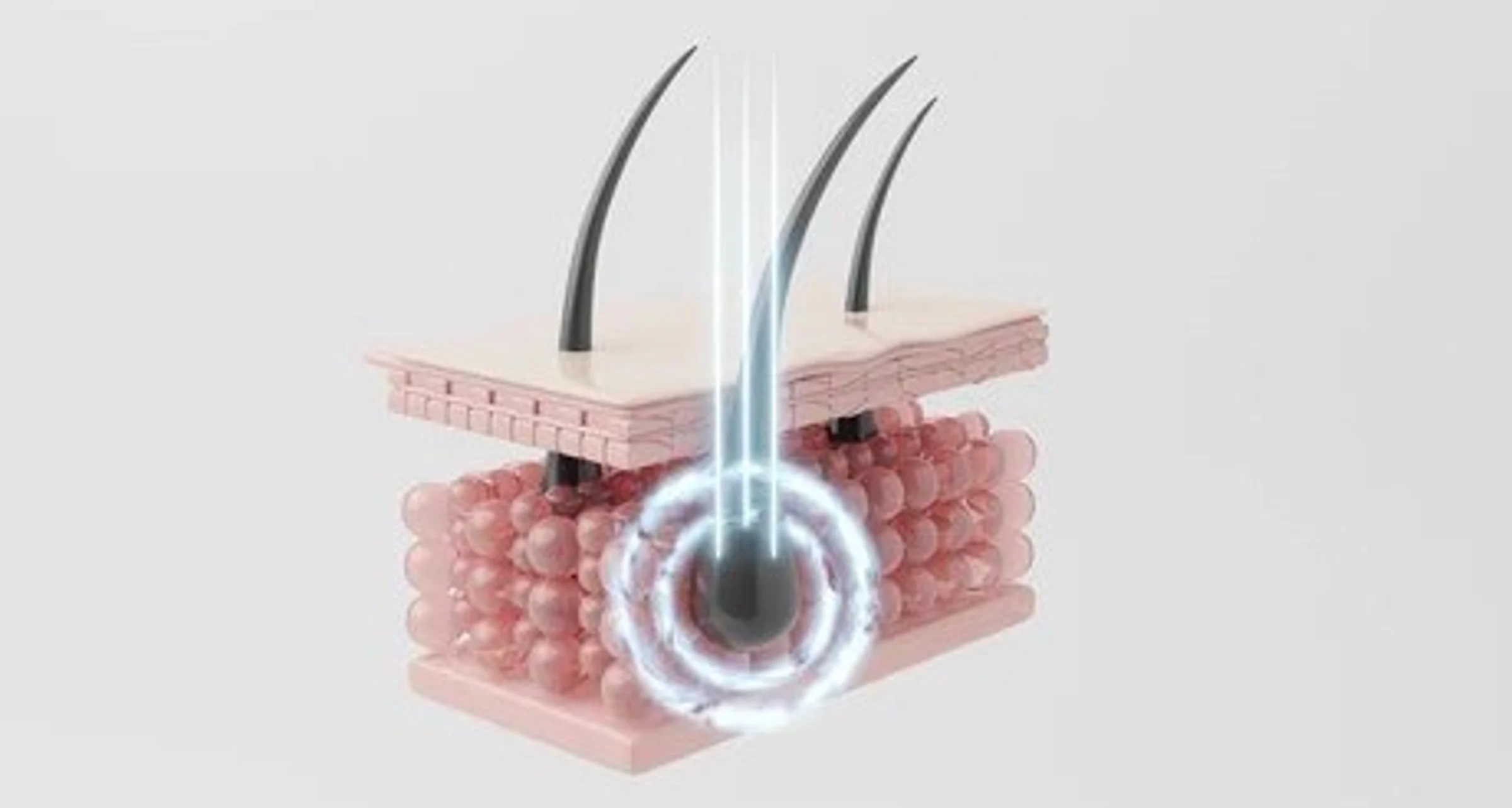
When the hair starts to grow back after shaving or removal, but the opening of the follicle is closed by the upper layer of skin before the hair manages to emerge, it meets a blockage, bends and grows back into the skin. In other words, instead of the hair growing straight and out of the skin, it curls and grows back into the skin.
The main causes of ingrown hairs
1. The most common cause – incorrect shaving
Shaving is the most common cause of ingrown hairs. When you shave with a blunt razor, against the direction of hair growth, or apply more pressure than necessary – the hair is cut in a way that makes it grow back inwards. Using a razor with several blades (multi-blade) makes the problem worse – the first blade pulls the hair and the second cuts it below the surface of the skin. The solution: use a single-blade razor, shave in the direction of hair growth and prepare the skin properly before you start shaving (for example, keeping the skin moisturised, using shaving gel, exfoliating, rinsing with lukewarm water).
2. Curly and frizzy hair
Curly hair is more likely to bend back into the skin – because of its structure. People with curly hair suffer more from ingrown hairs. One of the best solutions is to consider a different hair removal method – such as laser hair removal, which solves the problem at the root.
3. Dead skin cells
When dead skin cells build up on the surface, they can clog the pores and prevent the hair from growing outwards. Adding exfoliation to your skincare routine two to three times a week will help remove dead cells and keep pores open.
It is recommended to choose a gentle exfoliant suited to sensitive skin, and to use it only after the skin has calmed down from shaving, usually after about 24 hours. Using it too early or exfoliating aggressively can cause irritation and increase the tendency to ingrown hairs.
4. Waxing, epilation and plucking
When the hair is pulled from the root incorrectly, it may break below the surface of the skin and start growing inwards. Proper preparation before waxing – such as exfoliating the day before – significantly reduces the risk.
5. Tight clothing – friction makes the problem worse
Tight clothes, especially those made of non-breathable fabrics, put pressure on the growing hair and cause it to grow inwards. The most sensitive areas: the groin, the underarms and the legs. After hair removal it is recommended to wear loose clothing that does not cause much friction on the skin for at least one to two days.
Ingrown hairs in the groin – why does it happen more there?
The groin is considered one of the most common areas for ingrown hairs. Why?
- The skin in this area is more sensitive and less forgiving of shaving mistakes.
- The hair in this area is usually curlier or coarser and therefore tends to bend and grow back into the skin.
- Constant friction – from underwear, tight trousers and walking.
- High humidity and sweat increase the risk of secondary bacterial infections.
The best solutions:
- Shaving correctly and only in the direction of hair growth
- Gentle exfoliation before shaving
- Cotton rather than synthetic underwear
- Laser hair removal – the most effective long-term solution
Ingrown hairs in the beard – why does it happen?
Ingrown hairs in the beard area (Pseudofolliculitis barbae) are a common problem, especially in men with curly or frizzy facial hair.
Why it happens:
- Frequent shaving: shaving several times a week or daily increases the risk of ingrown hairs
- Using a multi-blade razor: pulls the hair while shaving and cuts it below the surface of the skin.
- Stretching the skin while shaving: causes the hair to be cut below the surface of the skin and grow back inwards instead of outwards.
- Shaving against the direction of growth: cuts the hair too close to the skin and increases the risk of ingrown hairs.
The solutions:
- Using a single-blade razor
- Shaving in the direction of hair growth
- Not stretching the skin while shaving
- Using an electric shaver instead of a razor
- If the problem is chronic – laser hair removal is the long-term solution
According to Mayo Clinic, one of the largest and best-known medical and research organisations in the world, in the case of ingrown hairs it is recommended to stop removing hair by shaving, plucking or waxing in the affected area until the skin calms down, a process that can take several weeks and sometimes even months. It also notes that in cases of recurrent or chronic ingrown hairs, it is recommended to avoid shaving, plucking or waxing for about 1 to 6 months, until the condition of the skin improves.
However, stopping hair removal for a long period is not always possible for personal, social or professional reasons. We therefore recommend laser hair removal, which significantly reduces the need for traditional removal methods such as frequent shaving or waxing, and thus reduces the risk of ingrown hairs forming.
What not to do with an ingrown hair
Before explaining what to do – it is important to understand what not to do, so as not to make the problem worse.
Do not squeeze or try to force it out: this is the most common mistake. Pressing on the area can push bacteria deeper into the layers of the skin, worsen the inflammation and cause infection and even a scar.
Do not use a non-sterile needle: even if you can see the hair under the skin, trying to pull it out with a household needle can cause a secondary bacterial infection.
Do not exfoliate aggressively: aggressive exfoliation on irritated skin can worsen the inflammation. Exfoliation should be gentle and suited to the skin type and the treated area.
Do not apply alcohol or perfume: alcohol dries the skin and worsens irritation.
Do not apply steroids or antibiotics "left over at home": self-treatment with prescription medicines without a diagnosis can make the problem worse or create antibiotic resistance.
Do not remove a hair with tweezers from an active inflammation: only after the redness has gone down, and only if the hair is clearly visible under the skin.
What to do when you already have an ingrown hair – step by step
If an ingrown hair has already developed – there are several things you can do to treat it correctly and safely. Here is the exact protocol:
Step 1: Stop shaving and waxing the area
Do not remove hair in the irritated area for at least 3-5 days. Give the skin time to recover.
Step 2: Warm compress – 10 minutes, 3 times a day
A warm cloth on the area for 10-15 minutes, 3 times a day, softens the skin and helps the hair come out. This is the most effective home remedy.
Step 3: Gentle exfoliation – after 24 hours
Exfoliating with a granular product or a soft bath sponge helps remove dead skin cells and sometimes allows the hair to come out by itself. Important: use exfoliation only 24 hours after hair removal, not immediately.
From our experience at Dermacare: in most mild cases, stopping shaving and waxing, using a warm compress and gentle exfoliation will improve the condition of the skin within a few days without the need for medical treatment.
Step 4: Salicylic acid 2%
Salicylic acid gently exfoliates the upper layer of the skin, helps prevent pores and hair follicles from becoming blocked, and thus reduces the risk of ingrown hairs.
If there is pus – see a doctor
If pus, severe pain or inflammation that does not clear within 5-7 days develop – it may be a bacterial infection that requires medical treatment.
Do not squeeze forcefully – the most important thing: do not try to press and force the hair out. This can worsen the inflammation and lead to infection or a scar.
What happens if chronic ingrown hairs are not treated?
Ingrown hairs that keep returning in the same area, without treatment, can cause long-term complications:
1. Atrophic scars (depressions in the skin)
When the inflammation recurs in the same place, small depressions may remain in the skin – an atrophic scar. This is particularly common in the groin and beard areas.
- 2. Hypertrophic scars (raised bumps)
In some people, the body reacts in the opposite way –
the body responds by producing excess scar tissue, so after the inflammation subsides a hard bump remains above the surface of the skin. This is a rarer phenomenon, but it can happen.
3. Post-inflammatory hyperpigmentation (dark spots after shaving)
Hyperpigmentation is the most common complication. After the inflammation subsides, a dark spot remains in the area. This is not a scar – but excess melanin that the body produced in response to the inflammation. The spots may remain for months, and sometimes years. Treatments such as creams containing hydroquinone, vitamin C or a chemical peel may help – but the best solution is to prevent them in the first place.
4. Subcutaneous cysts
In rare cases, a deep ingrown hair can form a cyst – a fluid-filled sac under the skin that sometimes requires surgical removal.
5. Mechanical acne
Recurrent ingrown hairs can create a condition similar to mechanical acne – recurring inflammations that look like pimples.
The conclusion: early treatment and prevention are the best way to protect the skin and avoid possible complications.
When should you see a doctor? When are antibiotics needed?
Most ingrown hairs resolve on their own within a few days with the right care and skin protection, but there are cases that require medical attention.
When to see a doctor:
- Inflammation that does not clear within 5-7 days
- Yellow or white pus appears
- Severe pain
- A large, painful bump appears
- Fever or feeling generally unwell
The doctor may recommend topical antibiotics (an ointment), or oral antibiotics if the infection has spread.
How do you soothe the skin after shaving or waxing?
Caring for the skin immediately after hair removal is the most important thing for preventing ingrown hairs. These are the main steps:
Cold water straight afterwards: rinsing with cold water tightens the pores and reduces irritation. This is the first and most important step.
Soothing cream: a cream containing aloe vera, chamomile or calendula will help calm the skin and prevent redness. It is important that the cream is alcohol-free – alcohol dries the skin and increases the risk of irritation.
Avoiding friction: after shaving or waxing, avoid rubbing the skin. Do not rub the area with a towel; pat it dry gently only.
Loose clothing: tight clothes create friction and pressure on the skin. Avoid wearing synthetic or tight clothing for at least 24 hours after hair removal – wear loose, breathable clothes.
The best solution for recurrent ingrown hairs
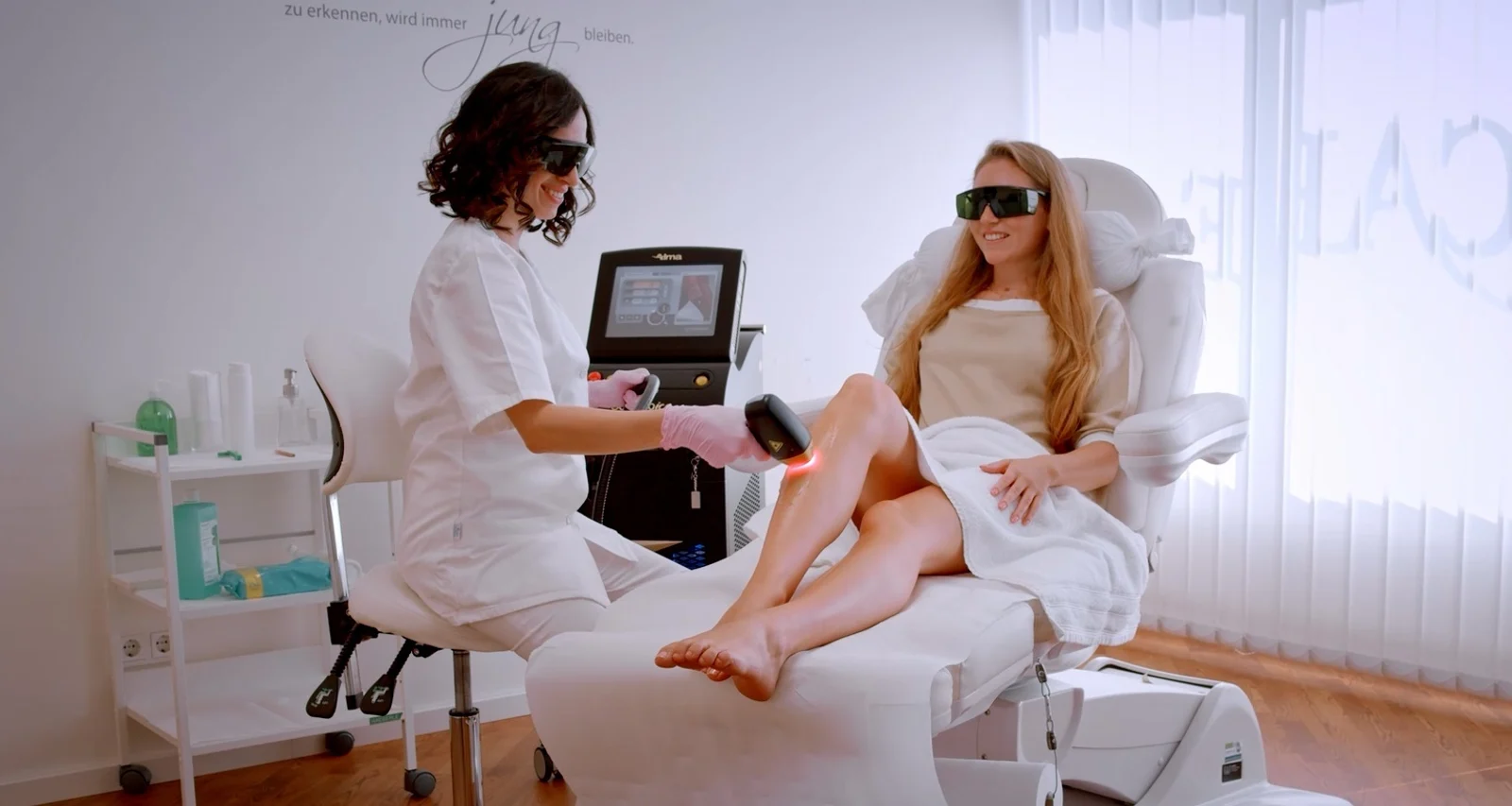
If you suffer from recurrent ingrown hairs – the most effective solution is laser hair removal. The laser reduces hair growth over time, and thus addresses the root of the problem – not just relieving the symptoms.
What actually happens? The laser damages the hair follicles and weakens them from the root. In studies on ingrown hairs (Pseudofolliculitis barbae), a marked improvement in clinical measures was observed, including a reduction in papules (small red bumps) and inflammation, after a series of laser hair removal treatments. After a full series – usually 5-10 treatments – the amount of hair drops significantly, and so the risk of ingrown hairs also decreases.
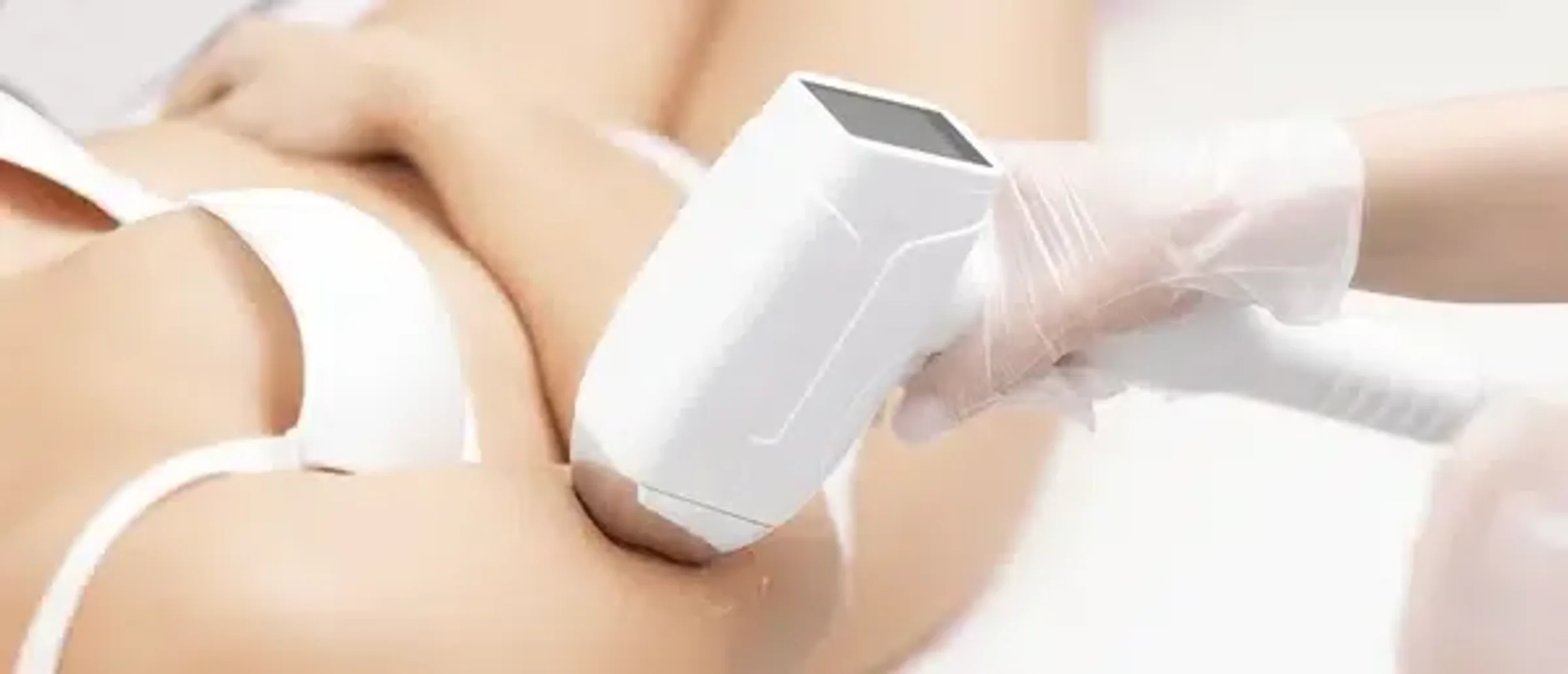
Many patients who have had laser treatments report that after significant thinning of the hair, ingrown hairs hardly appear at all. The treatment is also considered a convenient long-term solution. Especially in summer, when heat and sweat can make the problem worse, laser hair removal can be a suitable solution.
Summary
Ingrown hairs are a problem that can be prevented and even treated, once you understand what causes them and how to act correctly. Simple measures such as gentle exfoliation, keeping the skin moisturised, shaving correctly and wearing loose clothing can solve the problem in most common cases. But when the problem keeps coming back, especially in people with curly hair, laser hair removal is a more effective solution, because it reduces hair growth and thus addresses the root of the problem and not just the symptoms. It is recommended to have a personal consultation before starting treatment, in order to find the most suitable solution for your hair and skin type.
About: Dermacare is an advanced aesthetic medicine clinic, operating since 2010 with branches in Austria and Israel. The clinic is led by Tammy Yusupov, a certified beautician, and Eduard Yusupov, a tattoo removal expert.
If you suffer from recurrent ingrown hairs, for example in the groin, beard or underarm areas, a professional assessment of your hair and skin type can be carried out and a personal prevention or treatment plan tailored to help reduce the problem.
Book a consultation: 036127888 | info@dermacare.co.il
Written by Tammy Yusupov – certified beautician and owner of the Dermacare clinic chain (Israel and Austria) since 2010, with more than 10,000 patients, many of whom suffered from chronic ingrown hairs. | Last updated: March 2026
Frequently asked questions
Incorrect shaving is the most common cause. Curly hair, a build-up of dead skin cells, tight clothing and hair removal methods such as waxing or tweezing can also contribute to the formation of ingrown hairs.
No, in most cases. But if a secondary bacterial infection develops – it may cause scarring or hyperpigmentation. If there is pus, severe pain or inflammation that does not go away, see a doctor.
In mild cases 3-5 days, with proper care (such as a gentle peel and a warm compress). In complex cases with inflammation, up to a week or more. If it does not clear up within a week, see a doctor.
No. Squeezing by force may worsen the inflammation, cause a bacterial infection and leave a scar. Instead, treat it with a gentle peel and a warm compress.
Shave in the direction of hair growth, exfoliate regularly (twice a week), wear loose clothing, and keep the skin moisturised. The best long-term solution is laser hair removal.
No. This is a common myth. Waxing does not change the amount of hair or its thickness, it only pulls the hair out from the root.
Yes, but it is recommended to wait until the inflammation passes. The laser works best on healthy skin free of irritation.
Yes. Laser significantly reduces hair density, and therefore also reduces the incidence of ingrown hairs. It is the most effective solution for the groin area.
If the inflammation does not go away within 5-7 days, or there is pus, severe pain, or large lumps appear – see a doctor immediately.