In brief
- Radiofrequency treatment heats the deep layers of the skin in a controlled way and stimulates collagen and elastin renewal, without surgery.
- There are three main types of RF: external for gentle tightening, fractional for improving texture, and RF microneedling such as Morpheus8 for scars and deeper wrinkles.
- The choice of RF type is determined by the problem and the condition of the skin, not by the name of the device.
- The treatment does not replace a surgical facelift when there is significant excess skin or advanced sagging.
- The treatment should be avoided during pregnancy and breastfeeding, with a pacemaker, with an active skin infection or with a tendency towards keloids.
There comes a moment when the mirror is no longer “playing tricks”, but simply reflecting a real change. The skin looks slightly less firm, the jawline less defined, the texture less even, and suddenly the question arises whether you have to undergo an aggressive procedure to see an improvement.
In many cases, the answer is no. Radiofrequency treatment is one of the key technologies in aesthetic medicine for tightening, improving texture and rejuvenating the skin, without surgery and without changing your facial features. Its great advantage lies not only in the technology itself, but in the ability to match the type of RF to the right problem. There is a fundamental difference between a gentle external treatment, a fractional treatment and RF microneedling such as Morpheus8.
The right choice doesn't start with the name of a device. It starts with a simple question: what exactly do you want to improve, to what degree, and what condition is your skin in today. Once you understand the differences between the technologies, it is much easier to make a good, safe and precise decision.
Introduction: the future of firm, youthful skin starts here
Most patients don't come in because “they have one problem”. They come in because they feel their skin no longer behaves the way it used to. Sometimes it is slight laxity in the cheeks, sometimes fine lines that remain even at rest, and sometimes uneven texture or acne scars that become more noticeable over the years.
What is confusing is that, on the face of it, everything is called the same thing. A tightening treatment, an anti-aging treatment, a collagen renewal treatment. In practice, not every radiofrequency treatment works in the same way, and not every technology suits every goal. This is exactly where sound clinical judgement matters more than a marketing promise.
In recent years, radiofrequency treatment has become one of the most useful tools when looking for a visible improvement, but one that still looks natural. It doesn't “change your face”; instead, it works with the body's repair mechanisms to encourage strengthening, renewal and tightening of the tissue.
When considering whether RF is right for you, the right question is not “is this a good treatment”, but “which type of RF suits my goal”.
Some people need a more moderate external treatment, mainly for maintenance and subtle improvement. Others will benefit much more from a deep, targeted treatment such as Morpheus8, especially when there are scars, deeper wrinkles or more significant laxity.
A responsible medical approach doesn't start with the device, but with the assessment. We examine skin quality, tissue thickness, the degree of laxity, medical history and what you really expect from the process. From there, a logical plan can be built, instead of choosing a treatment just because it is popular.
What is radiofrequency treatment and how does it work to renew the skin
Radiofrequency treatment is based on energy that creates controlled heating within the deep layers of the skin. The aim is not to “burn” the tissue, but to activate a natural repair response. Put simply, the treatment gives the skin a precise stimulus that encourages it to rebuild itself better.
What happens in the skin during treatment
Our skin relies on collagen and elastin fibres to look firm, supple and even. Over time, this support weakens. With RF technologies, controlled heating in the dermis layer signals the skin to enter a renewal process.
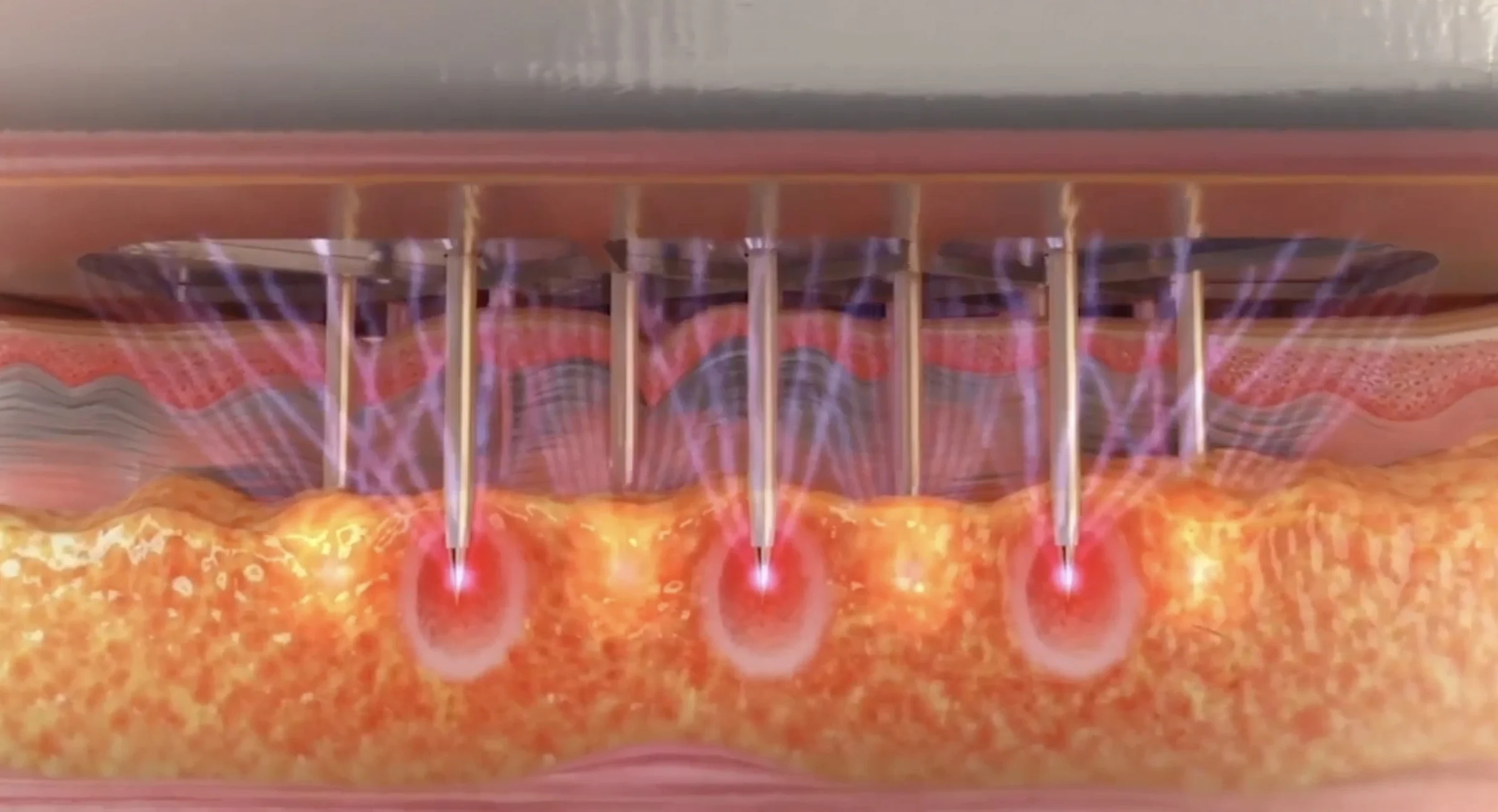
With nanofractional RF technology, the tissue is heated to about 44 degrees Celsius. This heating activates collagen and elastin proteins and, in the dermis layer, encourages the formation of new fibroblasts and natural collagen renewal.
This is why the right RF result doesn't look “done”. In suitable cases, the improvement is built from within the tissue itself.
Why it is considered a sought-after aesthetic treatment
The significant advantage of radiofrequency is the ability to work at depth while relatively preserving the outer layer of the skin, depending on the technology chosen. That is why, in many cases, firmness, elasticity and texture can be improved without a lengthy recovery.
What works particularly well is correctly matching the depth of action to the goal:
-
For gentle tightening and maintenance, external RF is usually suitable.
-
For improving texture and fine lines, fractional RF may be suitable.
-
For acne scars, deeper wrinkles and more pronounced laxity, a deeper treatment such as RF microneedling is sometimes needed.
Those who want to understand the differences between treatment levels can also take a look at solutions such as RF MAX for skin tightening, where the emphasis is on controlled heating and gradual improvement.
What radiofrequency treatment doesn't do
It is worth saying this directly. Radiofrequency treatment doesn't replace a surgical facelift when there is significant excess skin or very advanced sagging. Nor does it “erase” deep scars or structural wrinkles overnight.
What it can be, however, is an excellent tool for real, gradual and natural improvement. The best result is achieved when a realistic goal is defined and you understand in advance whether you are looking for maintenance, texture renewal or a deeper change.
Types of radiofrequency treatment and the differences between them
The most common mistake is thinking that every RF treatment is the same treatment under a different name. In practice, it is a family of technologies. The difference between them determines how deep we can go, what type of problem we can influence, and how strong the result will be.
External RF
This is the more classic generation of treatments. The energy is delivered through a handpiece that glides over the surface of the skin and heats the tissue in a controlled way.
Who it is usually suitable for:
-
Mild laxity
-
Ongoing maintenance
-
Patients who prefer a gentler treatment
-
General improvement in appearance and vitality
The advantage of external RF is relative comfort and minimal recovery time. The disadvantage is that in cases of acne scars, deep wrinkles or significant laxity, it will usually not be the strongest choice.
Fractional RF
Here the energy is not only distributed evenly, but divided into microscopic treatment points. Clinically, this means a more intensive and targeted action on skin texture. This type is more suitable when you are not just looking to “tighten a little”, but also to improve:
-
Visible pores
-
Uneven texture
-
Fine lines
-
Relatively superficial marks
With fractional treatment it is possible to work more precisely on problem areas, while maintaining a balance between effectiveness and a reasonable recovery.
RF microneedling
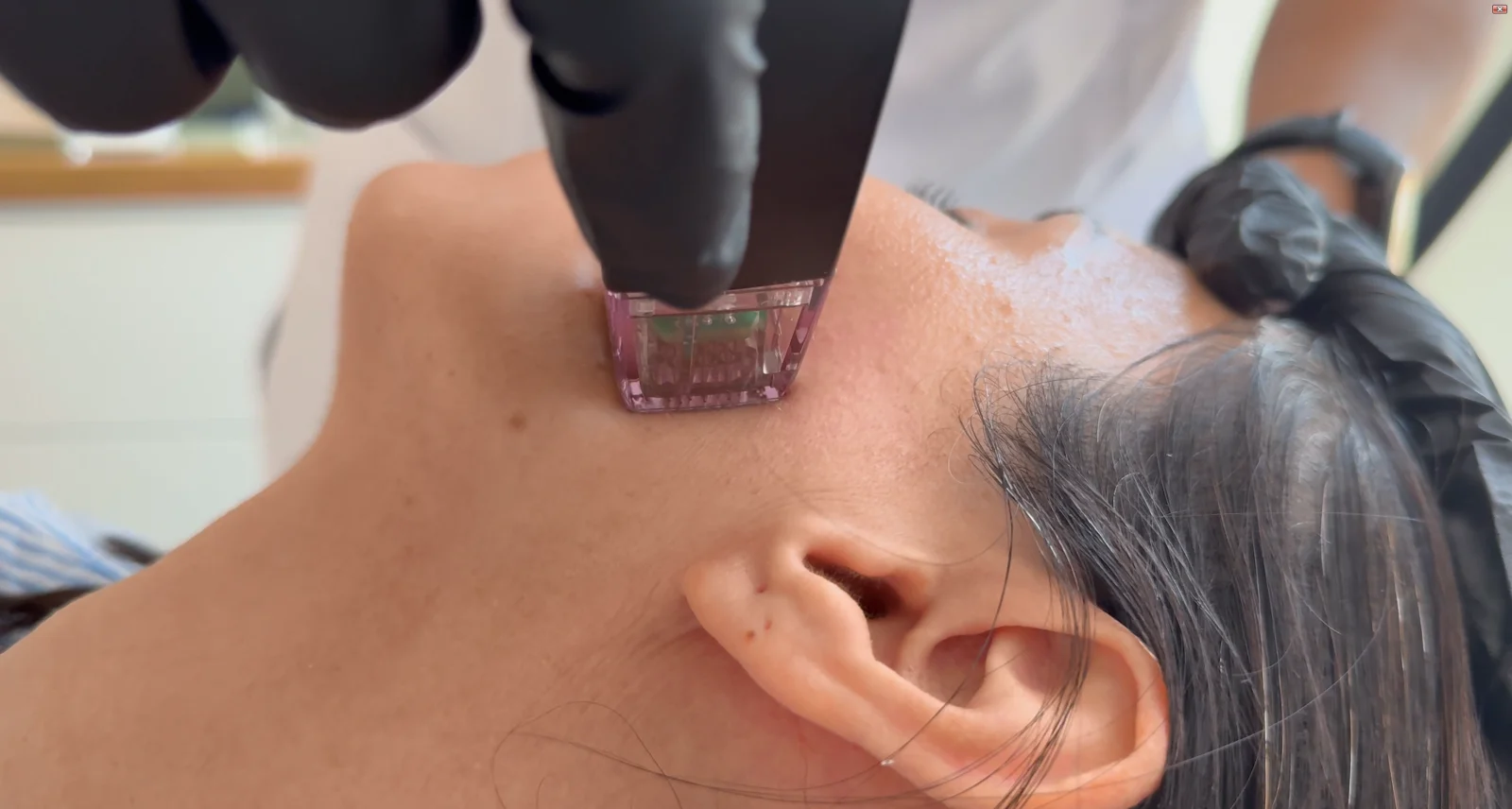
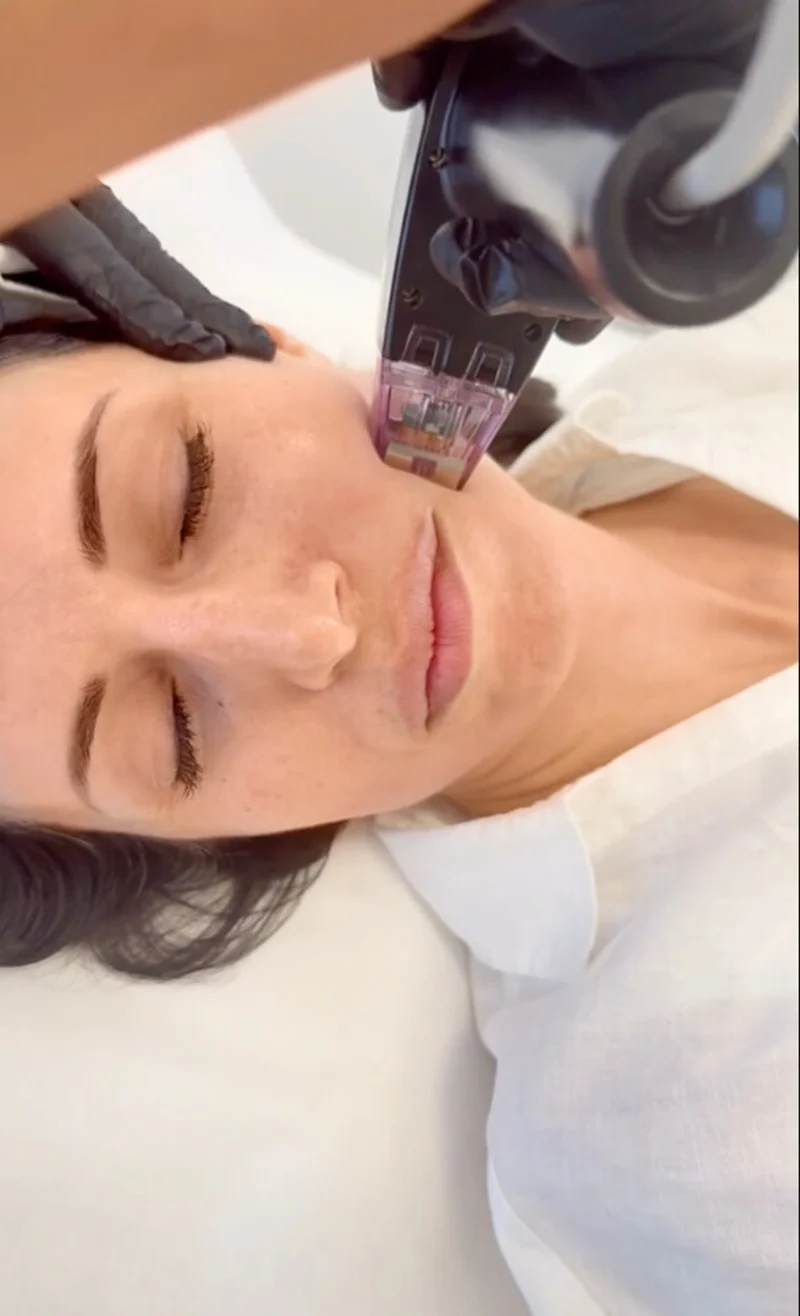
Here we enter a different level of treatment. Instead of heating the skin only from the outside, tiny needles create controlled entry points deep into the tissue, through which the RF energy is delivered to deeper layers.
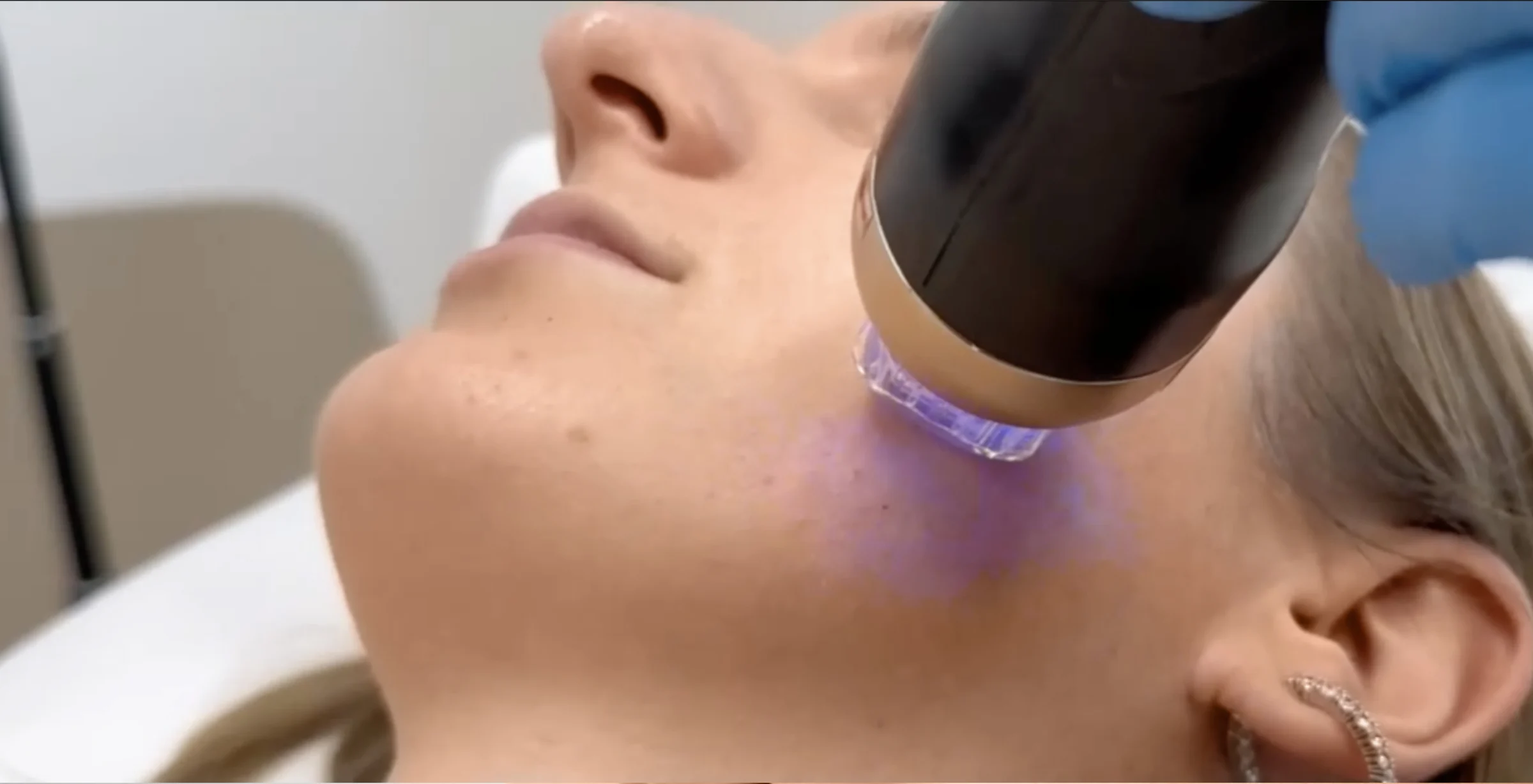
This is a technology that greatly expands the ability to treat not only gentle tightening, but also more complex skin quality problems.
When there is a gap between what is visible on the surface and what is happening deep in the skin, a superficial treatment alone won't always be enough.
Morpheus8 and why it is different
In systems such as Morpheus8, the combination of microneedling and RF allows for more precise and deeper work. The tiny needles penetrate to a depth of up to 3 mm and create a controlled injury that triggers a natural healing response, allowing targeted and effective treatment of deep acne scars and wrinkles.
This is the practical difference that patients need to understand. Morpheus8 is not intended only for “pleasant warming” or a general refresh. It is chosen when you want to work at depth on:
-
Acne scars
-
Deeper wrinkles
-
Skin laxity on the face and certain areas of the body
-
Skin texture that needs rebuilding
In other words, this is a technology that is more suitable when a structural effect on the tissue is needed, not just a subtle improvement on the surface.
How to choose the right type
There is no single answer that suits everyone. Here is a simple way to think about it:
| Type of treatment | What it does well | When it is less suitable |
|---|---|---|
| External RF | Gentle tightening, maintenance, general improvement | Deep scars, significant laxity |
| Fractional RF | Texture, fine lines, targeted skin renewal | Pronounced excess skin or very deep scars |
| RF microneedling | Depth, scars, more significant wrinkles, skin quality | Not always the first choice for those looking for a very gentle treatment |
Those interested in more advanced approaches to skin tightening and rejuvenation can also read about RF MAX and the upgrade in non-surgical skin rejuvenation, especially when deciding between a gentler level of treatment and a deeper intervention.
Which problems and conditions RF treatments are intended for
Radiofrequency treatment is not a “general facial treatment”. It is suitable for different goals, but only when the technology is chosen according to the type of problem. This is exactly the point at which a correct assessment changes the quality of the result.
Skin firming and tightening
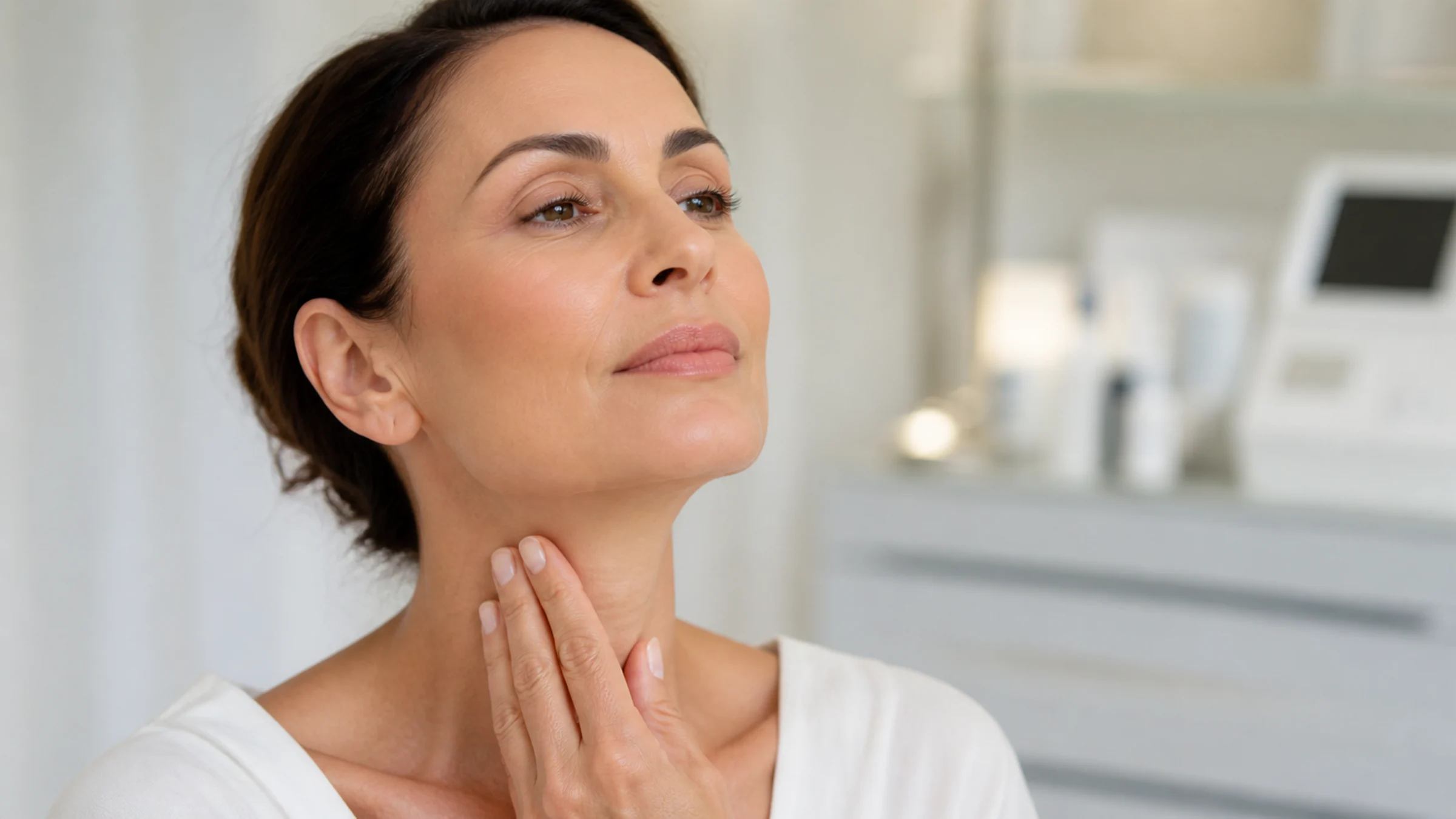
This is the best-known application. When there is a decline in firmness, but not yet sagging that justifies a surgical procedure, RF can help improve tissue support.
The most common areas are:
-
The jawline
-
Cheeks
-
The neck area
-
Décolletage
-
Sometimes also above the eyebrows
In cases of mild laxity, an external treatment may be sufficient. When there is a more noticeable decline in tissue quality, we sometimes prefer a deeper treatment.
Fine lines and wrinkles
Wrinkles don't form for a single reason. There are dynamic wrinkles that are affected by muscle movement, and there are wrinkles that are more related to skin quality and a decline in collagen. This is where RF can be particularly relevant.
It is usually suitable for areas such as:
-
Around the mouth
-
On the cheeks
-
On the neck
-
Areas with textural fine lines
When a wrinkle is mainly caused by lost volume or muscle activity, RF alone won't always be enough. That is why it is sometimes part of a broader treatment plan rather than the only solution.
Acne scars and uneven texture
This is one of the areas where deeper treatments, especially RF microneedling, have a clear advantage. When there are depressions, a rough texture or unevenness that remains even after the acne has gone, a precise stimulation of the rebuilding process is needed.
In such cases, the treatment doesn't “fill” the scar like a filler. It aims to improve the quality of the tissue itself over time.
When treating acne scars, the goal is not perfection. The goal is to make the texture less noticeable and more even, in a way that looks natural.
Certain body areas
RF is not limited to the face. It can also be used on areas with mild to moderate skin laxity, such as:
-
Abdomen
-
Inner arms
-
Thighs
-
Above the knees
-
Sometimes areas with a cellulite-like appearance
When the goal is to improve skin quality and firmness, the technology can fit well into a treatment plan. Those interested in these applications can read more about skin firming and tightening with anti-aging treatments.
Who the treatment is suitable for and who is not an ideal candidate
Not everyone who wants to improve the appearance of their skin is necessarily a suitable candidate for RF. A good match depends on the aesthetic problem, the medical condition, and the ability to accept a gradual result rather than an immediate “transformation”.
Who may be suitable
Generally, radiofrequency treatment is suitable for women and men looking for a visible but natural improvement without surgery. The best candidates are usually those with mild to moderate laxity, a decline in skin quality, fine lines, or texture that can be improved through collagen stimulation.
In Israel, the technology itself is not new. RF treatment for chronic pain has been an established medical method in Israel since the 1990s, with a history of safe and effective clinical use in the healthcare system, including within the national basket of health services. This background strengthens confidence in the technology, which was later also adopted for aesthetics.
Who is less suitable
There are situations in which the treatment should be avoided, postponed, or an alternative considered. Common situations include:
-
Pregnancy and breastfeeding
-
A pacemaker or significant metal implants in the treatment area
-
An active skin infection, including active herpes
-
A tendency towards keloids, depending on the type of treatment
-
Active skin diseases or certain underlying conditions
-
Use of certain medications, subject to medical judgement
In addition, when there is very significant excess skin, expectations must be realistic. In such a case, even an advanced treatment won't replicate a surgical result.
What is checked during the consultation
A proper consultation checks more than a list of contraindications. It is important to understand:
-
What really bothers you
-
The degree of laxity
-
Whether the problem lies in texture, volume, muscles or a combination of these
-
Whether it is right to choose RF, or to combine other approaches
If you are still deciding between different options, a guide such as which anti-aging treatment suits me can help you understand where radiofrequency treatment fits into the bigger picture.
Treatment and recovery stages at Dermacare
The patient's experience starts long before a device is switched on. In a high-quality treatment, organisation is no less important than the technology itself. When work is well organised, comfort increases and so does the chance of the right result.
The consultation and assessment stage
In the first meeting, we examine the condition of the skin, the areas of laxity, the quality of the texture, the depth of the problem, and whether the goal is tightening, scar improvement or a combination of the two.
This is also the stage at which expectations are genuinely aligned. If the reasonable result is a gradual improvement rather than a dramatic change, it is important to say so in advance. In a clinic like Dermacare in Petah Tikva, where radiofrequency microneedling treatments are performed as part of a broad aesthetic offering, the great value lies in the ability to build a tailored plan rather than choosing a treatment automatically.
Preparing for the treatment
Preparation varies slightly depending on the type of device and skin type, but usually includes:
-
Avoiding significant sun exposure before the treatment
-
Reporting regular medication or active skin treatment
-
Avoiding treatment of an area with irritation, a wound or an infection
-
Arriving with clean skin, according to the instructions given in advance
With RF microneedling, local anaesthetic is sometimes used to make the treatment more comfortable.
What you feel during the treatment
The sensation depends very much on the technology. With external RF, you usually feel warmth. With RF microneedling the sensation is more focused, and sometimes warmth and tingling are felt in certain areas, but in most cases the treatment is well tolerated when performed correctly and with suitable anaesthesia.
The deeper the treatment, the more important it is that the intensity, depth and number of passes are tailored individually. This is one of the areas where clinical experience makes a real difference.
What to expect after the treatment
After radiofrequency treatment, there may be:
-
Redness
-
A feeling of warmth
-
Mild swelling
-
Temporary sensitivity to touch
-
With RF microneedling, also a slightly rough or dotted appearance for a short time
In most cases this is an expected and temporary reaction. The recovery time depends on the depth and intensity of the treatment.
The easiest recovery is not always the measure of the most suitable treatment. Sometimes a deeper treatment requires a little more patience, but is much better suited to the problem.
Important aftercare instructions at home
After the treatment, the main emphasis is on protecting the skin and not overloading it. We usually recommend:
-
Gentle cleansing
-
A moisturising or restorative cream as instructed
-
Avoiding extreme heat for a short time
-
Avoiding overly active products in the first few days
-
Consistent sun protection
When do you start to see a change
Some patients feel that their skin is “lifted” or more vibrant relatively early, but the more significant improvement usually builds up over time. This is an important point. The treatment isn't based on a make-up effect, but on a healing and renewal response.
That is why those who come with the right approach and understand that it is a process are usually more satisfied with both the journey and the result.
Comparing RF treatment with other anti-aging methods
Radiofrequency treatment is an important tool, but not every aesthetic goal begins and ends with it. Sometimes it is the most suitable choice. In other cases, it will work well as part of a combination. To understand where it fits, it needs to be compared properly with the alternatives.
Comparison of anti-aging treatments
| Parameter | Radiofrequency (RF) treatment | Laser treatment | HIFU treatment | Injections (Botox/hyaluronic acid) |
|---|---|---|---|---|
| How it works | Controlled heating of the tissue and stimulation of collagen renewal | Light-based action on different skin layers | Focused ultrasound energy at depth | Muscle relaxation or adding volume |
| Main treatment goal | Tightening, improved texture, skin quality | Pigmentation, redness, superficial texture, sometimes skin resurfacing | Deep lifting and tightening | Dynamic wrinkles, contouring, filling |
| Recovery | Depends on the technology and depth | Varies according to the type of laser | Usually relatively easy | Usually short |
| Key advantage | Works well on tissue quality and firmness | Good when the problem is focused on the skin's surface | Suitable when looking for deeper work aimed at lifting | A targeted, quick result for a specific problem |
| Main limitation | Doesn't replace surgery in advanced cases | Doesn't always provide significant tightening | Not intended for every type of texture problem | Doesn't improve overall skin quality on its own |
RF versus laser
When the main problem is pigmentation, capillaries, sunspots or more superficial changes, laser or IPL may be more precise. When the main problem is laxity, a decline in firmness or a need to build collagen, RF is sometimes the more suitable choice.
Put simply, a laser “sees” certain problems on the surface of the skin better. RF works better when you need to influence the support structure of the skin itself.
RF versus HIFU
Both technologies work at depth, but not in the same way. HIFU is sometimes chosen when looking for deeper work aimed at a lifting effect. RF microneedling, and especially Morpheus8, is very suitable when there is a need to improve skin quality, texture, scars and laxity in the dermis.
These are not always competing treatments. Sometimes they solve different problems.
RF versus injections
This is a comparison that confuses many patients. Botox and hyaluronic acid are not supposed to “replace” radiofrequency treatment, and RF doesn't replace them. Each has a different role.
-
Botox is suitable for reducing dynamic wrinkles.
-
Hyaluronic acid is suitable for restoring volume, improving contours or providing support.
-
RF is suitable for improving tissue quality, firmness and texture.
In clinical practice, many successful treatment plans combine these tools rather than choosing just one.
Summary: the next step towards more vibrant, firmer skin
Radiofrequency treatment is not a single treatment, but a group of technologies with different goals. When the match is right, it can improve firmness, texture, fine lines and scars in a natural and responsible way. When the match is wrong, even an advanced treatment won't solve the right problem.
The most important point is to choose a treatment according to your skin, not according to a trend. In simpler cases, external RF will sometimes be enough. In more complex cases, Morpheus8 can provide a deeper and more precise solution.
Want to understand exactly what suits you? The Dermacare team will be happy to assess your skin condition, the suitable type of treatment and realistic expectations – in a professional, personal and precise way. To book a consultation and a personalised assessment, you can contact us here.
Frequently asked questions
There is no single number that suits everyone. It depends on the type of RF technology, the depth of the problem, the treated area and the goal. Gentler treatments tend to be built up as a course, while deeper treatments can be performed under a different protocol.
In practice, the decision is made according to the condition of the skin and not according to a "fixed number for everyone".
In some cases you see an initial change relatively early in appearance or in the feeling of firmness, but the more significant result develops gradually. This happens because the body needs time to produce and reorganise collagen.
If you are looking for an immediate result for an upcoming event, it is important to say so in the consultation so that a suitable treatment can be chosen.
The level of sensation varies according to the type of treatment. External RF usually feels like controlled warmth. RF microneedling feels more intense, so local anaesthetic is often used.
In most cases patients describe the treatment as tolerable, especially when the protocol is properly adapted.
No. The result can be long-lasting, but it does not stop the natural ageing process. The skin continues to change over time, so it is sometimes right to carry out maintenance or combine additional treatments later on.
A successful treatment does not "freeze time". It improves the starting point of the skin and helps preserve it better.
There are several key factors:
-
Correct assessment
-
Choosing suitable technology
-
Correct working depth
-
Home routine and sun protection
-
Understanding the limitations of the treatment
When one of these components is not accurate, even a good device will not necessarily give a good result.
With some technologies yes, but suitability is always individual. Skin type, sensitivity, history of pigmentation, previous treatments and medical condition influence the choice.
The cost varies according to the type of device, the treated area, the complexity of the case and the number of sessions. For this reason, it is not possible to give a responsible answer without seeing the condition of the skin and building a personalised plan.