In brief
- Acne scar treatment should be tailored to your skin type and scar type, and it begins with an accurate assessment.
- The most common type is depressed (atrophic) scars, between 80% and 90% of cases, including ice pick, boxcar and rolling scars.
- RF microneedling is suitable for boxcar and rolling scars and works in the dermis, with a lower risk of pigmentation compared with lasers.
- Fractional CO2 laser is also effective for ice pick scars, but requires a longer recovery and carries a higher risk of pigmentation.
- A combined plan is often built, using RF microneedling, chemical peels, PRP, fillers and biostimulators.
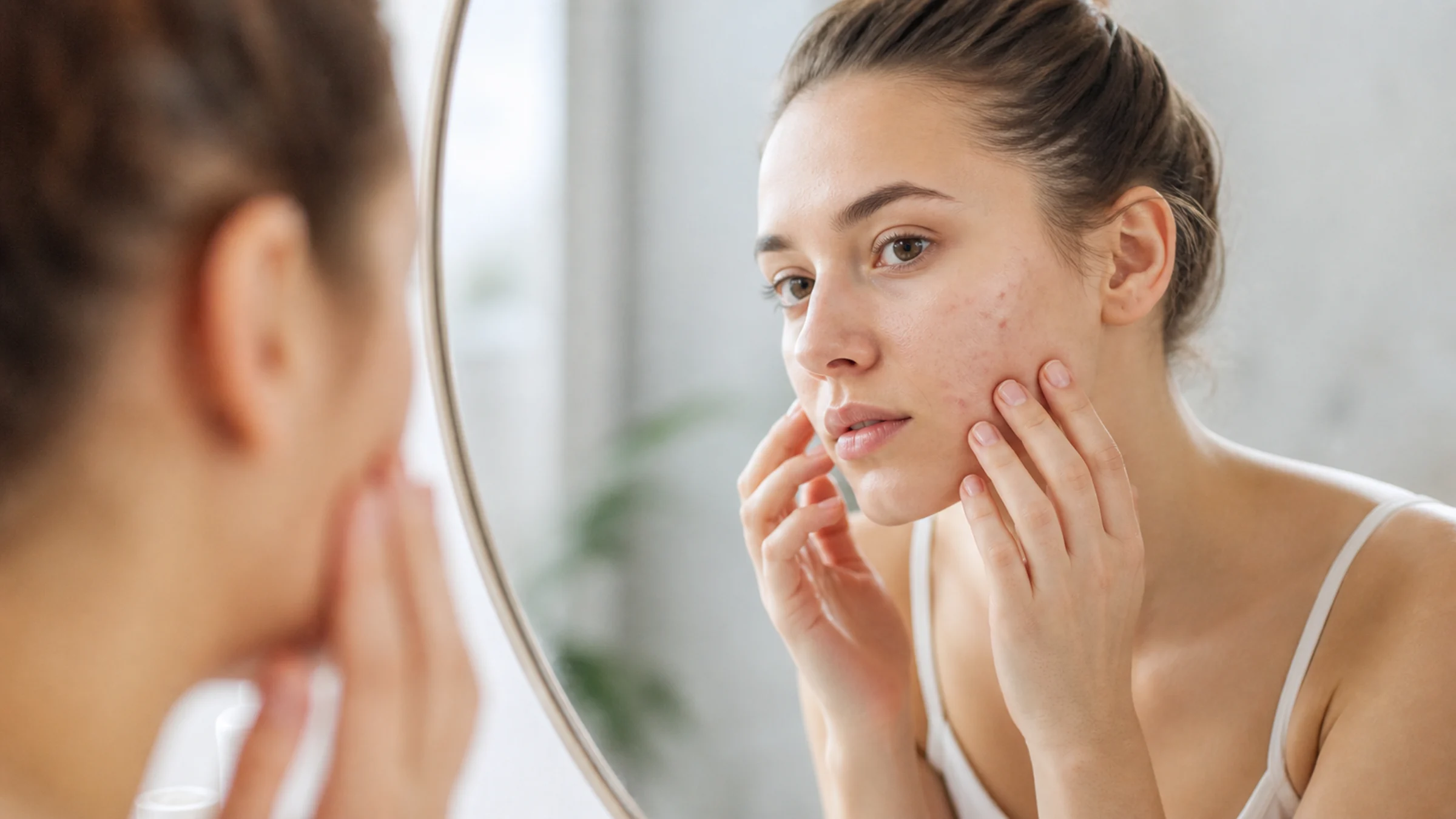
Acne scars are much more than just a "mark" on the skin. For many people, they are a daily reminder of a frustrating struggle, one that undermines self-confidence and causes discomfort in front of the mirror. If you know this feeling, the most important thing to know is that it is not a fate you have to accept. The right acne scar treatment, tailored to your skin type and scar type, can encourage the skin's natural healing processes, stimulate new collagen production and restore a noticeably smoother, more even look.
Why acne scar treatment is a personal journey and not an "off-the-shelf solution"
The path to treating acne scars begins with a simple understanding: no two skin stories are the same. The blow to self-confidence is real, and we know it well here at the clinic. Many patients, like a young woman who came to us recently with depressed scars that made her avoid social gatherings, share similar feelings of frustration and helplessness. At Dermacare, we first see the person behind the scars, and we understand that the path to improvement requires much more than technology – it requires empathy, deep clinical understanding and a personal plan tailored especially for you.
The Dermacare approach: treatment tailored precisely to your skin
Every successful journey begins with the right first step. With us, that step is always an accurate, in-depth assessment. Before we even talk about devices and treatments, we take the time to examine the type of scars, their depth, your skin tone and its natural ability to regenerate. Acne scars may be a common condition, but the solution has to be specific.
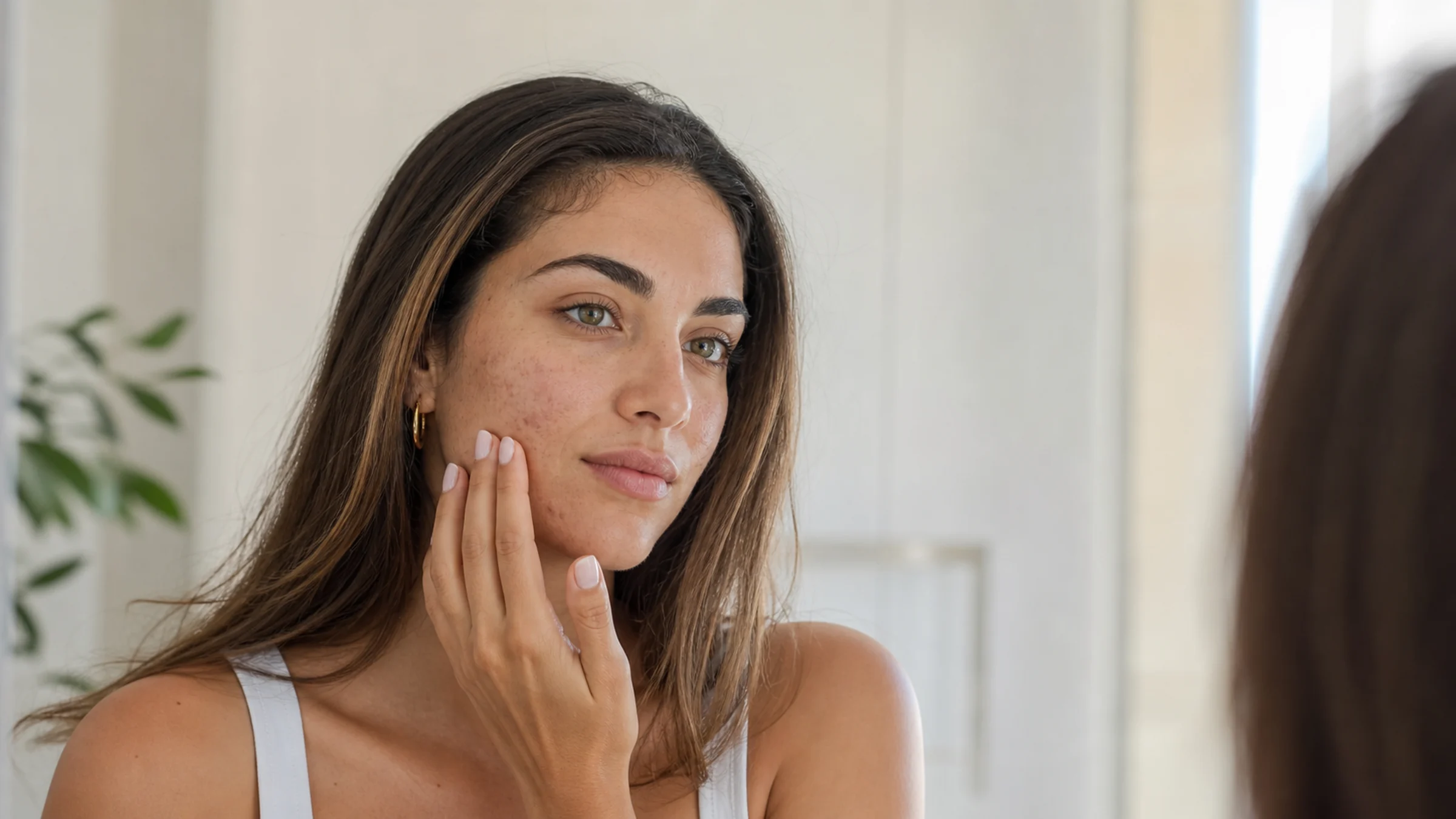
In fact, acne scars are a very common problem in Israel. It is estimated that about 80% of adolescents suffer from acne at some stage, and many of them develop permanent scars. The most common type, depressed (atrophic) scars, accounts for between 80% and 90% of all cases, and it also includes different sub-types, each requiring a different approach. These figures only underline how critical personalisation is to success.
At Dermacare, we build a personalised treatment plan, and it will often combine several different approaches. The aim is not just to "flatten" the scar, but to encourage the skin to heal itself from within. Our process includes:
-
A professional, in-depth assessment: accurate identification of the scar types – whether they are depressed, raised, narrow ("ice pick") or wide.
-
Building a combined treatment plan: using technologies such as RF microneedling alongside other supporting treatments, to work on the different layers of the skin and achieve an optimal result.
-
Setting realistic expectations: we explain exactly what can be achieved and how long it is expected to take, and we accompany you every step of the way.
The key to successful acne scar treatment is not the "most powerful" device, but building a smart plan that activates the skin's own healing mechanisms. It is a process that requires patience, but the result is a real and lasting improvement in skin texture.
Ultimately, we understand that improving skin texture depends on the production of collagen and elastin – its most important building blocks. That is why technologies that encourage their production, also known as biostimulators for collagen stimulation, are a central part of our approach. The result is not only skin that looks smoother, but a real change in how you feel and in your self-confidence.
Why do acne scars form at all, and how do you tell them apart?
Before diving into the solutions and techniques of acne scar treatment, it is important to understand what happens to our skin and why these marks remain. A scar is not just a "spot" left behind after a pimple. It is actually a physical reminder of a healing process that went wrong after the skin experienced trauma.
The story always begins with a deep, inflamed acne lesion, such as a painful cyst or a pus-filled spot. When this inflammation penetrates the dermis, it damages the skin's support network – the collagen and elastin fibres. In response, the body hurries to activate its natural healing mechanism to repair the damage, but sometimes it does not manage to do the job perfectly.
Collagen imbalance: the key to understanding the scar
Whether a scar remains and what it looks like depends almost entirely on one question: how the body produces new collagen in the damaged area. Here, there are two main possibilities:
-
Insufficient collagen production: the body simply did not manage to produce enough "filling material" to close the gap created in the tissue. The result is a depressed (atrophic) scar – what most of us know as pits, dents or "holes" in the skin. This is the most common type of acne scar.
-
Excess collagen production: in the opposite case, the body "overdoes it" and produces far too much collagen. The result is a raised (hypertrophic or keloid) scar, which looks like a small hill above the surface of the skin. This type is less common on the face and requires a different treatment approach.
Think of it like repairing a pothole in the road: if the contractor puts in too little asphalt, a dip will remain. If they put in too much, a bump will form. Our skin works in a similar way – the imbalance in the amount of "filling" is what creates the uneven texture.
The types of depressed scars you need to know
The most critical step on the way to smooth skin is correctly identifying the types of scars, because each type requires a slightly different treatment approach. Incidentally, most people have a combination of several types, which is why a professional assessment is so important. These are the three main types you will come across:
-
"Ice pick" scars: these are narrow, deep, small scars that look as if someone has pierced the skin with a sharp object. They form when the inflammation causes very deep damage, creating a narrow "tunnel" into the skin. Because of their depth, they are considered the most challenging to treat.
-
"Boxcar" scars: these are wider depressions with clear, angular edges, reminiscent of a box or square. They can be shallow or deep, and they are the ones that give the skin a "pitted", uneven look.
-
"Rolling" scars: these are wide, shallow depressions without sharp edges, creating a wavy, rough appearance, especially when the skin is viewed from the side or in certain lighting. They form because of internal scar tissue that "pulls" the skin downwards.
Acne scars are a very common condition in Israel, mainly among young people. Data show that about 75% of teenagers experience acne to some degree, and of these, up to 25% are left with scars that require treatment. In terms of distribution, about 70% of scars are depressed (a lack of collagen) and about 30% are raised (excess collagen).
Understanding that each type of scar has its own story and "personality" highlights why there is no single treatment that suits everyone. A professional, accurate assessment, like the one we carry out here at Dermacare, is the first and most important step towards building an acne scar treatment plan that will give you the results you really want.
What treatments are available for acne scars today, and what really works?
The world of aesthetics today offers a whole arsenal of advanced technologies for acne scar treatment. Broadly speaking, they all share the same goal: to signal the skin to "wake up" and start repairing itself. We create a controlled stimulus that forces the skin to produce new collagen and elastin fibres, which ultimately fills in the depressions and smooths the texture.
But – and it is a big but – there is no such thing as "the best treatment". There is the treatment that is right for you. Success depends on a precise match between the type of scar, its depth, your skin tone and your expectations. At the Dermacare clinic, we almost always build a plan that combines several techniques, because that is how the best results are achieved.
1. Radiofrequency microneedling (RF Microneedling) – deep, targeted rejuvenation
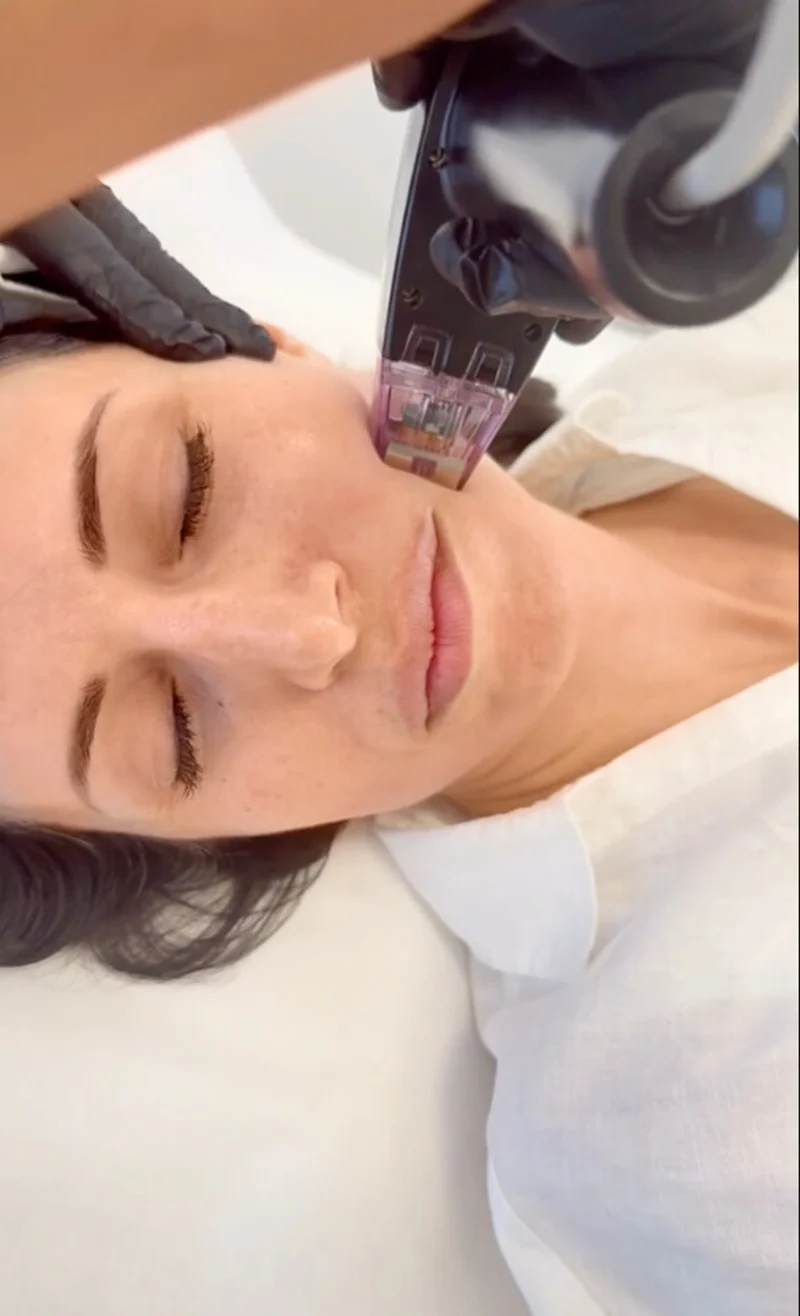
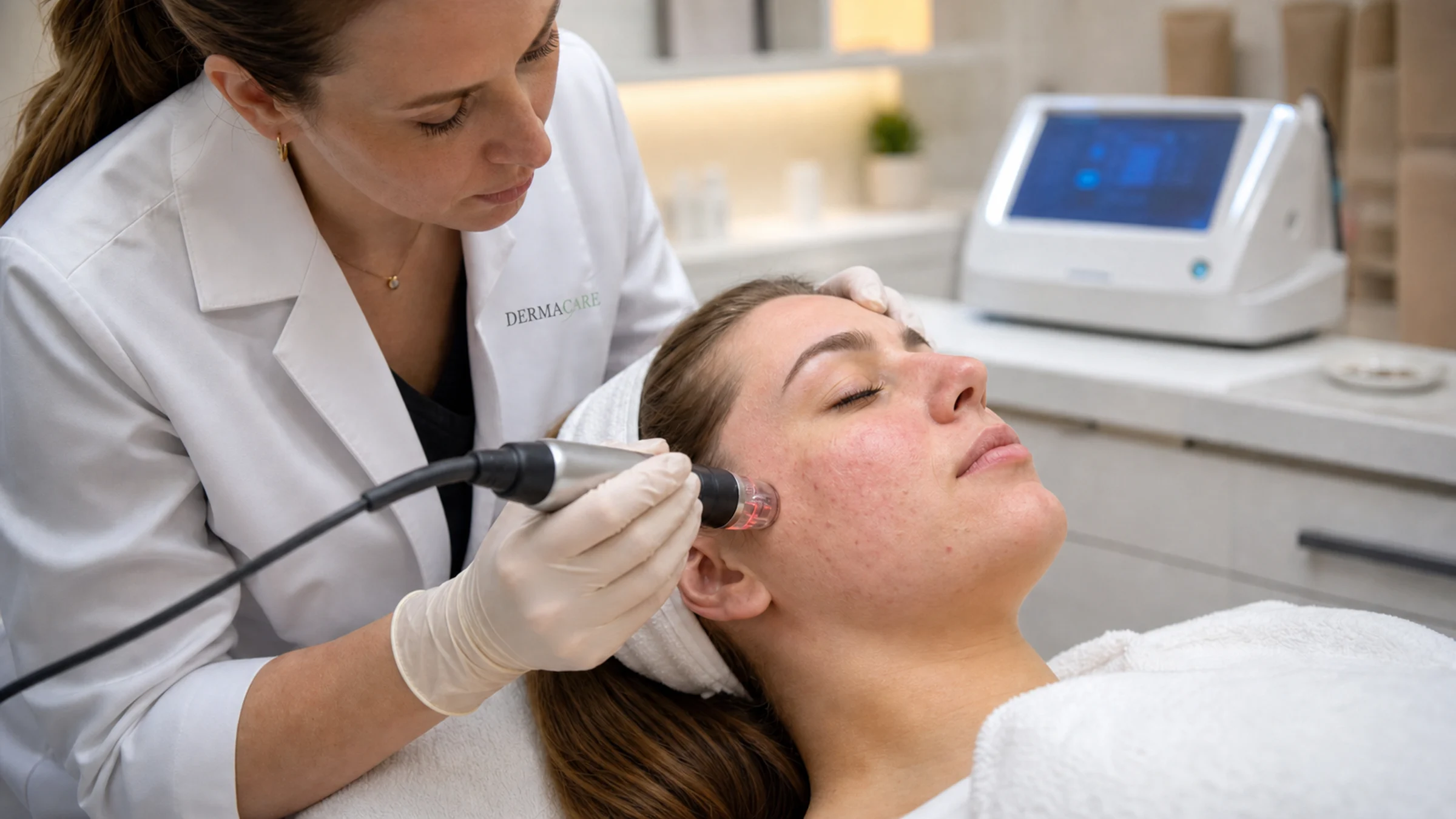
At Dermacare, one of the main methods we use is RF Microneedling. It is an effective and safe technology, particularly for the most common depressed scars – "Boxcar" and "Rolling".
How does it work? This technology is clever because it combines two actions in one go:
-
Micro-punctures (microneedling): tiny, sterile needles penetrate the skin to a precise depth, creating thousands of microscopic, controlled injuries. The body immediately recognises these injuries and activates its natural healing mechanism.
-
Controlled heating (RF): right at the tip of each needle, radiofrequency energy is emitted that heats the deep layer of the skin (the dermis). This heat does two things: it immediately contracts existing collagen fibres and powerfully stimulates the production of new, fresh collagen and elastin.
The beauty of this method is that we bypass the upper layer of the skin and go straight to the source of the problem, in the dermis. This makes the treatment particularly safe for darker skin tones too, with a significantly lower risk of pigmentation compared with lasers. You can read more about our approach to RF microneedling treatments at the clinic.
2. Laser treatments (for example, fractional CO2 laser)
Lasers, led by fractional CO2, are very powerful tools, but they also require careful selection. Think of it as a controlled "vaporisation" of tiny points in the skin. The laser beam creates thousands of microscopic columns of injury, leaving "islands" of healthy skin between them.
This healthy tissue is the key to rapid recovery. It mobilises all its resources to repair the injured areas, and in the process the skin builds a new, stronger collagen network. The result is dramatic smoothing of scars and an overall improvement in skin texture. Lasers can give excellent results for "Boxcar" scars and even for stubborn "Ice Pick" scars.
The downside? A longer recovery time (redness and peeling for several days) and a higher risk of dark spots (pigmentation), especially in people with darker skin.
At Dermacare, the choice between RF microneedling and laser is a clinical decision we make together with you. It depends on your skin tone, the type of scars and also how much "downtime" you can afford. There is no one solution that suits everyone, only the precise solution for you.
3. Chemical peels, PRP and fillers: the complementary treatments
Alongside the core technologies, we have other tools in the box that help us fine-tune the result:
-
Chemical peels: using medical-grade acids (such as TCA) causes controlled peeling of the upper layers of the skin. This is effective for blurring very superficial scars, smoothing the overall texture and treating dark marks left behind after acne.
-
PRP treatments (platelet-rich plasma): also known as the "vampire facial". We take a small blood sample from the patient, use a special machine to isolate the plasma, which is rich in growth factors, and inject it into or apply it to the treatment area. These growth factors are like "jet fuel" for the skin's natural healing process. We like to combine PRP with microneedling to enhance the result and speed up recovery.
-
Fillers and biostimulators: for individual, particularly deep scars, sometimes the quickest and most elegant solution is simply to fill them. Hyaluronic acid fillers can be used to "lift" the depression and achieve an immediate result (which lasts several months). Alternatively, biostimulators (such as Radiesse or Sculptra) can be injected – substances that make the skin produce its own natural collagen over time. This approach rebuilds the tissue from within for a natural, long-lasting result.
Comparing acne scar treatment methods
To bring some order, here is a table summarising the main differences between the leading methods. Remember, a combination of several of them is often what delivers the best result.
| Treatment method | Mainly suitable for | Average recovery time | Number of treatments required (average) | Key advantage |
|---|---|---|---|---|
| RF microneedling | Depressed scars (Boxcar, Rolling), all skin tones | 1-3 days | 3-5 | Highly effective, safe for dark skin |
| Fractional CO2 laser | Deep scars (Boxcar, Ice Pick), fair skin | 5-10 days | 2-4 | Dramatic results in texture improvement |
| Chemical peel (TCA) | Superficial scars, pigmentation | 4-7 days | 2-4 | Effective for improving overall texture and tone |
| Fillers | Isolated depressed scars | 0-1 days | 1 (every 9-12 months) | Immediate result for filling depressions |
| Biostimulators | Depressed scars, volume loss | 0-2 days | 2-3 | Gradual building of natural collagen |
Ultimately, choosing the right treatment or combination of treatments is both a science and an art. It requires a deep understanding of skin anatomy, clinical experience with the various technologies and, most importantly, listening to your goals and needs.
What a personal treatment plan looks like here at Dermacare
Acne scar treatment is not an "off-the-shelf solution". There is no magic formula that works for everyone. The success of the treatment depends on building a precise plan, one that takes into account every detail of your unique skin. At Dermacare, we believe that a professional, transparent and organised process is the key to quality results and, above all, to your peace of mind throughout.
The journey to smooth skin begins long before any device is switched on. It is made up of four main stages, designed to ensure that together we reach the best result for you.
Stage 1: professional assessment and setting expectations
This is the first and most important stage of the process. At the consultation we do not just look at your skin – we study it in depth. We carry out a comprehensive assessment to understand exactly what we are dealing with:
-
What types of scars are on the skin? Are they depressed "Boxcar" scars, "Rolling" scars or "Ice Pick" scars? In most cases it is a combination of several types, and it is important to identify the dominant ones.
-
How deep and how old are they? Newer scars that are still red sometimes respond faster to treatment. Older, white scars require a deeper, more intensive approach.
-
What is the overall condition of the skin? We check your skin tone (Fitzpatrick), elasticity, hydration level and tendency towards sensitivity or pigmentation. This information is crucial for choosing a technology that will be not only effective but also safe for you.
An equally essential part of this meeting is setting realistic expectations. We will explain honestly and openly what can be achieved, the range of improvement we are aiming for and how long the whole process will take. Our goal is for you to leave this meeting with a full, clear picture, with no surprises.
Stage 2: building a combined, personalised treatment plan
Once we understand exactly the condition of your skin, we put together a personal treatment plan for you. Here at Dermacare, we advocate a combined approach (combination therapy). Our experience shows that combining several technologies almost always delivers a better, more comprehensive result than relying on just one technology.
For example, a typical treatment plan might include:
-
A course of RF microneedling treatments: this is a core treatment in many plans, designed to deeply rejuvenate the dermis and encourage the skin to produce new collagen and elastin fibres.
-
Adding PRP (plasma) treatments: to accelerate the body's natural healing processes, shorten recovery time between treatments and enhance the building of new tissue.
-
Complementary peel treatments: between microneedling sessions, a gentle chemical peel can be added to improve surface texture, treat pigmentation marks left by acne and give the skin a more even, radiant look.
It is important to stress that this plan is not "set in stone". We monitor how the skin responds from one treatment to the next and adjust the protocol along the way to maximise the results.
We remember well a patient who came to us with depressed acne scars and uneven skin texture, who told us the condition was seriously affecting her self-confidence. After a professional assessment, a personalised treatment plan was built for her based on RF Microneedling and gradual skin rejuvenation. Over the course of the process, a significant improvement was seen in the texture and evenness of her skin, and she reported a huge positive change in her confidence.
Stage 3: carrying out the course of treatments with close support
The course of treatments itself takes place at regular intervals, usually every 4 to 6 weeks. This break is essential to allow the skin to complete the healing and rebuilding process between sessions. Every treatment is carried out by our skilled team, with uncompromising attention to sterility, safety and maximum comfort for you.
Throughout the process, we are available for any question, consultation or concern. Close support is an integral part of our approach. It is important to us that you feel safe and at ease at every stage.
Stage 4: recovery instructions, follow-up and maintenance
The treatment does not end when you leave the clinic. In fact, what you do at home is just as crucial to the success of the process. At the end of each treatment, you will receive a clear set of instructions from us, including:
-
Strict sun protection: daily use of sunscreen with a high SPF is an absolute must. This is the most important thing for preventing pigmentation and ensuring proper healing.
-
Using dedicated products: we will recommend restorative, soothing creams that help the skin heal in the best possible way and reduce redness.
-
Avoiding irritants: during the recovery period, it is important to avoid using acids, at-home peels or any aggressive product that may irritate sensitive skin.
After completing the course of treatments, we will schedule a follow-up appointment to assess the final result together. From there, we will build a long-term maintenance plan to help you preserve the smooth, healthy skin you have worked hard to achieve.
Results, recovery and instructions for caring for your skin
"When will I see results?" This is probably the first question every patient asks us at the clinic, and it is completely understandable. I want to be as honest as possible: acne scar treatment is a marathon, not a sprint. The result does not appear the day after the treatment. It builds up slowly, from within.
Treatments such as RF microneedling essentially "wake up" the skin to work. They trigger a deep biological process of producing new collagen and elastin fibres. Think of it as a thorough renovation of the skin's foundations. This process of building new, strong and elastic tissue simply takes time. An initial improvement in texture can sometimes be seen after the very first treatment, but the more significant result only becomes apparent after a few months, when the new collagen "settles" into place and fills in the scar depressions.
How many treatments are needed, and why is patience the key here?
The answer to this question is entirely individual and depends on the type of scars, their depth, how long they have been there and the overall condition of your skin. However, in the vast majority of cases, a course of 3 to 6 treatments is needed to achieve a significant change in appearance. We carry them out 4-6 weeks apart.
It is important to understand that each treatment builds on the one before it. We create a controlled stimulus, give the skin time to heal and rebuild itself, and only then move on to the next treatment to enhance the effect. That is exactly why patience and perseverance with the treatment plan are crucial to success.
"One of the most important things after acne scar treatment is to follow the instructions given at the clinic, especially regarding sun protection, using suitable products and avoiding unnecessary irritation of the skin. In addition, the right sequence of treatments and patience are a significant part of success, because the improvement in acne scars happens gradually."
The golden rules for a successful recovery and preserving your results
The success of acne scar treatment depends not only on what happens at the clinic, but also – and perhaps mainly – on what you do at home. If you do not follow the aftercare instructions, you may compromise the process. Strict care is essential for good recovery, preventing complications and getting the full benefit of the results you have invested in.
These are Dermacare's iron rules for caring for your skin after treatment:
-
Complete sun protection: this is the most important point, by far. You must use sunscreen with SPF 50+ every day, even when it is cloudy. Sun exposure after treatment can cause pigmentation (brown spots) and impair the healing process.
-
Using soothing products: in the first few days after the treatment, we will advise you to use dedicated creams and products with ingredients that soothe and restore the skin. The aim is to reduce redness and support the natural healing process.
-
Completely avoiding active ingredients: put aside all acids (such as glycolic or salicylic), retinoids, at-home peels and any other aggressive product. The team will tell you exactly for how long, but using such products on sensitive skin after treatment can cause significant irritation.
-
Keeping skin hydrated and cleansing gently: it is important to drink plenty of water and use a gentle, fragrance-free moisturiser. Wash your face with a mild soap, without rubbing.
Following these rules will ensure that your skin heals in the best possible way and allow you to enjoy the results you have invested in over the long term. By the way, the principle of activating the body's natural healing mechanisms is also the basis of other treatments we carry out, such as PRP treatments for skin and hair rejuvenation.
Your first step towards smoother skin
The path to smooth skin is a personal journey, and if you have read this far, you have probably already understood the most important point: acne scar treatment is not overnight magic. It is not the result of a single device or a miracle product, but a real process that requires a professional assessment, a personalised plan, the right technology and, most importantly, patience and perseverance.
Our message at Dermacare is simple: with the technologies available today, and with the right experience, it is possible to achieve a real and noticeable improvement in the appearance of scars. Every scar tells a story, but that story does not have to define your confidence. It is possible – and worthwhile – to encourage the skin to rebuild itself, produce healthy collagen and regain a more even, smoother appearance.
Rebuilding your skin and your confidence
The decision to start treatment is a big step, and it is sometimes accompanied by natural concerns. That is exactly why our process always begins with a conversation and an assessment. It is important to us that you understand where you are heading, what the realistic expectations are, and that you feel safe at every stage. Every patient receives complete, all-round care from us:
-
In-depth skin assessment: we will accurately identify your scar types and skin tone, because this is the foundation of any success.
-
Building a personal treatment plan: we will combine the technologies your skin needs, such as RF microneedling, a gentle chemical peel and complementary treatments. There is no one solution that suits everyone.
-
Close support and clear instructions: we will be there for you all the way, with essential instructions for caring for your skin at home too.
Our goal is not only to improve the texture of your skin. Our goal is to give you a safe, professional and caring experience that leads to a real and lasting change in how you feel when you look in the mirror.
Do not stay stuck with the frustration and the questions. If you feel the time has come to take a step, we are here to accompany you.
Want to find out exactly what is right for you? The Dermacare team will be happy to assess your skin condition, the right type of treatment and realistic expectations – in a professional, personal and precise way. To book a consultation, you can contact us here.
Read more about the anti-acne facial at the Dermacare clinic in Petah Tikva.
Frequently asked questions
This is an entirely legitimate question. Our goal is for your experience to be as comfortable as possible.
Before treatments such as RF microneedling, we apply a strong anaesthetic cream and wait long enough for it to work effectively. Most of our patients describe the sensation during the treatment as light tingling or a feeling of warmth, but not sharp pain. Our team is skilled and sensitive, and knows how to regulate the treatment so that you get through it easily.
Timing is truly critical. Our first rule is simple: first of all, make sure the active acne has calmed down completely. Intensive treatment of skin that is still inflamed and active can make the situation worse and do more harm than good.
On the other hand, we do not recommend waiting too long. There is a window of opportunity: the "fresher" the scars, the faster and more strongly the skin tends to respond to restoration and renewal processes. The perfect balance is to begin the process a few months after the last spots have disappeared and the skin has stabilised.
It is important to stress: there is no "magic number" of treatments that suits everyone. The result depends on the type of scars, their depth, skin tone and each person's individual renewal capacity. At the consultation we build a realistic expectation together with you. If you are interested in understanding more about the process, you can also read our article on how many treatments are needed to see a result.
Absolutely yes. This is one of the most common mistakes – thinking that scars that are 10 or 15 years old are a fate you have to live with. That is simply not true today.
Advanced technologies such as radiofrequency (RF) or targeted lasers know how to "wake up" the skin and encourage it to build new collagen, even in old, deep scar tissue. True, it takes patience: treating long-standing scars may take longer and require a more intensive series of treatments than for fresh scars. But a significant improvement in the texture and appearance of the skin is entirely achievable, even years after the acne has gone.
There is no uniform price for scar treatment, for the simple reason that there is no uniform treatment plan. The cost is a direct result of the personal treatment plan we build for you.
The final price is affected by several main factors:
-
Which technologies we combine: whether we use RF microneedling, peels, PRP, or a combination of several methods.
-
How many treatments will be needed: this depends on the depth of the scars and how your skin responds.
-
Which areas we treat: whether the treatment is focused on the cheeks only, or on the full face.
The only way to get an exact quote is to come for a consultation and assessment. At this session we will characterise the type of scars, understand the condition of your skin, build an action plan together and give you a transparent, detailed quote.
This is an excellent question. The improvement in skin texture achieved through treatments that renew collagen is long-term. We are in effect getting the skin to rebuild itself – new, stronger and healthier tissue. This new collagen stays there, and the scar itself does not "come back".
However, it is important to remember that our skin is a living organ that continues to change and age. Sun exposure, lifestyle and natural ageing processes continue to affect it. Therefore, to preserve the result over the years, we always recommend a smart preservation plan: a single maintenance treatment once every year or two, sticking to a proper skincare routine at home, and above all – sun protection. This is what will ensure that your investment in your skin is preserved.