
In brief
- The laser targets the melanin in the hair follicle and damages it, which is why it achieves a significant, permanent reduction in the amount of hair.
- The laser is effective only in the growth phase, and at any given moment about 15%-20% of the hairs are in this phase, which is why a series of treatments is needed.
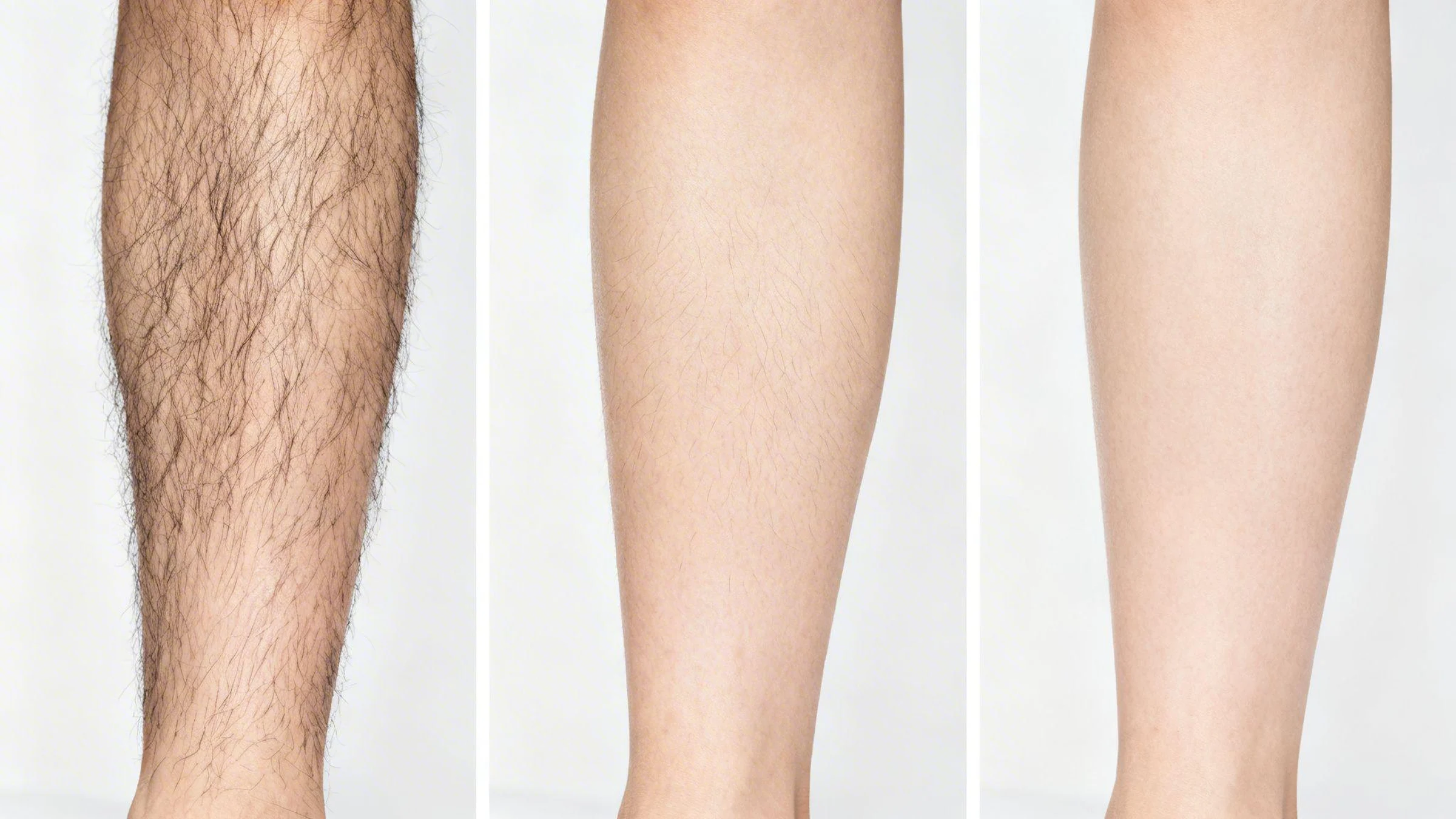
- In most cases the series includes 6 to 12 sessions, and its aim is a reduction of about 80% to 90% in the amount of hair.
- The laser is not effective on white, grey, red or very light blonde hair, because it lacks melanin.
- Shave 24 hours before treatment, avoid plucking and waxing, and avoid the sun for two weeks before and after each treatment.
Tired of shaving every day, the pain of waxing and hair that grows back too quickly? You are not alone. Laser hair removal is one of the most popular and effective methods for achieving long-lasting smooth skin. Unlike temporary solutions, the laser targets the hair growth mechanism and allows a significant, permanent reduction in the amount of hair. This guide will answer all the important questions and help you make an informed decision.
So how does this magic actually work?
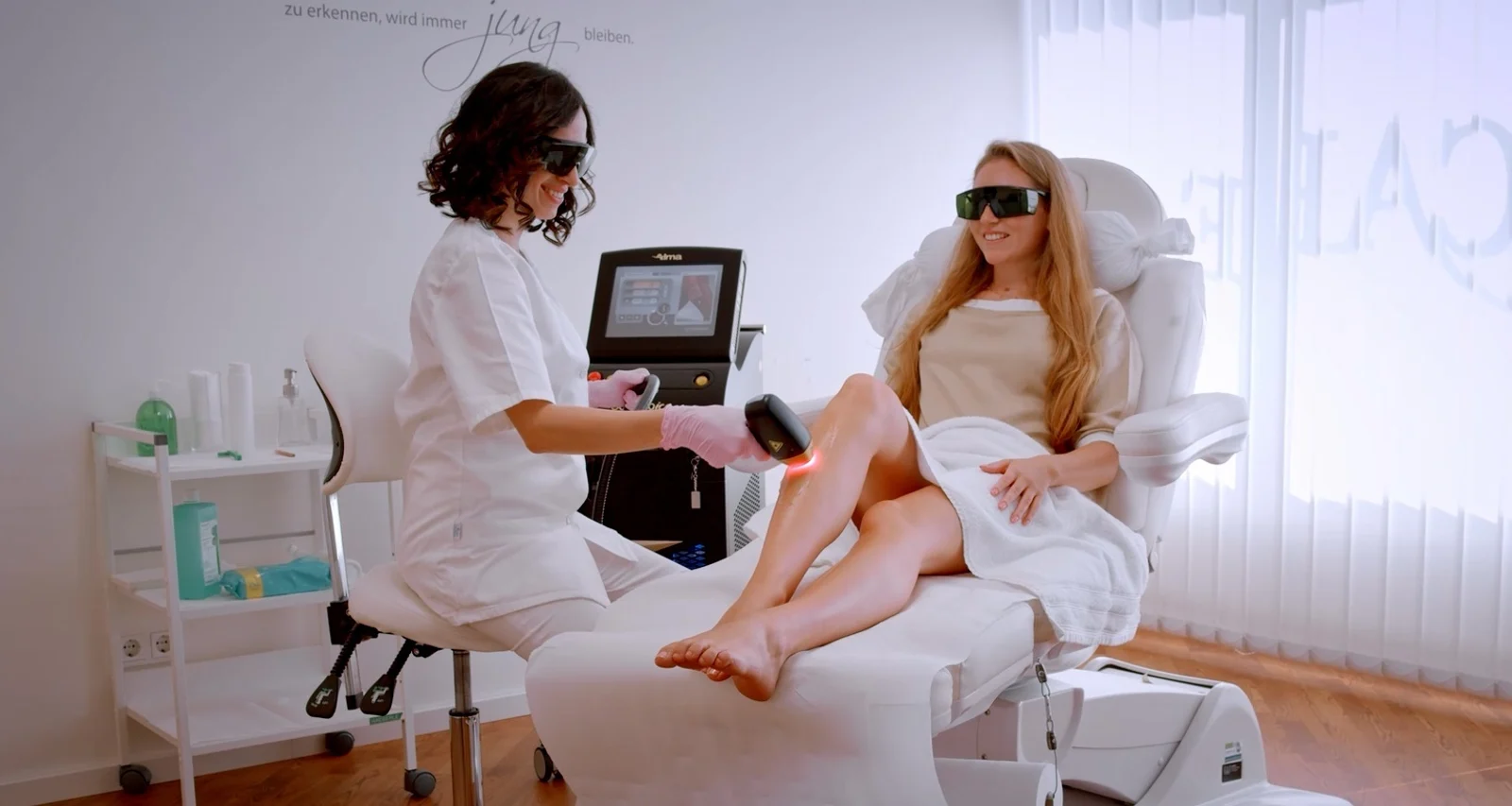
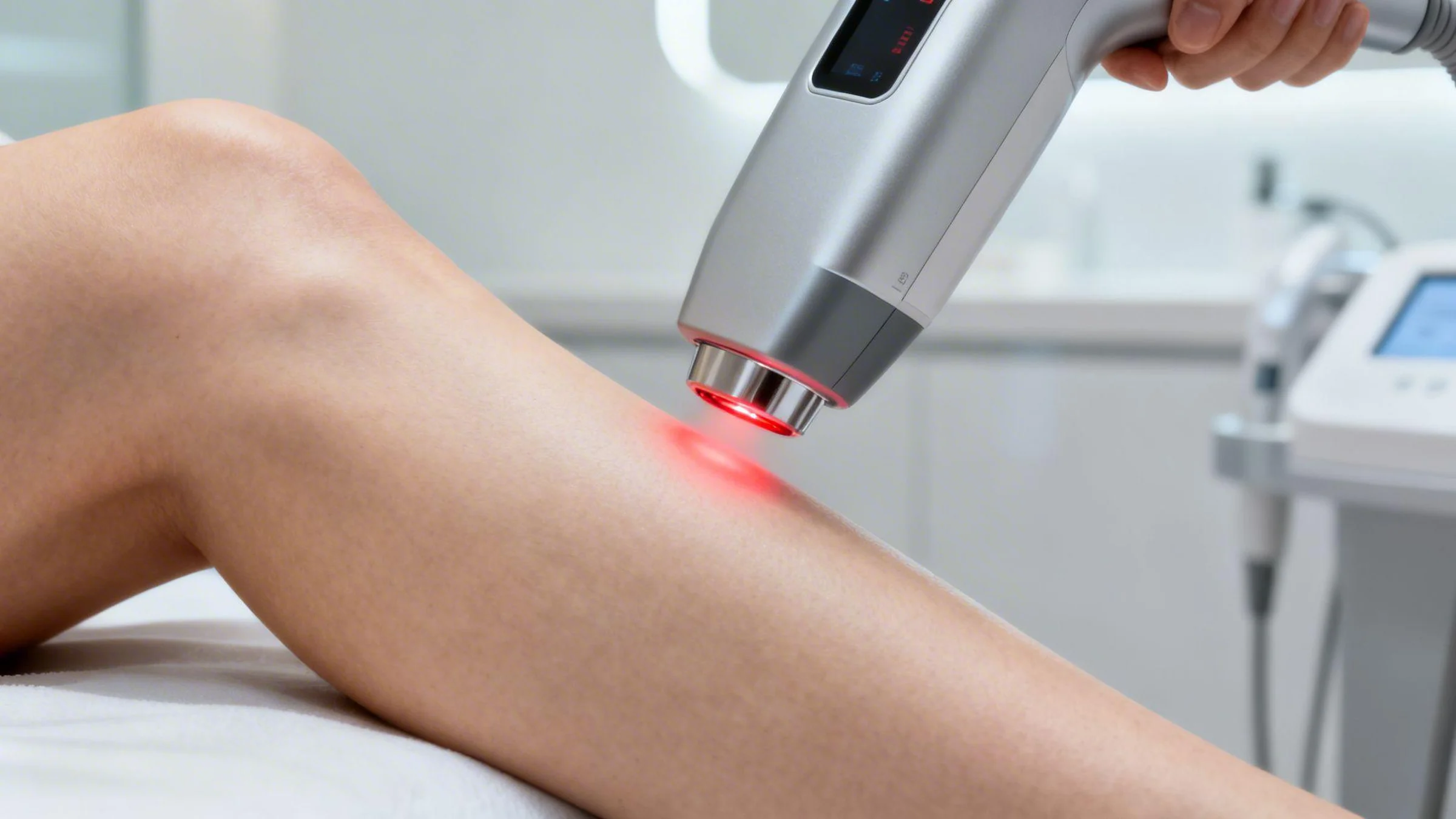
Laser hair removal is a medical-aesthetic procedure based on a scientific principle called "selective photothermolysis". Simply put, it involves a concentrated beam of light (laser) directed at the skin. The light beam "looks for" dark pigments, and in our case it focuses on melanin – the pigment that gives the hair its dark colour and is found in high concentration in its root.
When the laser beam hits the melanin in the hair follicle, the light energy is immediately converted into focused heat energy. This precise heat damages the follicle and the small blood vessels that feed it, neutralising its ability to grow new hair in the future. What makes the method unique is its precision: the laser targets only the dark target (the hair) and does not harm the lighter surrounding skin tissue, as long as the treatment is performed correctly and with professional tailoring.
Why is one treatment simply not enough?
One of the first questions we are asked at the Dermacare clinic is: "Why do I need a series of treatments, and why can't I get it done in one session?". The answer lies in the natural life cycle of hair. Every hair on the body goes through three growth phases:
-
The growth phase (anagen): this is the active phase, in which the hair is firmly attached to the root and receives nourishment from it. The laser is effective only in this phase.
-
The transition phase (catagen): the hair stops growing and begins to separate from the root. At this stage, the laser can no longer affect it.
-
The resting phase (telogen): the old hair falls out, and the follicle enters a short dormancy before it begins to grow a new hair.
At any given moment, only some of the hairs in the treatment area – usually around 15%-20% – are in the active growth phase suitable for treatment. This means that each laser treatment effectively targets only the group of hairs that was "online" on that day.
This is exactly why a series of treatments, carried out at regular intervals of several weeks, is not a recommendation – it is essential for the process to succeed. Each time we meet, we "catch" a new group of hairs that has entered the right growth phase. In this way, treatment after treatment, we systematically neutralise most of the active hair follicles in the area.
Understanding this principle is essential for forming realistic expectations. The goal is not for 100% of the hair to disappear in a single session, but a gradual, consistent reduction that lasts over time. You can read more about the advantages and disadvantages of laser hair removal in our in-depth article. At the Dermacare clinic, we build a personalised treatment plan that takes into account the growth cycles, the skin type and the treatment area, to ensure the best possible result.
Who is laser treatment really suitable for? (And who less so)
In the past, the answer to the question "Is laser right for me?" was limited: the treatment was intended mainly for people with very fair skin and dark hair. Fortunately, the technology has advanced significantly, and today we can treat a much wider range of skin tones and hair types.
Even so, professional, personalised tailoring is the key to success. This is not a "one size fits all" solution. That is exactly why an assessment and consultation with us at Dermacare is the first and most important step. In this appointment, we assess your skin type and hair colour, review your medical background, and only then build a treatment plan that is both effective and safe for you.
The relationship between skin tone and hair colour
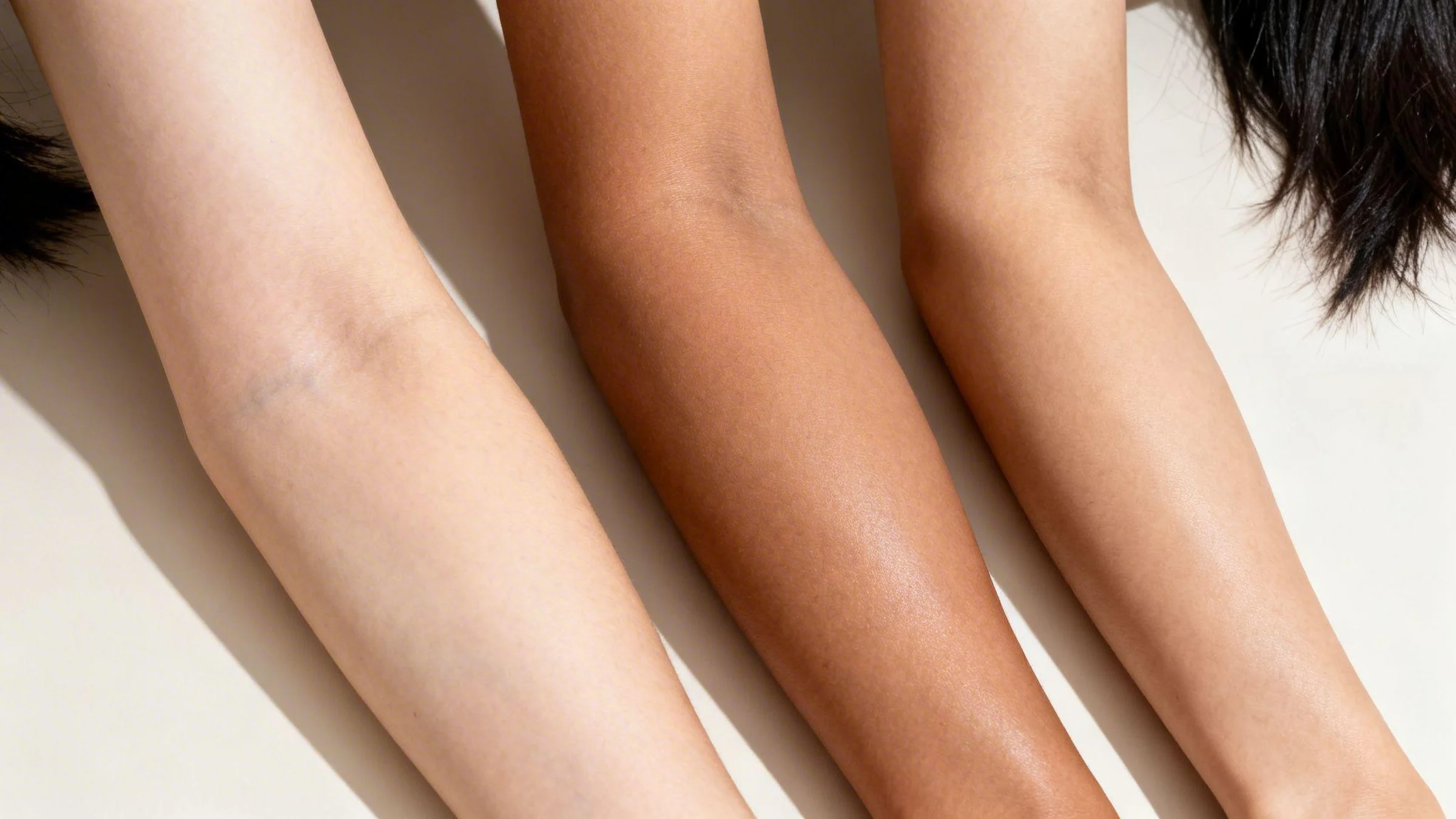
The laser works by detecting the contrast between the colour of the skin and the colour of the hair. The laser beam needs to "see" the dark pigment (melanin) in the hair follicle, but ignore the melanin in the skin itself to avoid damaging it.
-
The ideal (classic) combination: fair skin with dark, thick hair. This is still the best-case scenario, in which the sharp contrast allows the laser to work with maximum precision, and results are fast and effective.
-
Dark skin: in the past, treating dark skin was a significant challenge, because the laser struggled to distinguish between the hair pigment and the skin pigment. Today, thanks to advanced devices with dedicated wavelengths (such as Nd:YAG) and powerful cooling systems, we can safely and effectively treat people with dark skin too, while minimising the risk of side effects.
-
Light, white or red hair: here the laser's effectiveness is limited. It does not "see" white hair, grey hair, red hair or very light blonde hair, because they lack the dark melanin needed to absorb the laser energy. In these cases, there is no point in starting a series of treatments.
Tailoring by body area and hormonal influences
Not every area of the body responds to treatment in the same way. It is important to know the differences in order to have realistic expectations of the process.
-
"Stable" areas: legs, arms, underarms or lower back. In these areas the hair is less affected by hormonal changes, so the response to treatment is usually good, fast and consistent.
-
"Hormonal" areas: the face (upper lip, chin), the abdominal line, chest and shoulders (mainly in men). These areas are sensitive to hormonal fluctuations, and growth there may be more stubborn. Sometimes more treatments or maintenance sessions are needed to preserve the result.
From our experience at Dermacare, the face is the most challenging area to treat. That is why we have developed a dedicated protocol for it that includes a meticulous assessment and close follow-up. This approach allows us to achieve good, even results, even in cases considered complex.
Before starting treatment, especially in hormonal areas, a medical history review is essential. Medical conditions such as polycystic ovary syndrome (PCOS) or taking certain medications can affect the effectiveness of the treatment. It is vital that the treating team knows the full picture in order to tailor a precise treatment protocol that will work for you.
When do you finally see results? The complete laser hair removal timeline
One of the first (and most important) questions we hear at Dermacare is: "OK, but when will I start to see results? After how many treatments will my skin be smooth?". That is an excellent question, and the answer depends on your personal hair growth cycle and the treatment area.
The success of laser treatment is a matter of precise timing. As we explained, the laser beam is effective only when the hair is attached to the root, in the active growth phase (the anagen phase). Since only a certain percentage of hairs are in this phase at any given moment, we have to build a series of treatments in order to "catch" a different group of hairs that has entered the right phase each time.
So how many treatments do you really need?
The exact number varies from person to person, but in most cases a series that brings about a significant reduction in the amount of hair will include between 6 and 12 sessions. Data from the field supports this: in a survey of experts published on the Midrag website, 44% of the experts recommended 5-10 treatments, and a further 46.5% recommended 10-15. You can read more about this in the comprehensive review of the recommended number of treatments.
The good news is that the change begins to show after the first treatments.
Consistency is the key word for success. From our experience at the clinic, we know that about 95% of patients who make sure to complete the series of treatments according to plan and schedule achieve excellent results. Skipping a treatment or stopping the series halfway impairs the effectiveness of the entire process.
Why do some areas require more treatments than others?
It is important to understand that not all areas of the body respond in the same way or at the same pace.
-
Hormonal areas: the face (upper lip, chin), the neck and the abdominal line, and in men also the back and shoulders, are affected by hormonal changes. In these areas growth may be more "stubborn", because hormonal changes can "wake up" dormant hair follicles. Therefore, more treatments may be needed in the series, and sometimes maintenance treatments later on.
-
Stable areas: legs, arms and underarms tend to respond faster and more consistently. Hair growth in these areas depends less on hormonal fluctuations, so the results there are usually more stable.
The key is realistic expectations. The goal is to achieve a permanent reduction of about 80% to 90% in the amount of hair. It is important to remember that the laser is not effective on white hair, grey hair or very light downy hair. Sometimes, even after years, natural hormonal changes (such as pregnancy or menopause) may trigger light, sparse regrowth.
Expected progress over a series of laser treatments
The transition to smooth skin is a gradual process. To make things clear, we have prepared a table summarising what is expected to happen at each stage of the series, based on our experience with thousands of patients.
| Treatment stage | What to expect | Important notes |
|---|---|---|
| After treatments 1-2 | About two to three weeks after the session, the treated hairs will fall out. You will notice initial thinning and slower growth. | This is not new growth, but the natural shedding of hair whose follicle has been damaged. |
| Mid-series (3-6) | The improvement becomes significant. Clear "bald patches" will appear, and the hair that does grow will be thinner and weaker. | The frequency of shaving drops dramatically. This is the stage at which most patients begin to feel the freedom. |
| End of the series (7-12) | You reach the maximum possible result – a reduction of 80%-90% of the hair and mostly smooth skin. | The remaining hair is usually downy, fine and almost invisible. |
| Maintenance treatments | To preserve the result for years, one or two maintenance treatments a year are recommended. | This is a short treatment designed to "neutralise" individual follicles that have woken up over time. |
It is important to remember that the table represents an average, and the individual pace can vary according to genetics, skin and hair tone and the treatment area. But in the end, with patience and consistency, almost everyone achieves the desired result.
How do you prepare for treatment, and how do you maintain the results?
The success of a series of laser hair removal treatments is a joint effort. It depends not only on advanced equipment and the skill of the team, but also on you following the instructions. Proper preparation before each session and caring for the skin afterwards are the keys to achieving the maximum result and keeping the skin safe.
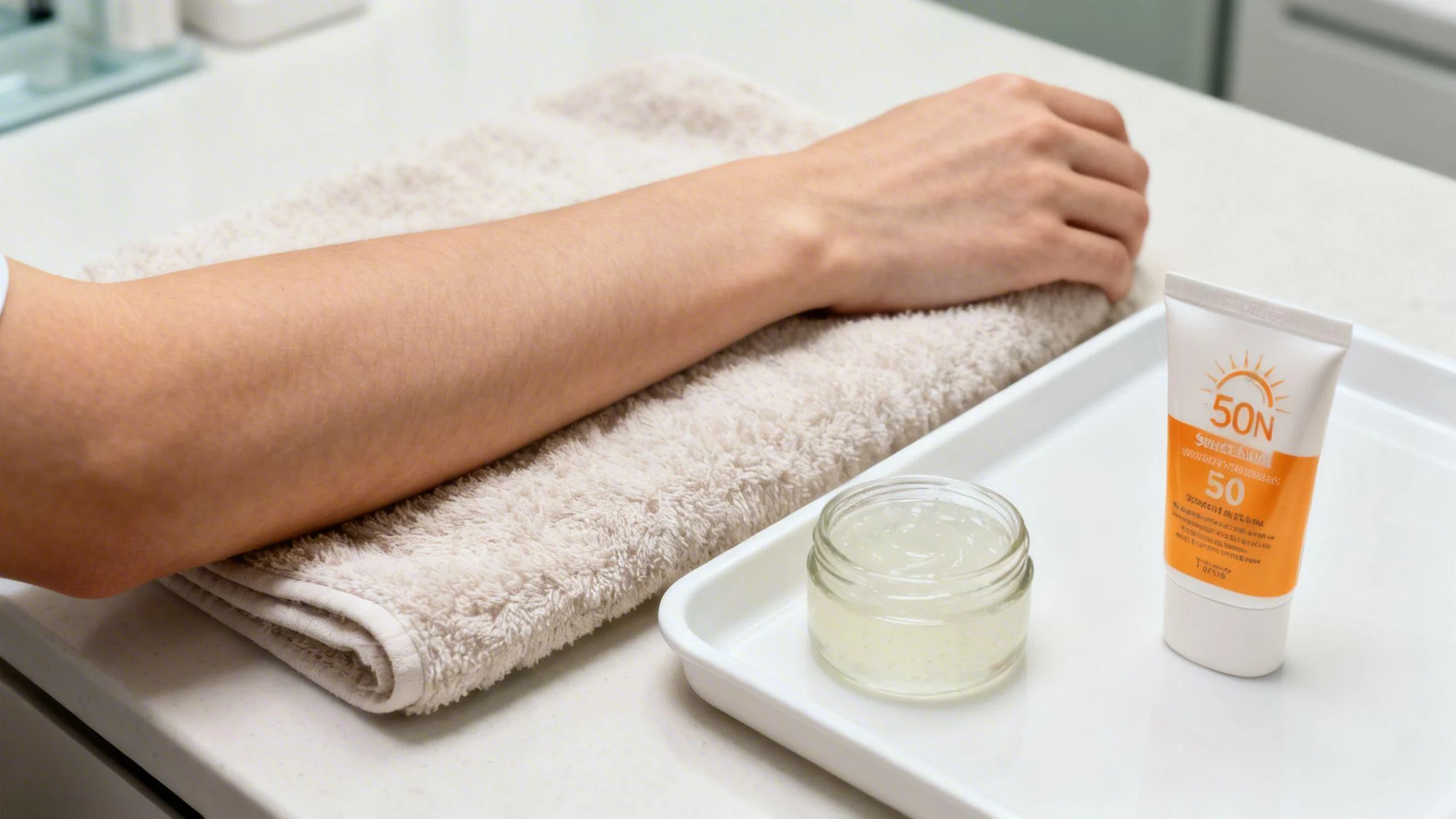
From our experience at Dermacare, we recommend coming to the treatment after shaving the area as instructed, avoiding sun exposure in the days before the treatment, not waxing or plucking between treatments, and updating us about any changes in your health or medications. This preparation is not a "request" – it is critical for the treatment to be precise, safe and effective.
Critical instructions before treatment
To ensure the laser works effectively and safely, there are a few golden rules that must be followed:
-
Shaving the area: shave the treatment area about 24 hours before your appointment. Shaving ensures that the laser beam concentrates on the root beneath the skin and is not "wasted" on the outer part of the hair, which could also cause burning.
-
No plucking whatsoever: it is strictly forbidden to remove hair by waxing, threading, tweezing or any other method that pulls the hair out by the root. If you do, the laser will not find its target and the treatment will not be effective.
-
Avoid sun exposure: this is perhaps the most important rule. Avoid sun exposure or tanning (including sunbeds) on the treatment area completely, for at least two weeks before and two weeks after each treatment. Tanned skin "confuses" the laser and significantly increases the risk of burns and pigmentation spots.
-
Clean skin: come to the treatment with completely clean skin – no creams, deodorant, perfume or any other product.
Important instructions after treatment
The skin has undergone a targeted treatment and now needs rest and soothing. Slight redness or mild swelling around the hair follicles is normal, and even a good sign that the treatment was effective. These effects usually pass within a few hours.
The key to a quick, comfortable recovery is moisture and protection. It is important to apply a soothing aloe vera-based cream or another product we have recommended several times a day for the first 2-3 days.
What else is important to do (or not do) after the treatment?
-
Avoid very hot showers, saunas or jacuzzis in the first 24 hours.
-
Avoid strenuous exercise that causes heavy sweating in the first 24 hours.
-
You must use sunscreen with a high protection factor (at least SPF 30) on areas exposed to the sun throughout the series of treatments.
-
After the treatment, the damaged hairs will begin to fall out naturally within two to three weeks. This is an excellent sign that the treatment is working!
Want to learn more about the right skincare routine? Read about proper skin care after hair removal in the detailed guide we have prepared.
Treating challenging areas and personalised protocols
One of the important principles you learn with experience in laser hair removal is that not every area of the body responds the same way. Personalisation is not a marketing slogan, but a real clinical need. From our experience at Dermacare, a "one treatment for everyone" approach is simply not effective enough, especially when it comes to complex areas of the body.
Some areas, such as the legs and arms, tend to respond relatively predictably. Other areas, by contrast, are a real challenge and require far more from the practitioner than simply operating the device.
The main challenge: the face
Of all the areas we treat, the face – and especially the chin, jawline and upper lip in women – is without doubt the most challenging. The main reason is that the hair there is directly and strongly affected by hormonal changes.
In women, even slight hormonal fluctuations can "wake up" dormant hair follicles and cause new growth, or turn downy hair darker and coarser. Therefore, the response to laser in these areas may be less even and slower. This is exactly where the importance of a personalised treatment protocol comes in.
Our solution at Dermacare is a dedicated protocol that we developed especially for hormonal areas. We start with a thorough assessment before the first treatment, review the patient's medical and hormonal background, and set realistic, clear expectations. Thanks to this approach, we are able to improve results significantly and avoid situations of partial response.
Our tailored protocol includes several critical components:
-
In-depth preliminary assessment: examining the skin type, the thickness and distribution of the hair, and asking about the hormonal background.
-
Dynamic parameter adjustment: from treatment to treatment, we change the laser intensity and pulse duration according to the response of the skin and hair.
-
Closer follow-up: sometimes we schedule sessions at varying frequencies, according to the individual rate of response.
-
Clear expectation setting: we explain in advance the importance of persistence and consistency, and the possible need for maintenance treatments.
Dealing with sensitive skin and non-standard responses
Beyond hormonal areas, there are patients with particularly sensitive skin or who do not respond as expected to the standard protocol. In such cases, continuing on the same path may lead to dissatisfaction and even side effects.
When we identify such a case, we make personalised adjustments that include changing the intensities, setting more precise intervals between treatments, or even dividing the treatment areas differently. The result is always a gradual, clear improvement in growth, a slower rate of growth and, above all, a satisfied patient.
The personal approach allows us to tailor the treatment to other delicate areas too, for example in laser hair removal in the intimate area, where skin sensitivity is at its highest. Ultimately, our goal is not just to "remove hair", but to do so in the safest, most effective and most tailored way for each and every person.
In summary: the path to smooth skin begins with the right decision
Laser hair removal is much more than a beauty treatment – it is an investment in quality of life and self-confidence. For the investment to pay off, it is important to choose a professional clinic that places an emphasis on precise assessment, personalisation, advanced technology and close support. The result depends not only on the device, but mainly on the experience and skill of the treating team. Following the instructions and persevering with the series of treatments will ensure that you achieve the best result for you – smooth, pleasant and healthy skin for the long term.
Want to understand exactly what is right for you? The Dermacare team will be happy to check your skin and hair type, build a personal treatment plan and set realistic expectations – professionally and precisely. To book a consultation and assessment, you can contact us here.
Written by Tammy Yusupov – a laser hair removal expert since 2010 and owner of the Dermacare clinic (Israel and Austria). With more than 10,000 patients and advanced training in Alma Lasers technologies. Member of the Israeli Society of Aesthetic Medicine.
Frequently asked questions
At what intervals are laser hair removal treatments carried out?
The ideal interval between treatments is about 4-8 weeks, depending on the hair growth cycle.
What is the definition of permanent hair removal?
The term "permanent hair removal" is defined by the FDA (the US Food and Drug Administration) as a significant reduction in hair for a period longer than the hair growth cycle in the treated area. The oldest method of achieving permanent hair removal is needle epilation. However, in recent years laser and IPL technologies have been used increasingly for hair removal, with great success. The SHR method, which uses four wavelengths, is the most advanced innovation in laser hair removal technology.
Can hair removal be performed during pregnancy?
We recommend waiting to start treatment until 2-3 months after giving birth. During this period hair growth stabilises, which means that a larger amount of hair will be visible, making the treatment more effective. We do not perform treatments during pregnancy. Although there is no evidence that the strong light affects the foetus, we avoid treatments during this period as a precaution. We will be happy to help with any further questions. Contact us and book a free consultation!
How long does a hair removal treatment take?
The duration of the treatment depends on the size of the treatment area. It ranges from 5 minutes for small areas to an hour for a full-body treatment.
For full information on the process, indications and prices: laser hair removal.
Frequently asked questions
The sensation during the treatment is not defined as intense "pain", but rather as momentary discomfort. Most patients describe it as a series of quick tingles or mild burning, similar to a small snap of a rubber band on the skin. The sensation passes immediately when the pulse ends. Technology has advanced significantly, and the advanced devices we work with have built-in cooling systems that cool the skin while the laser is working, which makes the experience perfectly tolerable.
The correct professional term is "permanent reduction" of hair, not "permanent removal". In practice, after completing a full series of treatments, the vast majority of treated hair follicles (around 80%-90%) will not grow new hair. The result is smooth skin for years. However, our body is dynamic, and significant hormonal changes (such as pregnancy or menopause) may "wake up" some dormant follicles. Therefore, we recommend a maintenance treatment, once or twice a year, to preserve the result over time.
No, and this is a critical point. The laser works by detecting the dark pigment (melanin) in the root of the hair. Therefore, the laser is not effective on hair that has no dark pigment, such as white or grey hair, very light blonde (downy) hair, and red hair. At the assessment session we examine the hair colour and determine how suitable it is.
This is an excellent question, because there is common confusion between the two. Although both are light-based methods, they are different technologies. A laser uses a focused, concentrated beam of light of a single wavelength, aimed precisely at the hair follicle. IPL (Intense Pulsed Light), by contrast, spreads a wide range of wavelengths in a diffuse way, like a camera flash, and is therefore less focused and less powerful. In most cases, laser treatment is considered more effective and precise, and may require fewer treatments to achieve a similar result.
Choosing the right clinic is the most important step. Make sure the treatment is performed by a qualified and experienced team, that the equipment is advanced and that the process begins with a personal, professional assessment session. Ask about the team's experience, the type of technology, price transparency and realistic expectation-setting. A price that is too cheap may indicate compromises in safety and quality.