In brief
- Laser hair removal for men significantly reduces hair growth over the long term and also helps with ingrown hairs and irritation.
- Male hair is thicker and denser, with deeper follicles, so a personalised protocol is needed rather than simply increasing the intensity.
- The realistic goal is a reduction of around 80%-90% in the amount of hair, not 100% removal for life.
- An average series includes 8 to 12 sessions, at intervals of 6-8 weeks on the body and 4-6 weeks on the face.
- After the series, a single maintenance treatment once every year or two is recommended, and white, grey, red or light blonde hair does not respond to the laser.
Laser hair removal for men is an effective solution for a significant, long-term reduction in hair growth in various areas of the body. The treatment is based on advanced technology that damages the hair roots in a controlled way, making it possible to achieve smoother skin, improve everyday comfort and treat problems such as irritation and ingrown hairs. At the Dermacare clinic, we specialise in tailoring a precise treatment protocol to the unique characteristics of male skin and hair.
Why do men choose laser hair removal?
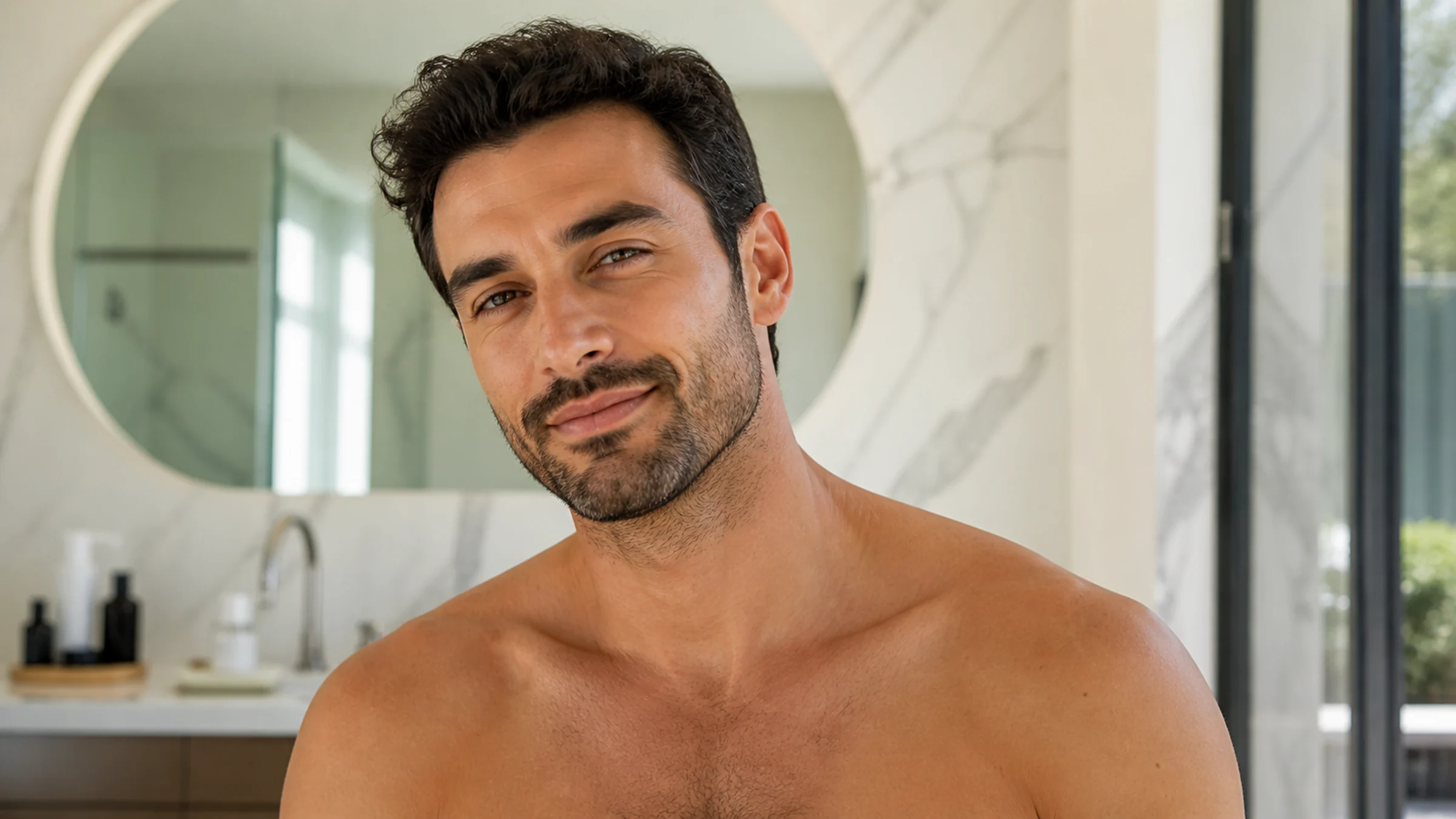
Demand for laser hair removal for men is constantly rising, and the reasons are varied and practical. Unlike in the past, the treatment is no longer seen as exclusively "feminine", but as an integral part of a modern male grooming routine that provides an effective, long-term solution.

From our experience at the Dermacare clinic, the main motives that lead men to choose the treatment fall into several clear categories.
Comfort and solutions to everyday problems
For many men, choosing laser stems from the need to solve practical problems that affect their quality of life:
- Ingrown hairs and irritation (folliculitis): Frequent shaving, mainly around the neck and beard line, causes many men to suffer from spots, redness and chronic inflammation. The laser tackles the problem at the root by reducing hair density, thereby reducing the need for frequent shaving.
- Hygiene and comfort, especially in the Israeli climate: Dense hair on the back, chest or underarms can increase sweating and cause discomfort. Reducing the amount of hair contributes to a fresher, cleaner feeling throughout the day.
- Comfort for athletes: For men who play sport, a smoother body makes it easier to wear tight sportswear, reduces friction and irritation, and even makes physiotherapy treatments and massages more effective.
Aesthetics and improved self-confidence
For many men, dense hair in areas such as the back, shoulders or nape of the neck is a source of insecurity. The treatment makes it possible to achieve a more aesthetic and well-groomed appearance, leading to a natural boost in self-confidence – at the beach, at the pool and in intimate situations.
An example from the clinic: A patient came to us with very dense hair on his back and shoulders, which caused him constant discomfort and affected his self-confidence. After a personalised series of treatments, there was a significant reduction in hair density and a marked improvement in the appearance of the area. For him, the change was more than aesthetic – he felt freer and more at ease with his body.
It is important to note that the goal is not the same for everyone. Some patients aim for almost completely smooth skin, while others prefer controlled thinning for a more natural look. With a personalised treatment protocol, the result can be controlled and tailored to the specific goal. You can read more about advanced aesthetic treatments for men in other guides on our website.
How does the laser work, and what is different about treatment for men?
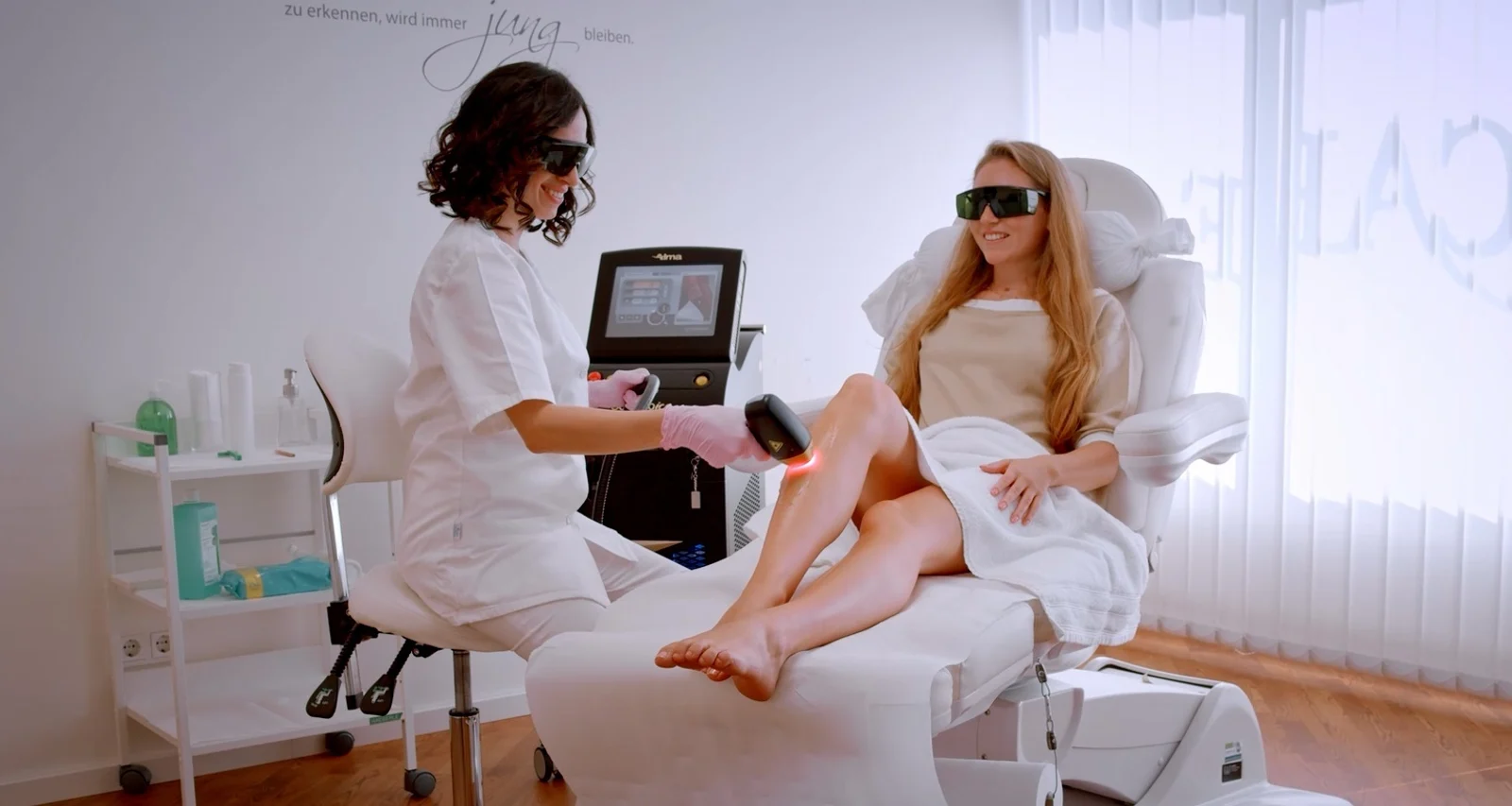
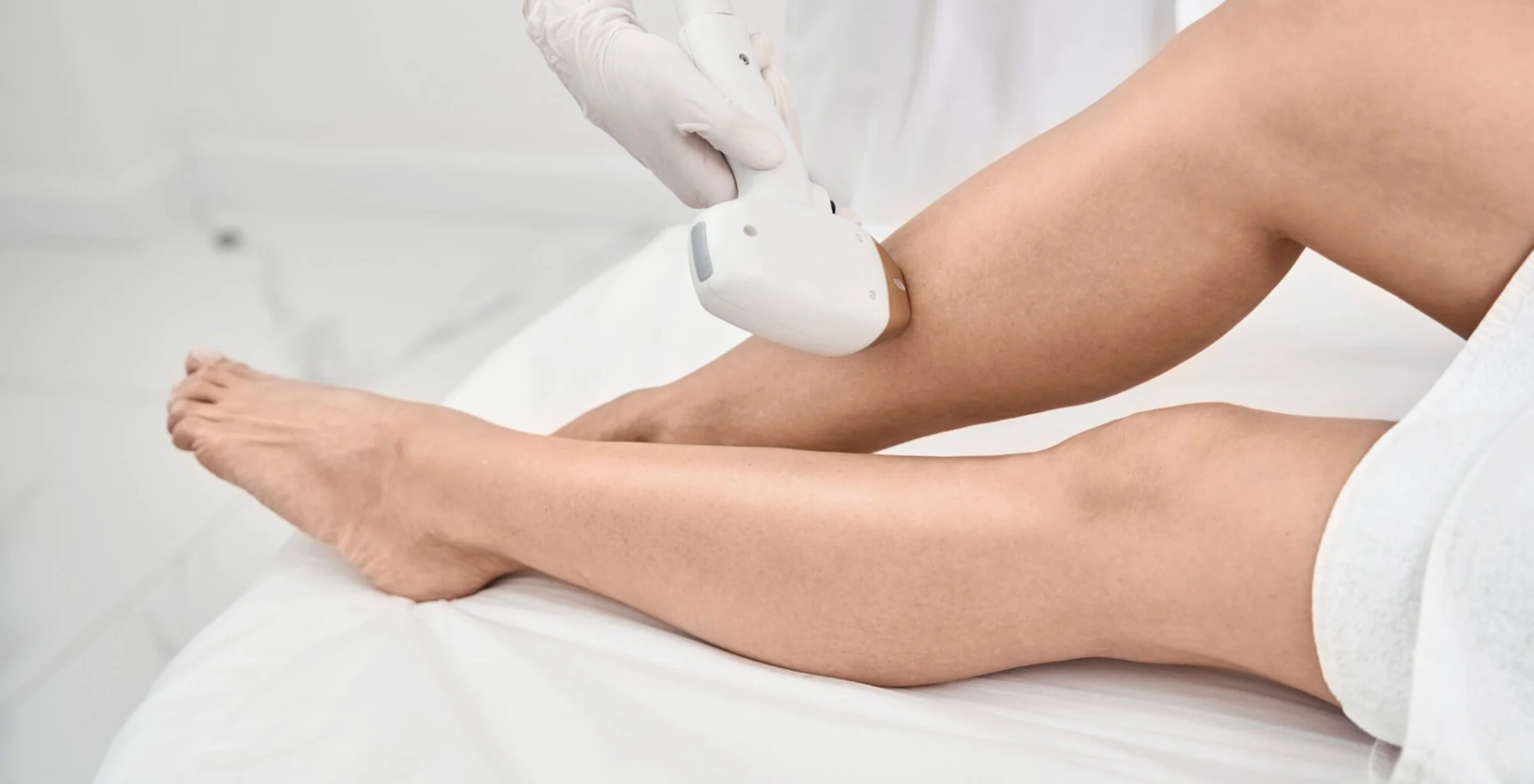
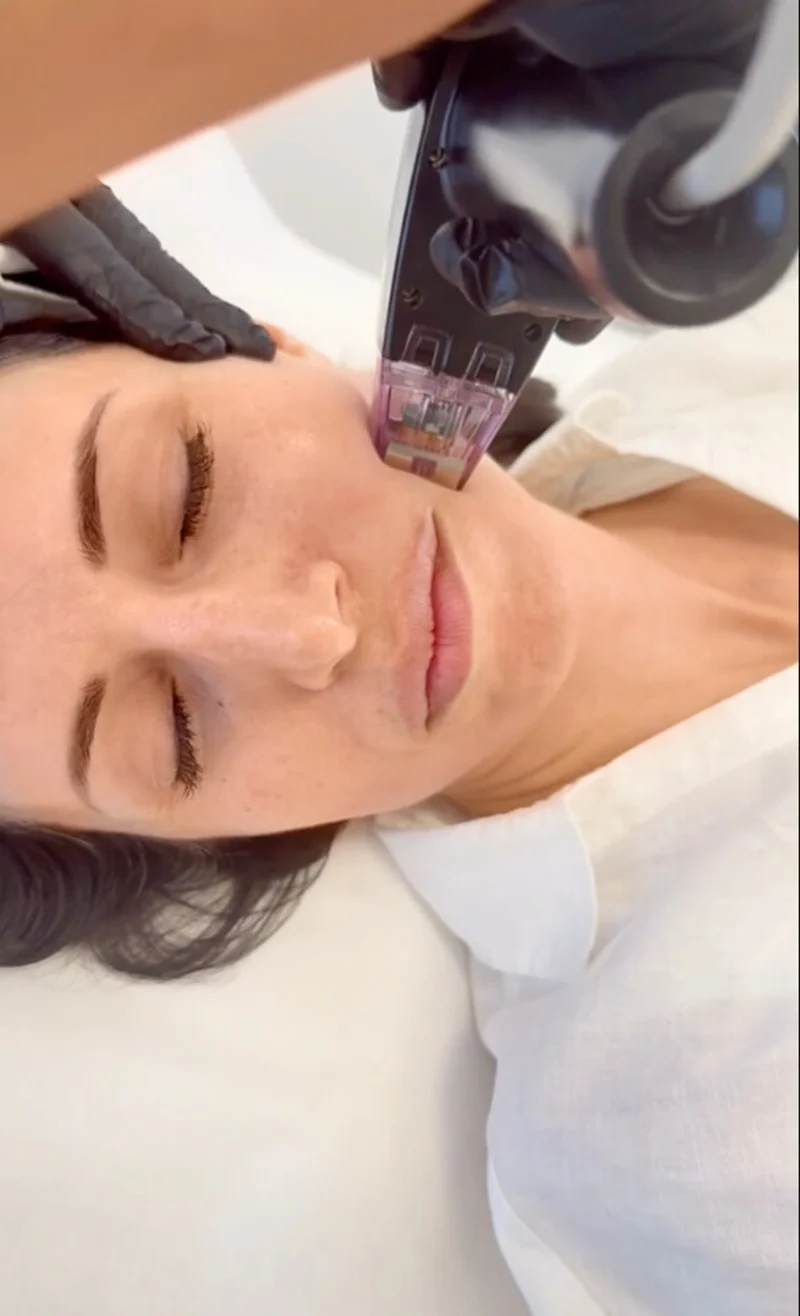
To understand the effectiveness of laser hair removal for men, it is important to know the mechanism behind the technology. The laser device emits a concentrated beam of light that targets the dark pigment in the hair – melanin. The melanin absorbs the light energy, which is converted into focused heat. The heat travels down the hair until it reaches the root, the hair follicle, and damages the growth mechanism and the blood vessels that nourish it. As a result, the follicle's ability to grow a new hair is significantly weakened or destroyed.
Why is a series of treatments needed?
The laser is only effective when the hair is in its active growth phase (the "anagen" phase). At any given moment, only a certain percentage of hairs (usually around 15%-20%) are in this phase. The remaining hairs are in the "resting" or "shedding" phases, and are therefore not connected to the follicle in a way that allows the heat to reach it. This is why a series of treatments at regular intervals is essential. In each treatment, we target a different group of hairs that has entered the active growth phase. In this way, we gradually thin the hair until the desired result is achieved. For more information, read about how laser hair removal works.
The adjustments required for treating men
The same treatment protocol cannot be used for women and men. Male hair has unique characteristics, and ignoring them can lead to ineffective treatment or side effects.
What characterises male hair?
- Thickness and coarseness: Male hair, especially on the back, chest and shoulders, tends to be thicker and coarser.
- Follicle depth: The hair roots are located deeper in the layers of the skin.
- High density: The number of hairs per square centimetre is usually greater.
- Skin thickness: Men's skin tends to be thicker.
At Dermacare, we know that the secret to success is not simply "turning up the intensity". The treatment requires building a personalised treatment protocol. We calibrate all the device parameters – intensity, pulse duration, cooling level and time intervals – to tailor them precisely to the patient.
This adjustment ensures that the energy penetrates to the required depth and is effective, while keeping the skin safe. Our experience shows that around 75%-85% of the men we treat complete the full series of treatments, because they see clear results from the very first sessions.
Who is the treatment suitable for? Personal adjustment to male skin and hair
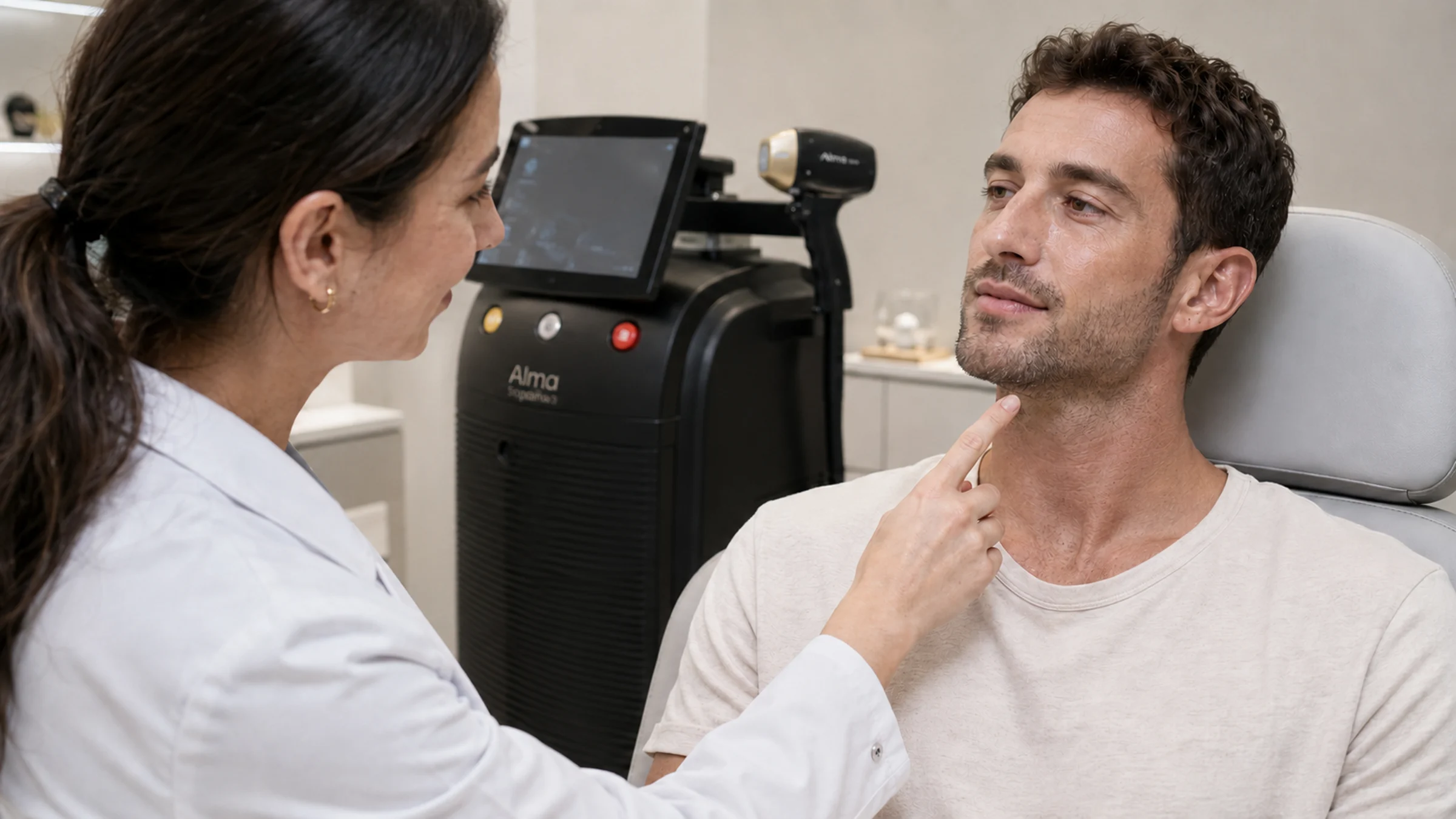
The success of the treatment depends to a large extent on the assessment and personal adjustment stage. At Dermacare, this is the first and most important stage, allowing us to build a precise plan to achieve the best results for you.
Matching skin tone and hair colour
The basic principle of the laser is based on the contrast between skin tone and hair colour. The ideal combination is fair skin and dark hair. In this case, the laser beam easily identifies the dark hair, and all the energy is absorbed in a focused way in the follicle, without damaging the surrounding skin.
However, advanced technologies now allow us to treat a wider range of skin tones effectively and safely, including darker ones, by using specific wavelengths and advanced cooling systems that protect the skin.
When is the treatment unsuitable or less effective?
We believe in full transparency about the limitations of the treatment. There are cases in which laser hair removal is not the right solution:
- Light hair: White, grey, red or light blonde hair lacks the melanin pigment that the laser needs, so the treatment will not be effective.
- Medical conditions: Active skin conditions in the treatment area (such as psoriasis), a history of keloid scars, or the use of medications that increase sensitivity to light require careful consideration, and sometimes medical approval.
During the consultation at Dermacare, we take a comprehensive medical history and examine the skin and hair. Our aim is to make sure that the treatment will not only be effective but, first and foremost, safe for you.
Managing expectations: the goal is a significant reduction
One of the most important topics in the consultation is setting realistic expectations. The term "permanent hair removal" can be misleading. The realistic and accepted goal is a permanent reduction of around 80%-90% in the amount of hair in the treated area. The little hair that remains, if any, will usually be finer, lighter and downier.
No professional clinic will promise 100% removal for life. Natural hormonal changes that occur in the male body over the years can stimulate the growth of new hair follicles. Therefore, after completing the series of treatments, maintenance treatments may be needed once every year or two to preserve the result.
How many treatments are needed and when will you see results?
The question "how many treatments do I need?" is one of the most common, and the answer depends on several personal factors:
- Treatment area: Areas with dense, deep hair (such as the back or chest) usually require more treatments than areas with sparser hair.
- Hair characteristics: The density, thickness and colour of the hair directly affect the number of sessions required.
- Skin tone: A clear contrast between skin colour and hair colour allows more effective treatment and shortens the process.
- Hormonal profile: The male hormonal system affects hair growth cycles.
From our experience, an average series of laser hair removal for men usually includes between 8 and 12 sessions.
Building the result over time
The result builds up gradually from session to session. Consistency and keeping to the correct intervals between treatments are critical to success.
- Body areas (back, chest, abdomen): The recommended interval is usually between 6 and 8 weeks.
- Facial area (nape of the neck, beard line): Hair grows faster, so the interval will be shorter, between 4 and 6 weeks.
Most patients start to see a change after the second or third treatment, with a noticeable reduction in hair density and slower growth. From treatment to treatment, the area becomes smoother, until a reduction of around 80%-90% in the amount of hair is achieved.
What does the result look like over time? After the first treatments, most men report hair shedding and slower growth. The hairs that do grow back become finer and lighter. At the end of the series, there is a significant reduction in the amount of hair and the skin stays smooth over the long term.
The importance of maintenance treatments
After completing the series of treatments, and to preserve the result for years to come, we recommend maintenance treatments. Usually a single treatment once a year or every two years is enough. These short treatments ensure that your investment is preserved over the long term.
How to prepare your skin for treatment and what to do afterwards
The success of laser hair removal for men depends not only on the technology and the practitioner, but also on you. Following simple instructions before and after each session ensures effective, safe treatment and quick recovery.
Proper preparation before treatment
Preparation begins several weeks before the first session, with the aim of bringing the skin and hair into optimal condition for the laser.
- Avoid plucking hair: Stop using wax, epilators or tweezers at least 3-4 weeks before the treatment. The laser must be able to "see" the hair root in order to work.
- Shave the area: Shave the treatment area with a razor about 24 to 48 hours before the session. This way, the laser energy will be concentrated on the root and not wasted on burning hair on the surface of the skin.
- Avoid sun exposure: This is a golden rule. Avoid sun exposure and tanning beds for at least two weeks before the treatment. Tanned skin can "confuse" the laser and increase the risk of side effects.
- Clean skin: On the day of treatment, make sure the treatment area is completely free of creams, deodorant or perfume.
Aftercare instructions
Immediately after the treatment, you may feel a slight warmth and see redness around the hair follicles, which indicates that the treatment has been effective. These effects usually pass within a few hours.
Following the instructions below will maximise the results and prevent complications. From our experience, these are the most important recommendations, based on trends in the laser hair removal market in Israel and our clinical experience.
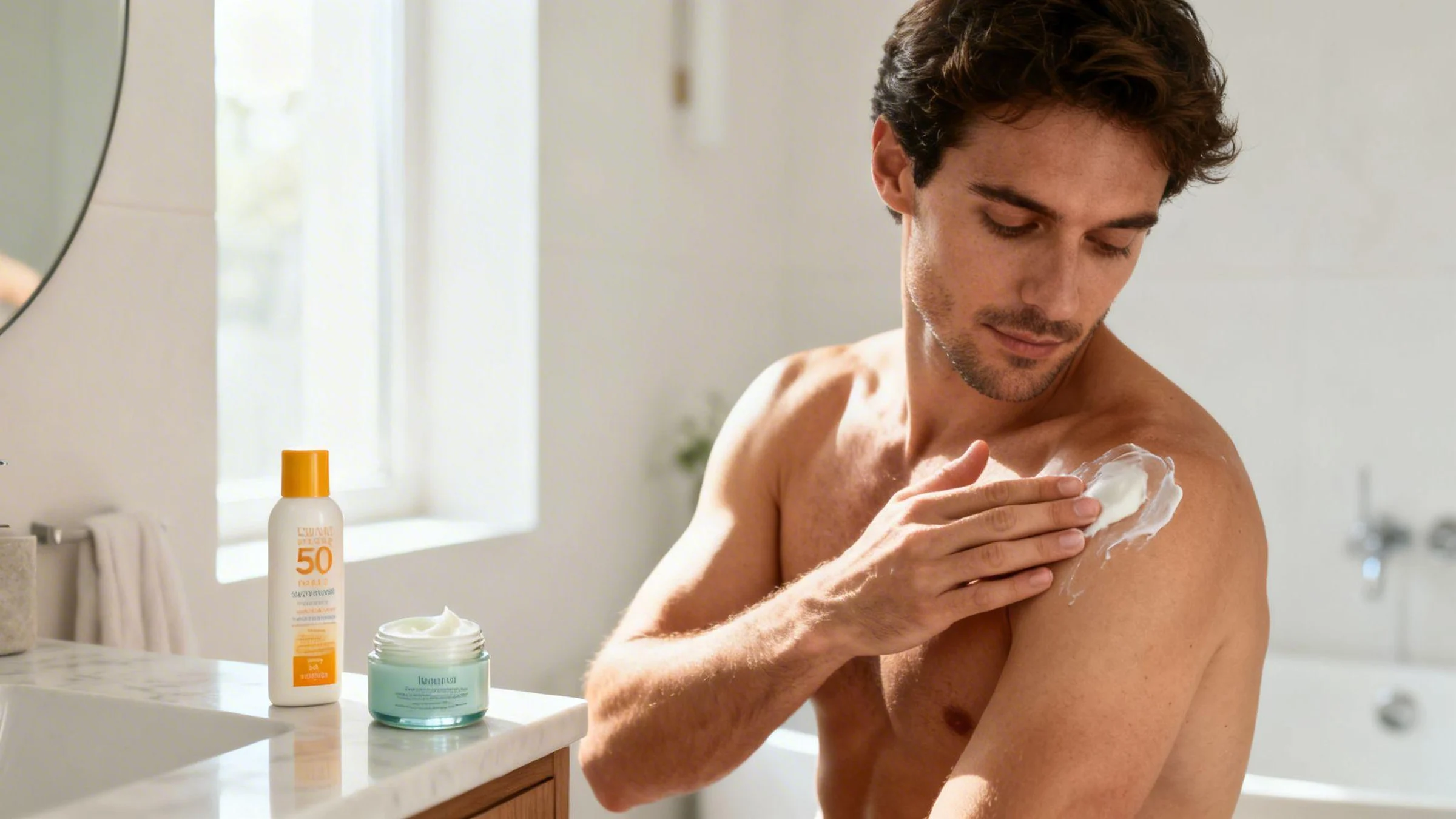
- Soothing the skin: A soothing gel is applied immediately after the treatment. It is recommended to continue applying a gentle, alcohol-free moisturiser over the following days.
- Avoiding heat: In the first 24 hours, avoid hot showers, saunas or jacuzzis.
- A break from physical activity: It is recommended to take a day or two off from strenuous exercise (24-48 hours), as sweat can irritate the skin.
- Sun protection: This is the most important point. Make sure to use a high-factor sunscreen (SPF 30 or higher) on any treated area exposed to the sun throughout the entire series of treatments.
Frequently asked questions
The intensity of the sensation depends on hair density, hair thickness and personal sensitivity. Because men usually have thicker and denser hair, the sensation may be slightly more noticeable. However, our advanced devices are equipped with powerful cooling systems that neutralise the sensation of heat and significantly reduce discomfort. Most patients describe the sensation as light, fleeting tingling.
Absolutely. This is one of the most popular requests. With precise planning, the laser can define a clean, symmetrical beard line on the cheeks and neck. It is also possible to thin the hair on the neck to get rid of irritation and spots caused by shaving, and enjoy a well-groomed look without giving up the beard.
The main difference is in the level of precision, and this is a critical parameter when treating male hair.
- Laser: Sends a single, concentrated and precise beam of light (a single wavelength), penetrating deeply and directly to the root of the hair. This method is considered more effective and safer for thick, deep male hair.
- IPL (Intense Pulsed Light): Works with flashes of light in a range of wavelengths. The energy is more dispersed and less focused, so its effectiveness on male hair may be lower.
At Dermacare we work exclusively with advanced laser technology to ensure optimal results and maximum safety.
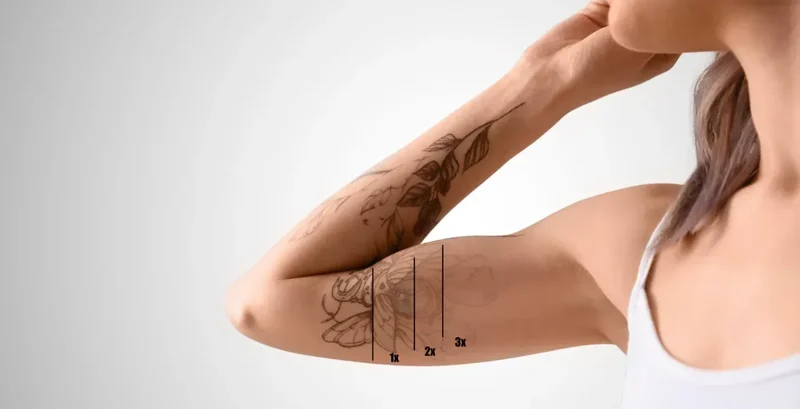
The answer is an unequivocal no. Treating tattooed skin directly is forbidden. The laser beam detects dark pigment and does not distinguish between the melanin in hair and the ink in a tattoo.
Laser treatment over a tattoo can cause burns, blisters, scarring and destruction of the tattoo. During the treatment, the practitioner will make sure to cover the tattoo thoroughly and keep a safety distance.
The male body, influenced by the hormone testosterone, continues to produce hair. The initial series of treatments destroys about 80%-90% of the active follicles, but "dormant" follicles always remain that may wake up in the future. Maintenance treatments, once or twice a year, are intended to treat those individual hairs that have regrown and to preserve the smooth result over the years.
Want to understand exactly what suits you? The Dermacare team will be happy to assess your skin and hair type, match the right treatment and build a personal plan with realistic expectations – in a professional and precise way. To book a consultation and personal tailoring, you can get in touch here.