
In brief
- Laser hair removal offers a permanent reduction of about 80%-90% of hair, unlike shaving, waxing and creams, which are temporary solutions.
- Waxing lasts between two and four weeks, shaving lasts a day or two, and both can cause irritation and ingrown hairs.
- The most common areas for men are the back and shoulders, chest and abdomen, and the nape and neck, and there is also growing demand for the face, arms, legs and intimate areas.
- After a course of treatments, usually only a single maintenance treatment is needed once every year or two.
- You can choose complete removal for a smooth look or gentle thinning for a natural look, and everything is personalised.
Yes, hair removal for men has long stopped being taboo. What started as a niche treatment for athletes has in recent years become an integral part of the grooming routine of many men in Israel – and for good reason. At Dermacare we see it every day: more and more men are looking for an effective solution to replace tedious shaving, painful waxing or strong-smelling creams.
Switching to laser hair removal is not just a matter of convenience. It offers an advantage that other methods simply cannot provide: a significant, long-term reduction in hair growth. The result is less hassle, less skin irritation, fewer spots and almost no ingrown hairs. For many, it is simply a real upgrade in quality of life.
Why are more and more men choosing hair removal?

Where the subject was once reserved for quiet conversations, today the picture is completely different. Men of all ages and from all walks of life come to our clinic to find a solution for body hair, and it has become legitimate and healthy to talk about it. This change in perception makes the treatment a natural part of the desire to feel and look better.
The motives behind the male revolution
The desire for smooth skin is not just a passing trend, but a practical decision driven by real motives that improve quality of life. From our experience at Dermacare, these are the main reasons that lead men to take the step:
-
Aesthetics and self-confidence: Many men simply feel better about themselves with smooth skin – at the beach, at the pool or in intimate situations. A well-groomed, clean look boosts self-image.
-
Comfort and hygiene: Dense hair, especially on the back, shoulders or chest, can cause excessive sweating and constant discomfort. Hair removal solves this at the root, giving a fresh, clean feeling throughout the day.
-
Saving time and hassle: Shaving every day? Painful waxing every few weeks? All of this takes time and effort and usually comes with a "bonus" of spots, irritation and ingrown hairs. Laser offers freedom from all this hassle.
-
Improved sports performance: For athletes – swimmers, cyclists or bodybuilders – smooth skin is much more than aesthetics. It may improve performance (aerodynamics in the water or on the bike), make massages and physiotherapy treatments easier and highlight muscle definition.
Men's move to hair removal is not just a fashion. It is a fundamental change in the way men perceive self-care. It expresses a desire to feel more comfortable in their bodies, save valuable time and enjoy a look that boosts confidence.
This shift is clearly felt in Israel. While in the past only specific groups of men sought treatment, data from leading clinics show a sharp rise in demand. Israeli men today no longer hesitate to remove hair from areas once considered "taboo", such as intimate areas, which shows that awareness of male aesthetics and the normalisation of the treatment are here to stay.
Comparing hair removal methods for men
So you have decided it is time to get rid of unwanted hair, but you are not sure where to start. Shaving? Waxing? Laser? The market is flooded with options, and each one promises something different. To bring some order to the chaos, let's break down the main methods, talk about their real advantages and disadvantages, and help you understand which solution is right for you.
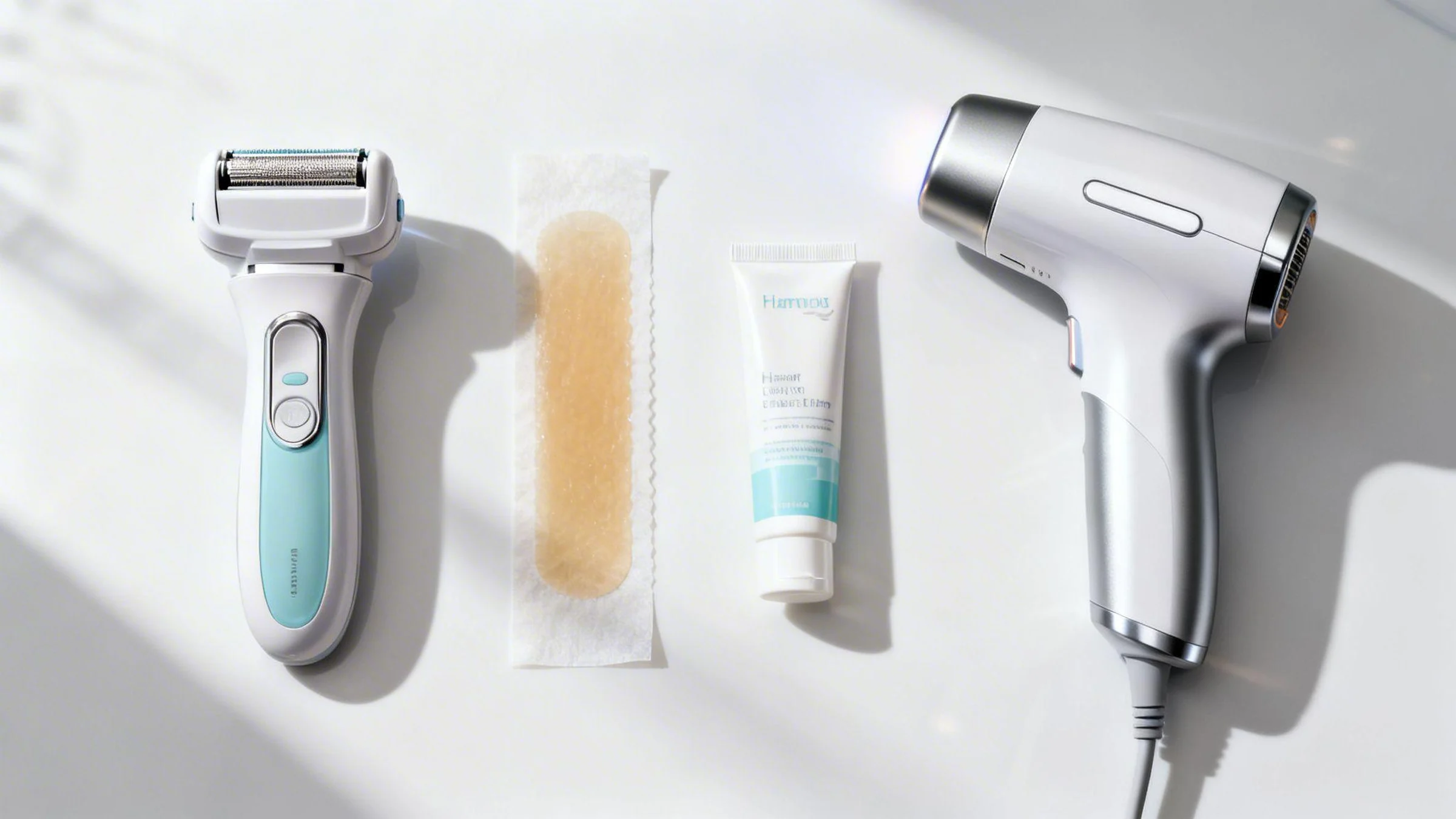
Ultimately, the choice depends on what you are looking for. Do you need a quick fix for a specific event, or do you want to invest in smooth skin and peace of mind for years to come? The differences between the methods are huge, and understanding them is the key to a decision you will be happy with.
Shaving – a quick fix with a short shelf life
Shaving is without doubt the most familiar and accessible method. A razor, a little foam and a few minutes in front of the mirror – and you have smooth skin. But this advantage is also its biggest disadvantage.
The razor only cuts the hair above the surface of the skin. The result? Within a day or two the hair comes back, and it usually feels pricklier and sharper. In the long run, this becomes a daily chore, often accompanied by irritation, cuts, spots (folliculitis) and dry skin, especially in delicate areas.
Waxing – smoother, but more painful
Waxing pulls the hair out from the root, so the result lasts much longer than shaving – between two and four weeks. That sounds great, but it comes at a price: pain. In areas with thick, dense hair, such as the back or chest, the experience can be anything but pleasant.
Beyond the immediate pain, waxing can cause redness, irritation and, in many cases, ingrown hairs – when the new hair struggles to grow out and causes inflammation. Add to this the cumulative cost of regular treatments, and you realise that this is a high-maintenance solution.
Hair removal creams – the chemical solution
Hair removal creams offer a pain-free solution. They work with chemicals that dissolve the hair protein (keratin) above the surface of the skin. In practice, the result is very similar to shaving: it is temporary, and the hair grows back within a few days.
The main disadvantage is the chemicals themselves, which can cause allergic reactions, burning and irritation, especially for people with sensitive skin. And yes, let's admit it, the smell of most of these creams is not something you would want as an aftershave.
Food for thought: All the temporary methods – shaving, waxing and creams – require constant effort. When you calculate the cumulative cost over the years (in money, time and suffering from side effects), they become an increasingly poor-value solution for anyone looking for a real, lasting result.
Laser hair removal – the smart long-term investment
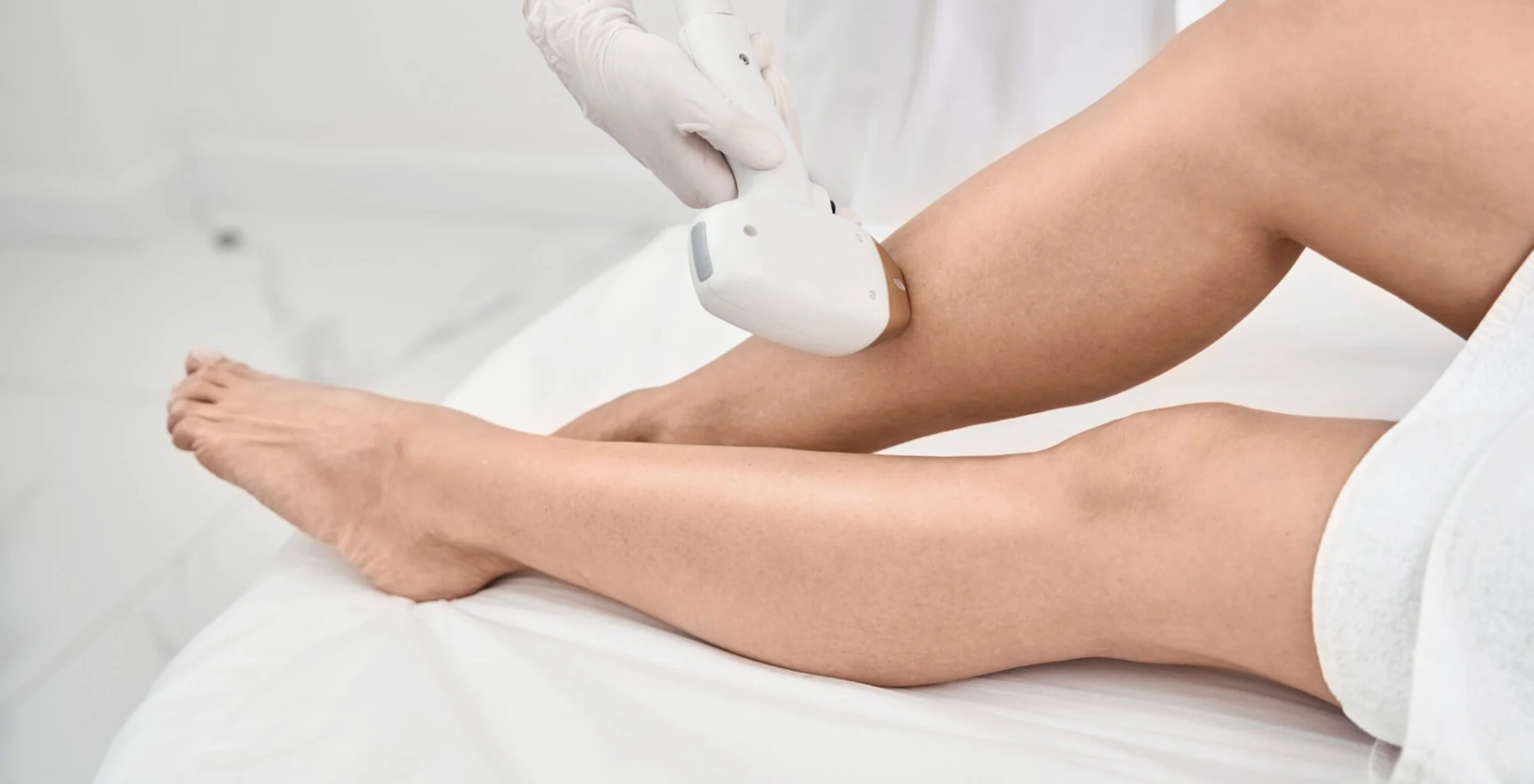
Laser hair removal works completely differently. Instead of treating the hair on the surface of the skin, the laser beam penetrates directly into the follicle, heats it and impairs its ability to grow new hair. The result is not just removal, but a permanent and significant reduction of about 80%-90% of hair.
What does this mean in practice?
-
Peace of mind for years: After a course of treatments, most of the hair simply does not come back. Usually only a single maintenance treatment once every year or two is needed to keep the skin smooth.
-
Tolerable pain: The sensation is usually described as small, fleeting prickles. At the Dermacare clinic, we use advanced cooling systems that make the treatment much more comfortable and tolerable.
-
Fewer side effects: Laser is the most effective solution for preventing ingrown hairs and spots. The mild redness after the treatment fades within a few hours.
-
A worthwhile investment: True, the initial cost is higher than a single waxing session. But calculated over the long term, you save years of paying for waxing or razors and, above all, you save time, pain and hassle.
A quick comparison of hair removal methods
To help you see the full picture, we have gathered the key data in a table.
This table summarises the main advantages and disadvantages of each method to help you understand which one best suits your needs.
| Parameter | Laser hair removal | Waxing | Shaving | Hair removal cream |
|---|---|---|---|---|
| Durability of the result | Permanent reduction (80%-90%) | 2-4 weeks | 1-2 days | 2-4 days |
| Pain level | Low to moderate (prickling sensation) | High | Low (risk of cuts) | Painless (risk of burning) |
| Treatment time | 10-60 minutes (depending on the area) | 15-45 minutes | 5-15 minutes | 5-10 minutes |
| Side effects | Temporary redness, prevents ingrown hairs | Redness, pain, ingrown hairs | Irritation, spots, cuts, dryness | Irritation, allergic reaction, smell |
| Long-term cost | Best value | High (cumulative) | Moderate (cumulative) | Moderate (cumulative) |
The table clearly shows: temporary methods may seem cheap and quick at first, but laser wins when it comes to long-term results, convenience and cumulative savings.
From our experience at Dermacare, having treated thousands of men, we see laser hair removal as the most effective and appropriate solution. It is the logical choice for anyone looking for a real result that will improve their quality of life and save unnecessary hassle. We are often asked what the difference is between laser and IPL, and it is an important topic. You can read more in our article comparing IPL and laser hair removal.
The most common treatment areas for men
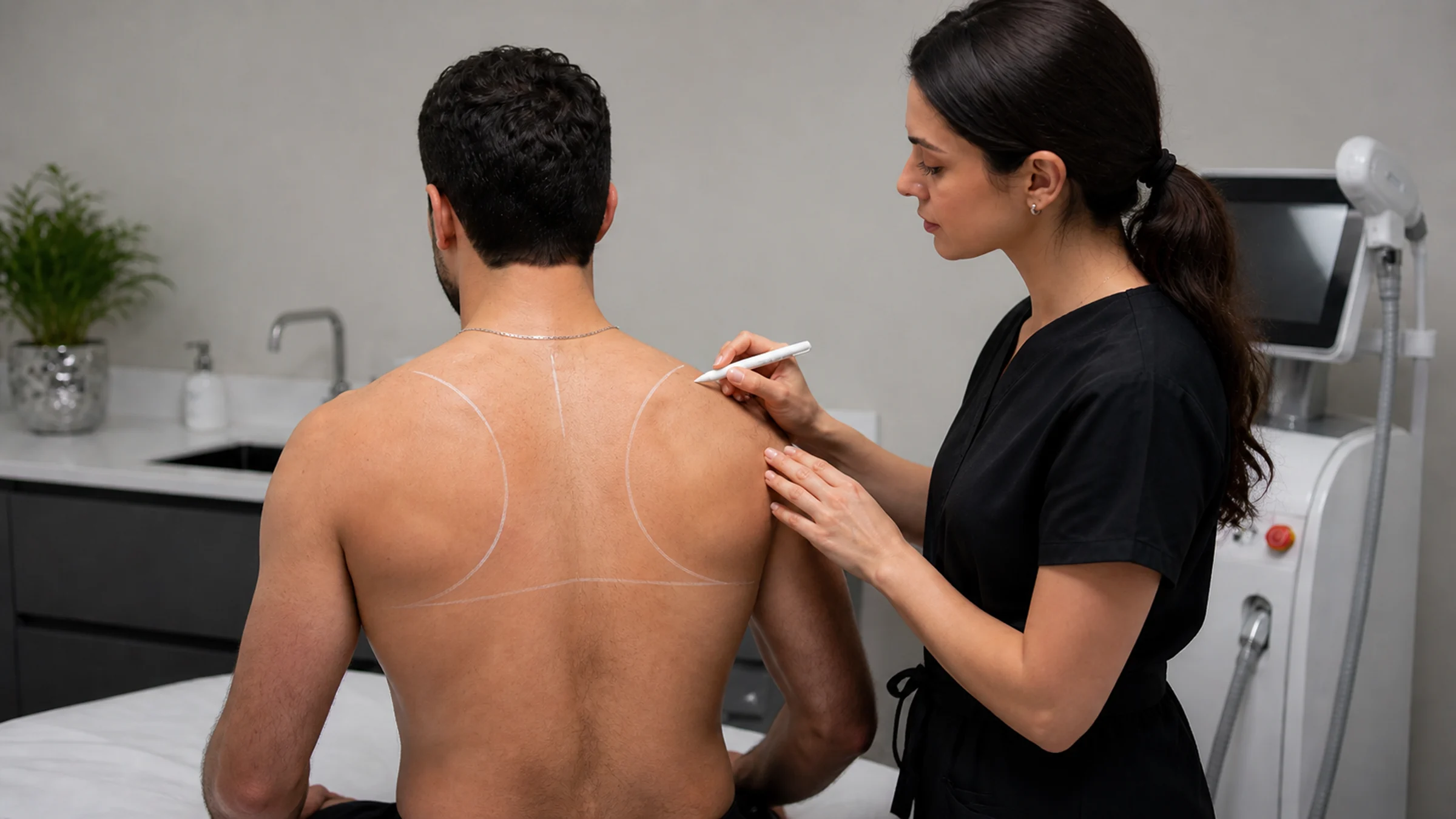
Over the years at the Dermacare clinic, we have met hundreds of men with different goals, but one thing is clear: there are certain areas of the body where hair is simply more bothersome. From our experience, the most common areas are the back and shoulders, chest and abdomen, and the nape and neck, but there is also growing demand for areas such as the face, arms, legs and intimate areas.
Understanding why each area bothers you is the key to tailoring a precise treatment that will achieve the right result for you. These are the areas that most men ask to have treated with laser hair removal at our clinic.
Back and shoulders – putting an end to discomfort
The back and shoulders are without doubt the most popular areas among men. Almost always, the reasons are a combination of three main factors:
-
Aesthetics: The desire to feel comfortable taking your shirt off at the beach or pool without thinking twice. A smooth back is seen as a more well-groomed, clean look.
-
Hygiene and comfort: Especially in the Israeli climate, dense hair on the back causes increased sweating. This leads to a constant sticky feeling, discomfort and even unpleasant odours that are hard to get rid of.
-
Difficulty treating it yourself: Shaving your back is an almost impossible task on your own. Waxing is painful and requires help. That is why a long-term solution such as laser becomes the most logical option.
The hair in these areas is usually thick and dark – which makes it ideal for laser treatment. The response is fast, and patients report not only an improvement in appearance but, above all, a dramatic increase in comfort and a feeling of freshness throughout the day.
Chest and abdomen – highlighting what you have worked for
Chest and abdominal hair is entirely a matter of personal taste. Some men prefer the natural look, while others aim for a smooth look that highlights their physique.
Common reasons for treating these areas:
-
Highlighting muscles: If you work hard at the gym, smooth skin simply shows off your body's contours better.
-
A clean, fresh feeling: As with the back, less hair means less sweat and a clean feeling that lasts throughout the day.
-
Personal preference: Ultimately, many men simply like the look and feel of smooth skin.
The good thing about treating these areas is the flexibility. You can choose complete removal for a completely smooth look, or gentle thinning for a more natural look. Everything is tailored to your wishes.
The importance of personalisation: Every area of the body has its own "personality" – different hair thickness, density, colour and skin sensitivity. The success of the treatment depends on the practitioner's ability to assess these characteristics and tailor a precise protocol, with the right laser intensities and the right intervals between sessions.
Nape and neck – the key to a neat look after a haircut
The nape of the neck is a small area, but it is a source of great frustration for many men. You know how, two or three days after a haircut, the hairline at the back is already starting to grow out and looks untidy? That's exactly it.
Beyond appearance, frequently shaving the nape often causes irritation, spots and ingrown hairs (folliculitis). Laser hair removal in this area is an almost perfect solution, because it achieves three goals at once:
-
A clean, neat look over time.
-
Preventing hair follicle inflammation and irritation.
-
Saving time and money on frequent visits to the barber.
Laser treatment of the nape is short, effective and gives peace of mind for a long time.
Other areas and personal preferences
Beyond the classic areas, we are seeing a clear rise in demand at the clinic for treatments in other areas. The data show that more and more men in Israel are choosing comprehensive full-body treatment. Here are a few notable examples:
-
Beard line shaping: An excellent solution for men who suffer from constant irritation from shaving the cheekbones or neck, or from ingrown hairs. Laser makes it possible to shape a clean, precise beard line once and for all.
-
Arms and legs: Mainly for aesthetic reasons, personal comfort or for athletes (such as swimmers and cyclists).
-
Intimate areas: For reasons of hygiene, comfort and self-confidence.
-
Underarms: A small area with a big impact. The treatment may significantly reduce sweating and contribute to a fresh feeling throughout the day.
Ultimately, the choice of treatment areas is yours. Our role at Dermacare is to listen to what bothers you, accurately assess your skin and hair type, and put together a treatment plan that will bring you the best result, safely and responsibly.
So how does our process at Dermacare work, step by step?
Deciding on hair removal for men is a big step, and it is natural to want to understand exactly what you are getting into. To achieve excellent results and give you complete confidence in the process, we at Dermacare have built a structured, transparent treatment protocol that accompanies you from the very first moment. Everything is personal, everything is professional.
Step 1: The assessment meeting – where it all begins
The first and most important step is the consultation and assessment meeting. This is not just a "technical step"; it is the conversation in which we understand exactly what you need and make sure the treatment is right for you.
What happens at the meeting?
-
Skin and hair assessment: We check your skin tone (according to the professional Fitzpatrick scale), the colour of the hair, its thickness and the density in the target area. These details are critical for calibrating the laser to the exact intensity.
-
Medical suitability check: We will go through your medical background together. It is important for us to know whether you have any sensitivities, skin diseases or regular medications that could affect the treatment. Your safety always comes first.
-
Setting realistic expectations: We will explain as clearly and openly as possible what to expect: how many treatments we estimate will be needed, what the rate of improvement will be, and what the final result will look like. The goal is for you to leave with the full picture, with no surprises along the way.
Only after this meeting, when we have all the information, do we build a personal treatment plan tailored specifically to your body and your goals.
Step 2: The treatment itself – efficiency meets comfort
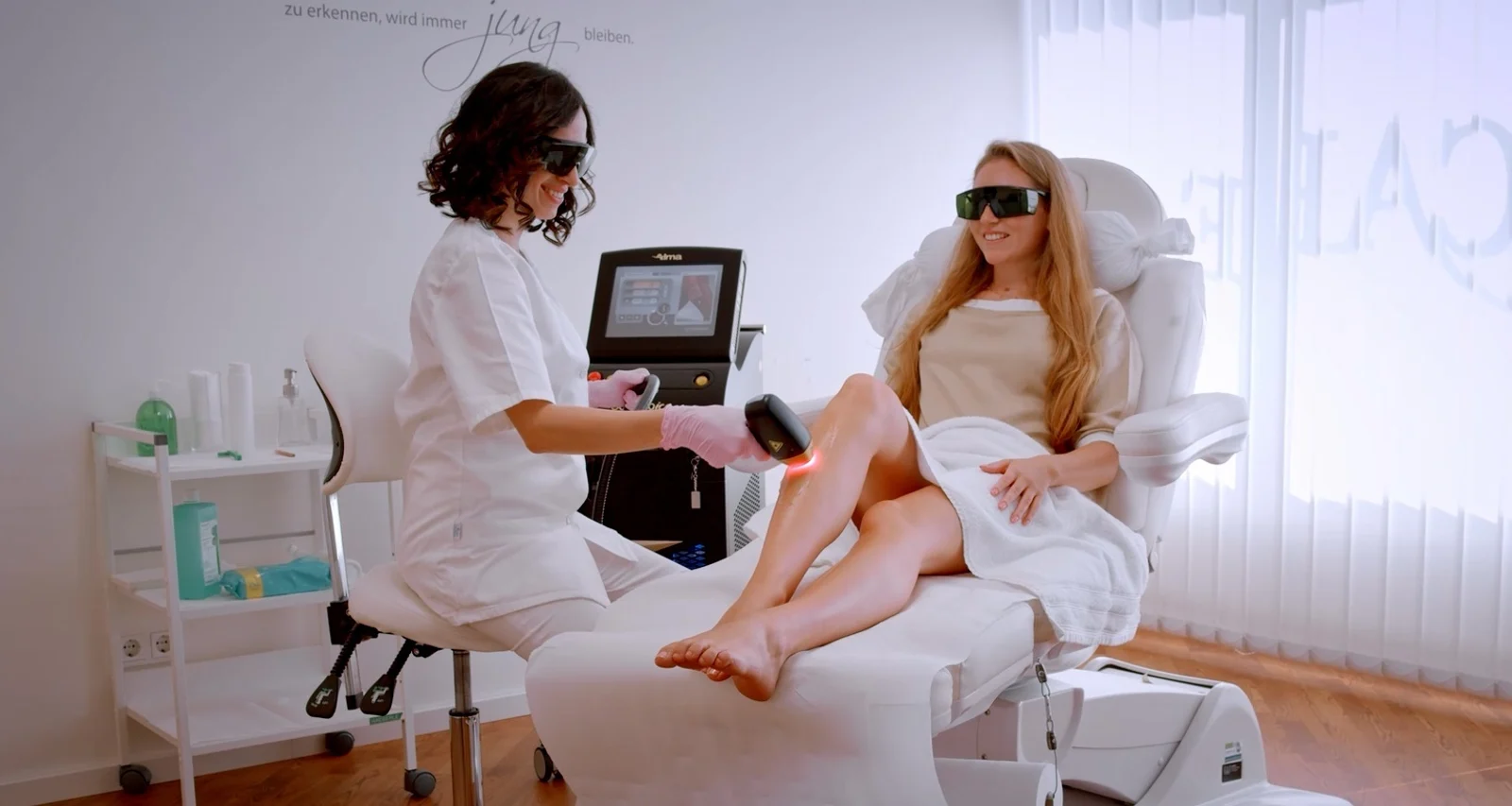
On the day of treatment, you will come to a professional, pleasant clinic. We will start by thoroughly cleansing the area, and then begin working with our advanced laser device.
One of the most important features of our technology is an advanced smart cooling mechanism. This system continuously cools the skin, literally a millisecond before and after each laser pulse. What does this mean in practice? The treatment is much more comfortable and tolerable, and the familiar prickling sensation is felt less.
During the treatment, our practitioner pays attention to your body and adjusts the laser intensity in real time, according to your skin's response and your sensitivity. We are always looking for the perfect balance between effective treatment and maximum comfort. If you are interested in diving deeper into the technology, you can read our article explaining how laser hair removal works.
Personalising the intensity is not only a matter of comfort but also of safety. Working at too high an intensity can cause irritation, while working at too low an intensity will simply not be effective. Our team's experience allows us to "read" the skin and adjust the treatment in real time.
Step 3: Follow-up and adjustments between treatments
Hair removal is a process, not a one-off quick fix. It is a series of treatments, with intervals of several weeks between sessions. This break is essential to "catch" the new hair follicles entering the active growth phase (anagen), the only phase in which the laser is effective.
After each treatment, we always check the progress. We see how the hair is thinning and how it grows back, and we fine-tune the treatment plan accordingly. For example, we may:
-
Change the intervals between treatments.
-
Adjust the laser intensity as the hair becomes finer and lighter.
-
Give you specific instructions, such as adding products to soothe the skin or a gentle peel to support the result, depending on the condition of the skin.
This dynamic approach ensures that the process remains as effective and personalised as possible for you at every stage, until together we reach the smooth result you wanted to achieve.
How many treatments are needed, and when do you really see results?
This is perhaps the first question every man asks us at the consultation, and for good reason. You want to know exactly what you are getting into, how long it will take, and when you will see the smooth back or chest you have always wanted. The answer, as you can probably guess, is not one "magic number" that suits everyone, but we can certainly give you a clear picture of the process.
It is important to understand that the success of the treatment does not depend only on the laser device, but on a combination of several factors that are unique to you.
What determines how many treatments you will need?
The number of treatments needed to achieve a smooth result varies from man to man, and depends mainly on four things:
-
The treatment area: Thick, dense hair, such as on the back or chest, "absorbs" the laser energy very well and usually responds faster. Areas with finer hair may require a little more patience.
-
Hair colour and thickness: This is the most important rule in laser treatment. The darker and thicker the hair, the more effective the treatment. Why? Because the laser "looks for" the dark melanin pigment, and when it finds it, it transmits energy through it that damages the root. Light or downy hair requires more treatments.
-
Your skin colour: The ideal situation is a sharp contrast between light skin and dark hair. But – and this is an important but – today's technologies allow us to treat people with darker skin effectively and safely too, by precisely adjusting the wavelength so that the energy focuses on the hair and not the skin.
-
Genetics and hormones: In men, testosterone levels directly affect hair growth. Your personal genetics and hormonal changes can affect the rate of growth and the need for maintenance treatments in the future.
Broadly speaking, most men will need a series of between 8 and 12 treatments to achieve a reduction of about 80% to 90% of hair.
So why can't you just have one treatment and be done?
To understand this, let's talk for a moment about how hair works. Every hair on the body has its own life cycle, made up of three phases:
-
The growth phase (anagen): This is the critical moment. In this phase, the hair is firmly attached to the root (the follicle) and is nourished by it. This is the only phase in which laser treatment can work, because only then can the light beam "travel" along the hair and destroy the follicle.
-
The transition phase (catagen): A very short phase in which the hair stops growing and starts to detach from its root.
-
The resting phase (telogen): The "dead" hair falls out, and the follicle enters a short dormancy before it starts to grow a new hair.
The thing is that at any given moment, only some of your hairs (about 15%-20%) are in the active growth phase. All the other hairs are "asleep" or in the process of shedding, and the laser simply does not "see" them.
That is why each treatment "catches" a different group of hairs that is in exactly the right phase. The intervals between treatments (usually 6-8 weeks) are designed precisely to give the "dormant" hairs enough time to wake up, enter the growth phase and become a target in your next treatment.
The key to success is simply consistency. Sticking to the course of treatments at the times scheduled for you is the surest way to make sure we catch all the hair follicles in the right phase and achieve an even, smooth result.
When will you start to see the change?
Do not expect completely smooth skin after the first treatment – it does not work like that. But you will certainly see an improvement, and much sooner than you think.
After just the first or second treatment, you will notice several things:
-
The hair becomes sparser: You will see small "bald patches" and less overall density.
-
Growth is slower: Hair that used to take a week to grow will suddenly need two or three weeks.
-
The hair is softer: The hair that does grow will be finer and less prickly and coarse.
The data from the field do not lie. Laser hair removal for men in Israel is one of the aesthetic treatments with the highest satisfaction rates.
Safety, preparation for treatment and important instructions
For hair removal for men to succeed, your preparation and adherence to the safety rules are no less important than the technology itself. At Dermacare we always tell our patients that the success of the process is teamwork – we bring the advanced equipment, and you bring your cooperation. It is important to us that you come to the treatment prepared and relaxed, and that you understand exactly what happens at each stage.
One of the first questions we hear is, "Wait, does it hurt?". The honest answer is that the sensation depends on the area being treated and your personal sensitivity. It is usually described as small pinches or warm prickles that pass quickly. At our clinic, we work with top-of-the-line laser devices that include an advanced cooling system. This makes the whole experience much more comfortable and tolerable, even in areas considered sensitive.
How do you come prepared for treatment?
Proper preparation ensures that all the laser energy reaches the right place – the hair root – and significantly reduces the chance of skin irritation. If you follow a few simple rules, you have taken the first step towards smooth skin.
-
Shaving the area: It is important to shave the treatment area 24-48 hours before the treatment. Why? Because we want the laser beam to hit the root and not be wasted on the tip of the hair above the skin.
-
No waxing or plucking: For at least three weeks before the treatment, you must avoid any method that pulls the hair out from the root (waxing, threading, epilator). The laser needs to "see" the dark root in order to work.
-
Say goodbye to the sun (temporarily): You must avoid tanning, both in the sun and on a sunbed, for about two weeks before the treatment. Tanned skin is more sensitive to the laser, and that is something we want to avoid.
-
Clean skin, nothing extra: On the day of treatment, you need to arrive with completely clean skin. No creams, deodorant, perfume or any kind of oil.
Side effects? What really happens to the skin after treatment
Laser hair removal, when performed by a professional and experienced team, is one of the safest treatments there is. Side effects, if they appear at all, are usually mild, localised and pass within a short time.
The most common effect is mild redness and very slight swelling around the hair follicles, which look like red dots. In fact, this is a positive response! It shows that the treatment worked and the laser hit its target precisely. This effect usually disappears within a few hours, and within a day at most. In rarer cases, mild itching may occur, which also passes on its own.
From our experience at Dermacare, the safest approach is personalisation. First of all, we assess your skin type and hair colour and adjust the laser intensity specifically for you. This minimises risks and ensures that the treatment is not only effective but also completely safe.
Aftercare instructions: how to preserve the results
What you do after the treatment is no less important than the preparation. A few simple rules will help the skin calm down, prevent irritation and ensure that the results last over time.
-
Soothe the skin: In the first few days after the treatment, it is recommended to apply aloe vera gel or another soothing cream, as recommended by the practitioner.
-
No very hot water: For the first 48 hours, it is best to avoid very hot showers, saunas, jacuzzis or even intensive sports training that causes heavy sweating.
-
Sun protection: This is an iron rule. You should avoid direct sun exposure of the area for about two weeks after the treatment, and if you go outside – apply sunscreen with at least SPF30.
-
Don't scratch: Even if it itches a little, it is important to resist scratching the area. It will only cause unnecessary irritation.
Of course, it is important to note that the treatment is not suitable in certain medical situations, such as active skin diseases in the area, taking medications such as Roaccutane, or in the case of infections. We check all of this carefully at the personal consultation.
Questions most men ask about laser hair removal
In every consultation with a man considering laser hair removal, a few questions keep coming up. We have gathered the most important ones here, with straightforward answers based on our clinical experience here at Dermacare. Our goal is for you to come to your hair removal for men treatment knowing exactly what to expect.
Do you get rid of the hair permanently?
This is perhaps the million-dollar question, and the honest answer is: almost. We are talking about a permanent and dramatic reduction of about 80%-90% of hair in the treated area. The laser essentially impairs the ability of the existing hair follicles to produce new hair, so the vast majority of the hair simply does not come back.
However, it is important to be realistic. Our body is a dynamic machine. Natural hormonal changes with age, genetics or even certain medications can "wake up" dormant follicles and cause individual hairs to grow, usually finer and lighter. That is why, to keep your skin smooth for years, we recommend coming in for a short maintenance treatment once every year or two.
What is the difference between laser and IPL?
They are not the same thing at all. Both use light to damage the hair, but the difference between them is significant.
-
Laser: Fires a single, focused and precise beam of light that hits the target – the dark melanin pigment in the hair root. This focus makes the treatment particularly effective, especially on male hair, which is usually thicker and darker.
-
IPL (Intense Pulsed Light): Emits a broad spectrum of light flashes, like a camera flash. This light is less concentrated and more scattered across the surface of the skin, which usually makes it less effective at targeting the follicle.
From our experience with thousands of patients, laser treatments achieve a better result in fewer treatments, and they are safer for a wide range of skin tones when performed professionally.
Can you have laser treatment in summer?
Absolutely, but it requires discipline. The only challenge in the Israeli summer is the sun. Tanned skin contains more pigment, and the laser may "get confused" and target the skin instead of the hair. That is why you absolutely must avoid tanning (natural or artificial) on the treatment area for at least two weeks before and after each treatment. Beyond that, you must use high-factor sunscreen (at least SPF 30) on a regular basis.
At Dermacare, we know how to adjust the treatment parameters even for skin that has changed slightly over the summer, to maintain maximum safety and effectiveness. If you know you will not be able to commit to the instructions, it is better to plan your course of treatments for the autumn and winter months. Full transparency with your practitioner is the key to your safety.
I have blond / white / ginger hair. Will the laser work for me?
Here the answer, unfortunately, is less optimistic. The laser's entire effectiveness is based on having a dark target to hit – the melanin pigment in the hair root.
-
Dark blond or light brown hair: The results will be moderate. It is possible, but will probably require more treatments than average.
-
Very light blond, white, grey or ginger hair: Such hair contains almost no melanin. The laser simply has no "target" to aim at, so the effectiveness of the treatment is low to non-existent. In such cases, the treatment is not recommended.
At the personal assessment meeting at the clinic, we will analyse your hair type and colour and give you an honest, accurate estimate of the results you can really achieve.
Want to find out exactly what suits you? The Dermacare team will be happy to assess your skin, the suitable type of treatment and realistic expectations – professionally, personally and precisely. To book a consultation, you can contact us here.
Frequently asked questions
At Dermacare, SHR systems from Spectra are used. The devices we use have been medically tested and clinically tested to ensure safe, effective and long-term hair removal treatment. The patented technology combines all the advantages of laser hair removal, without discomfort or damage to the skin.
SHR technology is suitable for anyone who wants to remove unwanted hair.
Our SHR device offers:
- Effective, pain-free hair removal,
- Suitable for every age, skin type and skin tone,
- Including patients with tanned skin and different hair types. The treatment is quicker and more comfortable than ever.
The technology, developed after years of research in the field of medicine, is an unprecedented breakthrough in aesthetics and enables laser hair removal – without pain. All the advantages, knowledge and experience accumulated over the last 20 years have been combined in a single device. The technology is suitable for all (!) skin types, without side effects, and makes it possible to achieve highly impressive results. Thanks to this exceptional advance, SHR dramatically changes the way hair removal is done, which in the past decade and a half has been carried out mainly with laser or IPL technologies.
With SHR technology, all areas of the body where there is hair can be treated optimally.
The cost depends on the area of the body and the size of the treated area. We offer significant discounts when purchasing treatment packages or treating several areas.