In brief
- Facial skin tightening means matching the type of laxity, the quality of the skin and the aesthetic goal, not a single treatment that suits everyone.
- After the age of 25, collagen production falls by 1%-2% a year, and by the age of 40 the skin has lost about 30% of its natural collagen.
- Morpheus 8 is suitable when there is also a texture problem and fine lines, and HIFU works at depth in the jawline, chin and neck areas.
- Skin boosters improve hydration and texture, and Botox is intended for dynamic wrinkles, not for tightening lax tissue.
- A layered plan is usually built that combines technology, injections and maintenance, after an assessment of the type of problem.
If you have come here, you are probably already seeing it in the mirror: a jawline that is less defined, skin that looks more tired, or a feeling that the face has "dropped" a little even without any dramatic change. In most cases, facial skin tightening is not one treatment that suits everyone, but a matter of matching the type of laxity, the quality of the skin, the biological age of the skin and your aesthetic goal.
The good news is that there are now several effective treatment routes, from technologies such as Morpheus 8 and HIFU to injections designed to stimulate collagen or restore volume. The right decision does not start with the question "what is the strongest", but with the question what exactly your skin is lacking, and at what depth it needs to be treated.
Why does skin lose its firmness? The science behind skin laxity
Skin laxity is not just a matter of "thin skin" or "fine lines". It is a deeper biological process that involves the layers of the skin themselves, and above all the decline in the body's ability to produce its natural support components.
The role of collagen and elastin
Collagen is the protein that gives the skin structure, stability and support.
Elastin is responsible for the skin's ability to stretch and return to its place.
When these two are present in good quantity and quality, the skin looks tighter, denser and more elastic. When they wear down, you start to see laxity, a change in texture, a softening of the jawline and fine lines that remain even at rest.
When it actually starts
The ageing process of facial skin begins as early as the late 20s. After the age of 25, collagen production falls by 1%-2% a year, and by the age of 40 the skin has already lost about 30% of its natural collagen, which leads to sagging tissue. In Israel, chronic sun exposure contributes to about 80% of the signs of premature ageing.
The clinical implication is clear. In some patients we first see a decline in skin quality, and in others we first see a change in the structure of the face. So not all laxity looks the same, and it does not all respond to the same treatment.
What speeds up the process
Apart from age, there are several factors that bring on laxity earlier or make it more pronounced:
-
Strong Israeli sun: regular exposure speeds up the breakdown of collagen and damages skin quality.
-
Genetics: some skin loses firmness earlier even with a healthy lifestyle.
-
Weight changes: significant weight loss or gain can affect the skin's natural tension.
-
Smoking, stress, insufficient sleep: they are not always the only cause, but they can certainly make the appearance worse.
When a patient says "I can see sagging", we need to check whether it really is sagging tissue, loss of volume, poor skin quality, or a combination of all three. This is the key point before choosing a treatment.
In cases where the goal is not only temporary tightening but also stimulating collagen production, dedicated treatment approaches such as biostimulators to stimulate collagen are sometimes considered, especially when the problem is not only on the surface.
Why creams are not always enough
A good cream can improve hydration and comfort, and sometimes also the appearance of the texture. But when laxity is related to a decline in the skin's supporting structure, a treatment that works deep in the tissue, not just on the outer layer, is usually needed.
This is exactly why advanced technologies and biostimulating injections play a central role in modern facial skin tightening. They target the mechanism, not just the symptom.
An overview of technologies and injections for facial skin tightening
In practice, there are two main families of solutions: energy-based technologies and injections. The difference between them is not just technical. It relates to whether the goal is to contract, to heat, to trigger healing, to improve texture, to restore volume, or to make the skin produce new collagen.
Morpheus 8 and RF microneedling
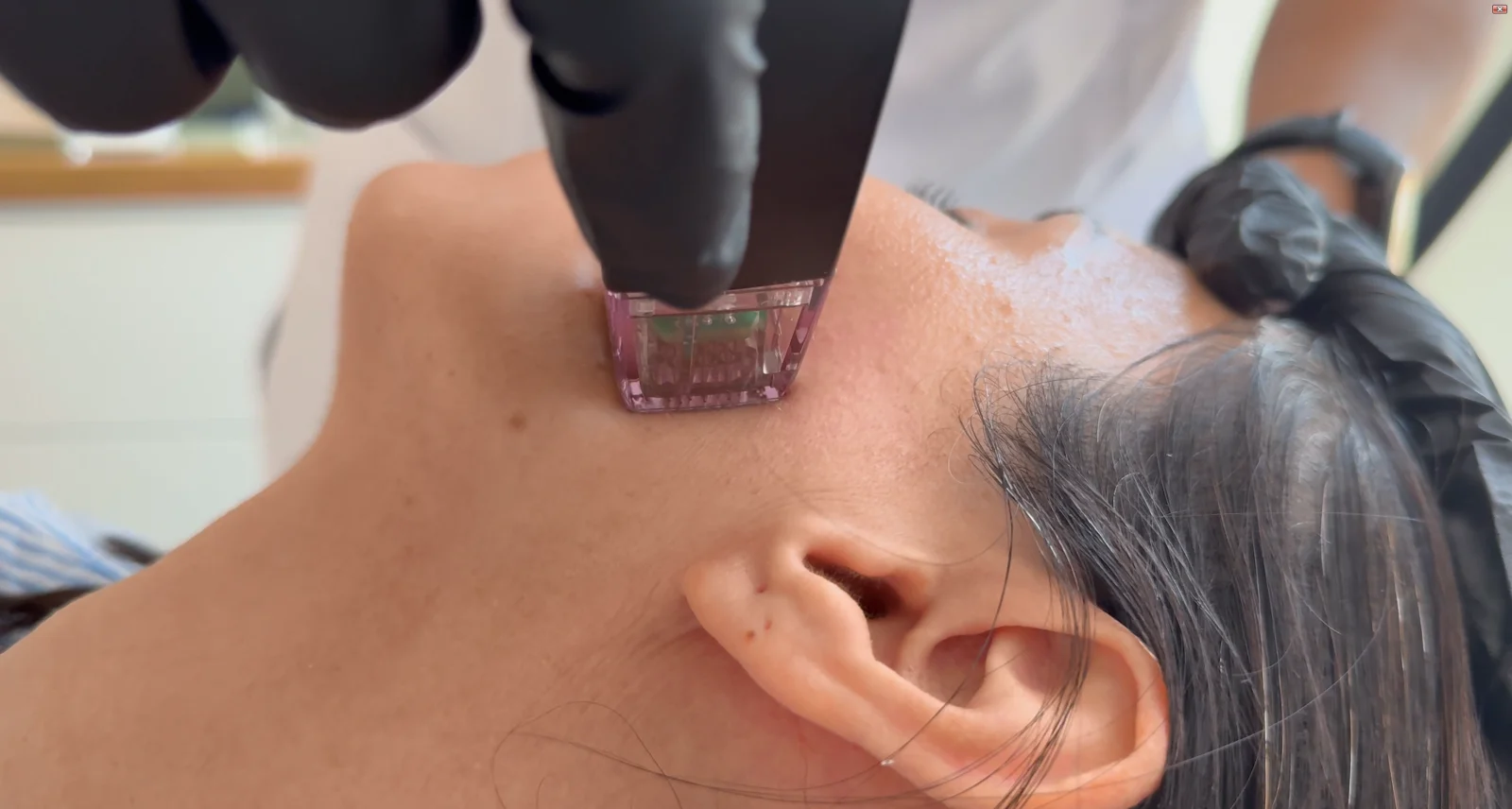
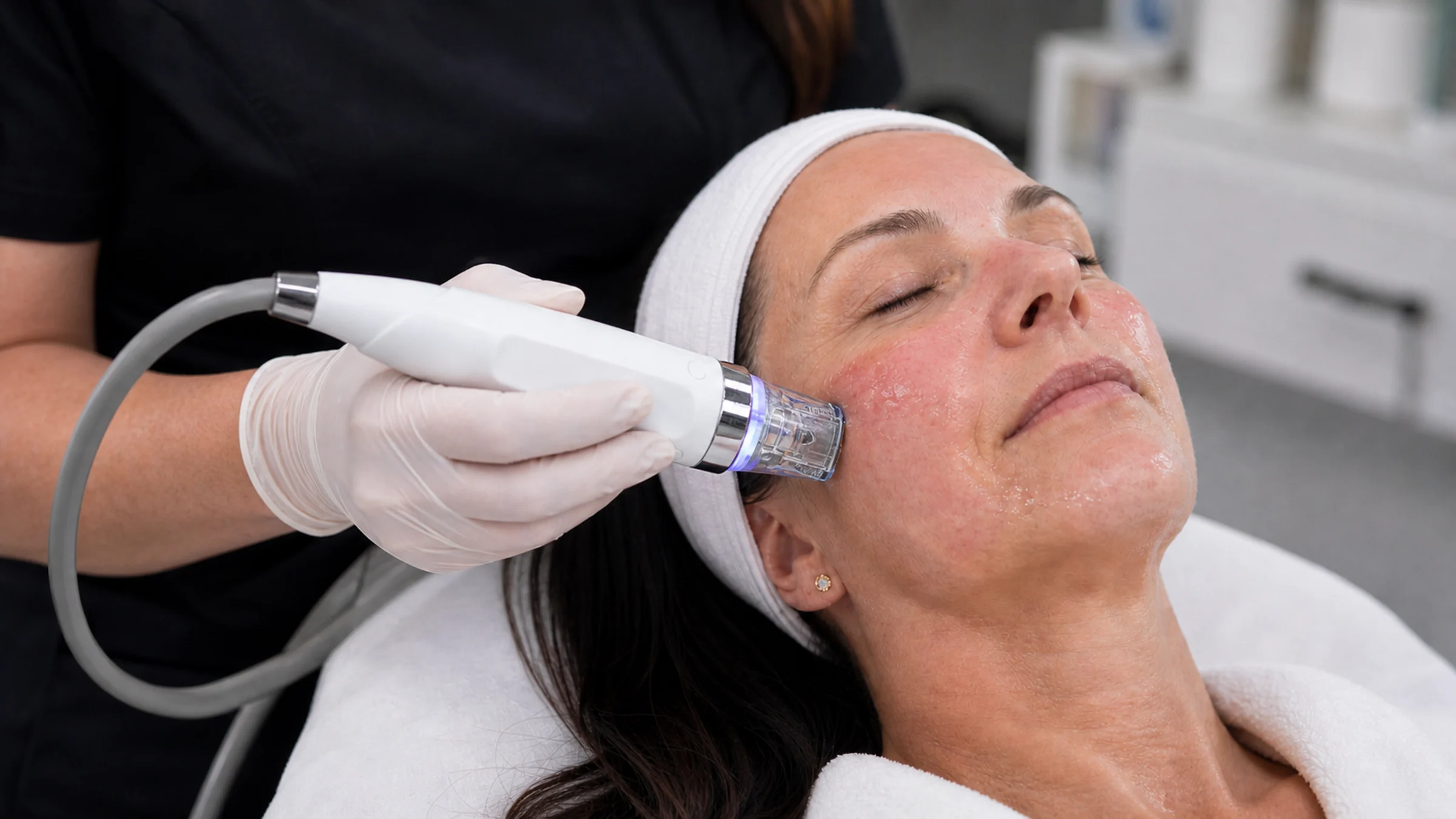
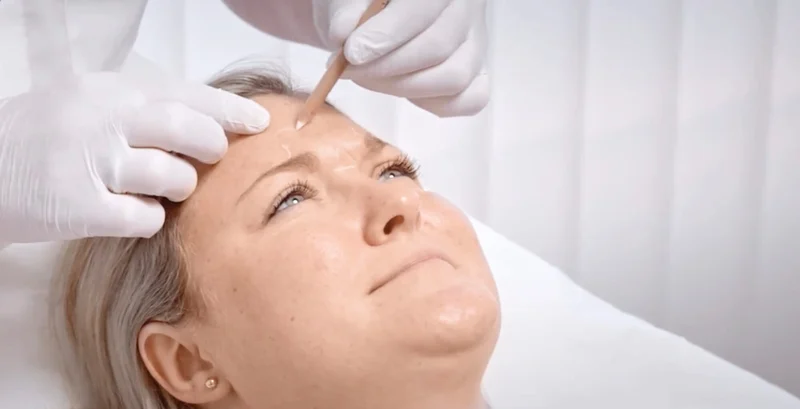
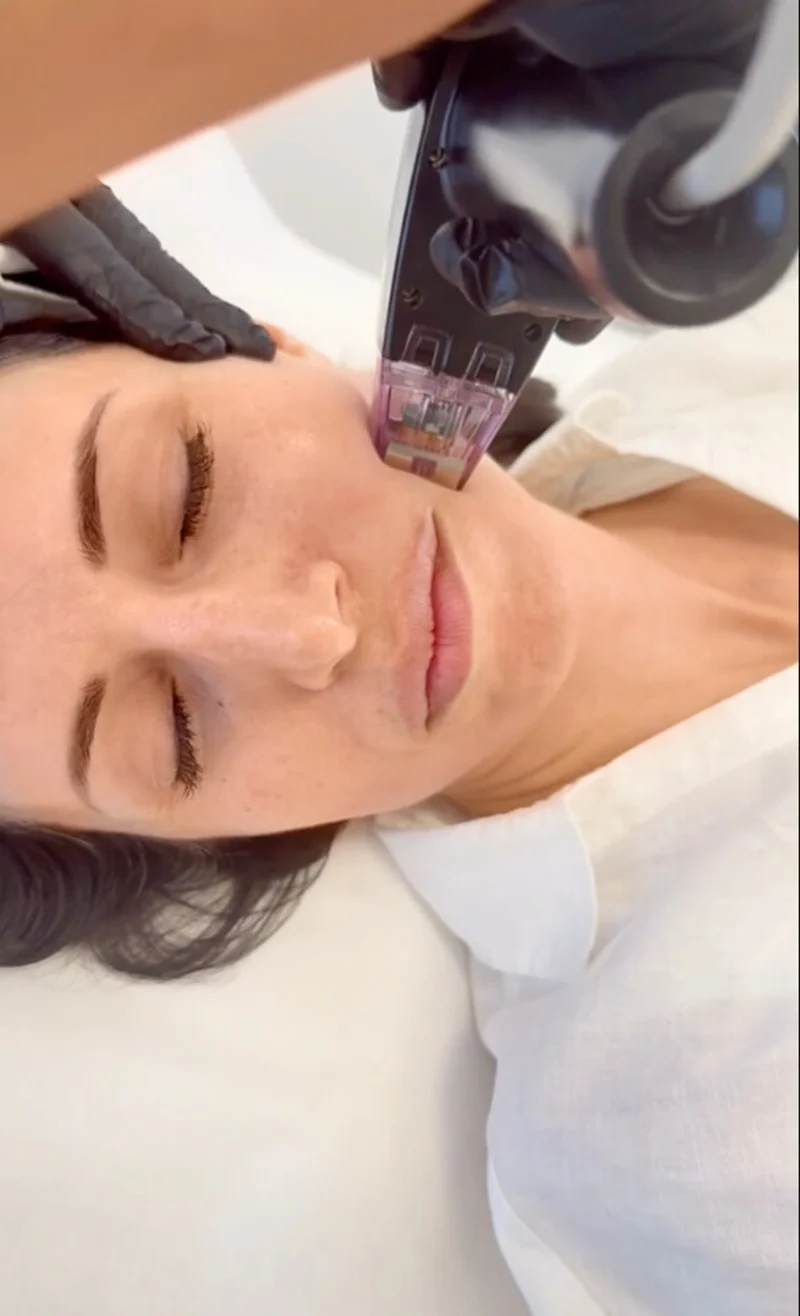
Morpheus 8 combines microneedling with RF radiofrequency. The needles create controlled micro-injuries that activate the body's natural healing response, and the RF energy heats and stimulates the production of new collagen and elastin in the deeper layers. HIFU, by contrast, uses focused ultrasound waves that penetrate the deeper tissues of the skin and muscles to produce rapid contraction.
In practical terms, Morpheus 8 is particularly suitable for patients who are not only looking for a "lift" but also for improved texture, fine lines, pores, and sometimes areas where the skin looks thick or uneven.
It is especially relevant when there is both laxity and average skin quality.
Among the treatments available in Israel, there are also options for radiofrequency treatment for the face for patients looking for an approach based on tissue heating and collagen stimulation.
HIFU for deeper tightening
HIFU works differently. The energy is focused at depth, so it may be better suited to situations that call for a relatively deep effect, for example in the area of the:
-
Jawline
-
Chin
-
Neck
-
Lower cheeks
The main advantage of HIFU is its ability to work in deep layers without directly damaging the upper skin. The disadvantage is that it is less suited to improving the surface texture of the skin. If the main problem is texture, pores or fine lines, it will not always be the first choice.
IPL and lasers
Light- and laser-based treatments come into the picture mainly when there is a combination of mild laxity and impaired skin quality.
For example, dull skin, pigmentation, sun damage and less even texture.
It is important to be precise here: not every laser is designed for significant tightening, and not every light treatment gives a lifting effect. In many cases the contribution is more to quality, radiance, evenness and gentle collagen stimulation, and less to deep tightening.
Skin boosters
Skin boosters do not "fill" like classic fillers. Their purpose is to improve intradermal hydration, vitality and texture. They can work well when the skin is dull, thin or dehydrated, but they are not a stand-alone solution for moderate or advanced laxity.
Many patients mistakenly think that every injection tightens. That is not true. If the main deficiency is structural, improving hydration alone will not change the jawline or neck laxity.
Biostimulators
Biostimulators, such as Radiesse or Sculptra, work in a different way. They do not just fill a space, but encourage the body to produce collagen itself over time. This is a particularly good option when there is loss of quality, reduced support, or a need for more gradual and natural strengthening of the tissue.
They are not an automatic substitute for devices, but sometimes they actually complement them. In some cases, combining technology with injections gives a more appropriate result than choosing a single method.
A good treatment is not the one that sounds the most advanced, but the one that solves the right problem. Skin with damaged texture, lost volume and deep laxity will not respond optimally if we treat only one of the components.
Dermal fillers and Botox
Here too, it is important to get things straight.
Dermal fillers are mainly intended to restore volume and support certain areas. If the "laxity" actually stems from hollowing of the cheek or temple, the right filling may improve the appearance.
Botox is intended for dynamic wrinkles, not for real tightening of lax tissue.
So if you are looking for facial skin tightening, you should not ask "which injection is worth having", but whether my problem is movement, volume, skin quality or tissue laxity.
How to choose the right treatment for you: a practical comparison
The really important step is not to know all the devices, but to understand which ageing pattern you belong to. Some patients have thin, wrinkled skin but no significant sagging. Some have a softening jawline, but their skin texture is still good. And some suffer from a combination of laxity, lack of volume and sun damage.
Three common situations in the clinic
When the main problem is texture with mild to moderate laxity
Here we usually prefer treatments that address both skin quality and tightening.
Morpheus 8 may be more suitable when there are fine lines, pores, superficial scars or skin that feels "lax but also uneven".
When the focus is the jawline, chin or neck
If the goal is a deeper effect on the lower areas of the face, HIFU becomes a stronger part of the conversation.
It is less of a "texture treatment" and more of a treatment aimed at structure and deep contraction.
When the skin looks hollow and not just lax
In such cases, technology alone is not always enough.
If support is lacking, dermal fillers or biostimulators may sometimes be needed, alone or in combination.
Comparison of facial skin tightening treatments
| Type of treatment | Main goal | Ideal areas | Recovery time | Recommended number of treatments |
|---|---|---|---|---|
| Morpheus 8 | Tightening and texture improvement | Cheeks, jawline, neck, areas with fine lines | Usually short, with temporary redness | Usually a personalised series |
| HIFU | Deeper tightening | Jawline, chin, neck, lower cheeks | Usually minimal | Depending on the depth of laxity |
| IPL or certain lasers | Improving skin quality, tone and texture, and sometimes gentle tightening | Face, neck, areas with sun damage | Varies by technology | A series is sometimes needed |
| Skin boosters | Improving hydration, glow and texture | Face, sometimes also the neck | Relatively short | According to the skin's condition |
| Biostimulators | Collagen stimulation and gradual support | Areas with reduced quality and support | Depends on the product and the area | Usually according to a personal plan |
| Dermal fillers | Restoring volume and structural support | Cheeks, jawline, chin, hollows | Relatively short | Usually as needed |
What usually does not work well enough
There are also mistakes that keep recurring:
-
Creams instead of deep treatment: good for maintenance, not for correcting significant laxity.
-
Excessive filling instead of tightening: when you try to "lift" everything with volume, the result can sometimes look heavy.
-
Choosing a treatment based on a trend: not every treatment that suits a friend or relative will suit your ageing pattern.
If you are torn between devices, injections or a combination, it is worth starting with a structured mapping of the type of problem. You can also use the guide which anti-aging treatment is right for me before deciding.
Who a combined approach suits
Clinical experience shows that many patients do not need "one perfect treatment", but a layered plan.
For example:
-
A technology-based treatment for tightening
-
An injection to improve support or stimulate collagen
-
Conservative maintenance to preserve skin quality
This is usually the more appropriate way to get a natural rather than exaggerated result.
The treatment process at Dermacare step by step
Many patients come with the same question: "What actually happens if I start a tightening process?" Beyond the technology itself, the important part is how the assessment is made, how the treatment is tailored, and how you are supported along the way.
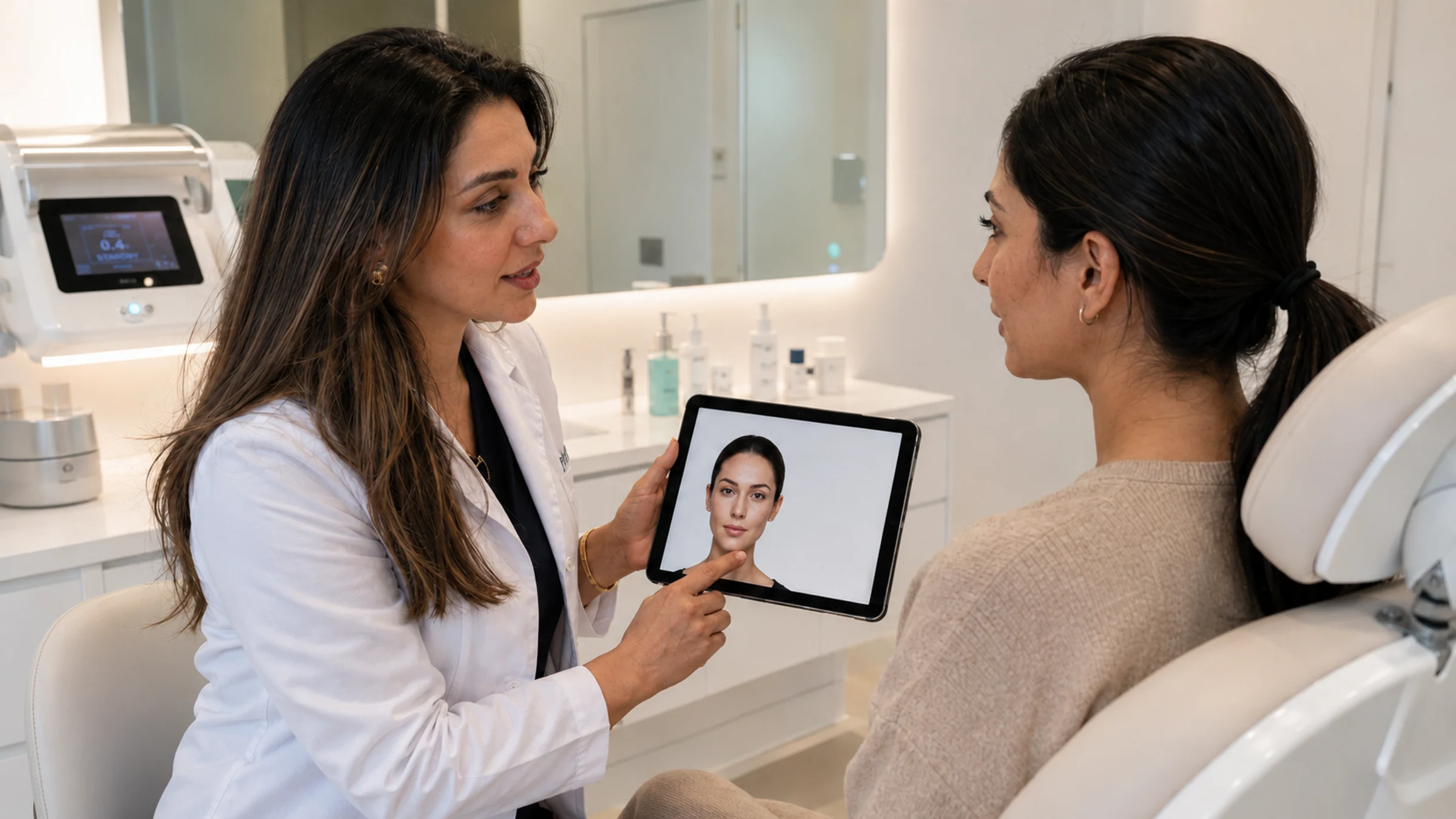
The assessment stage
The first appointment does not start with the device. It starts with your face.
We examine skin quality, skin thickness, the degree of laxity, the extent of volume loss, the condition of the pores, fine lines, pigmentation, and whether it involves one area or a broader pattern.
At this stage we also clarify expectations. There is a difference between a patient asking for a subtle refresh and someone expecting an effect closer to a facelift. This difference guides the entire plan.
Building a tailored plan
After the assessment, we decide whether it is right to go for:
-
A technology-based treatment only
-
Injections only
-
A combination of the two
-
A gradual treatment over several months
In cases where microneedling is needed, one of the available options is microneedling with a derma roller, with the choice between methods made according to the depth of the problem, the skin type and the treatment goal.
This is also where precision comes in. Sometimes a patient thinks she only needs HIFU, but the examination reveals that the main component is actually a decline in skin quality. Sometimes the exact opposite is true.
The treatment day itself
Before a technology-based treatment, the skin is usually cleansed thoroughly and sometimes a local anaesthetic is applied, depending on the method.
During the treatment, the areas marked in advance are worked through systematically, at the depth and intensity determined by the condition of the skin.
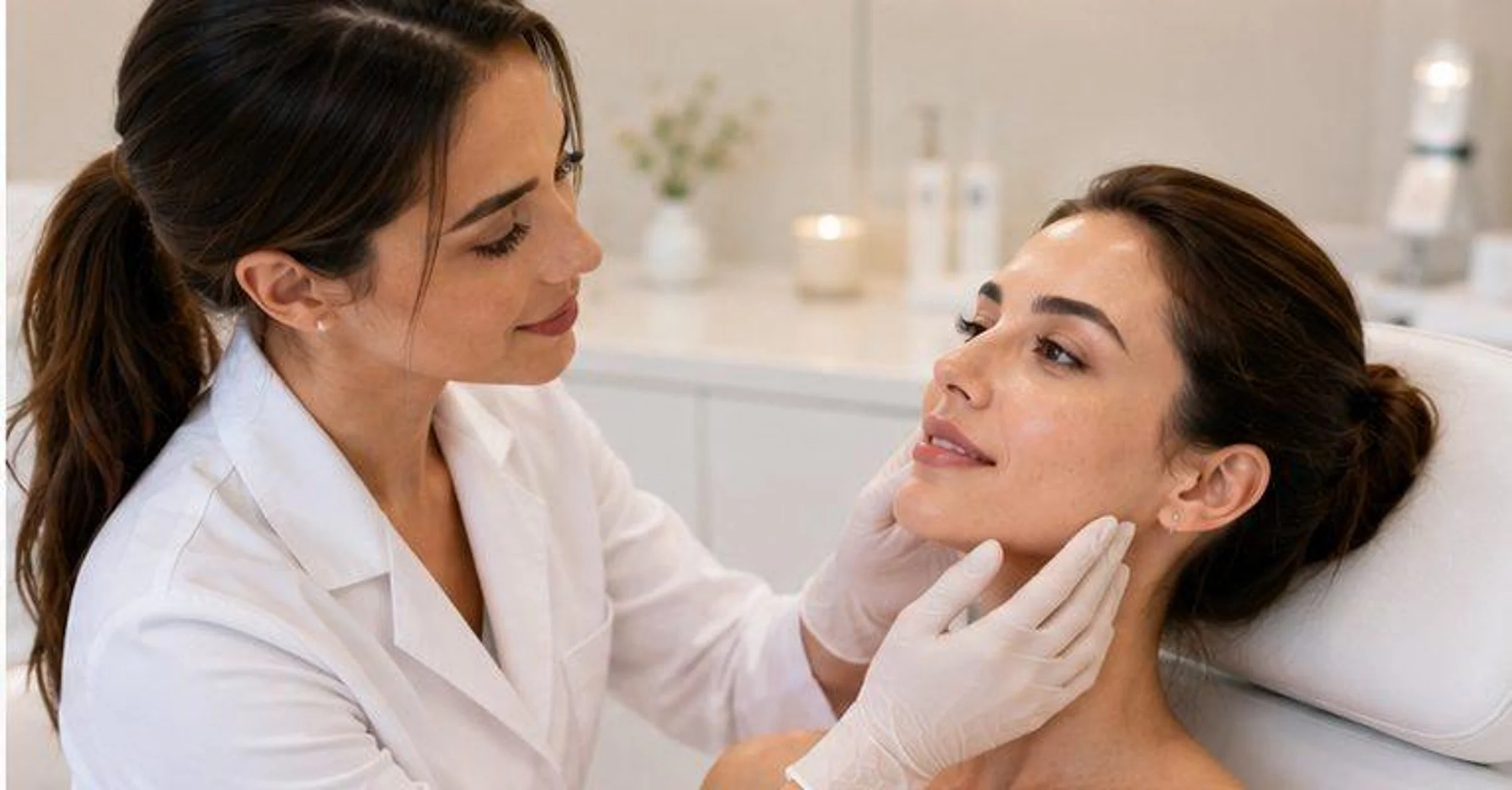
Some patients feel warmth, tingling, pressure or temporary discomfort. The sensation varies from one technology to another and between different areas of the face.
What happens afterwards
After the treatment you receive clear instructions. These usually include strict sun protection, avoiding unnecessary irritation of the skin, using soothing products, and sometimes temporarily stopping active ingredients.
It is important to understand that a tightening treatment is not judged only by what you see when you leave the clinic. Part of the improvement comes gradually, as the skin goes through a process of rebuilding and reorganisation.
Good support after treatment is almost as important as the treatment itself. It affects recovery, comfort, and the ability to maintain the result without irritating the skin during the sensitive period.
Follow-up and adjustments
During follow-up we check whether the skin's response matches the plan, and whether the plan needs to be updated.
An experienced aesthetic clinic does not work on a "one treatment and that's it" basis, but in a process based on how the skin actually responds.
Results, recovery and estimated costs: what can you expect?
This is usually the point people are most interested in. How long it takes, when you see a change, how many days of recovery are needed, and what the expected cost is. The short answer is that it all depends on the method and the starting point, but there are a few principles that help manage expectations correctly.
When you see results
With tightening treatments, there is a difference between a certain immediate response and the mature result.
With technologies that work by stimulating collagen, the skin continues to change even after the treatment itself. So in some cases you see an initial improvement quite early, but the more significant result comes gradually.
A Morpheus 8 treatment takes 15-30 minutes and allows an immediate return to your routine, and a series of 3-5 sessions achieves an improvement of 50%-70% in firmness and fine lines. In addition, the costs of tightening treatments range from ILS 1,500 to ILS 5,000 per treatment, depending on the method, and 60% of patients in Israel choose non-invasive treatments over surgery.
What recovery actually looks like
Recovery depends greatly on the method chosen.
With some treatments there may be redness, slight swelling, a feeling of warmth or sensitivity to touch. With others the return to routine is almost immediate, but care is still needed with sun, heat, sport and active skincare products.
In most cases, what bothers patients is not significant pain but mainly the temporary appearance of the skin in the first few days. That is why it is important to plan the treatment around your personal schedule as well.
What affects the final result
It is not only the technology that determines it. Several factors have a big influence on the quality of the result:
-
The initial severity of the laxity
-
The age of the skin and its sun history
-
Skin type and thickness
-
Completing the recommended series of treatments
-
Maintenance afterwards
-
Daily sun protection
Anyone who expects a big change from a single treatment despite advanced laxity may be disappointed. By contrast, those who understand that it is a cumulative process usually make better decisions.
Is maintenance needed?
In most cases, yes.
Facial skin tightening does not "erase" the ageing process, but slows it down, improves and strengthens. That is why maintenance, even if gentle, is important to preserve the effect.
If you want a better understanding of the price ranges for the different types of treatment, you can also read about how much skin tightening costs.
Realistic expectation is part of the result. A non-invasive treatment can improve, tighten and refresh, but it does not replace surgery in every situation, and it is not meant to look like it.
How to choose a professional clinic for facial skin tightening
The difference between the right treatment and a disappointing one is not determined only by the name of the device. It is determined by the assessment, the tailoring, the standard of execution, and the ability to also say when a particular treatment is not suitable.
What to check before booking
-
Who performs the assessment and the treatment
It is important to know whether it is a doctor or a qualified medical team with experience in aesthetic treatments. -
Whether there is a genuine personal assessment
If a treatment is offered before your skin type, the depth of laxity, the quality of the tissue and your expectations have been assessed, that is a warning sign. -
Whether the clinic can offer more than one option
A place that works with only one method may push everyone towards the same solution. In practice, facial skin tightening sometimes requires a choice between several routes. -
How they talk to you about results
A professional clinic does not promise miracles. It explains what is reasonable, what is limited, and what will require a series or a combination.
Why specific experience matters more than branding
In skin tightening, slogans are of little value. What is valuable is reading the face correctly.
You need to know how to recognise when the laxity is in the skin, when it is subcutaneous, when volume is missing, and when the patient actually needs a more conservative approach.
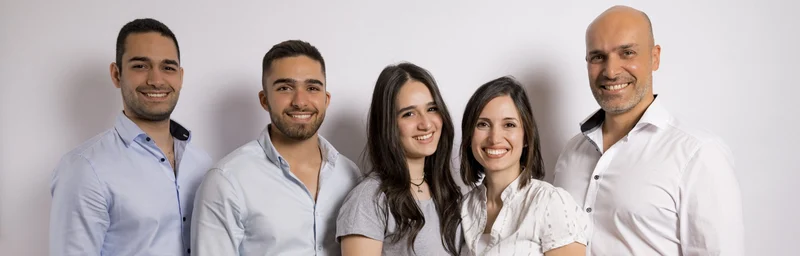
At Dermacare in Petah Tikva, this point is given central weight: tailoring the treatment to the structure of the face, the skin type and the realistic goal, and not to a trend or a fixed menu. This is the standard worth looking for in any clinic, even if you are still at the research stage.
Questions worth asking in the consultation
It is worth coming with a few simple questions:
-
What exactly is the source of my laxity.
-
Which treatment addresses the root of the problem and not just the appearance.
-
Whether a series, maintenance or a combination is needed.
-
What the expected recovery actually is.
-
What the possible risks are and what is done if the response is not sufficient.
A good clinic will be happy to answer to the point, even if the answer is complex.
Frequently asked questions
There is no single age that is right for everyone. Some patients start relatively early because their skin quality declines quickly, and some do not need significant treatment until a later stage. The decision should be based on the actual condition of the skin, not on the age on your ID card.
Yes. Men increasingly seek such treatments, mainly in the jawline, chin and neck area. The difference is that they usually want to keep a sharp, natural look that does not look "treated", so a conservative and precise approach is important.
The level of discomfort varies between technologies and between people. In some treatments local anaesthetic is used, and in others the sensation is tolerable but noticeable. It is important not to promise "painless", but to understand in advance what to expect with each method.
When there is a combination of several issues. For example, moderate laxity together with volume loss, pigmentation and uneven texture. In such a situation, choosing only one treatment may give a partial improvement. Sometimes a combined approach gives a more natural result.
In many cases yes, but not always on the same day and not always in the same order. It depends on the type of treatment, the area, and the overall plan. The idea is not to "add everything", but to build the right sequence of actions.
Not always. Non-invasive or minimally invasive treatments can improve mild to moderate laxity very nicely, and sometimes even beyond that, but there are situations in which significant excess skin will require a surgical solution to achieve a greater change. The aim in responsible aesthetic treatment is to choose the route that suits the situation, not to promise a result that does not suit the method.
It depends on the technology, but usually we recommend avoiding sun exposure, extreme heat, intensive exercise, sauna, and sometimes also the use of acids or retinol for a few days. The precise instructions should be given according to the type of treatment you have had.
Absolutely. Sensitive skin, darker skin, skin with a tendency to pigmentation, active acne, inflammation or certain skin conditions require careful adjustment. Sometimes the protocol is changed, sometimes treatment is postponed, and sometimes a different method is chosen.
Want to understand exactly what suits you? The Dermacare team will be happy to assess your skin condition, the suitable type of treatment and realistic expectations in a professional, personal and precise way. To book a consultation, you can contact us here.