
In brief
- Skin tightening is a treatment goal based on stimulating collagen production, mainly through radiofrequency microneedling or biostimulator injections.
- Results build up gradually over about three to six months rather than immediately, and are mainly suitable for mild to moderate skin laxity.
- Radiofrequency microneedling starts from ILS 700 per treatment, Morpheus8 for the face costs ILS 2,000 and biostimulators start from ILS 2,000 (as of February 2026).
- In October 2025 the FDA published a safety communication on the risks of certain uses of RF microneedling, so the treatment should only be performed by a licensed, skilled practitioner.
- Home RF microneedling devices should not be used, and the treatments are not recommended during pregnancy and breastfeeding, with active wounds or infections, or with active skin conditions.
In brief: Skin tightening is an area of aesthetic medicine that aims to improve the texture, quality and firmness of the skin by stimulating collagen production. Common methods include radiofrequency microneedling, such as Morpheus8, and biostimulator injections. The price of treatment depends on the chosen method and the area treated. Treatment is generally suitable for mild to moderate skin laxity, while advanced laxity requires a medical consultation and individual assessment. Key points:
- Main methods: radiofrequency microneedling, such as Morpheus8, and biostimulator injections.
- Duration of the process: results build up gradually over about three to six months, not immediately.
- Nature of the treatment: this is an aesthetic-medical procedure, so it is important to have it performed by a qualified, experienced professional. A medical assessment is also required where necessary.
- Treatment price: the price depends on the type of treatment, the size of the area treated and the number of treatments required.
- How much does facial skin tightening cost? The price depends on the treatment protocol. Radiofrequency microneedling from ILS 700 per treatment, and biostimulators from ILS 2,000 per treatment. The exact price is set after a personal consultation. As of February 2026.
What is skin tightening and how does it work?
Skin tightening is designed to improve the firmness, elasticity and texture of the skin. The aim of treatment is to address the gradual decline in collagen and elastin, a natural process that begins as early as your twenties and over time affects skin quality, elasticity and the degree of laxity.
Collagen is a key structural protein that contributes to the support and strength of the skin, and when its levels decline, the skin may look looser and less even in texture. Tightening treatments work by stimulating new collagen production, for example through controlled heating combined with mechanical stimulation, as in radiofrequency microneedling, such as Morpheus8, or by injecting substances that trigger a biological response in the tissue. The method is chosen according to the condition of the skin, the degree of laxity and the goals of treatment.
So "skin tightening" is a treatment goal, not the name of a single device or procedure.
Facial skin tightening
On the face, the main treatment areas are the jawline, the cheeks, the upper neck and sometimes also areas where fine lines and changes in skin texture are visible. These are the areas where signs of laxity tend to appear relatively early, which is why they are among the most commonly treated in the clinic.
Because of the anatomical complexity of the face, treatment requires precision, experience and professional understanding on the part of the practitioner. In many cases, the neck and décolletage can also be treated in the same session for a more even, harmonious look.
Skin tightening in other areas
Areas such as the abdomen, thighs, arms and sometimes the knees are also common areas for tightening treatments, especially when mild to moderate skin laxity appears after pregnancy, weight loss or as part of natural changes in skin texture and quality.
In such cases, the aim of treatment is to improve the firmness, texture and evenness of the skin, usually with radiofrequency microneedling, and sometimes with additional treatments as needed. These treatments are intended mainly for cases where the goal is to stimulate collagen production and improve skin laxity without surgery, as long as the laxity is not too advanced.
What methods are available for skin tightening?
Skin tightening treatments fall into two main approaches: radiofrequency microneedling, such as Morpheus8, and biostimulator injections. Sometimes the best approach is a combination of the two.
Radiofrequency microneedling
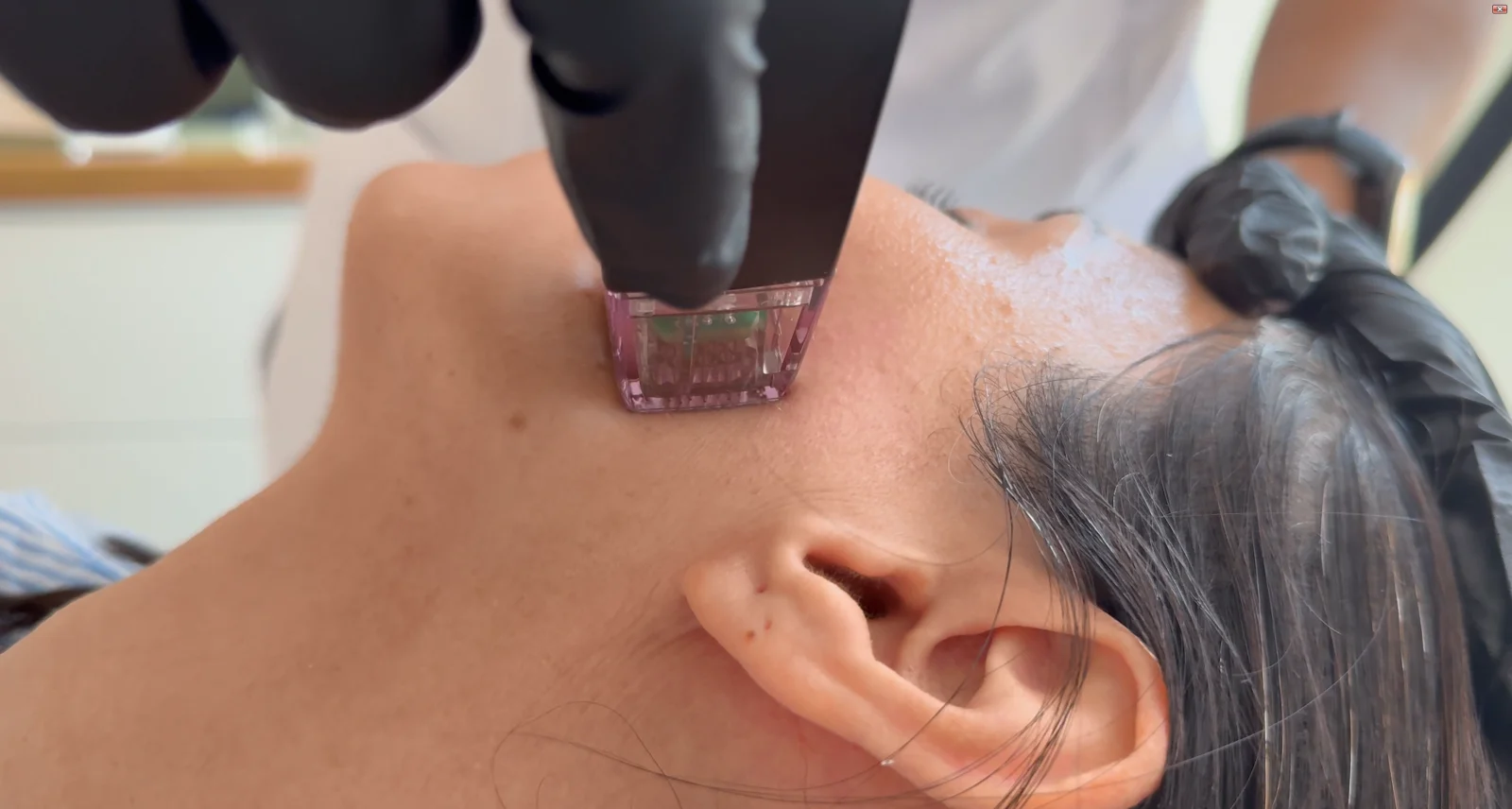
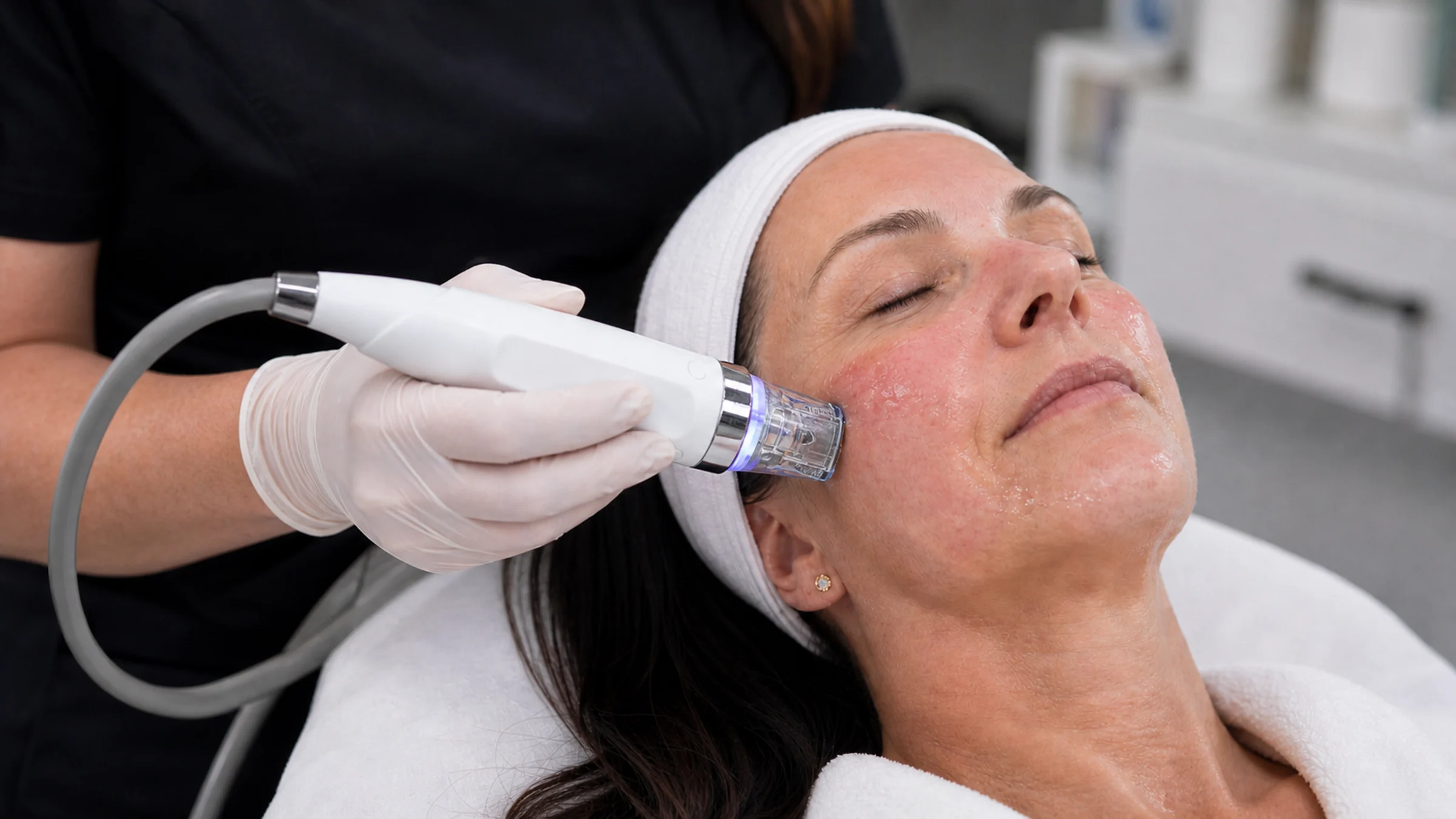
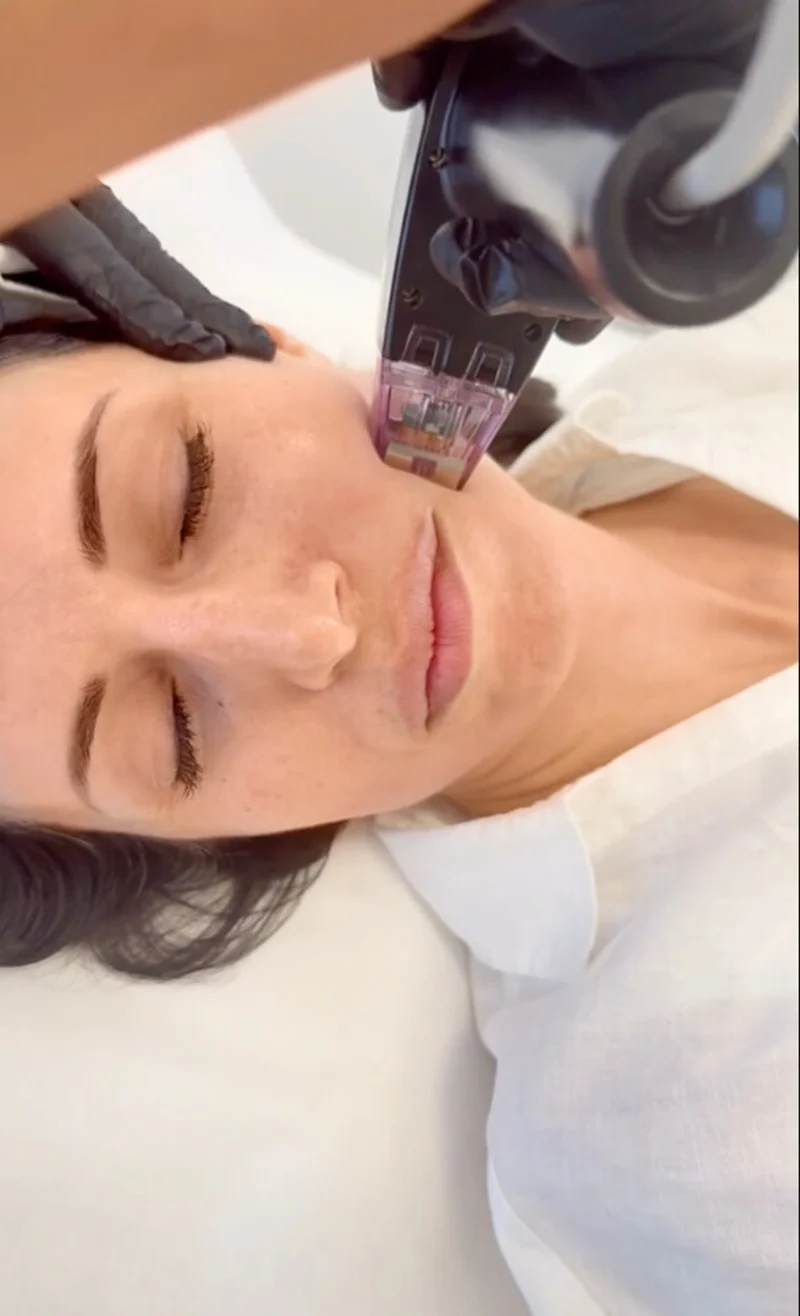
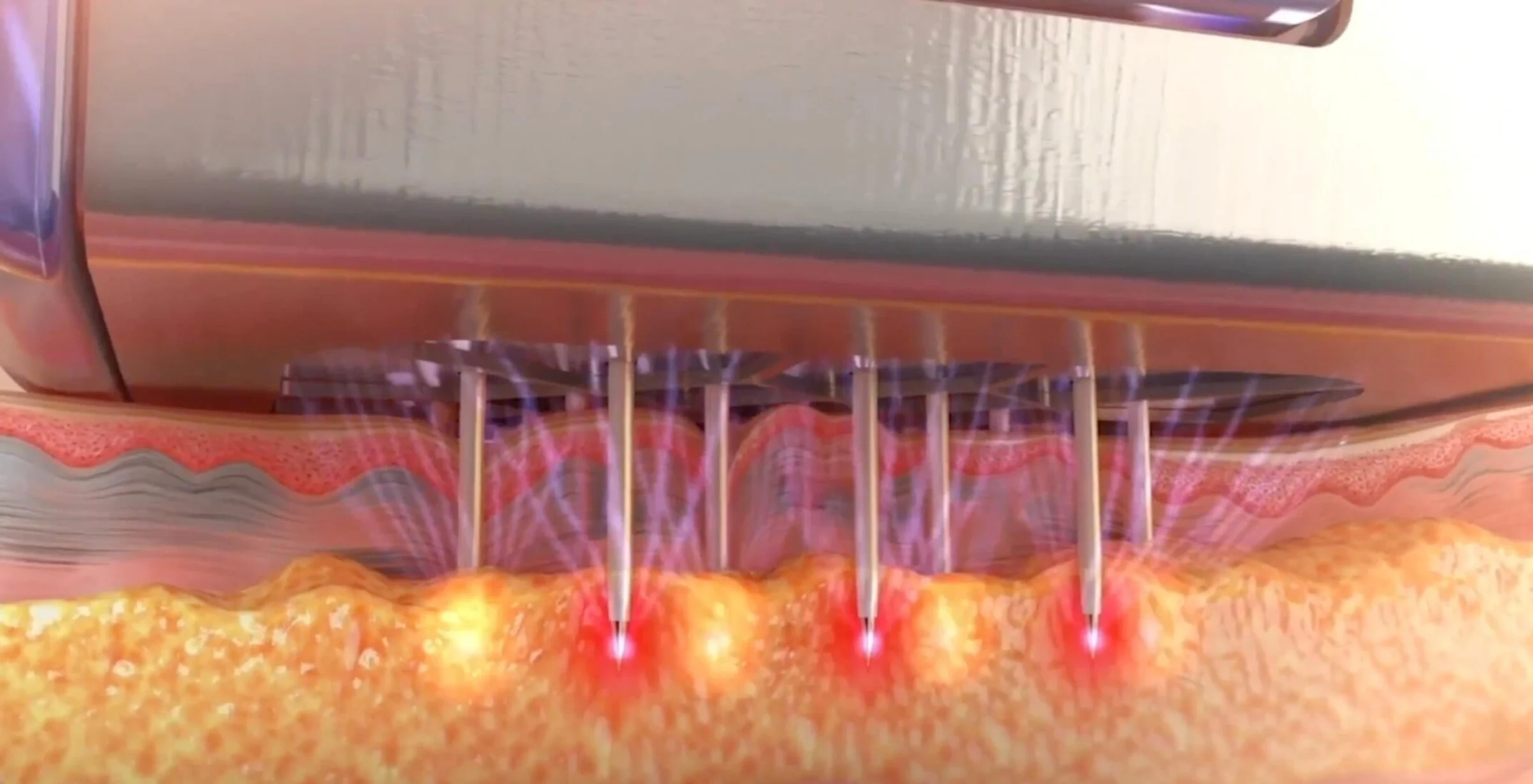
One of the best-known treatments in this field today is radiofrequency microneedling (Radiofrequency Microneedling). During treatment, micro-needles are inserted into the skin and deliver RF energy to the dermis. The combination of controlled mechanical micro-injury and thermal heating creates a dual stimulus aimed at encouraging collagen remodelling and improving skin texture, the appearance of pores and the degree of laxity.
Biostimulator injections
Unlike fillers, which add volume immediately, biostimulator injections work through a gradual biological mechanism: the injected substance (such as PLLA or CaHA) encourages the body to produce collagen naturally over weeks and months. This treatment is recommended mainly for those looking for a noticeable long-term improvement in skin quality rather than an immediate change.
Combining methods
Sometimes the most effective approach is a combined plan: a technology-based treatment to improve skin tightness and texture, alongside biostimulators that build gradual structural change over time. The treatment plan is set according to how the skin responds, the patient's goals and the doctor's recommendation.
Skin tightening methods compared
| Method | Suitable for | Typical sessions | Recovery | Peak result | Price range (indicative) |
|---|---|---|---|---|---|
| Morpheus8 | Mild to moderate skin laxity, improving skin texture and the appearance of pores | 3 | 1-3 days | After 3-9 months | Face ILS 2,000, face and neck ILS 2,250 per treatment |
| RF Max radiofrequency microneedling | Mild to moderate skin laxity, improving skin texture and the appearance of pores | 3 | 1-3 days | After 3-9 months | By area: from ILS 700, face ILS 900, face and neck ILS 1,200 |
| Biostimulators | Long-term improvement in skin quality | 2-3 | None to minimal | After 3-6 months | Depending on the type of product, quantity and injection area: from ILS 2000 |
| Combination | Moderate skin laxity, tightening + improved skin texture | Personalised plan | Depends on which methods are combined | After 3-9 months | Based on a personalised plan |
Who is skin tightening suitable for, and who is it not?
Skin tightening treatments are generally suitable for men and women with mild to moderate skin laxity, reduced skin elasticity, changes in texture and a wish to preserve and strengthen skin quality over time. Age is not a barrier, but realistic expectations are a basic condition for successful treatment.
There are situations in which some treatments are not recommended: pregnancy and breastfeeding, active skin conditions in the treatment area, certain medications, active wounds or infections, and specific medical conditions. Suitability is always decided after a professional assessment at the consultation.
Safety: who is qualified to perform the treatment?
In October 2025 the FDA (US Food and Drug Administration) published a safety communication regarding potential risks of certain uses of RF microneedling. Following the communication, the AAD (American Academy of Dermatology) also addressed the issue and emphasised that this is a medical procedure that should be performed only by a licensed, skilled medical professional with appropriate experience.
The reported cases included possible complications such as burns, scarring, loss of subcutaneous fat, nerve damage and disfigurement. These complications are rare, but can occur when the treatment is not properly tailored, when inappropriate parameters are used, or when the procedure is performed by a professional who is not sufficiently skilled in the technology and the anatomy of the treated area.
That is why my recommendation is to choose a licensed practitioner with proven training and real experience in radiofrequency microneedling treatments, whether a dermatologist, an aesthetic physician or a qualified professional working to a structured medical protocol under appropriate supervision.
In addition, home-use RF microneedling devices should be avoided entirely. The FDA states explicitly that this is a medical procedure and not a cosmetic home treatment, and that improper use can lead to significant complications. If anything unusual occurs after treatment, it is important to contact the doctor or practitioner who performed the procedure promptly, so that it can be properly assessed and treated in time.
Questions worth asking at your consultation:
- Who actually performs the treatment and what training do they have?
- Which device/model is used and under what approvals is it operated?
- What depth/intensity protocol is used for my skin type?
At the Dermacare clinic, all treatments are performed in a sterile, supervised environment with specific professional training for each protocol.
Skin tightening – what does it cost?
Factors that affect the cost of treatment
The price depends on several factors: the treatment method (radiofrequency microneedling/biostimulators/a combination of both), the size of the area (face/face + neck/body/other), the number of treatments in the series, the depth/intensity of the protocol, the amount of product (for biostimulators), and who performs the treatment (doctor/qualified practitioner).
Prices vary between clinics and depend on the treatment protocol. The ranges shown here are for guidance only and are correct as of February 2026.
How much does facial skin tightening cost?
Morpheus8: ILS 2,000 per treatment for the face, ILS 2,250 for the face and neck.
Radiofrequency microneedling for the face: from ILS 700 per treatment (the price varies by area, protocol and number of sessions in the series). Biostimulator injections: from ILS 2,000 per treatment (the price depends on the type of product, the quantity and the area treated). Combined plan: priced according to the combination of methods and the structure of the series – usually better value as part of a package.
The exact price is set only after a personal consultation, in which we define your goals, assess the condition of your skin and build a tailored treatment plan.
What to expect from the treatment process
Before treatment
Before a skin tightening treatment, you should arrive without make-up on the treatment area, avoid prolonged sun exposure and tanning in the days before treatment, and tell the practitioner or doctor about any regular medication, a tendency to bruise or herpes. Any change to medication, including anti-inflammatories such as ibuprofen, should only be made on the instruction of a medical professional. Exact preparation instructions will be given at the consultation according to the method and protocol chosen.
During and after treatment – radiofrequency microneedling, such as Morpheus8
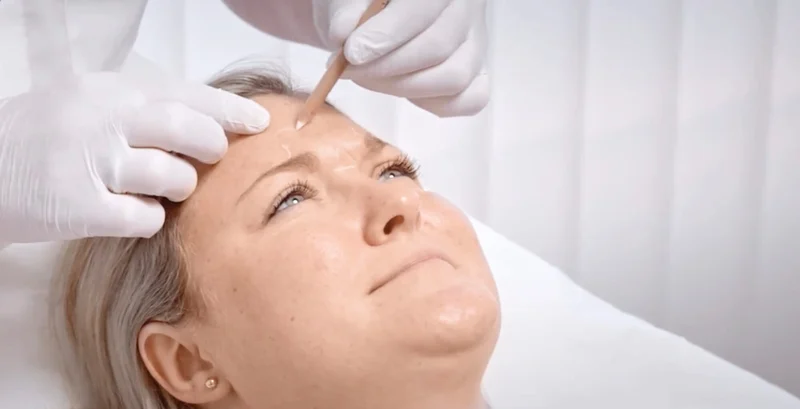
Radiofrequency microneedling treatments, such as Morpheus8, are performed after applying an anaesthetic cream and disinfecting the area. Treatment usually takes between 15 and 45 minutes, depending on the area treated. After treatment there may be redness, mild swelling and a sensation of warmth, which usually pass within one to two days. Aftercare instructions, such as avoiding heat and exercise during the first 24 to 48 hours after treatment, will be given according to the protocol.
During and after treatment – biostimulator injections
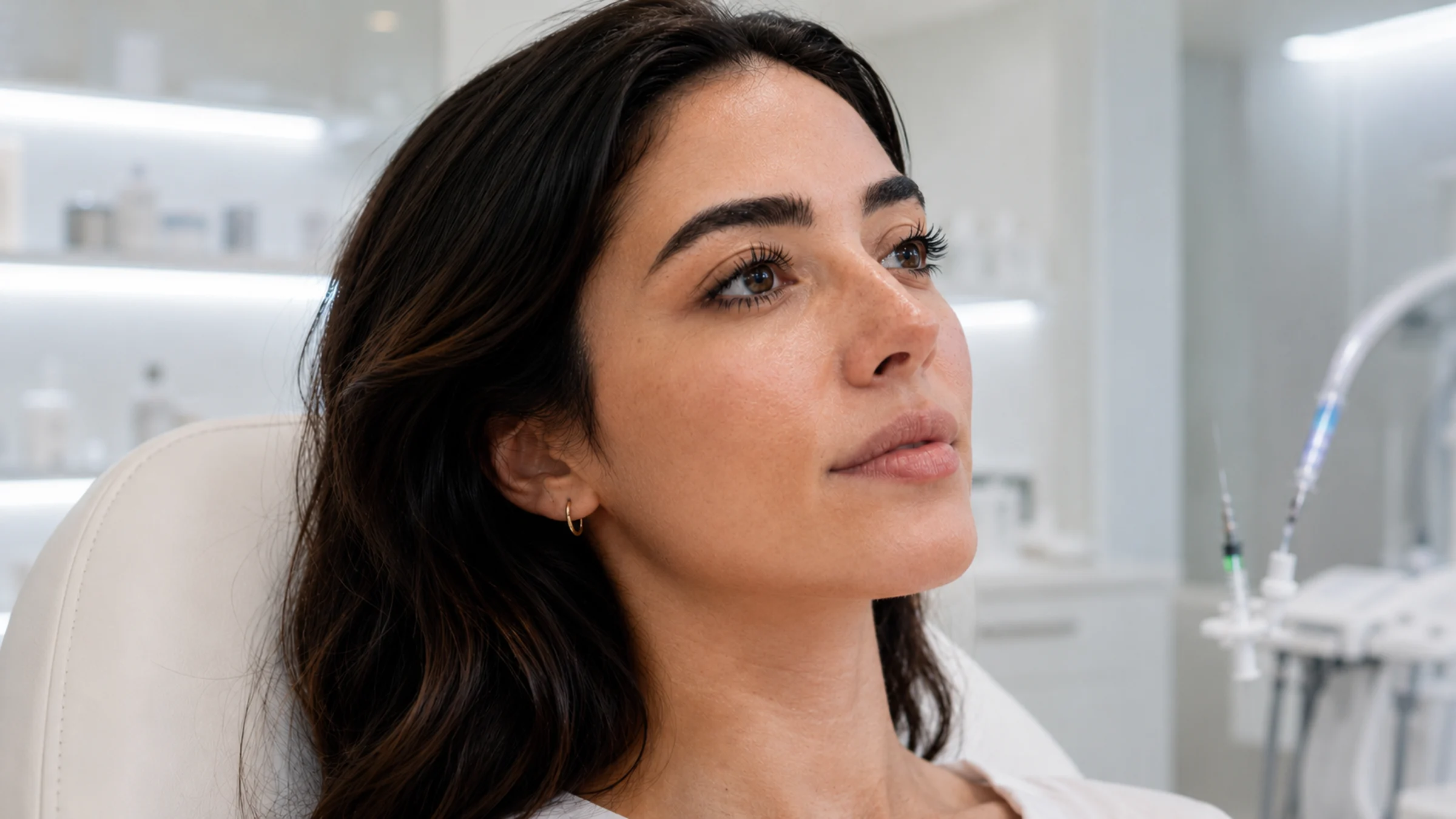
Biostimulator injections are performed after disinfection and sometimes local anaesthesia. The product is injected into the appropriate layers according to the area and goal. Treatment is shorter than radiofrequency microneedling and depends on the amount of product and the area treated. After the injection there may be local tenderness, mild swelling and sometimes small bruises. Aftercare instructions vary according to the type of product and the protocol, so it is important to follow your practitioner's instructions.
Possible side effects and when to see a doctor
Common effects that pass on their own include redness, mild swelling, local tenderness and minor bruising. Less common effects may include infection or reactivation of the herpes virus in the treatment area. Contact a doctor/the clinic if you notice significant swelling that does not subside, unusual pain, a change in skin colour lasting more than a week, or signs of infection such as local warmth, discharge or increasing pain.
Results: when will you see improvement and how long does it last?
Some patients notice an improvement in skin texture and a tighter feel after the very first session. However, the deeper effect on collagen production develops gradually over three to six months after treatment. Remodelling is a slow, progressive process, and a review published on PubMed reported that improvement may continue even beyond six months. The final result can therefore be better assessed once the series of treatments has been completed.

Frequently asked questions
Skin tightening is an aesthetic-medical process intended to stimulate collagen production and improve skin elasticity and firmness. It is achieved through various treatments such as microneedling combined with radiofrequency and/or biostimulator injections. What they all have in common: encouraging a gradual process of tissue building, structural improvement and reactivation of collagen.
Facial skin tightening focuses on improving jawline tightening, the cheeks, the upper neck area and expression lines. It is the most common in clinical practice and requires an experienced practitioner.
The price of skin tightening depends on the treatment method, the area treated, the protocol and the number of sessions. As a general indication (as of February 2026): radiofrequency microneedling from ILS 700 per treatment, and biostimulators from ILS 2000 per treatment. The exact price is determined at a personal consultation.
The cost for the face depends on whether it involves microneedling combined with radiofrequency, biostimulators or a combination, and also on the number of treatments in the plan. Usually, a combination of methods is priced as a series/package and is determined after personal tailoring. Microneedling combined with radiofrequency – how does it work? During the treatment, micro-needles are inserted into the skin, delivering RF energy to the dermis layer. The combination of mechanical stimulation and controlled heating is intended to encourage collagen rebuilding, and to contribute to a gradual improvement in the texture, firmness and overall appearance of the skin.
Usually it is a series of several sessions, the number of which is determined by the treatment method, the area and the degree of skin laxity. A personal consultation is the way to get an exact plan.
Microneedling combined with radiofrequency is usually carried out under local anaesthetic. Recovery time usually lasts one to three days, during which there may be redness, mild swelling and sometimes pinpoint bleeding or slight bruising. With biostimulators there may be local tenderness and mild bruising.
An initial improvement may appear after the first treatment, but the significant result is usually built gradually over 3 to 9 months. How long the effect lasts depends on skin type, age, sun exposure, skincare routine and the need for maintenance sessions.
The treatment is not suitable for pregnant women, people with active skin diseases, those taking certain medications, and in specific medical conditions. In addition, advanced skin laxity requires a conversation with a doctor before starting treatments. Personal suitability is determined at a professional consultation only.
Review studies published by dermatologists indicate an improvement in skin elasticity and firmness after a series of treatments, mainly with microneedling combined with radiofrequency. Results depend on various factors, so it is important to set realistic expectations at a personal consultation.
At Dermacare we build a skin tightening plan according to the condition of the skin, the degree of laxity and the patient's goal, rather than "one treatment that suits everyone". Every treatment is carried out in a supervised sterile environment, with careful attention to safety, selection of the precise protocol and full transparency regarding the number of sessions, the recovery process and the costs. Patients receive clear support and instructions before and after each treatment, to maximise the result and minimise risks.
Want to know which tightening treatment suits you and what the exact cost will be? Book a personal consultation at the Dermacare clinic in Petah Tikva: 03-6127888 | info@dermacare.co.il
Written by: Tammy Yusupov, certified cosmetician, owner of the Dermacare clinics in Israel and Austria since 2010. Areas of expertise: aesthetic medicine, advanced skin treatments, clinical anti-aging protocols. Last updated: February 2026. The information is general and is not a substitute for personal medical advice.
Read more about radiofrequency microneedling at the Dermacare clinic in Petah Tikva.
Want to see all the prices in one place? The full Dermacare treatment price list — laser hair removal by area, Botox and more.