

In brief
- Pico laser breaks down tattoos through a photoacoustic effect, meaning a mechanical pressure wave rather than heat alone, and therefore reduces the thermal load on the skin.
- On average 6 to 12 sessions are needed at intervals of 6 to 8 weeks, and the whole process takes 6 to 18 months.
- Pico requires up to 30% fewer treatments than nano laser, and is suitable for all skin tones (Fitzpatrick I-VI) with an adapted protocol.
- Spectra PicoPulse has four wavelengths, 1064, 532, 585 and 650 nanometres, to match different ink colours.
- The treatment is not suitable during pregnancy and breastfeeding, and adjustment or postponement is required with a fresh tan, a tendency to keloids and autoimmune diseases.
In brief: Pico laser (Picosecond Laser) is an advanced laser technology for tattoo removal, based on extremely short pulses (picoseconds) that break down the ink particles in the skin through a photoacoustic effect – rather than through heat alone. In aesthetic medicine, picosecond lasers are used mainly for tattoo removal and lightening stubborn pigments. Compared with traditional nano lasers, pico laser allows more effective breakdown of difficult colours, reduces the thermal load on the skin, and requires fewer treatments.
Key points:
- Mechanism: mechanical breakdown of ink through a photoacoustic effect, not heat alone
- Number of sessions: 6-12 on average, at intervals of 6-8 weeks
- Suitability: suitable for all skin tones (Fitzpatrick I-VI) with an adapted protocol
- Safety: risk reduction through protocol adjustment, protection from prolonged direct sun, keeping to the intervals between treatments and following the practitioner's instructions
Why do people search for "pico laser", and what is its main use?
Most searches for the term "pico laser" relate to tattoo removal. This is the technology that has become an advanced standard in the field in recent years, thanks to its ability to break down ink particles with high efficiency and less thermal load on the tissue. Besides tattoo removal, pico laser is also used to treat pigmentation spots and lighten skin marks – but these are different uses that require a separate assessment. On this page we will focus on the main and most common use: pico laser tattoo removal.
What is pico laser and how does it work?
Pico laser is a laser device that emits extremely short pulses, measured in picoseconds (a trillionth of a second). By comparison, previous-generation lasers such as the nano laser operate in billionths of a second, meaning that pico is a thousand times faster. This difference is not merely numerical: it fundamentally changes the way the ink breaks down beneath the surface of the skin.
Mechanism of action – the photoacoustic effect
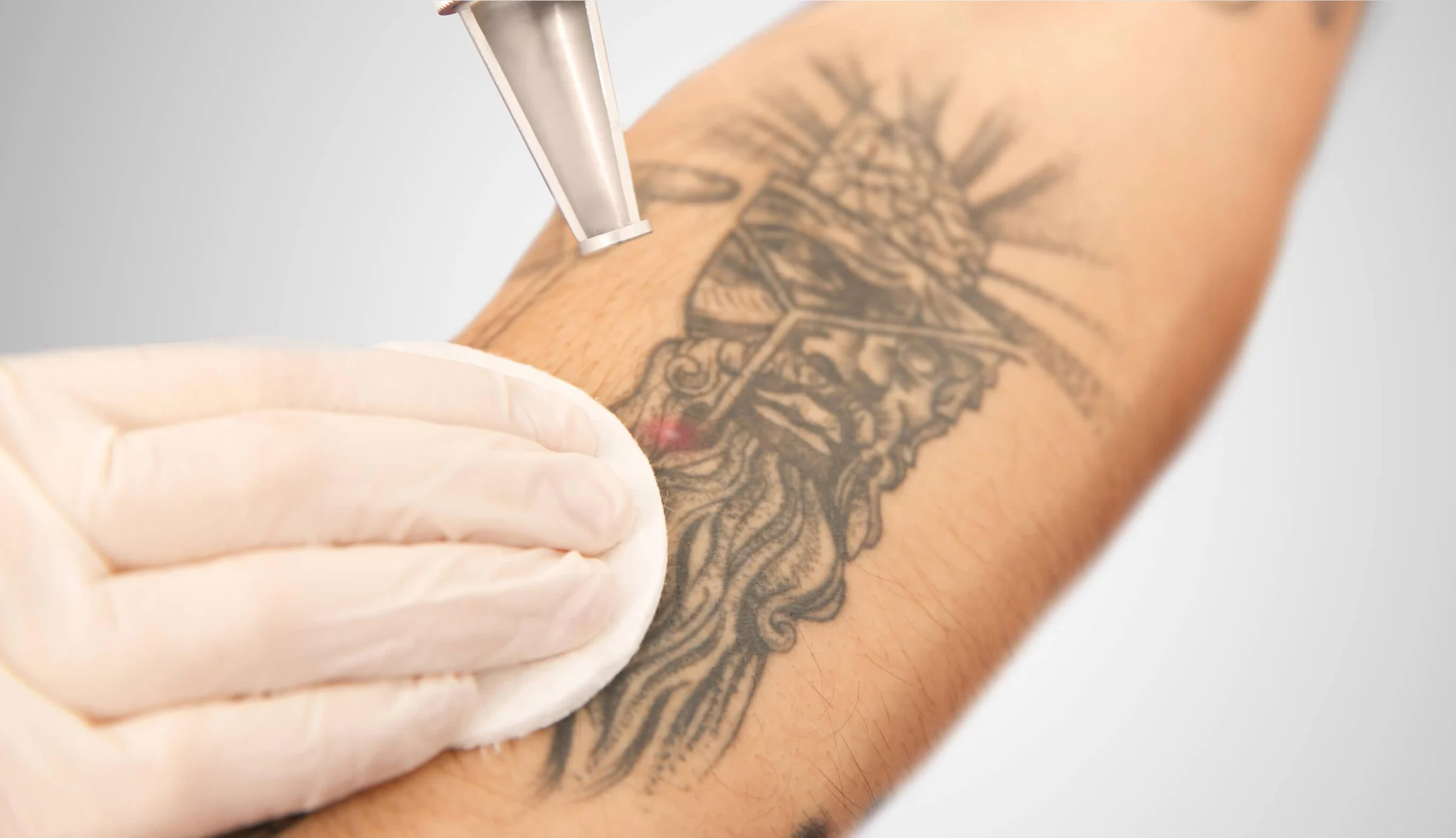
When the short laser pulse hits the ink particles, an acoustic pressure wave is created that shatters them into tiny fragments. This is the photoacoustic effect: instead of heating the ink and the surrounding tissue, the laser creates a mechanical pressure oscillation that breaks the particles apart. The smaller the particles, the more efficiently the body's lymphatic system clears them away. The result: gradual fading of the tattoo from session to session.
Modern short-pulse lasers, including picosecond-technology lasers, offer improved efficacy and safety while reducing complications such as pigmentation changes, especially in dark skin. You can read more at NCBI StatPearls – Laser Tattoo Removal.
The scientific principle – Selective Photothermolysis
The scientific basis for laser tattoo removal is the principle of Selective Photothermolysis, first described by Anderson and Parrish in 1983. The principle states that laser light of a certain wavelength is selectively absorbed by a specific target (such as ink pigment) when the pulse duration is shorter than the target's thermal relaxation time.
The key difference between pico laser and nano laser lies precisely at this point: ink particles are very tiny, so their thermal relaxation time is short. A picosecond pulse is better suited to effectively breaking down such small particles.
What this means in practice: pico laser mainly creates mechanical breakdown (photoacoustic) and less thermal damage to the surrounding tissue. This reduces side effects such as burns, pigmentation changes and scarring. In practice this translates into the aim of delivering energy to the pigment with minimal heat spreading to the tissue – especially relevant in dark skin, where melanin increases the risk of pigmentation changes. However, the effect of the laser varies between patients and depends on many factors such as skin type, ink colours and the depth of the tattoo. You can read more about the removal technique.
What is the difference between pico laser and nano laser?
The key difference lies in the pulse duration and the way the ink breaks down. Both types of laser are designed for tattoo removal, but the differences affect the result, the length of the process and the side effects:
| Parameter | Pico laser | Nano laser |
|---|---|---|
| Pulse duration | Picoseconds (a trillionth of a second) | Nanoseconds (a billionth of a second) |
| Main mechanism | Mechanical breakdown (photoacoustic) | More significant thermal component |
| Challenging colours (green/yellow) | Higher efficacy with original pico devices | Medium-low |
| Number of treatments | Up to 30% fewer treatments than nano laser | More than pico laser |
| Suitability for dark skin (Fitzpatrick IV-VI) | Better with an adapted protocol | Requires greater caution |
| Risk of pigmentation changes | Almost zero (with correct adjustment and following the instructions) | Higher, mainly in dark skin |
A prospective randomised study of 49 patients showed a statistically significant superiority of pico lasers over nano laser, with the rate of clearance above 75% being significantly higher in the pico group. You can read the study at PubMed – Lorgeou et al.
How many pico laser treatments are needed?
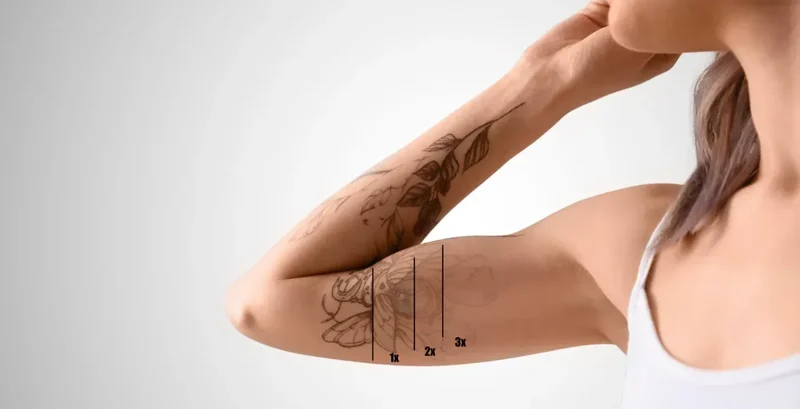
On average, 6-12 sessions are needed to remove a tattoo completely. The interval between sessions is 6-8 weeks, and the whole process takes 6-18 months. Waiting between treatments is important because the body clears the ink particles gradually – the laser breaks them down, and the body clears them away.
Treatment ranges by type of tattoo
Small black tattoo: usually between 6-8 sessions. Black ink responds best to laser because of its higher absorption capacity.
Professional coloured tattoo (medium-large): usually 8-14 sessions. Colours such as green, yellow and light blue are more resistant and require adjustments of different wavelengths.
Preparation for a cover-up: only 2-4 sessions. The aim is sufficient lightening so that the tattoo artist can work with a new design.
Cover-up tattoo (double layers): 8-14 sessions on average – multiple layers of ink prolong the process.
What can prolong the process?
A dense coloured tattoo, layers (cover-up), a location in an area with lower blood flow (feet, fingers), or a history of pigmentary reactions.
In the professional community there is a tool called the Kirby-Desai Scale, used to estimate the expected number of treatments. The scale takes into account factors such as skin type, tattoo location, ink colours, amount of ink, layers and existing scars. However, an accurate estimate of the number of treatments can only be made after a physical examination of the tattoo and skin type.
What does the pico laser treatment process look like?
The treatment is outpatient and does not require a long recovery time. The session itself is short, but the key to success is the number of sessions and the intervals between them.
Before treatment
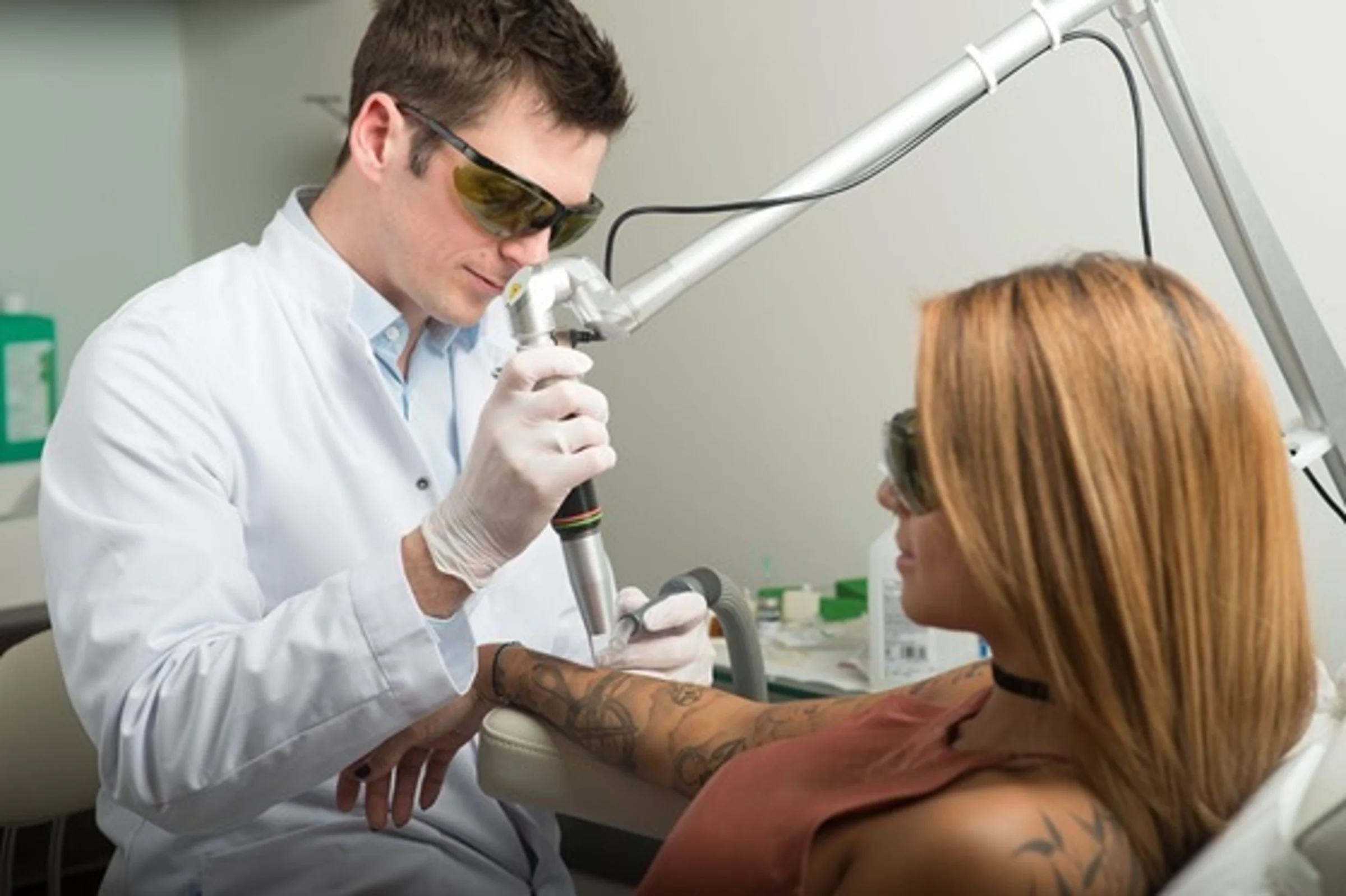
The area is disinfected. Depending on individual sensitivity, a local anaesthetic cream is applied about one to two hours before the session. Special protective glasses are provided for the staff and the patient.
During treatment
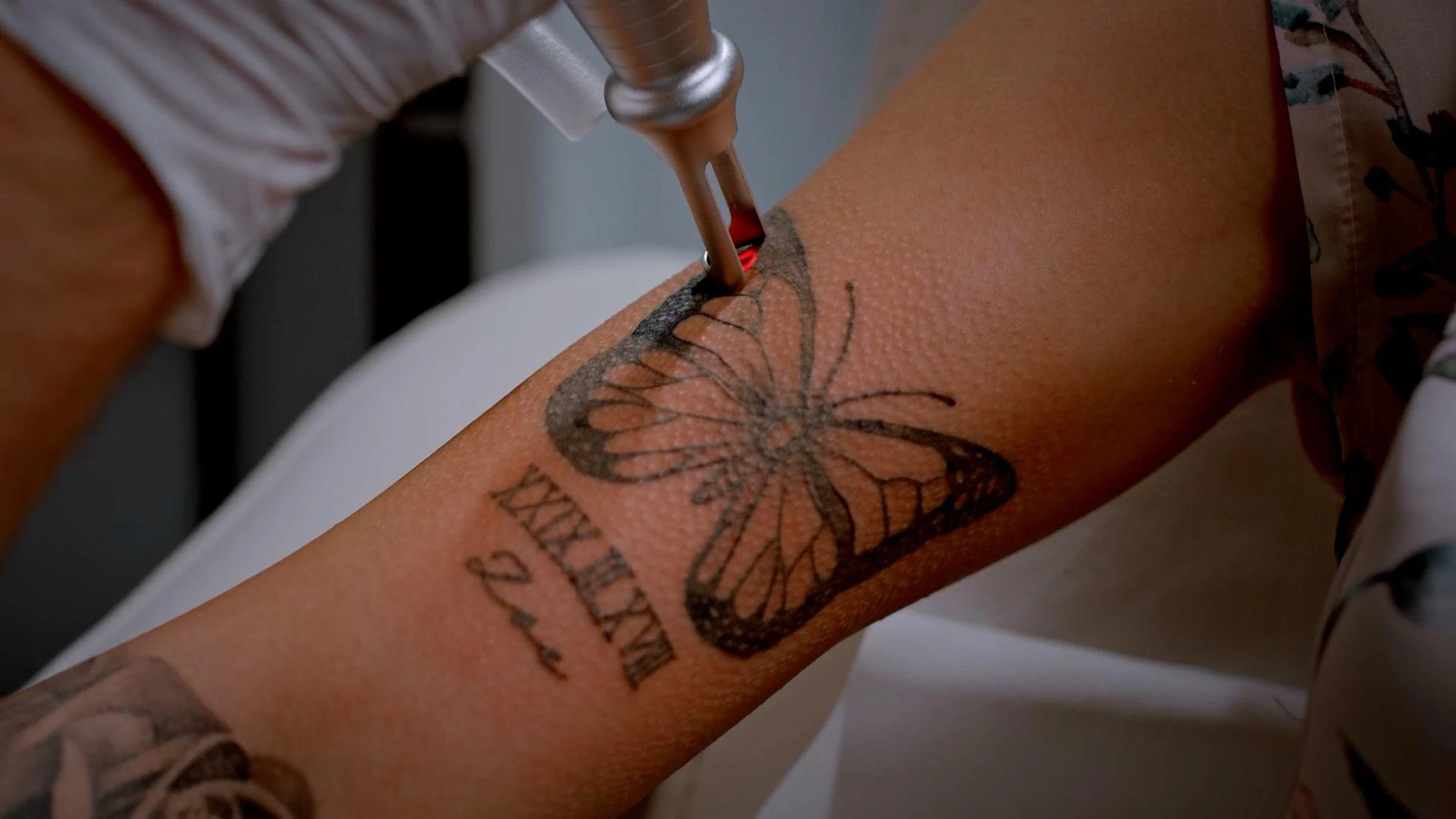
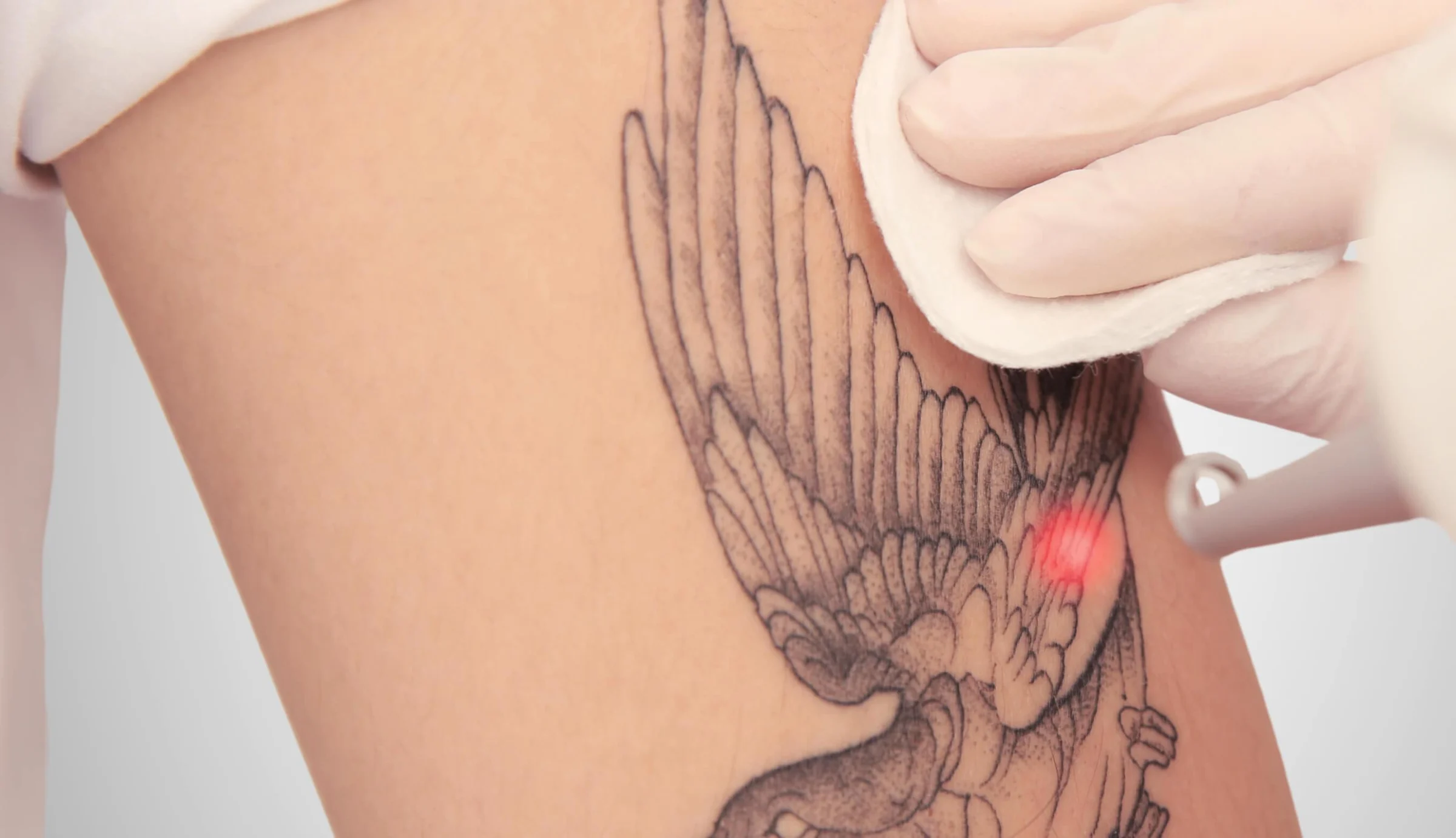
The session lasts between 30 seconds and a few minutes, depending on the size and colours of the tattoo. The laser works in short pulses on the tattoo, with air cooling before and after. The skin may turn white for a moment – a normal reaction called frosting, which indicates interaction of the laser with the pigment.
After treatment
Immediately after the session, mild to moderate redness and occasionally swelling are expected, which pass within a few hours. It is important to keep the area clean, apply a soothing ointment (Biafine or Bepanthen) as needed, avoid prolonged direct sun exposure or tanning and use SPF 50+ every day. Do not go to the pool or the sea for the first two days.
Side effects and risks – what you need to know
Common effects include redness and mild swelling – all of which pass within a few days. Pico laser treatment is considered safe when carried out by a professional team with experience in the field and suitable equipment.
Rare effects
- Hyperpigmentation (dark spots) – possible mainly in dark skin or after sun exposure.
- Hypopigmentation (light spots) – rare, mainly in dark skin with excessively high intensities.
- Scarring – a negligible chance with pico laser when the protocol is correctly adapted.
- Blisters and scabs – occasionally in patients who do not follow the aftercare instructions.
When to seek a check-up
Contact the treating team if you experience unusual pain that does not improve, large blisters, discharge, an unusual smell, or worsening redness after 48 hours.
The FDA notes that laser tattoo removal requires the use of the correct type of laser, an understanding of the tissue response, and knowledge of post-procedure care. You can read more in the FDA article.
Who is pico laser treatment suitable for, and when should it be postponed?
The treatment is suitable for all skin tones (Fitzpatrick I-VI) after protocol adjustment, and is also suitable for old, new, amateur and professional tattoos. However, there are situations in which special adjustment or postponement is required:
A fresh tan in the tattoo area – increases the risk of pigmentation and burns. Wait four weeks before and after tanning.
Autoimmune conditions – diseases such as lupus or scleroderma may affect the skin's response and the healing process. An individual assessment is required.
A tendency to hyperpigmentation or hypopigmentation – if the skin reacts with colour changes to injuries or other treatments, the protocol will need to be adjusted.
A history of keloid scars – if there is a tendency to form keloids, the risk of scarring increases and the decision should be considered carefully.
Medications or supplements that increase sensitivity to light – these are checked in the consultation before treatment. Healing disorders, poorly
controlled diabetes or a tendency to recurrent infections – these are examined in the consultation before deciding whether the treatment is suitable.
Pregnancy or breastfeeding – there is a risk of an inflammatory reaction or infection, and in general during pregnancy or breastfeeding the aim is to avoid unnecessary exposure and risks when there is no good safety data. Therefore women in these situations should not undergo laser tattoo removal; in addition, breastfeeding sources note that there is not enough information on whether the ink breakdown products can affect or pass to the baby, and therefore recommend postponing until after breastfeeding.
Suitability for treatment is determined after a full medical history and assessment of the tattoo. At Dermacare, we examine each case individually and offer a personalised plan.
The technology at Dermacare – Spectra PicoPulse
At the Dermacare clinic we use the Spectra PicoPulse, a new-generation pico laser. One of the things that sets this device apart is its four wavelengths:
1064 nm – well absorbed by black ink. This is the basic wavelength.
532 nm – suited to breaking down red, brown and orange ink. This wavelength targets warm pigments.
585 nm – designed to treat shades of light blue and purple, which are considered challenging for older technologies.
650 nm – targets green colours, which are considered the most difficult to remove and often do not respond well to lasers with limited wavelengths.
The aim is not "more power", but precise matching of the wavelength to the ink and skin profile to improve efficacy and reduce risks.
Initial assessment and treatment planning
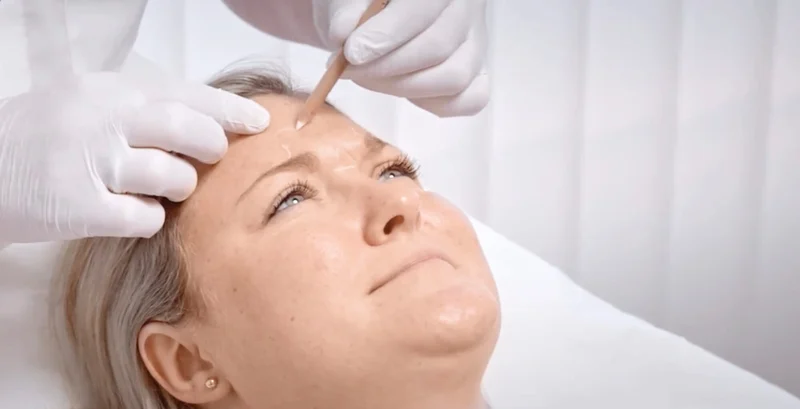
Every pico laser treatment begins with a personal consultation and assessment of the tattoo: checking skin type, ink colours, tattoo depth and location. Based on the assessment, a tailored treatment plan is drawn up, including setting expectations about the number of sessions and expected results. You can send a photo of the tattoo for an initial assessment – even before you come to the clinic.
Book a consultation and initial assessment | 036127888 | info@dermacare.co.il
This article was written by Eduard Yusupov, a specialist in tattoo removal with more than 16 years of experience (since 2010), owner of the Dermacare clinics in Austria and Israel. This content is based on current scientific literature (StatPearls, PubMed, PMC) and accumulated professional knowledge in the field of laser tattoo removal.
Frequently asked questions
The sensation is usually mild, especially after using a numbing cream. Areas with less fatty tissue (such as the ankle, ribs, hand) may be more sensitive. It is recommended to apply a local numbing cream about 1 to 2 hours before the session. The discomfort passes within a few minutes after the treatment.
Complete or almost complete removal of the tattoo can be achieved. Black, red and brown tattoos achieve the best results. With resistant colours such as yellow or green, a slight "shadow" remains in rare cases. Sometimes the shadow continues to fade for several months after the series is complete, as the body continues to clear ink particles.
Frosting is an expected, normal reaction that occurs immediately when the laser hits the ink. The whitening of the tattoo is caused by tiny gas bubbles (carbon dioxide and water vapour) released as a result of the breakdown of the ink particles. It is a reaction that indicates the laser's interaction with the pigment; in itself it does not guarantee a final result. After a few minutes the tattoo returns to its original colour.
This phenomenon is called paradoxical darkening and is documented in the scientific literature. In some light inks, and especially when metallic compounds such as iron oxides are involved, and sometimes components in white ink such as titanium dioxide, a chemical reaction may occur that darkens the pigment after laser. The colour may change to a dark grey or even green shade.
Yes, but with a different wavelength for each colour. Black responds best. Red, brown and orange respond well. Green, purple, blue and yellow are considered more challenging, but a pico laser with several wavelengths manages to treat them more effectively than older technologies. Colours such as white cannot be removed, but can be significantly faded.
You can stop at any stage without risk. The tattoo will remain lighter than its initial state, but will not disappear completely. The treatments already performed are not "cancelled" and you can continue the series at any time.
Yes, but increased caution is required in protecting against prolonged direct sun. You must avoid tanning for at least four weeks before and after the session, and use SPF 50+ every day (when exposed to the sun). If there is a significant tan in the tattoo area, it is recommended to postpone the treatment until the tan fades.
Not necessarily, even though old tattoos may look more faded to begin with. In practice, the most significant factor is the ink colour and depth, not only the age of the tattoo.