
In brief
- A skin booster is a treatment that improves skin quality from within, not a filler: its aim is to deliver deep hydration, smooth the texture and restore radiance without changing your facial features.
- The treatment involves tiny injections of a special hyaluronic acid into the dermis, which encourages the skin to produce new collagen and elastin.
- It is suitable for dry, tired skin, fine lines and loss of elasticity, as well as for the neck, décolletage and the backs of the hands.
- An anaesthetic cream is applied about 30 minutes before the treatment, the injections take around 20 minutes on average, and you can return to your routine almost immediately.
- The hydrating effect is felt in the first few days, and the full result peaks about two weeks to a month after completing the course of treatments.
A skin booster treatment is not just another anti-aging treatment. It is a category of its own. The goal here is not to "fill" wrinkles or "plump up" cheeks as classic fillers do. The goal is to improve skin quality from the inside out, giving it deep hydration, a smoother texture and restoring the natural glow that has faded over time.
What is a skin booster and how does it restore the skin?
Unlike a moisturiser, however expensive, which works only on the outer layer of the skin, a skin booster treatment reaches deeper, into the dermis, where renewal processes take place. Think of your skin as a sponge that has dried out and lost its elasticity. A skin booster is like watering that sponge from within, restoring its softness, vitality and radiant appearance.
The main goal: natural, gradual improvement
The philosophy behind this treatment is not dramatic change but gradual, natural improvement. That is why it has become one of the most popular treatments in Israel, especially among women and men looking for a subtle result and an overall improvement in the appearance of their skin, without looking "done".
At the Dermacare clinic, we see the skin booster as an essential foundation for skin rejuvenation. In our experience, it is particularly suitable for the following situations:
-
Skin that looks dry, tired or dull.
-
When the first signs of ageing and fine lines start to appear.
-
For anyone who wants to improve their skin texture and give it a healthier, more radiant look.
-
As a maintenance treatment that preserves skin quality over time.
The treatment itself is based on high-quality materials and advanced technology, the product of precise development processes.
Not a filler, but a skin quality enhancer
It is worth stressing the fundamental difference once again: a skin booster is not a "filler". While fillers are designed to add targeted volume to areas such as the cheeks, chin or lips, a booster works across a wider surface area to enrich the entire skin with moisture and encourage natural renewal processes.
The overarching aim of a skin booster treatment is not to "fill" but to "quench". It restores the skin's underlying structure, leading to an overall fresher, smoother and more radiant look, without artificially altering your facial features.
In practice, the process involves a series of tiny, precise injections of a special hyaluronic acid (usually non-cross-linked), which encourages the skin to produce new collagen and elastin. As a result, the improvement is not only external and visible, but also internal and deep – the kind that strengthens skin health in the long term.
How the treatment makes the skin produce collagen and elastin
To understand how a skin booster works, we need to take a quick look at the science behind the scenes. It is not magic, but a sophisticated process that reactivates the skin's natural repair mechanisms. It all starts with one remarkable molecule – hyaluronic acid.
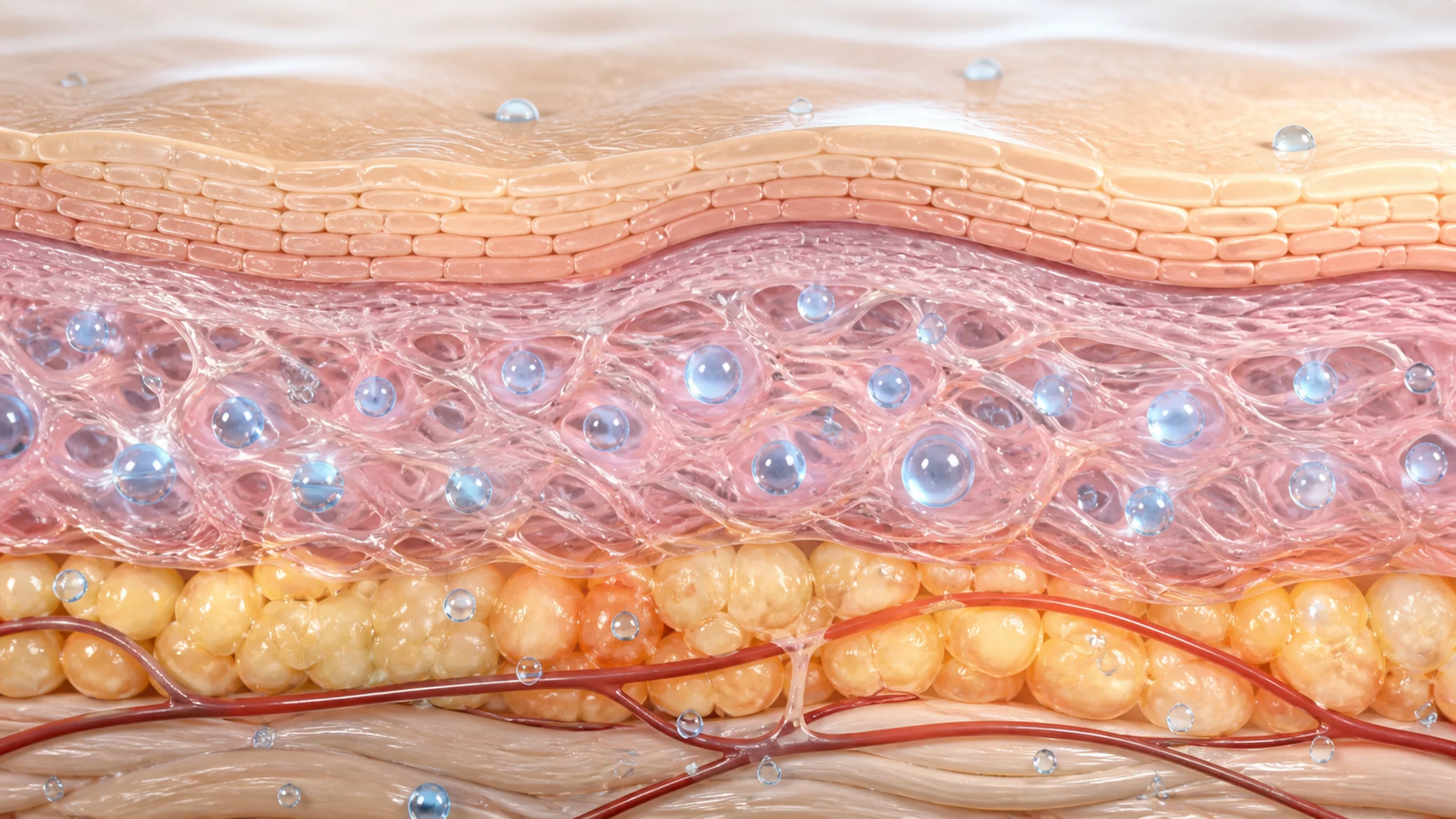
In a skin booster treatment we inject hyaluronic acid with a special structure – it is not designed to "plump" like a filler, but to spread gently through the dermis. This substance is like a magnet for water, able to hold up to 1000 times its own weight in fluid.
Stage one: building internal moisture reservoirs
Immediately after the precise injection, the hyaluronic acid molecules start drawing water from the surrounding tissue. The result is a dense network of moisture reservoirs beneath the skin. Think of it as installing a tiny internal irrigation system in the skin, ensuring its deeper layers stay hydrated and nourished over time. A well-hydrated environment is a basic condition for skin cells to function properly.
The role of hyaluronic acid in a skin booster is not only to provide immediate hydration. Its main purpose is to create the perfect conditions for the skin's "production plants", the fibroblasts, so that they start working overtime.
Stage two: "waking up" the fibroblasts and producing collagen and elastin
Fibroblasts are the cells responsible for producing the two proteins most essential to the appearance of our skin:
-
Collagen: the protein that gives the skin its structure, strength and firmness. It is the skin's scaffolding.
-
Elastin: the protein responsible for the skin's elasticity and its ability to spring back after being stretched.
When fibroblasts are in a dry, "tired" environment, their work rate drops dramatically. The deep hydration created by a skin booster treatment is like a shot of energy for them. This process, called biostimulation, prompts the fibroblasts to "wake up" and get back to vigorously producing new, stronger and denser collagen and elastin fibres.
Put simply, the skin not only looks better on the outside, it actually rebuilds itself from within and naturally becomes firmer, stronger and more elastic. If you would like to learn more, you can read about the role of biostimulators in stimulating collagen in our in-depth article.
At the Dermacare clinic, we make a point of working only with the most advanced materials, and we use precise injection techniques that ensure the product is distributed evenly. This precision is crucial to maximise the biostimulation process and ensure the skin gets everything it needs to renew itself and look its best.
Who is a skin booster treatment particularly suitable for?
One of the first questions we hear here at the clinic is "Is a skin booster the right treatment for me?". The short answer is that improving skin quality can benefit almost everyone. But, as with any aesthetic treatment, there are situations in which it is simply the ideal solution.
A skin booster is not a treatment tied to age or gender. It is an excellent answer to a wide range of needs, from young people in their 20s who want to start caring for their skin and prevent damage, to older patients who want to restore the vitality their skin has lost over the years.
The main target groups for the treatment
Over our years of experience at the Dermacare clinic, we have identified several main groups for whom this treatment is simply tailor-made:
-
For dry, tired and dull skin: if you feel your skin is "thirsty", looks a little grey and has lost its natural glow, a skin booster is like giving it a glass of cold water on a hot day. It quenches the skin with deep hydration, directly into the dermis, and restores a fresh, radiant look.
-
For those starting to notice fine lines: this treatment is excellent for smoothing the first fine lines that appear around the eyes, the mouth or on the cheeks. It does not "plump" like a filler, but works on improving the overall texture of the skin, giving it a smoother, fresher look.
-
For people experiencing a loss of elasticity and firmness: when the skin starts to lose its elasticity and firmness, whether due to age or sun exposure, the treatment helps to stimulate it into action. It encourages the natural production of new collagen and elastin, contributing to subtle tightening and restoring the skin's elasticity.
Additional uses and personalisation
A skin booster is not just for the face. It is also very effective in rejuvenating other areas that often "give away your age", such as the skin of the neck, the décolletage and the backs of the hands. These areas are usually neglected, and the treatment can work wonders for their texture, hydration level and overall skin quality.
This treatment is an excellent "gateway" into the world of aesthetics for anyone who is a little hesitant or wants to start with something gentle. It also works wonderfully as a complementary treatment alongside other injectables such as Botox and fillers, to enhance the overall result.
Another significant advantage is its ability to improve the appearance of superficial acne scars. In fact, a skin booster is one of the popular treatments for post-acne scarring, and many patients report a noticeable improvement in skin texture after just a short course of treatments.
That said, it is important to be realistic. The treatment is less suitable for very deep wrinkles or significant skin laxity. Such conditions usually require other solutions, such as fillers or biostimulators. That is exactly why we hold a preliminary assessment consultation at Dermacare, where we analyse the condition of your skin together and make sure this really is the right treatment for you. You can also read more about how to choose the anti-aging treatment that suits you in our complete guide.
The skin booster treatment at the clinic, step by step
To ensure a calm and safe treatment experience – and, just as importantly, results you will love – we at Dermacare believe in an organised, transparent process. From extensive clinical experience with skin booster treatments, we have learned that the success of the treatment begins long before the injection itself.
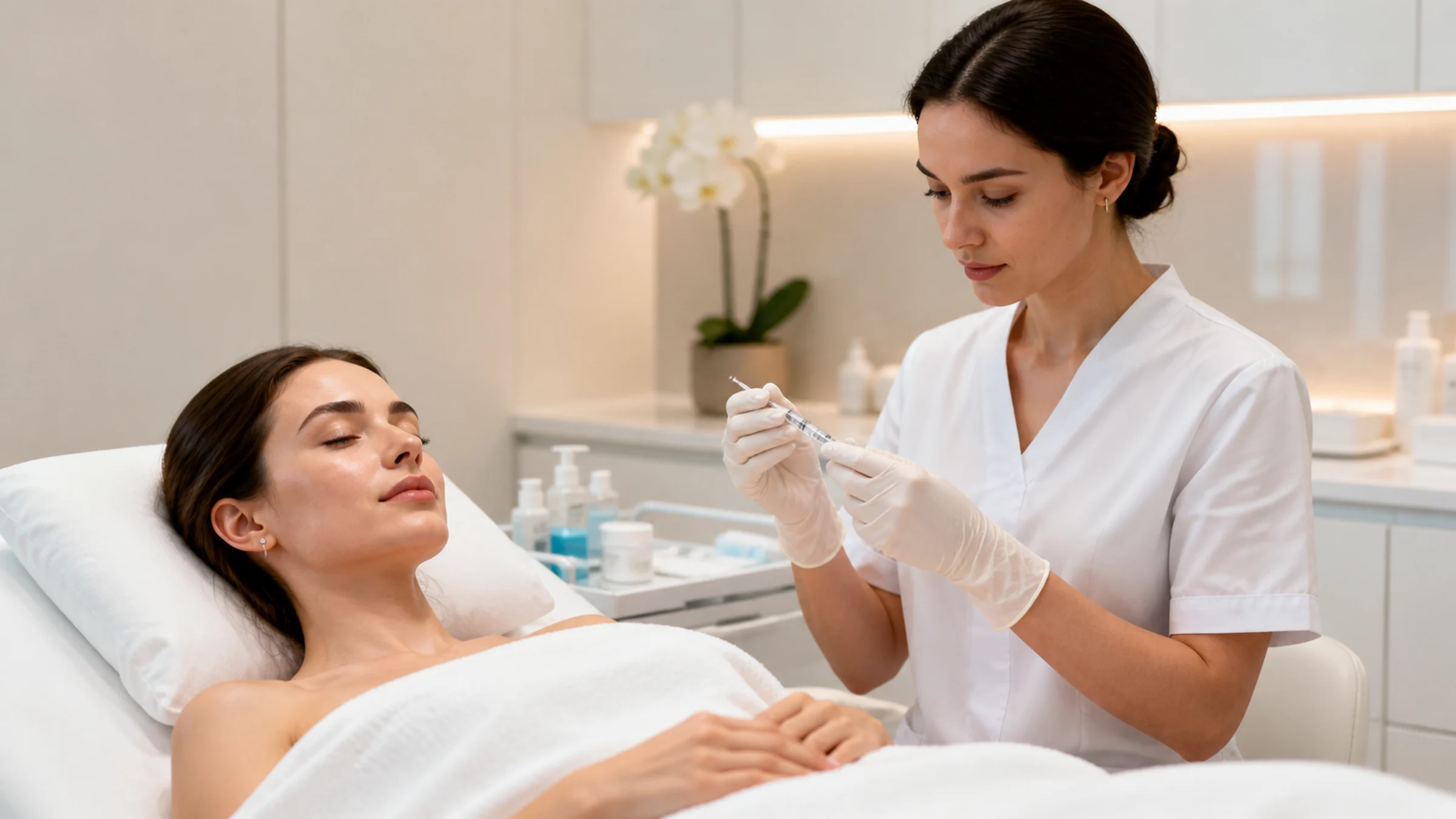
This is what the process looks like at our clinic, from the moment you walk in until you return to your routine.
Step 1: consultation and personal assessment
Everything starts with a personal meeting with one of the doctors from our experienced team. This meeting is the most critical part of a successful treatment.
This is what happens at the meeting:
-
Professional skin assessment: we examine the condition of your skin in depth – its elasticity, hydration level, texture and overall quality.
-
Medical history: we learn about your health background to make sure the treatment is safe for you.
-
Setting realistic expectations: we talk openly about what can really be achieved, what the treatment offers and what it cannot offer. Transparency is key.
-
Building a personal treatment plan: together we build a treatment protocol tailored precisely to the condition of your skin and the goals we have defined.
Step 2: preparation and numbing
One of the biggest concerns is pain, which is why we never compromise on your comfort. About 30 minutes before the injections begin, we apply a strong local anaesthetic cream to the entire treatment area. Our aim is simple: for the treatment to be as comfortable as possible, with minimal discomfort.
Step 3: the treatment itself – precise, gentle injection
The injection stage itself is relatively quick, taking around 20 minutes on average. The treatment is performed by a doctor, using a series of gentle, precise injections.
Good to know: at Dermacare we use a variety of injection techniques. Sometimes we use a very fine needle, and in other cases we prefer a cannula (a thin, flexible tube with a blunt tip). The choice depends on the treatment area, the condition of the skin and the chosen protocol – all to achieve even distribution of the product and reduce the chance of bruising.
Step 4: quick recovery and aftercare instructions
Immediately after the injections, there may be slight redness and localised swelling at the injection points. This is a completely natural skin reaction that usually subsides within a few hours. You can return to your routine almost immediately. Our team will provide you with clear, simple aftercare instructions to ensure a quick recovery and long-lasting results. By the way, combining a skin booster with facial mesotherapy treatments can enhance the results even further, and this is something we can discuss at the consultation.
Treatment results: when will you see a change and how long does it last?
These are probably the two most important questions we hear at the clinic: "When will I start to see something?" and "How long will it last?". To answer them, it is important to understand that a skin booster treatment works on two levels, so the results also arrive in two stages.
The first stage is the immediate hydrating effect. Many patients tell us that within the first few days after the treatment they feel their skin has simply "had a drink of water" – it looks fresher, more hydrated and has a subtle glow. This is the immediate effect of the hyaluronic acid.
The deeper result and the significant change
But – and it is an important but – the truly significant effect, the one that changes skin quality from within, takes a little longer. The real aim of the treatment is to encourage the skin to produce new collagen and elastin fibres itself, and this building process does not happen overnight.
Therefore, the full result – firmer, more elastic skin with a smooth, even texture – appears gradually and peaks about two weeks to a month after completing the full course of treatments. You can read more about the first results of a skin booster treatment in the detailed article we have prepared.
The treatment protocol we recommend here at Dermacare usually includes a course of 2-3 treatments, about a month apart. This interval gives the skin the time it needs to respond to the stimulation and begin the internal rejuvenation process.
Think of it as a gym workout for your skin. Each treatment builds on the previous one, allowing continuous stimulation of the cells responsible for producing collagen and elastin. This gradual approach is the secret to a result that looks natural and lasts.
How long do the results last and what affects this?
The second question, about how long the result lasts, is more complex because it depends very much on individual factors. On average, results last for between 6 and 12 months, but several factors can affect this range:
-
Age and initial skin condition: young, healthy skin usually responds better and maintains the results for longer.
-
Lifestyle: factors such as smoking, diet and sun exposure break down hyaluronic acid faster and shorten how long the result lasts.
-
Genetics: our genetic predisposition plays a role in how quickly our skin ages.
-
Type of product: there are different types of skin boosters, and the concentration and structure of the hyaluronic acid also affect how long the treatment lasts.
Recommended treatment protocol and maintaining results
| Treatment stage | Number of sessions | Interval between sessions | Maintenance frequency |
|---|---|---|---|
| Initial course (loading) | 2-3 sessions | About 4 weeks | Not applicable |
| Maintenance treatment | 1 session | Not applicable | Every 6 to 12 months |
The table clearly shows the two phases of the treatment: an initial "loading" course to build the foundation, followed by simple maintenance treatments to preserve what we have achieved. To keep your skin looking fresh and vibrant over time, we at Dermacare recommend a maintenance treatment. In most cases, one treatment every six months to a year makes all the difference.
So what happens after the treatment? Side effects and recovery instructions
So that you can come to your treatment with complete confidence, it is important to also talk about what happens after the injections. At Dermacare we believe transparency is the basis of trust, so we want you to know the whole picture – including possible side effects and recovery instructions.
The good news is that with skin booster treatments, side effects are usually mild, localised and pass quickly. Our goal is not only to give you radiant, beautiful skin, but also to make sure the path there is as safe and comfortable as possible.
What side effects can you expect?
From our experience at the clinic, most patients will experience very mild reactions that pass on their own. In fact, these reactions are a natural sign that the skin has "woken up" and is starting its internal renewal process.
So what can you expect?
-
Redness and mild swelling: mainly at the injection sites. This reaction usually settles within a few hours, and at most within a day.
-
Tiny bruises: may appear at the injection points, especially if the skin is delicate. They are absorbed and disappear completely within a few days.
-
Local sensitivity: there may be slight tenderness to the touch in the treated area, which is also expected to pass within a day or two.
It is good to know that most of these marks can easily be concealed with a little make-up the day after the treatment, so returning to your routine is almost immediate. If you would like to learn more, you can also read about other skin booster side effects in the questions and answers section of our website.
Important instructions for the days after the treatment
To ensure optimal results and a quick, smooth recovery, there are a few simple instructions worth following in the first 24-48 hours. These rules are mainly designed to minimise swelling and prevent bruising.
The rule of thumb is simple: let your skin rest. Avoid anything that increases blood flow to the face. This will give the injected product time to settle into the tissue in the ideal way.
So what should you avoid?
-
Strenuous physical activity: postpone your gym workout for a day or two.
-
Heat exposure: skip the sauna, jacuzzi, steam rooms and very hot showers.
-
Drinking alcohol: alcohol dilates blood vessels and may increase swelling and the risk of bruising.
-
Massaging or rubbing the area: it is important not to touch, press or massage the injected areas.
Ultimately, the best way to minimise risks is to choose a professional clinic such as Dermacare, where the medical team is experienced, maintains complete sterility and knows the correct injection technique. If any question or concern arises, our team is always available to provide answers and support.
Questions we are asked every day about skin boosters
At every consultation here at Dermacare, a few questions come up again and again. We have gathered the answers here, in plain, straightforward language, to give you all the information you need to understand whether a skin booster is really what your skin needs.
Is a skin booster treatment painful?
This is probably the first question everyone asks, and the honest answer is: you usually feel very mild discomfort, if any at all. Before the treatment we apply a strong anaesthetic cream to the area for about half an hour, ensuring the treatment is as comfortable as possible. In addition, most of the skin booster products we work with contain added lidocaine (a local anaesthetic), which reduces any possible discomfort during the injection itself.
What is the difference between a skin booster and a filler?
An excellent question, because this is the heart of the matter. Although both are based on hyaluronic acid, their roles are completely different.
Think of it this way: a filler is like a sculptor who shapes and adds volume exactly where it is needed. A skin booster, on the other hand, is like a gardener tending the soil so that the whole plant – the skin – looks fresh, healthy and radiant.
Fillers are designed to add volume: they sculpt the jawline, accentuate the cheekbones, shape the chin or fill deep wrinkles. A skin booster does not add volume at all. Its role is to improve the quality of the skin itself – restoring deep hydration from the base, improving the texture, increasing elasticity and encouraging the skin to repair itself from within.
Can a skin booster be combined with other treatments such as Botox or laser?
Absolutely. Not only is it possible, in many cases it is even recommended. A skin booster works very well in synergy with other treatments.
-
Combining with Botox: this is a classic combination. Botox treats dynamic expression lines (for example, on the forehead), while the skin booster ensures the rest of the skin looks smoother, more hydrated and more radiant.
-
Combining with laser: if you are treating pigmentation or tightening your skin with laser, the skin booster complements the effect by improving the skin's hydration and elasticity.
Of course, the order and timing of the treatments are crucial. At the consultation we will build an organised treatment plan with you that matches your needs exactly, to ensure an optimal and safe result.
At what age should you start with skin boosters?
There is no clear-cut answer here, because it depends entirely on your individual skin condition and treatment goals. You can start as early as your late 20s or early 30s, mainly as a preventive treatment. The aim at these ages is to maintain skin quality, natural hydration and collagen production in order to delay the signs of ageing. At older ages, the treatment serves as a rejuvenation tool for treating existing damage such as dryness, tired texture, fine lines and loss of elasticity, restoring a more vibrant, healthy and fresh appearance to the skin.
Want to find out exactly what is right for you? The Dermacare team will be happy to assess your skin condition, the right type of treatment and realistic expectations – in a professional, personal and precise way. To book a consultation, call us or leave your details here
Frequently asked questions
Skin booster is injected directly into the upper layers of the skin in a precise and targeted way. The products contain one of the highest concentrations of hyaluronic acid available on the market. After injection, the skin booster spreads through the treated area and gives the skin intensive hydration from within. This process encourages the skin's biological renewal – the result: skin that is firmer, smoother and naturally radiant.
Skin booster is especially suitable for people aged 30 to 50 who want to deal with the first signs of wrinkles and skin laxity. However, the treatment is also suitable for younger people as a preventive step, and for older people who want to improve skin texture and overall appearance.
As with any injectable treatment, there may be mild redness, swelling or slight bruising in the treated area. These effects usually disappear within a few hours. Allergic reactions are especially rare, since skin booster is produced without chemical cross-linking agents.
Skin booster treatment is considered only mildly invasive, and in most cases is not accompanied by significant pain. Only a small number of small injections are given on each side of the face. If needed, a local anaesthetic cream can be applied before the treatment begins.
Results are not immediate. Usually a gradual improvement can be seen that begins to appear after a few weeks, and continues to improve over months. The rate of response varies from person to person and depends on the type of product, the treatment area and the condition of the skin.
Usually, two to three treatment sessions about four weeks apart are enough to reach optimal results. A maintenance treatment once every 6 to 12 months can help preserve the results over time.
For full information about the process and prices: skin booster.