

In brief
- Sunspots on the face are usually a common, benign condition caused by cumulative sun exposure, and generally appear between the ages of 40-50.
- Sunspots, melasma and post-inflammatory pigmentation look similar but require different treatment, which is why professional diagnosis comes before treatment.
- Melasma usually responds better to a conservative, precise approach than to aggressive treatment.
- Home treatment with retinoids, vitamin C or niacinamide is mainly suitable for superficial spots, and usually does not remove long-standing, well-defined sunspots.
- For stubborn spots, technologies such as IPL are used, with the intensity and treatment parameters adjusted to the skin tone.
If you have found your way here, you are probably already seeing a small brown spot in the mirror, or a few scattered spots on your cheeks, forehead or above your lip, and asking yourself whether it is "just a spot", whether it can be lightened with a cream, or whether professional treatment is needed. In most cases, sunspots on the face are a common and benign condition, but the real challenge is not just removing the spot, but correctly identifying what type of pigmentation you have and choosing a treatment that won't make things worse.
In the clinic, this is exactly the stage at which many patients are surprised. Not every brown spot is a sunspot, and not every treatment that suits fair skin will also suit Middle Eastern, Mediterranean or darker skin. That is why the right decision starts with diagnosis, and only then with choosing the technology, the treatment intensity and preparing the skin.
What are sunspots on the face and why are they so common in Israel
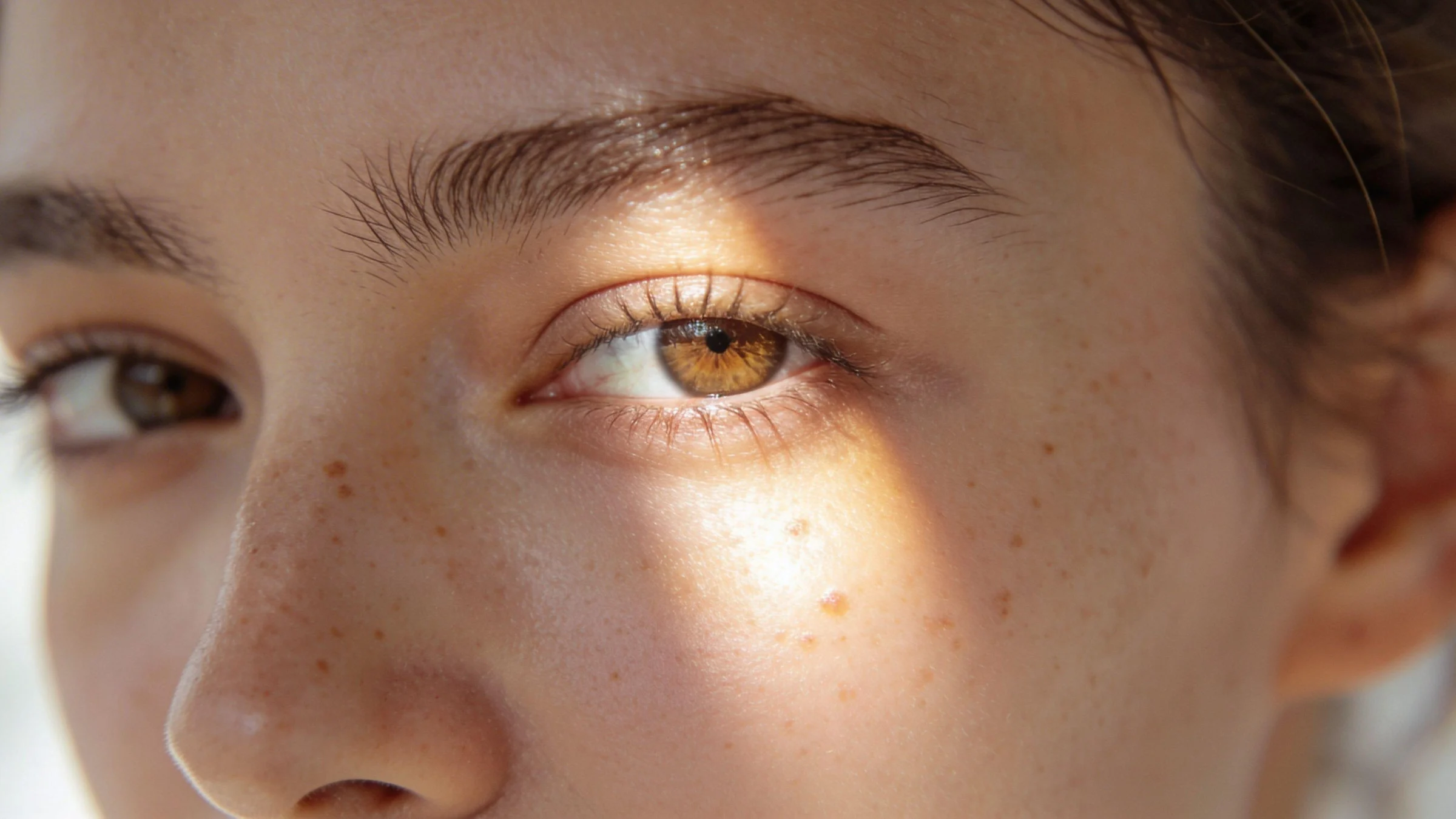
Sunspots on the face, or solar lentigines, are superficial brown spots that form as a result of cumulative sun exposure over the years. They don't necessarily appear immediately after a period of tanning. On the contrary. They are usually a late expression of old damage that has built up in the skin gradually.
How the spot actually forms
The skin produces melanin, the pigment responsible for skin colour, as part of its defence mechanism against UV radiation. When the same exposure is repeated again and again, the melanin doesn't always spread evenly. In some places it "concentrates" and creates a defined spot.
You can think of sunspots as the skin's memory. The sun of previous years isn't always visible immediately, but at some point it starts to appear in the form of localised spots, especially in areas that are regularly exposed.
Why it is so common here in particular
In Israel, sun exposure is almost continuous throughout the year. Sunspots usually start to appear between the ages of 40-50, but they originate from cumulative damage that began years earlier. Israel has about 300 days of sunshine a year, and according to estimates about 70-80% of the population over the age of 50 with fair skin are affected by the condition.
Who tends to develop sunspots
There are several groups who experience the condition more often:
-
People with fair skin tend to develop sunspots more frequently.
-
Women and men aged 40 and over start to see the cumulative damage more clearly.
-
Those exposed to the sun in everyday life even without "deliberate tanning", for example when driving, walking, working outdoors or regularly sitting next to a window.
-
Those who had freckles in childhood may see a transition over the years from scattered freckles to permanent, more distinct spots.
A typical sunspot does not necessarily indicate a dangerous medical problem, but it does indicate a history of chronic exposure to radiation. That is why treating it is both aesthetic and part of a broader approach to skin health.
Where they are seen most
The classic areas are the face, the backs of the hands and the décolletage. On the face they are mainly seen on the cheeks, temples, forehead and above the lip, because these areas receive direct and continuous light.
What usually doesn't work is treating every brown spot as the same thing. Sunspots on the face look simple, but without an accurate diagnosis it is possible to treat melasma as if it were a lentigo, or post-acne pigmentation as if it were sun damage. This is where the differences that really matter begin.
Differential diagnosis – how to tell the difference between a sunspot, melasma and post-acne marks
One of the most common questions in a consultation is whether it is a sunspot or something else. It is an excellent question, because the three conditions sometimes look similar from a distance, but behave completely differently when treated.
What patients usually see
In the mirror, you see "a brown spot". From a professional point of view, a few other questions need to be asked. Is the border sharp or blurred? Is the distribution symmetrical? Was there previously a spot, irritation or an aggressive treatment? Does the spot get worse in summer? Is there a hormonal background?
The following comparison helps to understand the difference, but it is no substitute for a diagnosis.
Comparison of common types of pigmentation
| Characteristic | Sunspots (lentigo) | Melasma | Post-inflammatory pigmentation (PIH) |
|---|---|---|---|
| Appearance | Relatively well-defined brown spots, round or irregular | More diffuse brown areas, often like a "mask" | Spots that remain after a pimple, irritation or inflammation |
| Borders | Usually clear | Usually less sharp | Vary according to the depth of the inflammation and the skin's response |
| Typical location | Cheeks, forehead, temples, sun-exposed areas | Centre of the face, forehead, cheeks, above the lip | Where there was inflammation, acne, friction or irritation |
| Main cause | Chronic sun exposure and cumulative damage | Hormonal influence combined with sun | The skin's response to inflammation or trauma |
| Response to sun | Tend to become more prominent over the years | Tends to worsen easily with sun exposure | May darken if the skin is exposed to the sun during healing |
| Nature of treatment | Usually suitable for targeted treatment of the spot | Requires a gentle, gradual and careful approach | Requires treatment that calms inflammation and reduces the risk of worsening |
What classic sunspots look like
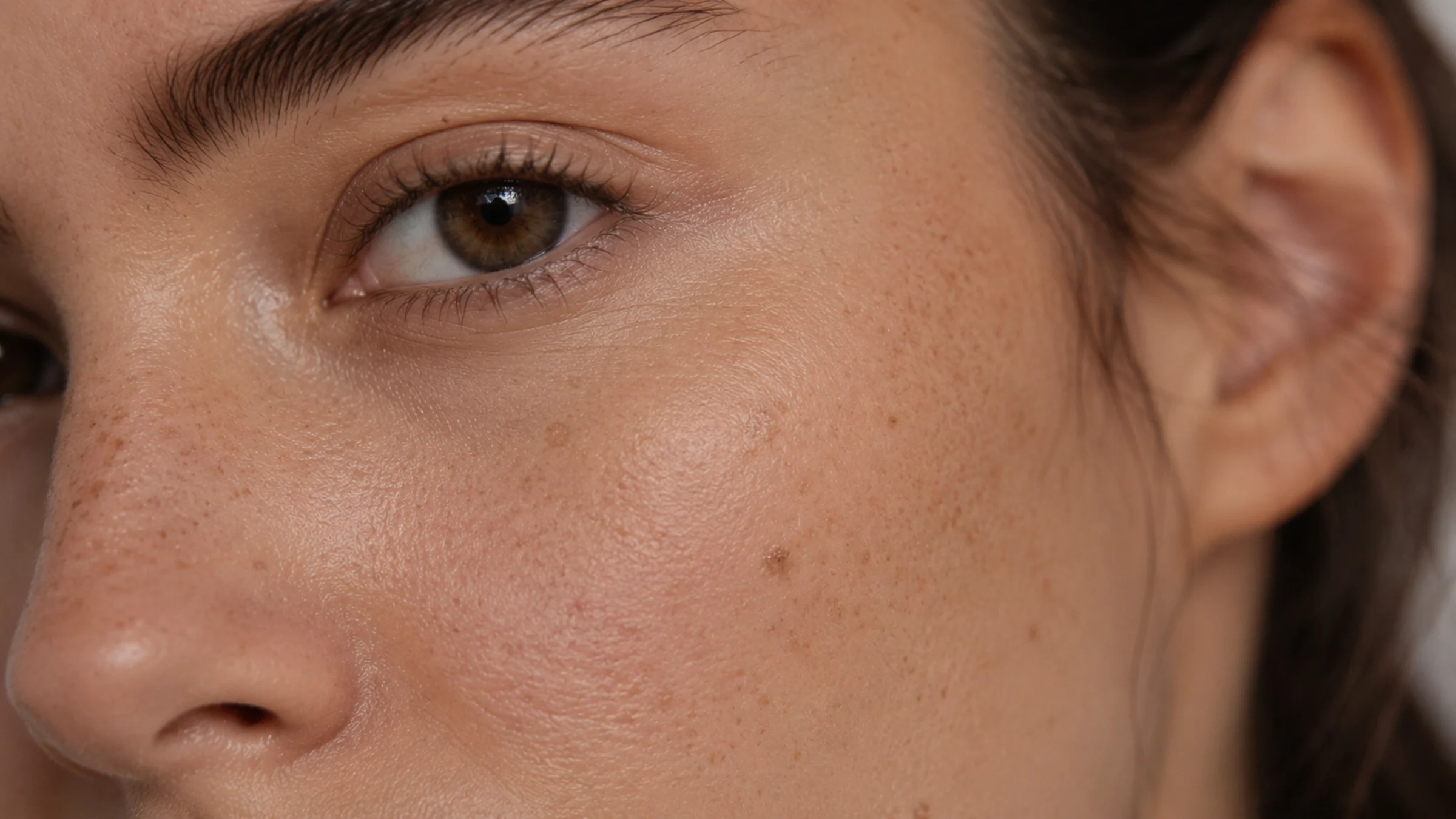
Sunspots on the face are usually more localised. Sometimes you see a few individual spots, each with a relatively clear border. They appear on sun-exposed areas and don't have to be symmetrical on both sides of the face.
When melasma is suspected
If the pigmentation looks like a wider patch, especially in the centre of the face or above the lip, and if it is relatively symmetrical, melasma is suspected. The common mistake here is choosing a treatment that is too strong, in the belief that it is just a superficial spot.
Melasma doesn't like aggressiveness. In many cases it responds better to a conservative, precise protocol than to an attempt to "erase" it quickly.
What pigmentation after acne or irritation looks like
PIH is the result of inflammation. It can appear after acne, an unsuitable peel, friction, aggressive picking or even insect bites. Sometimes the patient remembers exactly where a pimple was, and sometimes all that remains is a "map" of dark marks without an active lesion.
This is especially important in darker skin, where even relatively mild inflammation can leave a stubborn mark.
Why you shouldn't self-diagnose
A picture on the internet doesn't tell the whole story. Even a similar appearance can hide a completely different mechanism. In the clinic we examine not only the colour, but also the depth of the pigment, the distribution of the spots, the history of the skin, sun exposure, previous treatments and skin type.
Self-diagnosis often leads to one of two mistakes. Either months are wasted on products that can't help enough, or a treatment that is too strong is chosen and darkens the area instead of lightening it.
The importance of professional diagnosis before any pigmentation treatment
Before deciding on IPL, laser, a peel or a combined treatment, you need to understand exactly what is being treated. This is not a technical step. It is the step that determines whether the treatment will be right, safe and realistic in terms of results.
What is checked at the assessment appointment
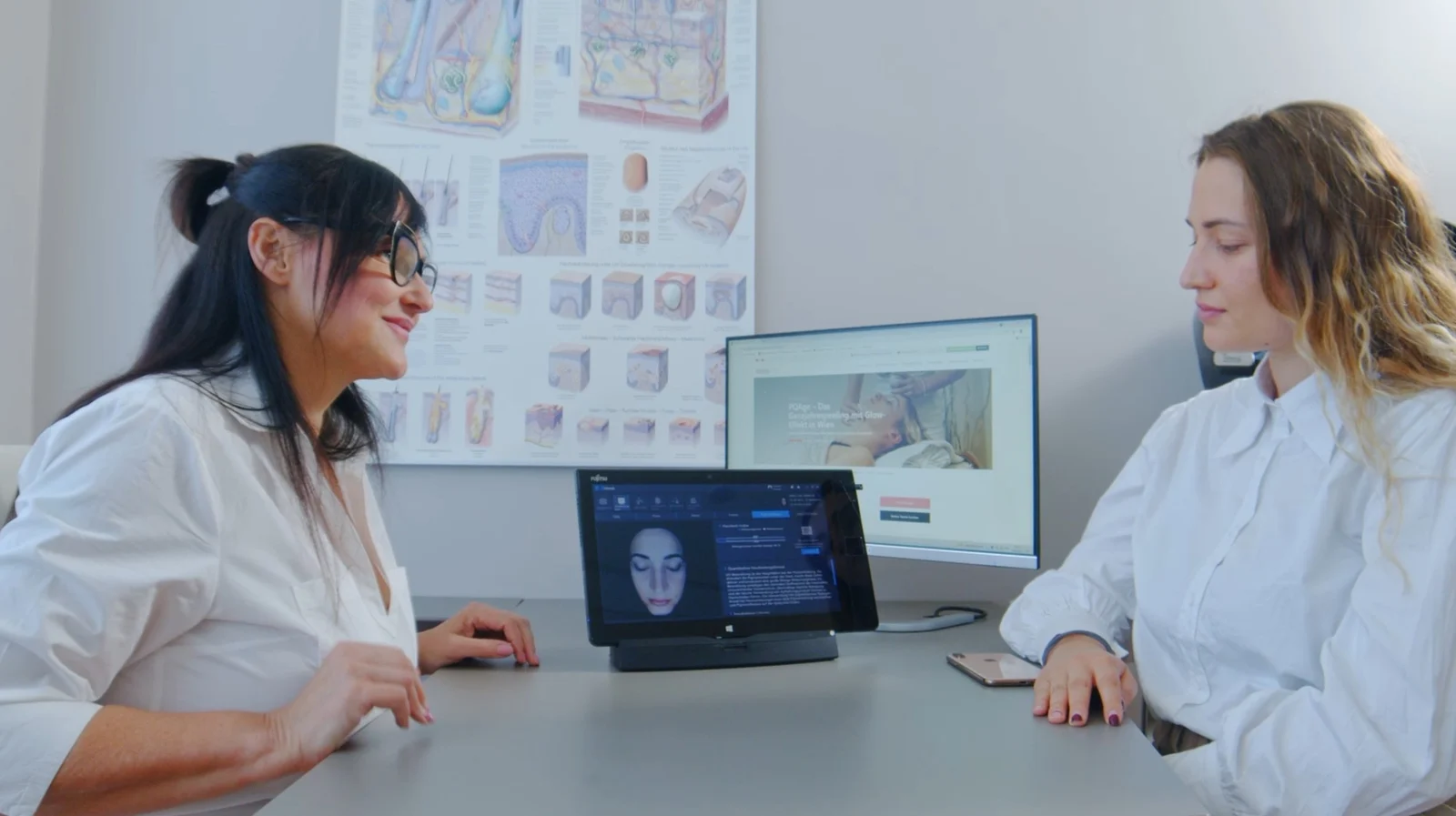
The assessment begins with questions. Not just "how long have you had the spot", but also a history of sun exposure, pregnancy or hormonal changes, a tendency towards pigmentation, active acne, skin sensitivity, medication and previous treatments.
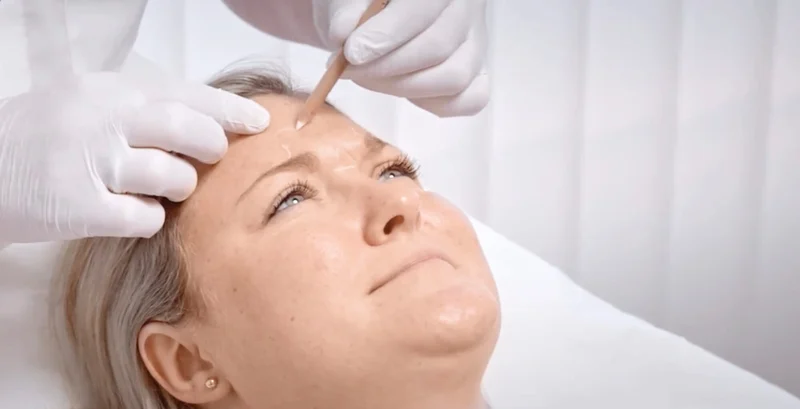
Then comes the examination itself. We look at the borders of the spot, its colour, its estimated depth, the area of the face and the type of skin response.
Where appropriate, we also use computerised skin analysis to get a more accurate picture of the skin's condition and the layers of pigmentation.
Why skin type changes the whole picture
Exactly the same spot won't be treated in the same way in two different patients. A patient with fair skin, a superficial spot and a stable skin history won't respond in the same way as a patient with darker skin, a tendency towards PIH and sensitivity to inflammation.
Another difference is the goal of the treatment. Sometimes the goal is the targeted removal of sunspots on the face. In other cases, it is also necessary to improve skin texture, reduce general sun damage or build a maintenance plan to prevent recurrence.
The right technology chosen for the wrong patient, at the wrong intensity, is not a good treatment. It is simply an imprecise use of a good tool.
What can happen when the assessment is skipped
The risk is not only a lack of results. It is also worsening. A treatment intended for a superficial spot can cause unnecessary irritation in melasma, or cause secondary pigmentation in skin that is prone to it.
That is why a serious clinic doesn't start with the device. It starts with understanding. Only then is it decided whether it is right to perform a targeted treatment, a gradual treatment, preliminary skin preparation, or sometimes even to postpone treatment until the skin is more balanced.
Home treatments and cosmetic products – what really works
Many patients come to us after already trying a serum, an acid, retinol or a "brightening cream". That makes sense. Home treatments are almost always the first port of call. The problem is that expectations of them sometimes don't match what they can really do.
Where home treatment can help
Good products can help in several situations:
-
Everyday prevention by reducing the worsening of existing pigmentation.
-
Gradual lightening of relatively superficial spots.
-
Maintaining results after treatment at the clinic.
-
General improvement of skin texture and tone when the spot is not particularly deep.
Which ingredients usually appear in such a routine
There are several families of ingredients that come up again and again:
-
Retinoids such as retinol or tretinoin support faster cell turnover.
-
Vitamin C is usually part of a morning routine and is intended to support a more even tone.
-
Azelaic acid is common when there is also a tendency towards acne or relative sensitivity.
-
Niacinamide is suitable for those looking for a relatively gentle ingredient for regular use.
-
AHAs such as fruit acids can encourage gentle exfoliation and improved texture.
What usually doesn't happen at home
What home treatment almost never does is completely remove long-standing, well-defined sunspots. If the spot has been there for years, if it is well defined and if it is noticeable even without make-up or strong lighting, it is very likely that topical treatment alone will be limited.
This is an important point in managing expectations. Not because the products are "not good", but because their mechanism of action is more moderate, and they depend on long-term consistency and the skin's individual response.
When peels come into the picture
In some cases, chemical peels for skin renewal are also included as part of a structured plan. Here it is important to distinguish between a tailored professional peel and the independent use of acids in concentrations or at a frequency that are not suitable for the skin.
A practical rule: if the product burns, peels and irritates but the spot doesn't improve, you don't necessarily need "a stronger product". Sometimes you need a better diagnosis.
When it is worth moving to treatment at the clinic
If months of consistent use have passed without significant change, if the spot actually gets darker in summer, if there are several types of pigmentation together, or if the skin tends to develop marks after every irritation, it is usually right to move on to a professional assessment.
Put simply, products are a good foundation. But with sunspots on the face, they are usually part of the solution, not the whole solution.
Removing sunspots on the face with advanced technologies
When it comes to distinct, stubborn spots or those that don't respond well enough to home treatment, treatment moves into the realm of aesthetic medicine. Here the aim is no longer just to encourage general skin renewal, but to act directly on the concentrations of melanin or on the layer in which the pigment sits.
IPL for treating sunspots
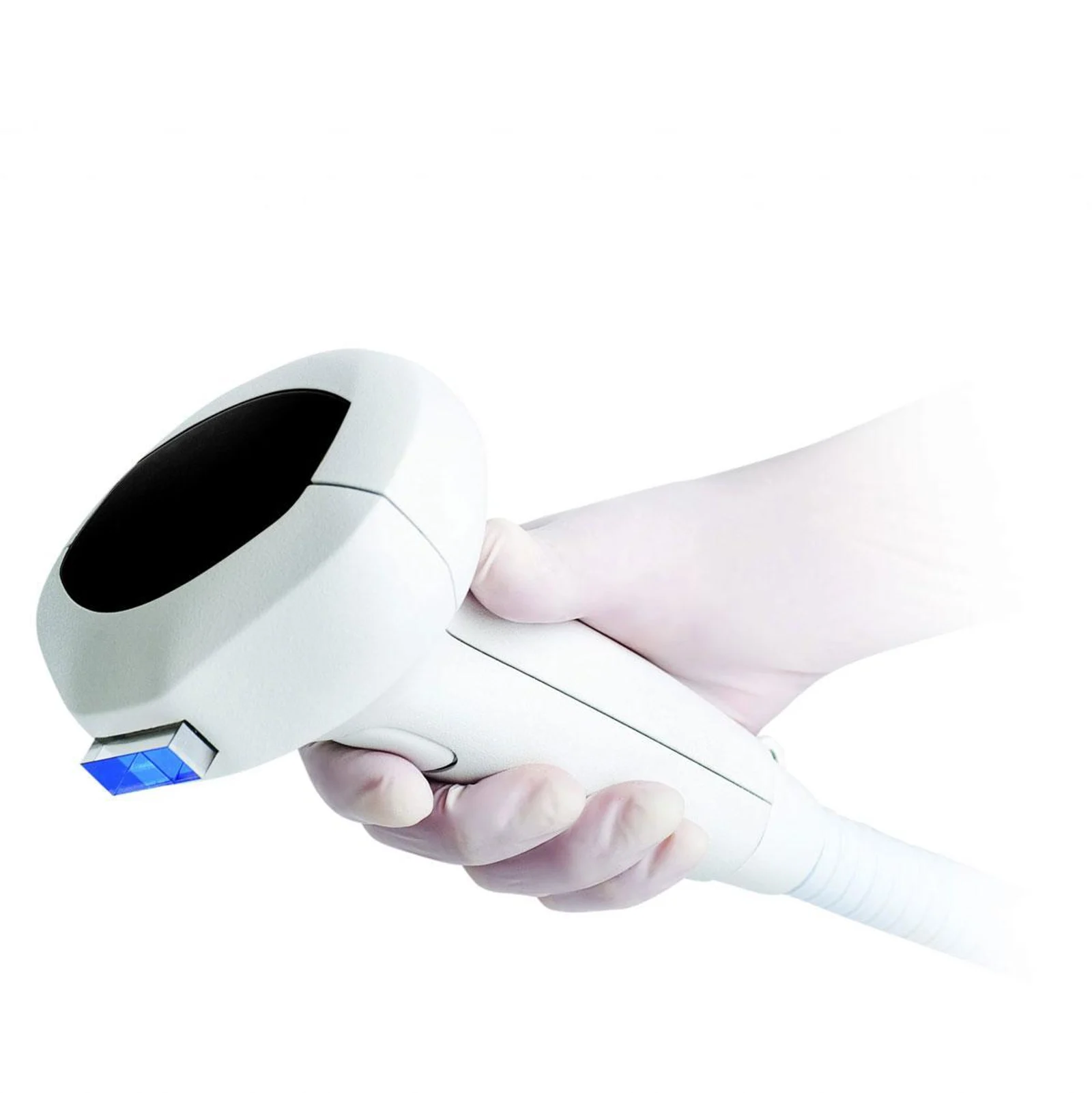
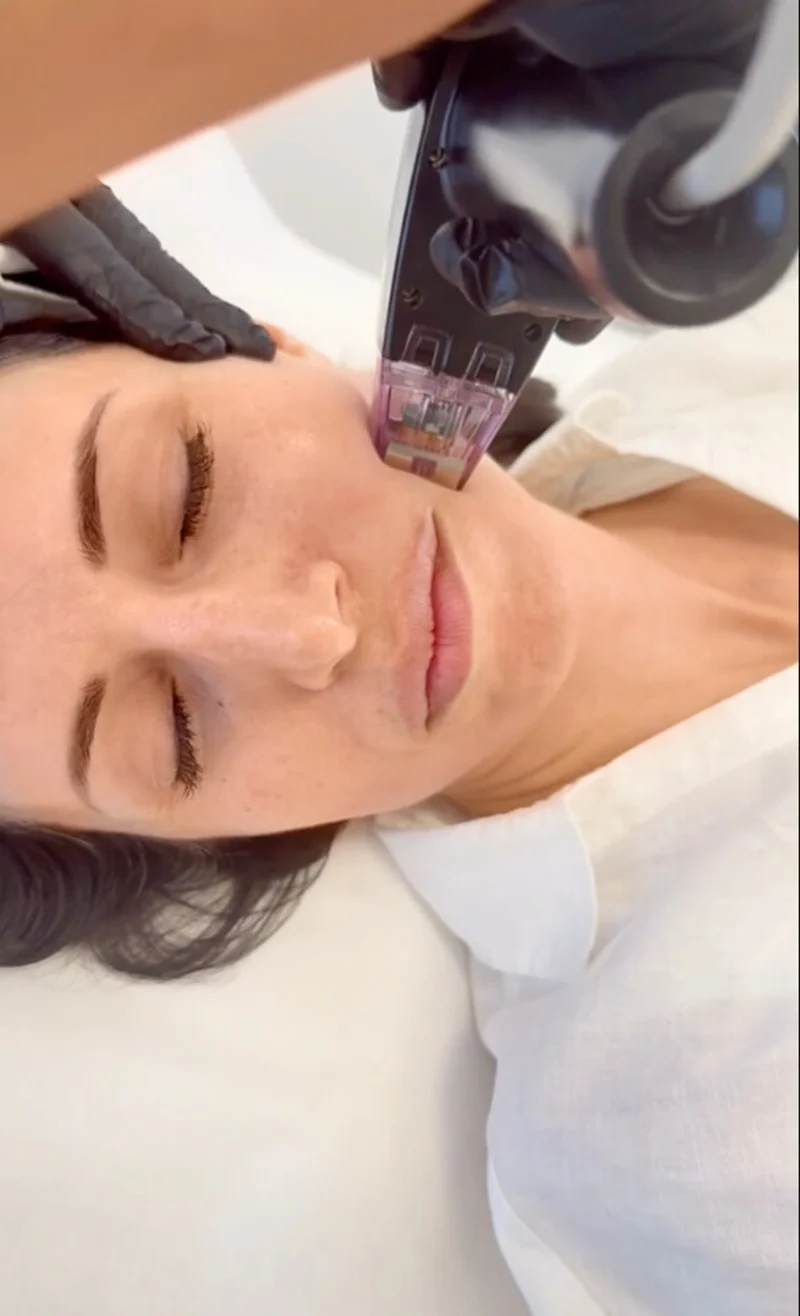
IPL is not a single laser with a single wavelength, but flashes of light in different ranges. With correct treatment, the energy is directed at the pigment and causes it to break down gradually. It is a treatment that is often chosen when there are both scattered sunspots and a desire for a general improvement in skin tone.
Its main advantage is the ability to treat not just a single spot, but the overall appearance of skin that has suffered chronic sun exposure. The disadvantage is that not every skin type is suitable for the same intensity, and not every patient is a good candidate for such a treatment without prior preparation.
In Israel, where there is a wide range of skin tones, adjusting the treatment parameters is critical. Clinics such as Dermacare also use dedicated IPL technologies such as Lumecca, depending on the diagnosis and skin type, with the aim of targeted treatment while maintaining an appropriate safety profile.
Alexandrite laser for targeted spots
For certain sunspots, especially on relatively fair skin, the alexandrite laser is a very precise option. The alexandrite laser operates at a wavelength of 755 nanometres, is particularly suitable for people with fair skin, Fitzpatrick I-III, and usually requires between 1-3 treatments for superficial spots. Each treatment takes about 10-20 minutes, after which the spot tends to darken and form a fine scab that peels off naturally within 7-10 days.
This is a treatment that offers very high precision, but it is not "automatically" the right choice for everyone. The darker the skin, or the less clear-cut the diagnosis, the more caution is required.
RedTouch when looking for local precision
There are situations where a treatment that is very focused on the borders of the spot is wanted, with a relatively quick return to normal routine. RedTouch operates at a wavelength of 675 nanometres and is described as the first and only technology in the world that treats sunspots on the face in this way. The same source states that in most cases about 3 treatments are needed for an optimal result, and that a gradual fading of the spot can already be seen between treatments.
What is important to understand is not just the name of the device, but the logic behind choosing it. If it is a well-defined spot, on suitable skin, and the goal is precise treatment with minimal damage to the surrounding area, this may be a good option.
Carbon laser peel when general skin refreshment is also needed
A carbon laser peel won't always be the first choice for a single, well-defined sunspot, but it fits in well when there is also dull skin, uneven texture, visible pores or a need for a general improvement in the appearance of the skin alongside addressing pigmentation.
The treatment works differently from targeted pigment laser treatments. That is why it is more suitable for some cases and less for others. It is no substitute for an accurate diagnosis, but it can sometimes be a sound part of a combined plan.
Professional chemical peels
A professional chemical peel can be particularly helpful for more superficial spots, an uneven distribution of tone, or as part of preparing the skin before an energy-based treatment. The choice of peel depth, type of acid and treatment frequency is made according to the actual condition of the skin.
Here you need to be careful about comparing it to a home peel. At the clinic, we work according to a measured protocol, taking into account sensitivity, history of pigmentation and the skin's ability to heal.
Combined treatments for overall improvement
Not every treatment plan is built on a single device. Sometimes treatment of the spot itself is combined with complementary elements such as skin preparation, restoring the skin barrier, gentle microneedling in selected cases, or maintenance treatment aimed at preventing recurrence.
Many patients benefit more from a well-structured plan than from chasing "the strongest device". This is also why, in complex cases, it is worth reading about laser pigmentation removal in the broader context of tailoring the treatment, not just the type of device.
Successful treatment of sunspots on the face is measured not only by how quickly the spot darkens and falls away, but also by whether the skin remains calm, even and stable afterwards.
What you usually feel during the treatment
The sensation varies according to the technology. Some patients describe brief warmth, tingling or a feeling like "a small rubber band" snapping. With certain targeted treatments, the sensation is felt more on the spot itself and less on the surrounding skin.
In most cases it is possible to return to your routine relatively quickly, but you should expect temporary redness, temporary darkening of the spot or gentle peeling. In many cases this is part of the normal course, as long as it matches the type of treatment and the instructions you have received.
Choosing the right treatment for your skin – the importance of personalisation
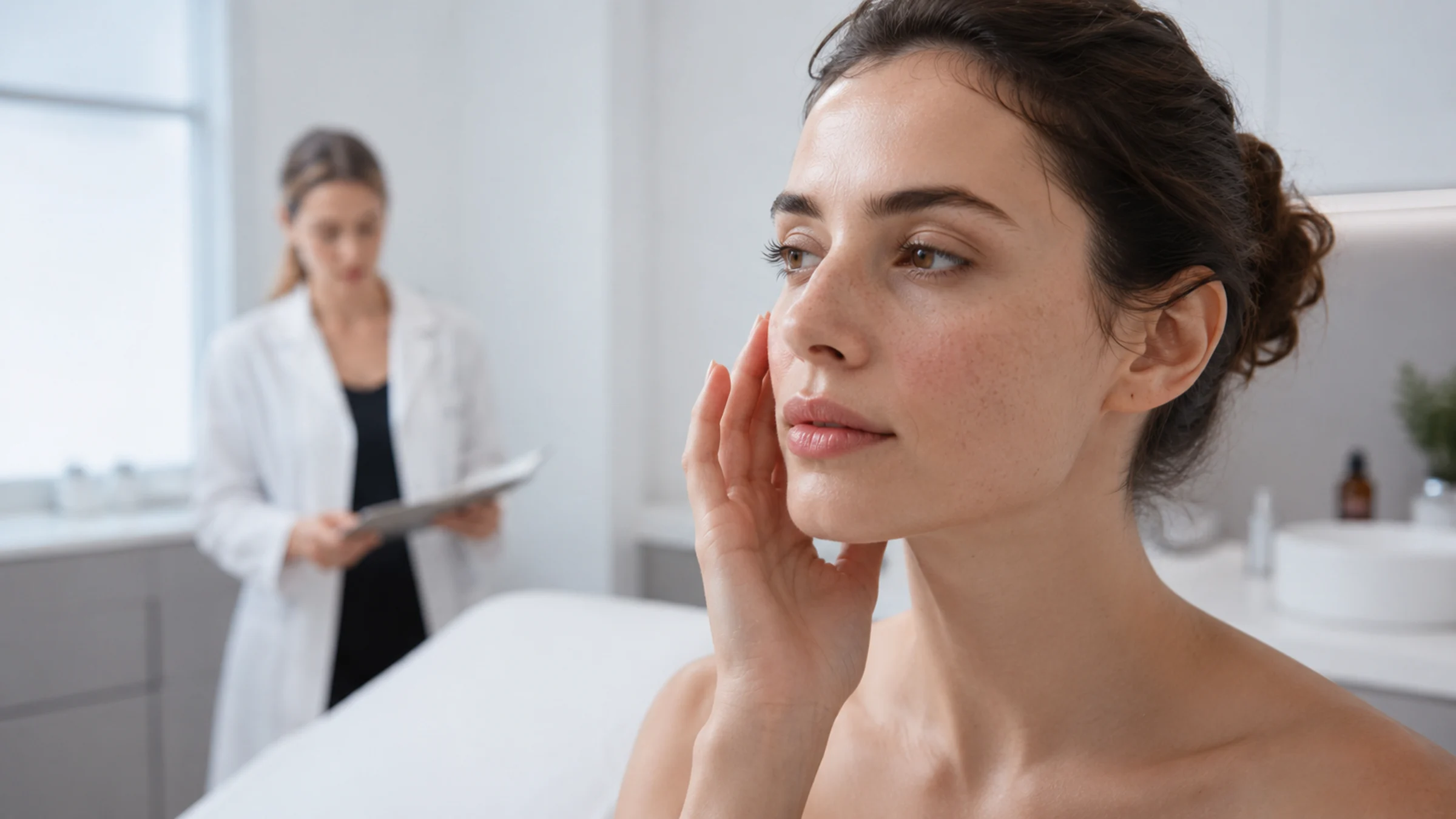
The decision on treating sunspots on the face isn't made on the basis of a general picture of "there is pigmentation". It is made on the basis of a combination of the type of spot, skin type, depth of pigment, skin sensitivity and the history of previous reactions.
What really influences the choice
Two people can come in with an almost identical spot, but receive a completely different plan. The main reasons are:
-
Skin tone according to Fitzpatrick. The more basic pigment there is in the skin, the more precise and careful you need to be.
-
Type of spot. A superficial sunspot is different from melasma or PIH.
-
Location on the face. Certain areas are more sensitive to irritation or to repeated sun exposure.
-
Treatment history. Skin that has already undergone treatments, peels or irritation responds differently.
-
The ability to commit to recovery and maintenance. Treatment without consistent sun protection is a recipe for frustration.
The particular challenge of darker skin
This is one of the most important points for the Israeli population. Treating sunspots on darker skin, Fitzpatrick IV-VI, requires special expertise, because aggressive laser and IPL treatments may increase the risk of PIH by 30-50%. A more conservative approach includes using technologies with longer wavelengths or preparing the skin in advance with melanin-suppressing products.
The practical implication is clear. With Middle Eastern, Mediterranean or darker skin, we don't just ask "what is most effective", but also "what is safest relative to its effectiveness".
How to reduce risk without compromising on results
The right approach usually involves several principles:
-
A conservative start rather than trying to "erase" quickly.
-
Preliminary skin preparation when there is a tendency towards reactive pigmentation.
-
Choosing the technology according to skin type, not just the type of spot.
-
A gradual approach between treatments while monitoring the skin's response.
-
Combining improvement of the spot with maintaining a healthy skin barrier.
Those who want an in-depth understanding of these considerations can also read about pigmentation spot removal and whether laser treatments are suitable.
In skin that is prone to marking, a treatment that is "too gentle" is sometimes actually the smarter treatment. The goal is not just an immediate reaction, but a good result that lasts without creating a new spot.
The recovery process, results and maintaining your results
After the treatment, an immediate improvement isn't always visible. In fact, in many cases the spot first darkens, and only then begins to lighten. This is a very important part of managing expectations.
What recovery usually looks like
With targeted energy-based treatments, it is common to see:
-
Mild to moderate redness in the treated area.
-
Temporary darkening of the spot in the first few days.
-
Peeling or a fine scab in some cases.
-
A temporary feeling of dryness or sensitivity.
With sunspots treated with a targeted laser, the process may include darkening followed by natural peeling. With gentler treatments, recovery can be easier and quicker, but the result may also appear gradually.
When are results visible
This depends on the technology, the depth of the spot, the skin type and the individual response. Some patients see a change after the first treatment, while others need a series of treatments or a combination of clinic treatment and a home routine.
What is not right is to assess the final result too early. The skin needs time to go through the stages of reaction, breakdown and renewal.
What is important to do after the treatment
The most critical part is preventing the problem from worsening again. The instructions vary according to the type of treatment, but almost always include avoiding unnecessary irritation and being very careful about sun protection.
You can also refer to the detailed guidance on what not to do after laser treatment, as many of the principles are also relevant to pigmentation treatments.
How to maintain the result
The most common mistake is thinking that once the spot has faded, the matter is closed. In reality, the skin's tendency to develop pigmentation doesn't disappear. That is why maintenance is needed:
-
Sunscreen every day, even when you are not planning to spend time at the beach.
-
A tailored home routine where necessary.
-
Monitoring for new spots or a change in the pattern of pigmentation.
-
Maintenance treatments only if they are really needed and according to the condition of the skin.
Summary and conclusions – the path to even, healthy skin
Sunspots on the face are a very common condition in Israel, but the right treatment for them starts not with the device but with the diagnosis. That is the difference between a smart treatment and a random one. When it is correctly identified whether it is a lentigo, melasma or PIH, and the approach is tailored to the skin type and its sensitivity, a good, safe and realistic improvement can be achieved.
In practice, the best result comes from a combination of three things: a professional assessment, choosing a treatment that suits your skin and not just the spot, and consistently caring for your skin even after the spot has lightened. This way, it is possible to improve not only the spot itself, but the overall appearance of the skin over time.
Want to understand exactly what suits you? The Dermacare team will be happy to assess your skin condition, the suitable type of treatment and realistic expectations in a professional, personal and precise way. To book a consultation, you can contact us here.
Frequently asked questions
No. Some spots are melasma, some are pigmentation after acne or irritation, and some require a dermatological examination to rule out another finding. For this reason, it is not right to choose a treatment based only on general appearance.
Usually some lightening can be achieved, especially with superficial spots or as part of maintenance, but long-standing, well-defined spots will usually need professional treatment. Cream alone is not always capable of breaking down focused pigment sufficiently.
The sensation varies according to the type of treatment and the treated area. Most patients describe a tolerable discomfort rather than prolonged pain. In some treatments the sensation is brief and focused, and in others a feeling of warmth is more noticeable.
There is no single answer that suits everyone. A superficial, well-defined spot may respond more quickly. Complex pigmentation, sensitive skin or a tendency to pigmentation sometimes require a more gradual approach.
Yes. Even if the treatment was very successful, renewed sun exposure may encourage the appearance of new spots or renewed darkening in the area that has already been treated. For this reason, sun protection is part of the treatment, not just an accompanying recommendation.
Sometimes yes, but not automatically. With darker skin it is particularly important to carry out an early assessment, choose conservative parameters and decide whether this is really the right technology for the specific case. An unsuitable treatment may cause hyperpigmentation instead of improvement.
If the skin is irritated, inflamed, tanned or unbalanced, or if there is uncertainty about the type of pigmentation, it is sometimes better to postpone treatment and first carry out an assessment, skin balancing or suitable preparation.
It is usually more convenient to be treated in periods when sun exposure is lower and it is easier to be diligent about protection. However, the decision depends on lifestyle, the type of treatment and the ability to avoid direct exposure afterwards.