
In brief
- There is no single price for treating underarm hyperhidrosis: the price depends on the type of treatment, how long the effect lasts, the amount of product or technology and the need for maintenance.
- Botox injections for both underarms are usually priced at ILS 2,500 to 3,500, surgery at around ILS 1,200 to 5,000, and MiraDry at about ILS 16,500.
- MiraDry reduces sweating by up to 80% after the very first treatment, is approved by the FDA and the Ministry of Health, and the results are permanent for most patients.
- Surgery may be covered by your health fund or supplementary insurance (Shaban), subject to approval, but Botox injections, laser and MiraDry are not covered by the national health basket.
- When comparing prices, also look at how long the effect lasts, the number of repeat treatments required and the disruption to your routine, not just the amount you pay.
You are standing in front of the wardrobe before a meeting, once again choosing a shirt that will not show sweat patches, and asking a simple question: what does underarm hyperhidrosis treatment cost – how much will a treatment that gives you real control over the problem actually cost, rather than just a temporary fix for a few hours?
There is no single right price for everyone when it comes to treating underarm hyperhidrosis, because you are not just buying a "procedure". You are paying for the type of treatment, how long the effect lasts, the amount of product or technology required, the expected number of repeat treatments, and how likely it is that you will need ongoing maintenance over time. This is also why the price differences between the options are very large.
In practice, Botox injections for the underarms are usually priced in the range of ILS 2,500 to 3,500 for both underarms, surgery can cost around ILS 1,200 to 5,000, and MiraDry is at the top end of the scale at about ILS 16,500. There are also topical solutions such as specialised creams and products, at a much lower cost, but with a more limited effect. The figures here are based on the source already mentioned earlier in the article.
The number alone is not enough.
Clinically, a patient with mild sweating that gets worse in summer does not necessarily need to start with an expensive treatment. On the other hand, a patient who changes shirts in the middle of the working day, avoids certain colours or suffers constant social embarrassment needs to weigh cost against real benefit. In such a case, a more expensive treatment up front may prove better value over time if it reduces frequent repeat treatments and disruption to daily life.
It is worth comparing each option on four parameters: how much it costs today, how long it is expected to help, how much discomfort or recovery time it involves, and whether your health fund or supplementary insurance (Shaban) may contribute. That is the difference between a superficial price check and the right medical decision.
Anyone looking into the cost of injections quickly sees that the price is affected both by the amount of product and by the aim of the treatment. You can see this clearly in comparison with the cost of Botox for frown lines, where a very different amount of product is usually required from that used to treat underarm hyperhidrosis.
So the right question is not just "how much does it cost", but "what do I get for this price, and how long is it expected to last". That is the right starting point for a comparison.
An overview of underarm hyperhidrosis treatments and price ranges
When asking about underarm hyperhidrosis treatment prices, it is important to distinguish between a temporary treatment, a long-term treatment, a conservative solution and a surgical solution. Each path looks similar from the outside, but they are very different in terms of cost, convenience, suitability and type of result.
The following table gives a quick, clear picture:
Comparison of underarm hyperhidrosis treatments
| Type of treatment | Average price range (ILS) | Duration of effect | Important notes |
|---|---|---|---|
| Botox injections | 2,500-3,500 | About 10 months | For both underarms the average price is about ILS 3,300, because a relatively large amount of product is required |
| Surgery for underarm hyperhidrosis | 1,200-5,000 | Depends on the method | May be included in the health basket or supplementary insurance (Shaban), subject to medical approval |
| MiraDry | About 16,500 | Long-term | A targeted technological treatment for the underarms |
| Specialised creams and soaps | About 60 | Temporary | A cheaper option, but effectiveness is usually limited |
The data in the table are based on prices of underarm hyperhidrosis treatments in Israel.
It is worth noting a point that many patients miss. A lower price does not always mean better value. A cream or soap may be suitable at an early stage or in a mild case, but when sweating stains clothes, interferes with work or causes daily embarrassment, people usually look at medical treatments and not just an off-the-shelf product.
Rule of thumb: when comparing prices, do not just compare the amount you pay. Also compare how long the effect lasts, how many times you will need to repeat the treatment, and how much it disrupts your routine.
Anyone familiar with injections knows that even with the same product, the price varies according to the area treated and the aim. A good example of this can be seen in the article the cost of Botox for frown lines: how much does it really cost. The underarms usually require a larger therapeutic amount than a small aesthetic injection, so the pricing is also different.
The leading treatment methods in detail and how each one works
There is a fundamental difference between a treatment that reduces the activity of the sweat glands for a limited period and a treatment aimed at long-term reduction of the glands themselves. This difference affects both the treatment experience and the price.

Botulinum toxin injections
This is one of the best-known treatments for underarm hyperhidrosis. The idea is relatively simple. The product is injected at superficial points in the area, and it reduces the transmission of the nerve signal that activates the sweat glands. In practice, less nerve signal means less sweating.
For the patient, it is a relatively short outpatient treatment, with no surgery. It is usually a convenient option for those looking for significant improvement without undergoing a surgical procedure. The main drawback is that the result is temporary, so you also need to think in terms of maintenance.
For more focused information on this option, you can read about Botox for underarm sweating.
MiraDry
MiraDry is a technological treatment intended for the underarms only. The treatment achieves a reduction of up to 80% in sweating after the very first treatment, takes between 30 and 90 minutes, is approved by the FDA and the Ministry of Health, and does not cause compensatory sweating, unlike surgical options. The results are permanent for most patients.
Clinically, this is a treatment particularly suitable for those looking for a long-term solution who do not want surgery. Sometimes an additional treatment is needed, and the decision is made according to the response of the area, the severity of the condition and the patient's expectations.
When a patient is deciding between Botox and MiraDry, the right question is not "which is better", but "are you looking for flexibility and a lower initial cost, or a higher investment in a long-term path".
Surgical solutions
There are several possible approaches to surgery for underarm hyperhidrosis, depending on the medical assessment. These are not treatments you choose on price alone. Medical suitability, risk versus benefit, the recovery period and whether it is right to start with a less invasive option at all all need to be carefully considered.
For some patients, surgery is a relevant solution mainly if the condition is severe, if other treatments were not suitable, or if coverage through the health fund may be possible. For others, the very fact that it is a surgical procedure makes it less attractive.
Topical creams and products
These are the products many people try first. Sometimes this is enough in mild cases or at certain times, but when it comes to genuine hyperhidrosis, in most cases the result is only partial. The advantage is the affordable price and simplicity. The drawback is that they do not address the problem at its root.
What factors affect the final price of the treatment
Two patients can come in with the same general complaint, "I sweat under my arms", and receive completely different quotes. This is not necessarily an unjustified gap. It usually stems from real differences in treatment planning.
The severity of sweating and the size of the area
The more significant the sweating, the more precise, and sometimes the more intensive, the treatment needs to be. With injections, for example, there are cases in which a broader protocol is required to cover the entire active area.
Not every underarm "behaves" the same way. Some patients have a relatively focused sweating area, while others have a wider distribution, more noticeable odour, or complaints that get worse in summer and with exertion.
The type of treatment chosen
This is the most significant variable in the price. There is a natural gap between an injection-based treatment that is repeated periodically and an advanced technology aimed at a long-term result, and certainly a surgical procedure.
Another difference is between a treatment performed relatively quickly in the clinic and a treatment that requires dedicated equipment, longer working time and different medical preparation.
The quality of the equipment and the protocol
With medical equipment, not every platform is the same. When it comes to an advanced treatment, it is important to understand whether dedicated, approved technology is used, whether the protocol is tailored to the underarms, and whether there is a structured process of diagnosis, marking, treatment and follow-up.
An important checkpoint: if a quote is much lower than usual, it is worth asking what exactly it includes. Is it a full assessment, which product or equipment is used, and what happens if follow-up treatment is needed?
The team's experience and the medical setting
The price does not only reflect the product or the machine time. It also reflects diagnosis, tailoring, correct performance and risk management. In an area like the underarms, where the aim is not only aesthetic but also functional and about quality of life, it is important that the treatment is carried out in a proper medical setting.
In practice, patients choose not only on "how much it costs", but also on how much they trust the person performing the treatment.
Is it a one-off or an ongoing solution?
Some treatments look cheaper at the outset but require repeated maintenance. Others are more expensive up front but are designed as a lower-maintenance path. So the right way to think about price is not only "how much am I paying today", but also "what can I expect going forward".
Private treatment vs health funds: what is covered and what is not
In Israel, this is one of the most confusing issues in the field. Quite a few patients assume that if hyperhidrosis is a real medical problem, every treatment for it should be covered. In practice, this is not the case.
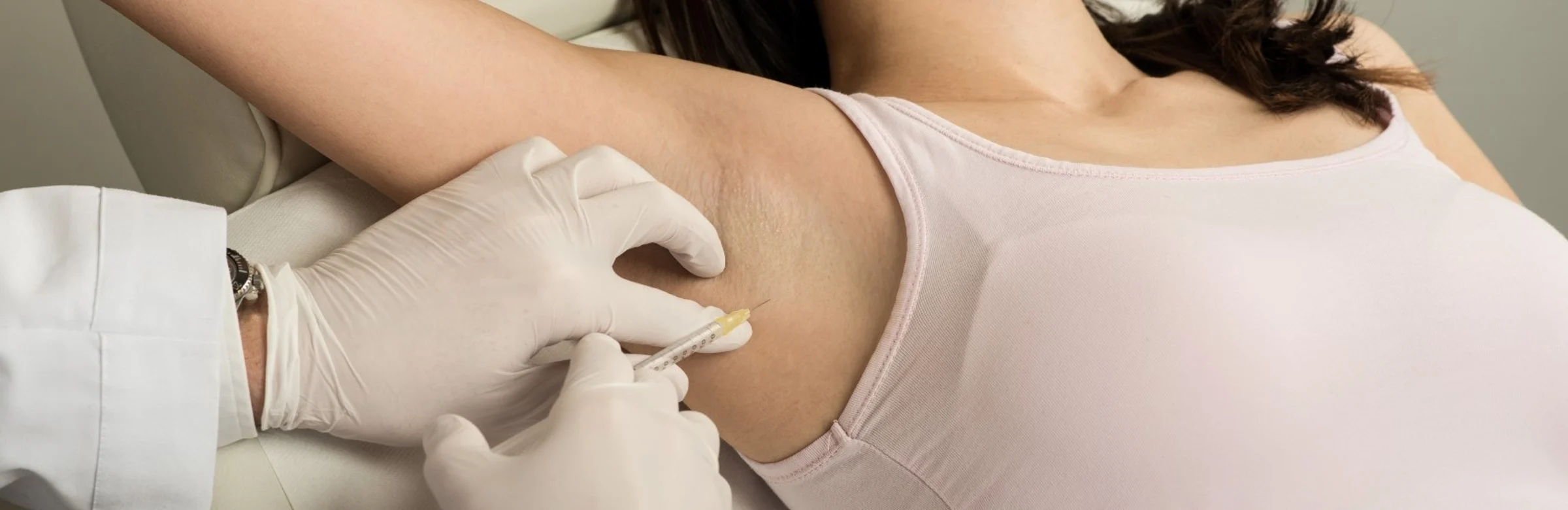
Surgery for underarm hyperhidrosis may be fully covered by the health funds through their supplementary insurance (Shaban) services, subject to approval, while Botox injections in the range of ILS 2,500-4,000, laser treatments and advanced technologies such as MiraDry are not covered by the national health basket at all.
What this means in practice
If you are considering private treatment, it is important to understand that you are paying not only for availability and convenience, but also for access to technologies that are not usually available through the public system. On the other hand, if you are suitable for surgery and your health fund may contribute or cover it, it is worth checking this before booking private treatment.
When it is worth checking your entitlements with your health fund
There are several situations in which you should not skip this check:
-
When surgery is being considered. This is the path where coverage may be genuinely relevant.
-
When your budget limits the decision. Sometimes simply knowing what is covered changes your priorities.
-
When you have already received a previous medical recommendation. Existing documents can help with further enquiries.
You can start by checking properly how much of the cost your health fund covers, to understand what it is reasonable to ask for, which documents may be required, and where the gap usually arises between what patients expect to receive and what is actually approved.
Many people discover too late that the first question was not "which treatment is the most innovative", but "which funding route is relevant to me at all".
Where the confusion arises
The confusion stems from the fact that the problem is medical, but not all solutions are classified in the same way. Health funds tend to treat a basic surgical procedure differently from injections or advanced, privately funded technology. You therefore need to distinguish between medical entitlement and the availability of a particular treatment.
How to choose the right clinic for hyperhidrosis treatment
The difference between a successful treatment and a disappointment does not start with the machine or the syringe. It starts with the diagnosis. Underarm hyperhidrosis looks simple, but in practice you need to understand how severe the condition is, whether it is typical primary hyperhidrosis, whether previous treatments have been tried, and what the patient expects.
What the suitability assessment must include
A good clinic does not start with a "special offer", but with the right questions. It finds out how long the problem has existed, what makes it worse, which treatments have already been tried, and whether there are medical conditions or medications that need to be taken into account.
It is also important to ask what exactly to expect in the treatment itself, what you can realistically expect from it, and whether there is a recovery period or any restrictions afterwards.
Transparency about price and the limits of the treatment
If you get an answer that is too general, without details of the treatment method, without an explanation of why this option was chosen, and without any discussion of limitations, that is a red flag. Responsible treatment includes an explanation of the benefits, but also of what it does not solve.
It is advisable to ask for a clear answer to the following questions:
-
Who actually performs the treatment
-
Which technology or product is used
-
Are there instructions for before and after
-
What happens if the result is partial or if further treatment is needed
Why clinical experience makes a difference
In the underarms, precision matters. Not only to improve the result, but also to reduce errors, discomfort and unrealistic expectations. A clinic with a proper medical framework knows how to tailor the protocol to the patient, instead of pushing everyone towards the same method.
If you would like to get an impression of the professional approach, the areas of treatment and the setting in which the team works, you can visit Dermacare, the clinic for aesthetic medicine and treatments. In this field, Dermacare also offers Botox injections for underarm hyperhidrosis as part of a framework of consultation and personal tailoring.
Choosing the right clinic is not measured only by the price on the page. It is measured by the quality of the diagnosis, the level of explanation, and whether you feel you are being offered a solution that suits you, not just a treatment someone wants to sell.

Frequently asked questions
The sensation depends on the method. With injections there is usually a tolerable and relatively brief discomfort. With device-based treatments the sensation varies according to the technology and whether local anaesthetic is used. What matters more is not just to ask "does it hurt?", but "how do we prepare to make the treatment tolerable and safe?".
It depends on the type of treatment. With some treatments the change is felt gradually after the procedure, and with others the result stabilises over time. For this reason, during the consultation you should receive an explanation not only about the day of the treatment, but also about the timeline that follows.
This is a very common question. With some procedures this concern arises more, and with others less. As for MiraDry, the information mentioned earlier states that it does not cause compensatory sweating, unlike surgical options. In any case, this topic should be checked specifically according to the method being considered rather than settling for a general answer.
Not necessarily. Suitability is determined by the severity of the sweating, the treatment area, general medical condition, previous treatments and personal preferences. Some patients prefer a more conservative start, and some are looking for a long-term solution from the outset.
With some methods, it is a matter of periodic maintenance. With other methods, the goal is to achieve a longer-lasting reduction, and sometimes to consider another treatment only if active sweating that bothers you remains. It is not right to decide this in advance without an examination.
Yes, every medical treatment has its own recovery profile. With injections, local sensitivity, redness or short-term discomfort are possible. With energy-based treatments, temporary swelling or sensitivity are possible. It is important to receive clear instructions after the treatment and to know when a particular effect is considered reasonable and when it is worth informing the clinic.
There is no single answer that suits everyone. The question is not only chronological age, but also how significant the sweating is, how much it affects quality of life, and what the appropriate medical framework is. In minors and particularly young people, greater caution and individual assessment are required.
It is worth arriving with answers to some basic questions: how long the problem has existed, whether it is constant or seasonal, what you have already tried, and what exactly bothers you. Sometimes this information points to the right treatment better than any Google search.
For further general questions about injectables, you can also see the page Botox treatment frequently asked questions.
Ultimately, the question underarm hyperhidrosis treatment price cannot be answered properly without also understanding what you get in return, what to expect afterwards, and whether there is any coverage route worth checking before private treatment. A good decision combines budget, medical suitability and real convenience in everyday life. The information here is general and does not replace personal consultation.
Want to understand exactly what suits you? The Dermacare team will be happy to assess your skin condition, the suitable type of treatment and realistic expectations – in a professional, personal and precise way. To book a consultation, you can contact us here.
Read more about Botox treatment at the Dermacare clinic in Petah Tikva.
Want to see all the prices in one place? The full Dermacare treatment price list — laser hair removal by area, Botox and more.