

In brief
- A single carbon peel treatment for the face at Dermacare starts from ILS 500, and the final price is set after a skin analysis.
- The price is affected by the size of the area, the protocol and purchasing a series, and buying a series reduces the cost of each session.
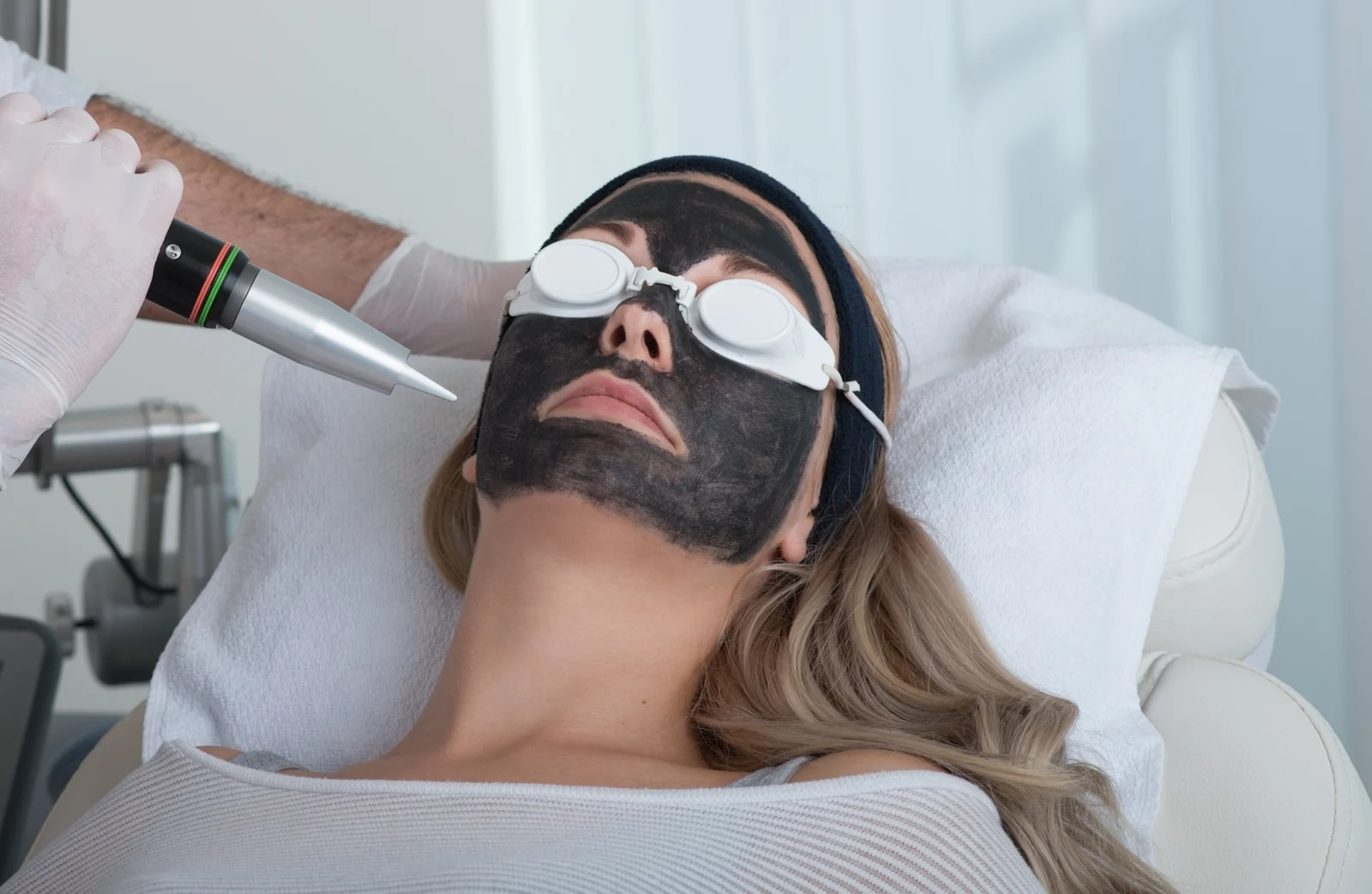
- The treatment combines applying a carbon gel, gentle heating with low laser energy and controlled vaporisation of the carbon with a stronger pulse, and takes less than an hour.
- A single treatment suits a refresh before an event, while for pores, post-acne or oily skin a series of 3 to 5 treatments is recommended.
- A break of two weeks to a month is recommended between treatments.
Interested in a carbon peel? If you have searched Google for "carbon peel price", it is worth knowing that the price range for a facial carbon peel in Israel is usually between ILS 500 and ILS 700 per session. At Dermacare, the cost of a single facial treatment starts from ILS 500, with the final price set after a professional skin analysis and according to the treatment goals and the recommended treatment plan.
The price reflects a complete clinical process, not just the technical procedure. It includes an in-depth diagnosis, building a personal treatment protocol, the use of advanced laser technology and guidance from an experienced team. Our aim at Dermacare is to provide full transparency so that you understand exactly what you are paying for and the value you will receive.
Cost comparison: carbon peel at Dermacare
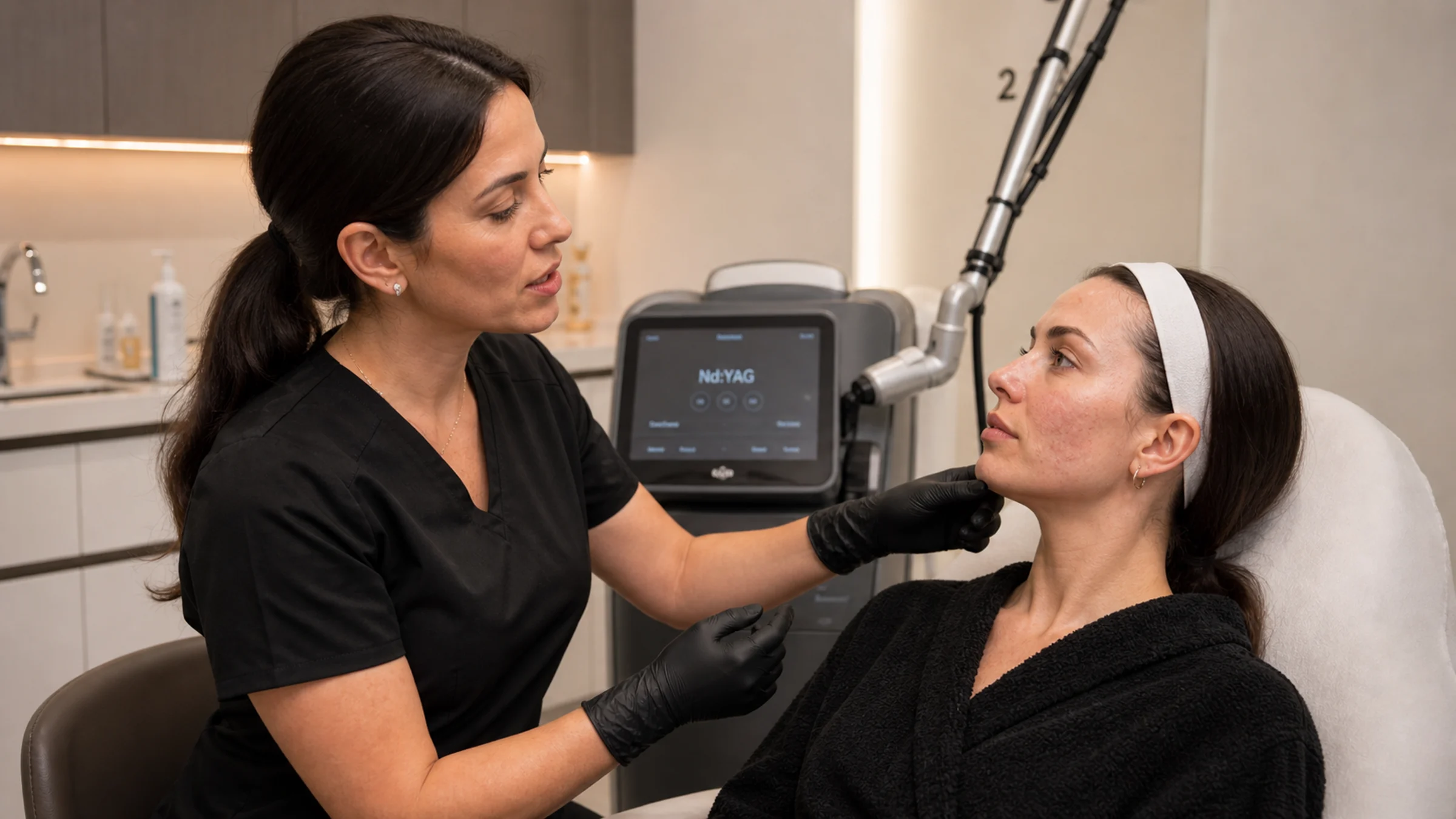
To give a clear picture, we have summarised estimated price ranges for carbon peel treatments at the Dermacare clinic. It is important to stress that these are general estimates, and a final, accurate quote is only given after a professional consultation and a personal skin analysis.
| Type of treatment | Who is it for and how often? | Estimated price range (per single treatment) |
|---|---|---|
| Single facial carbon peel treatment | Excellent as a one-off "glow" treatment to refresh the skin before an event, or as a first try. | From ILS 500 |
| Series of facial carbon peel treatments | The recommended plan for an in-depth improvement in skin texture, reducing pores and balancing oiliness. In a series, the price per treatment is lower. | Better value than a single treatment (offer given at the consultation) |
| Carbon peel treatment for the back or chest | A targeted treatment for larger areas, mainly for post-acne marks, excess oiliness or uneven texture. | From ILS 600 (depending on the size of the area) |
| Combined treatment (complex protocol) | A protocol that combines additional active ingredients (for example, to lighten pigmentation) and requires advanced personalisation. | From ILS 750 (depending on complexity) |
Investing in a professional treatment is first and foremost an investment in the health and safety of your skin. Results vary between patients.
What factors affect the price of a carbon peel?
When looking into the question of carbon peel price, it is important to understand that this is not an off-the-shelf product with a uniform cost. The final price takes several professional factors into account, and understanding them will help you assess the value correctly. At Dermacare, we believe that personalisation is the basis for excellent, safe results, and this is also reflected in our pricing.
1. Size of the treatment area
The most basic factor is the size of the area being treated. Naturally, treating a large area requires more working time, a larger quantity of materials and longer use of the equipment.
-
Full face: This is the most common treatment, and standard quotes usually refer to this area.
-
Back or décolletage (chest): Treating these areas, which is especially popular for post-acne marks, requires more time and resources, so the cost will be higher.
-
Specific areas: In some cases, the treatment focuses on a specific area such as the nose and chin only. Here the pricing will be adjusted to the exact scope of the work.
"Our goal at Dermacare is not just to 'treat' but to solve a specific problem. If the problem is on the back, there is no reason to pay the full price of a facial treatment. Personalisation is part of our service and our fair pricing."
The popularity of the treatment in Israel also affects prices.
2. Treatment protocol and specific goals
Not every carbon peel treatment is the same. The exact protocol is determined at the diagnostic consultation according to your goals and directly affects the cost.
-
Protocol for refreshing and glow: If the goal is mainly a general refresh and a radiant look ("Hollywood glow"), the protocol is relatively simple and its cost will be in the entry-level price range.
-
Complex protocol: When specific skin problems need to be treated, the protocol may include adjustments that affect the price:
-
Combining active ingredients: In cases of pigmentation or post-acne, we may add dedicated serums or additional active ingredients to enhance the result.
-
Choosing the type of carbon: There are different types of carbon gel – some designed specifically for very oily skin, sensitive skin or skin prone to pigmentation. Using these advanced materials may change the cost of the treatment, but it is critical to success.
-
Fine-tuning the laser parameters: This is where the practitioner's experience comes into play. The ability to precisely adjust the laser intensity and wavelength to the skin's condition requires expertise and affects the quality and safety of the treatment.
-
To better understand the differences between types of treatment, we recommend reading our guide on how to choose the most suitable type of professional facial peel.
3. Purchasing a series of treatments
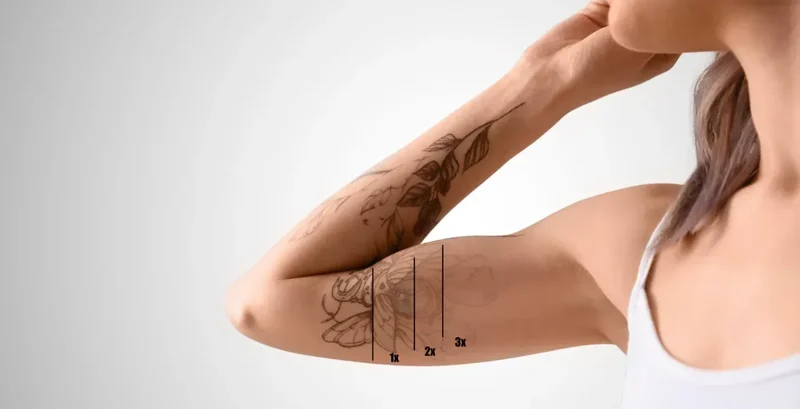
A single treatment provides an immediate refreshing effect, but to achieve a deep and lasting improvement in skin texture, pigmentation or oil balance, a series of several sessions is usually required. That is why we offer treatment packages at more attractive prices. Purchasing a series in advance reduces the cost of each individual session and makes the process better value in the long run. At the consultation we can recommend the right number of treatments for you and offer a suitable plan.
How does a carbon peel work, step by step?
To understand the value behind a carbon peel and its price, you need to know the process itself. It is a sophisticated procedure that combines advanced technology with active ingredients to cleanse, refresh and revitalise the skin from the ground up, and it is performed at the Dermacare clinic by a skilled, experienced team.
Step 1: Thorough cleansing and skin preparation
Every quality facial treatment starts with proper preparation. This step includes deep cleansing of the face to remove make-up, dirt and oil. The cleansing ensures that the activated charcoal mask is absorbed evenly and effectively, and it is carried out with professional products suited to the skin type.
Step 2: Applying the carbon mask (activated charcoal)
After cleansing, we apply a thin, even layer of black activated charcoal (carbon) gel to the skin. This gel has two roles:
-
Serving as a target for the laser: The dark colour of the charcoal absorbs the laser energy in a targeted, precise way.
-
Acting as a "magnet" for impurities: The charcoal particles gently penetrate the pores, where they attract excess oil (sebum), dead skin cells and dirt.
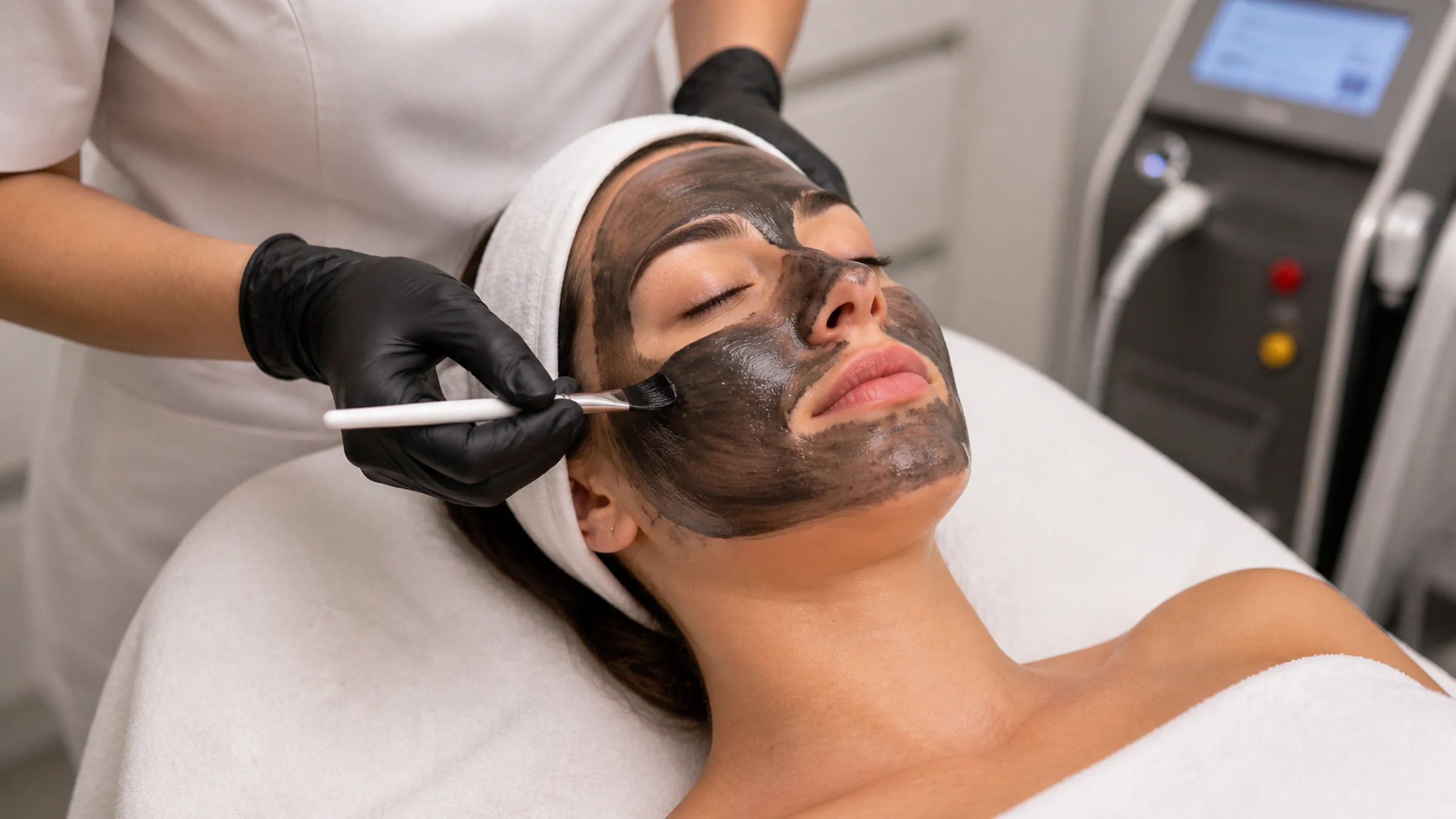
At the clinic, we make sure the carbon gel is applied precisely and evenly. An uneven layer can make the treatment ineffective, so precision here is critical and is what distinguishes an amateur treatment from a professional one.
Step 3: Gentle heating with the laser
The laser device comes into action. In the first stage, we use a relatively low-energy laser pulse. The laser energy is absorbed by the charcoal particles and gently heats them. The heating causes the particles to bind better to the oil and dead cells in the pores, while at the same time gently warming the deeper layer of the skin (the dermis), which encourages the production of collagen and elastin. At this stage you may feel a pleasant warmth.
Step 4: Controlled vaporisation of the carbon and deep cleansing
This is the most effective stage. We switch to a fast laser pulse with higher energy. When the laser beam hits the charcoal particles, it causes their immediate, controlled vaporisation (the "photoacoustic effect"). This achieves several goals at once:
-
Gentle exfoliation: It removes the outermost layer of dead skin cells and reveals new, fresh skin.
-
Deep pore cleansing: Every charcoal particle that has trapped dirt vaporises and takes the impurities out with it, which helps clear "blackheads" and reduce the appearance of pores.
-
Antibacterial effect: The heat generated destroys acne bacteria (P. acnes).
-
Stimulating collagen production: The energy signals the skin to start a process of healing and renewal.
The whole process is relatively quick and usually takes less than an hour. The immediate result is cleaner, smoother and more radiant skin.
How many treatments are needed, and is a series really better value?
One of the most common questions at the Dermacare clinic is "How many treatments do I need?". The answer depends on the goal of the treatment. It is important to distinguish between an immediate improvement and real change built up over time in order to set realistic expectations.
When can a single treatment be enough?
There are situations in which one carbon peel treatment gives an excellent result. If you have an important event and want to give your skin a "boost" of radiance and freshness, a single treatment is an ideal solution. It will deep-cleanse the skin, restore its glow and give it an instantly smooth, vibrant look, with no recovery time needed.
Why do we recommend a series in most cases?
If the goal is to treat persistent skin problems or to achieve significant change, a single treatment is only the beginning. To achieve lasting results, a gradual process is required. In most cases, the recommended protocol will include a series of 3-5 treatments. This approach is essential for treating conditions such as:
-
Enlarged pores: Ongoing treatment allows consistent cleansing and gradual tightening.
-
Post-acne marks: Each treatment contributes to gentle exfoliation and stimulates collagen production, which helps gradually fade scars and marks.
-
Oily skin: A series of treatments helps regulate the activity of the sebaceous glands and reduce oiliness over time.
-
Uneven skin texture: The cumulative effect of the treatments leads to visibly smoother, more even skin.
We usually recommend a break of two weeks to a month between treatments. This interval allows the skin to complete its natural renewal process.
Food for thought: Think of it like a workout. One workout will make you feel good, but a consistent series of workouts is what builds muscle and changes your body. The same is true of a carbon peel: one treatment gives you a glow, but a series is what restores and improves the quality of the skin from within.
Is a series better value financially?
Financially, the answer is almost always yes. When you purchase a series of treatments in advance, the price per treatment drops significantly compared with paying for each session separately. This makes investing in your skin's health smarter and more economical in the long run. At the consultation at Dermacare, we can build a plan together that suits your goals and your budget.
Who is the treatment suitable for, and when is it important to avoid it?
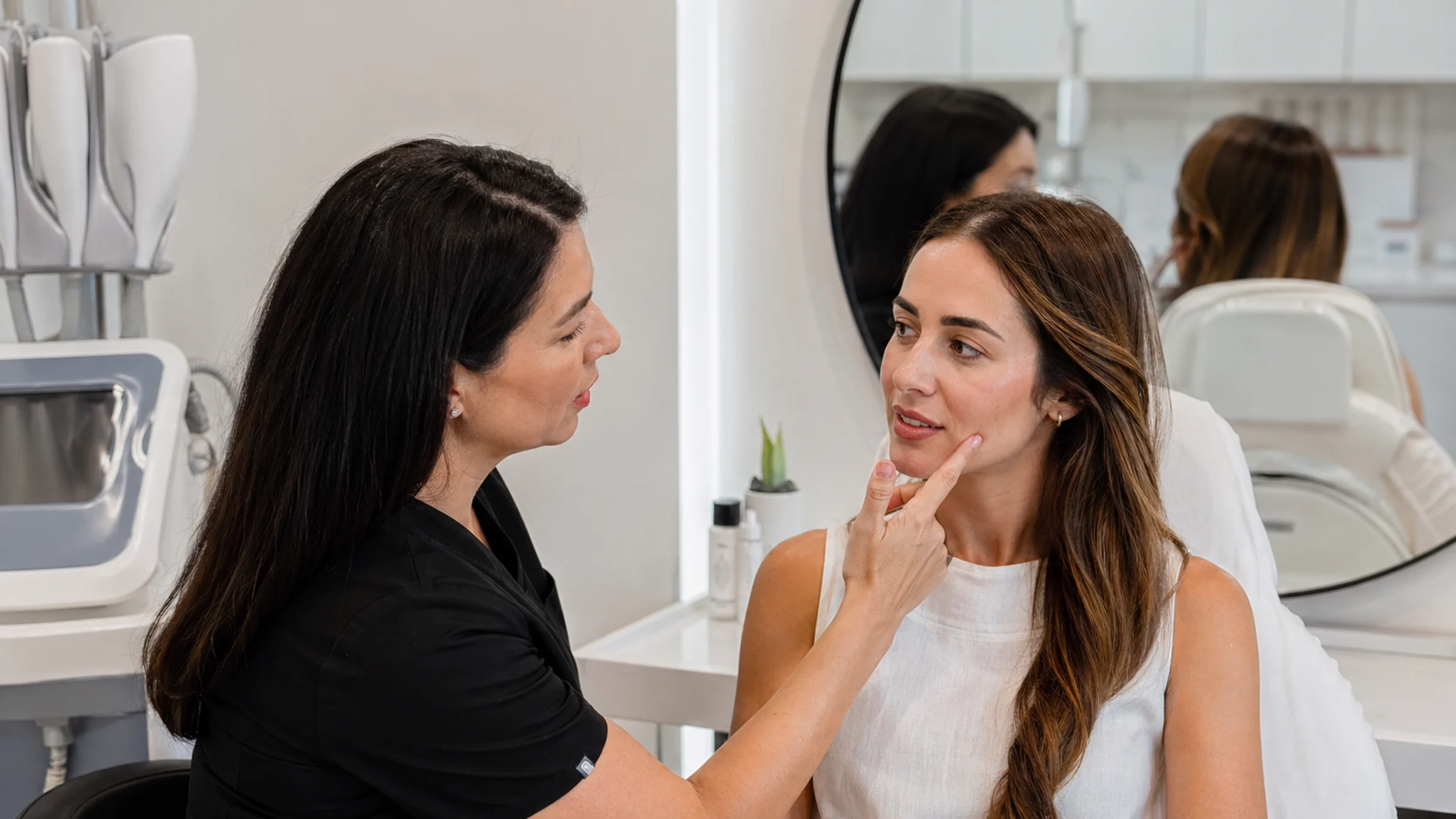
A carbon peel is a popular and effective treatment, but like any professional procedure, it is not suitable for everyone. The most critical step, even before setting a carbon peel price, is a professional skin analysis. With us at Dermacare, the consultation is designed for exactly that: to analyse your skin condition, understand your goals and make sure this treatment is indeed the right and safe choice for you.
Who will the treatment make a real difference for?
A carbon peel is an especially good solution for the following conditions:
-
Oily skin with enlarged pores and "blackheads": The treatment deep-cleanses the pores and absorbs excess oil, and over a series of treatments it helps shrink the pores and gives the skin a smoother look.
-
Post-acne marks and rough texture: The gentle exfoliation encourages skin renewal. Over a series, you can see an improvement in fading red or brown marks from old blemishes and a general smoothing of skin texture.
-
Looking for a quick "glow" treatment before an event: The treatment provides an immediate effect of freshness, cleanliness and natural radiance, and it is perfect before an important event as there is no recovery time.
-
Superficial pigmentation and uneven skin tone: The renewal effect helps lighten mild sun spots and restore a more even, healthy tone to the skin.
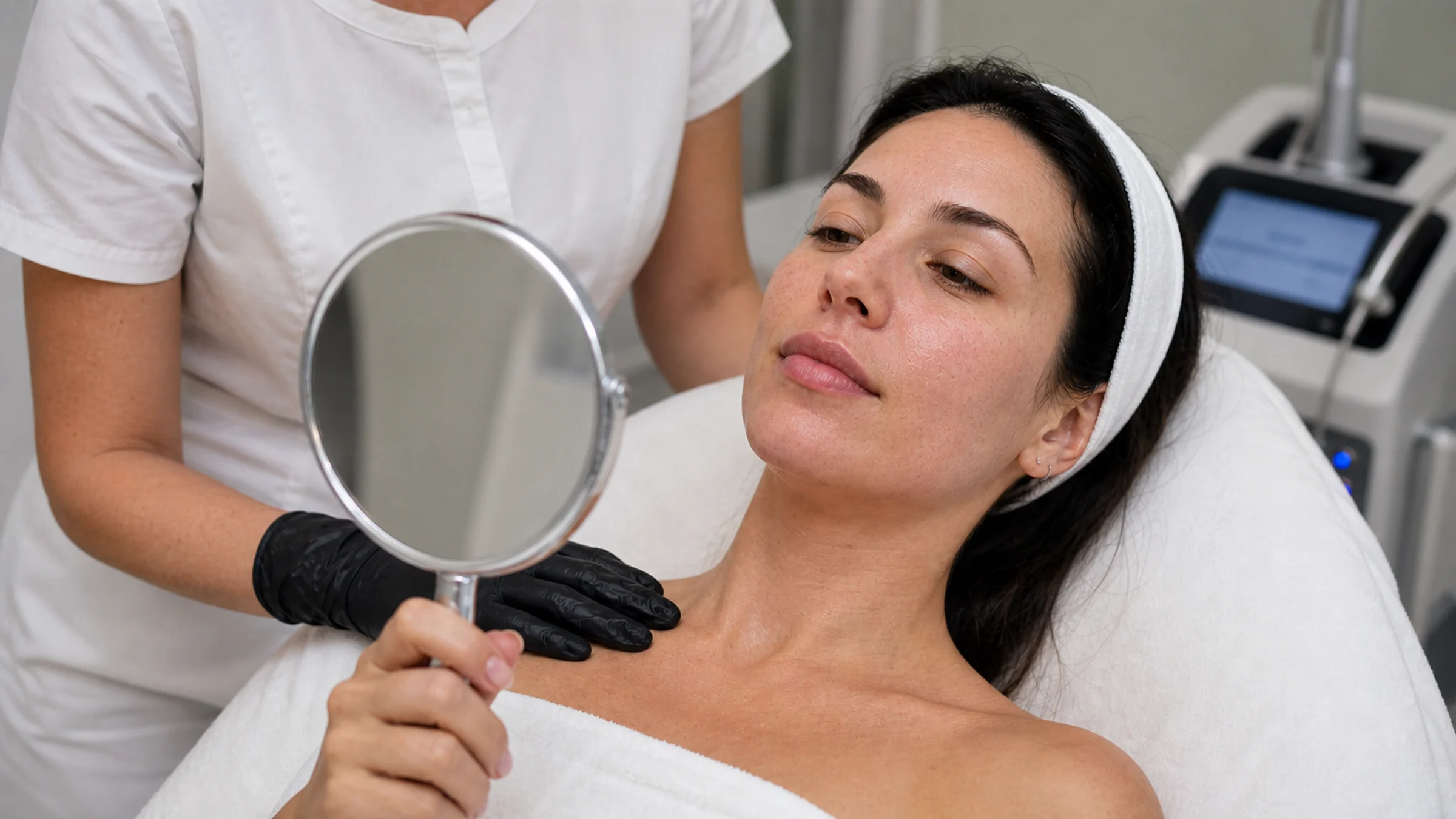
When you must skip or postpone the treatment
Alongside its benefits, there are medical conditions in which a carbon peel is not the right choice and may even be harmful. At Dermacare we carry out a full medical questionnaire to rule out contraindications.
"Patient safety is always the top priority. A treatment that is not right for the person may not only be a waste of money but may also cause side effects. Our responsibility is also to know when to say 'no'."
The main conditions in which we will not perform the treatment include:
-
Active, inflamed acne: The treatment is excellent for post-acne marks, but it must not be performed on active cystic or inflammatory acne, as it may worsen the inflammation.
-
Active skin infection: In the case of herpes, impetigo or any other infection in the area, you need to wait until it has fully healed.
-
Very dry or sensitive skin: Patients with very dry skin, atopic dermatitis or active rosacea may experience irritation from the treatment.
-
Pregnancy and breastfeeding: As a precaution, we do not perform laser treatments on women who are pregnant or breastfeeding.
-
Taking photosensitising medication: Medications such as Roaccutane (isotretinoin) in the past six months make the skin particularly sensitive and may cause burns or pigmentation in response to the laser.
-
Autoimmune diseases affecting the skin: In conditions such as lupus or vitiligo, extra caution and approval from the treating doctor are required.
Correct suitability assessment is the key to achieving the desired results in complete safety.
Frequently asked questions
What is a peel?
The term "peel" refers to an external aesthetic-dermatological skin treatment carried out using natural fruit acids, chemical acids or mechanical exfoliation. A peel is suitable for improving or removing skin changes caused by sun exposure or the ageing process, as well as for reducing wrinkles, pigmentation spots and superficial acne scars, and it also helps tighten the skin. Since the improving properties of natural fruit acids were discovered, many peeling methods have been developed. In chemical peels, a distinction is usually made between superficial peels (fruit acid peels), medium-depth peels (PQAge peel) and deep peels (TCA peel), according to the intensity of the effect on the skin and the degree of peeling. Mechanical peeling methods include dermabrasion and microdermabrasion. We tailor the type of peel to the desired result.
How is the peel performed?
A medical peel is a powerful, advanced treatment that is not comparable to a peel done at home or at a beautician's. The acids used are much more concentrated and stronger, so the skin must be accustomed to them gradually. Before treatment begins, preparation is carried out at home for several weeks. Then, depending on the skin type and treatment method, we start with a solution at a concentration of 10-20% and gradually increase the concentration by 10% each week, up to about 50-70%. During the treatment itself, the skin is cleansed and its oil layer removed. The peeling acid is then applied for a set period of time. At the end of the waiting time, the acid is washed off or neutralised. During and after treatment, the skin may feel hot or burning, but this sensation disappears after neutralisation. After a few hours to a few days, the skin peels to varying degrees, a process that lasts several days.
How does the peel work?
In a chemical peel, fruit acids or other substances are applied to the skin and penetrate the upper layers to varying depths. They dissolve dead skin cells, encourage renewal of the epidermis and stimulate the production of collagen fibres, ground substance and elastin in the dermis, while increasing the skin's ability to retain moisture. The result is a renewed, thicker and firmer skin structure with higher moisture levels. The skin becomes smoother, firmer and younger-looking, while sun damage, pigmentation and fine lines are reduced or disappear – as long as they are not too deep. The more active and aggressive the acid, the more significant the skin rejuvenation results, but the risk of side effects also increases accordingly.
What is important to pay attention to after a peel?
For the first three hours after the peel, the treated area must not be exposed to water or cosmetic products. After that, you can apply a moisturiser or sunscreen. During the course of peel treatments, do not use products containing vitamin A. Avoid sun exposure during the treatments and for up to two weeks after they finish. In the event of sun exposure, use a sunscreen with a high protection factor (at least SPF 20, preferably higher). To prolong the results of the treatment, it is recommended to continue caring for the skin with dedicated products, such as creams containing a low concentration of glycolic acid.
What happens in the days after the peel?
Immediately after the peel, the skin will be red and a feeling of tightness may appear. After a few days, the peeling process will begin, and in place of the peeling layers new, fresh and younger skin will be revealed – but it will also be very sensitive. Using suitable skincare products will support the renewal process. The full results of the peel can only be seen after a few days to weeks. In the case of a chemical peel, two follow-up checks are carried out to make sure the skin is healing properly. By contrast, after a fruit acid peel, no medical follow-up is needed, as its effect is more superficial.
Which type of peel is most suitable for me?
This question can only be answered after a personal consultation. There are different types of peel, chosen according to the goal of the treatment. A fruit acid peel works on the upper layers of the skin, a PQAge peel penetrates the middle layers, while a TCA peel also reaches the deeper layers. As with any aesthetic treatment, a peel requires preparation beforehand and complementary care afterwards. Depending on the desired goal, the specialist will choose the most suitable type of peel for you.
For full information on the process and prices: Carbon laser peel.
Want to see all the prices in one place? Dermacare's full treatment price list — laser hair removal by area, Botox and more.
Frequently asked questions
No, the vast majority of patients report that the treatment is not painful. The most common sensation is light tingling or short pulses of gentle warmth. One of the great advantages of the treatment is that no anaesthetic cream is needed, which makes the process shorter and more pleasant.
The treatment has a dual effect:
-
Immediate effect: right after the first treatment the skin looks cleaner, fresher and more radiant.
-
Long-term effect: for a deeper improvement in skin texture, reduced pores or treatment of post-acne marks, a series of 3-5 sessions is required. The results of such a series are more significant and can last several months, provided you keep up a proper skincare routine and sun protection.
Not at all. A carbon peel is a "lunchtime procedure" that allows an immediate return to your routine. There may be mild redness that usually passes within a few hours, but there is no peeling and no need to stay at home.
Yes. Unlike medium or deep chemical peels, a carbon peel is safe to perform in all seasons of the year, even in the Israeli summer. However, you must use sunscreen of at least SPF30 every day to protect the skin and maintain the results of the treatment.
Both are designed to renew the skin, but in different ways. A carbon peel uses a laser and carbon for a gentle mechanical-thermal peel with no visible flaking and no downtime. A chemical peel, by contrast, uses acids to cause chemical exfoliation of the skin, and often requires downtime.
| Feature | Carbon peel | Chemical peel (medium) |
|---|---|---|
| How does it work? | A combination of laser and carbon gel. | Use of acids that cause peeling. |
| Depth of peel | Superficial and gentle. No visible peeling. | Medium. Accompanied by visible peeling. |
| Downtime | None. | Several days. |
| Sensation | Gentle tingling and warmth. | Burning. |
| Suitable for summer? | Yes. | Not recommended. |
| Main goals | Pore cleansing, oily skin, glow, even texture. | Fine lines, pigmentation, scars. |
At Dermacare, after a professional assessment, we will know how to recommend the exact solution for you, whether it is a carbon peel, a fruit acid peel or another treatment.
The question about the carbon peel price for a series is an important one, because this is where you get the best value. While a single treatment starts at about ILS 500, buying a series lowers the cost per treatment. For example, a series of 3 treatments will usually cost between ILS 1,350 and ILS 1,800, which reflects a significant discount. At the consultation we will build a personal plan for you and give an exact quote.
Want to understand exactly what suits your skin? The Dermacare team will be happy to carry out a professional skin analysis, assess the suitable type of treatment and realistic expectations – in a professional, personal and precise way. To book a consultation, you can get in touch here.