
In brief
- Laser pigmentation removal breaks down excess melanin in a targeted way, lightening sun spots, age spots and post-blemish pigmentation.
- An accurate diagnosis of the type of spot, its depth and the skin tone is critical; without it, treatment may make things worse, especially with melasma and dark skin.
- IPL suits superficial, scattered spots, while a single-wavelength laser suits deep, stubborn pigmentation such as melasma.
- In the first days, the spots usually darken for 5 to 10 days, and this is a normal part of the process.
- A series of treatments 3 to 4 weeks apart is required, and daily sun protection with SPF 50 is the most important instruction for maintaining the results.
Laser pigmentation removal is an advanced method in which we use concentrated light energy to break down excess melanin in a targeted, precise way – the pigment responsible for the appearance of spots on the skin. It is one of the most proven and effective solutions available today for treating sun spots, age spots and pigmentation left behind after blemishes. The aim is to restore a more even, smooth and healthy appearance to the skin.
So who is laser pigmentation removal suitable for?
The treatment is suitable for women and men who want to treat various skin spots and achieve an even tone. Most people who come to us at Dermacare are aged 30 and over and suffer from sun spots, age spots or melasma (hormonal pigmentation). With advanced technologies, a significant improvement in the appearance of spots can be achieved, but the final result always depends on an accurate diagnosis, the type of spot and the skin tone.
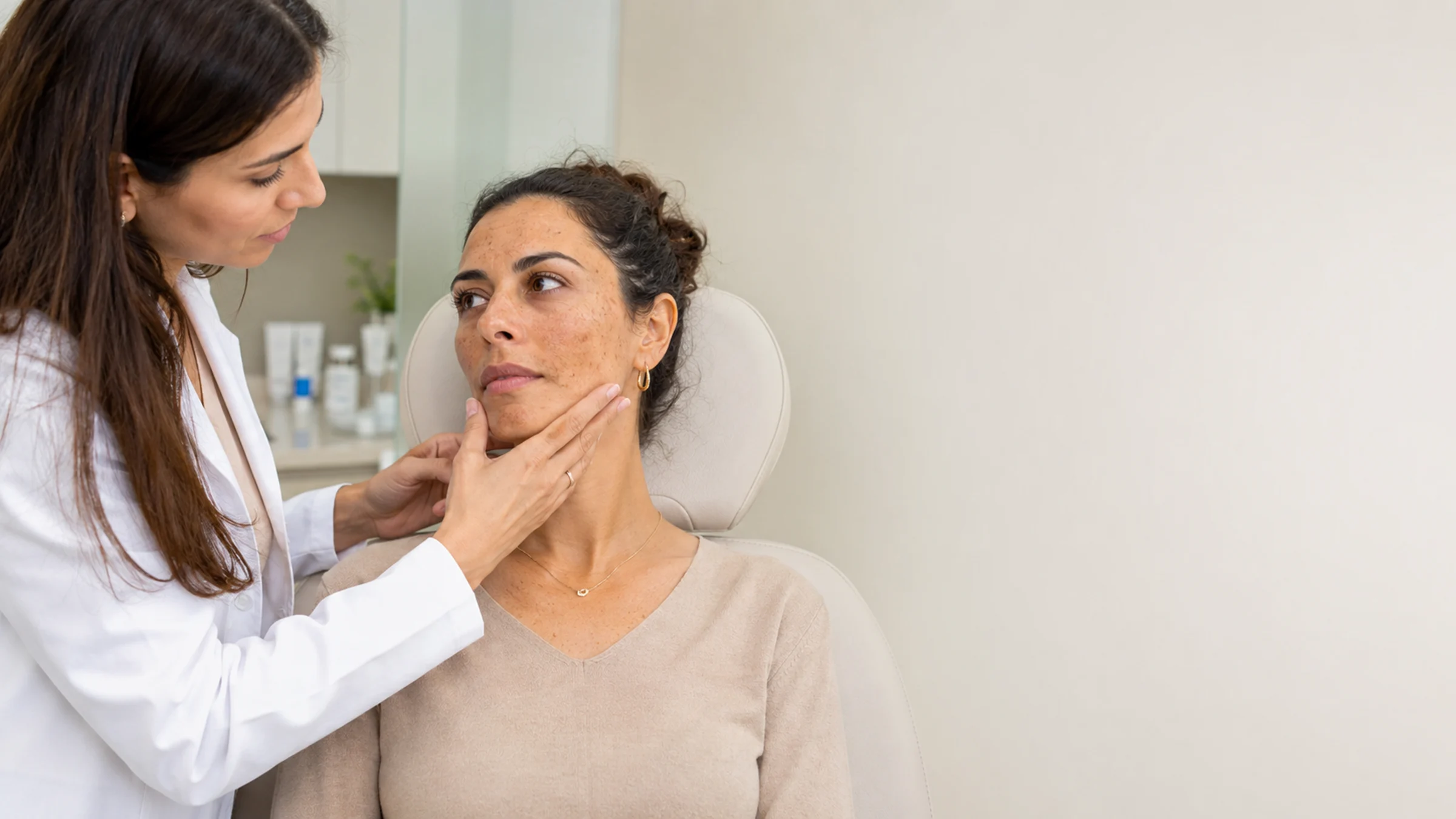
At Dermacare, the first and most critical step is a professional diagnostic consultation. In this consultation, an experienced team member does not just "look at the skin" but thoroughly diagnoses the type of pigmentation, which layer of the skin the spot is in, and your skin tone. An accurate diagnosis allows us to choose the right technology – whether a targeted laser or light treatment (IPL) – and to define the precise treatment protocol for success.
A point from our clinical experience: The key to success is not the device but the preliminary diagnosis. We have seen quite a few cases in which treatment carried out without a correct diagnosis, or with unsuitable technology, not only failed to help but actually made the condition worse. This is especially critical with sensitive or dark skin, or in cases of melasma.
In general, the treatment may be suitable for people who suffer from:
-
Sun spots (solar lentigines): brown, flat, round spots that appear on the face, hands and décolletage after years of sun exposure.
-
Age spots: similar to sun spots, they tend to appear with age as a result of cumulative sun exposure.
-
Post-inflammatory hyperpigmentation (PIH): dark spots left as a "souvenir" of acne blemishes, a burn or another skin injury.
-
Freckles: small, numerous spots that usually appear in people with fair skin and respond very well to treatment.
At Dermacare we have a range of laser technologies, based on the understanding that there is no one-size-fits-all solution. You can read more about the different types of lasers at the clinic to understand the difference between each device and why it is important to tailor it individually.
Overview of common types of pigmentation and their suitability for laser treatment
To make things clearer, we have summarised in a table the common types of spots, their causes, and how they are expected to respond to personalised laser treatment.
| Type of pigmentation | Main causes | Expected response to laser treatment |
|---|---|---|
| Sun and age spots | Prolonged, cumulative exposure to UV radiation | Very good response. Usually 2-4 treatments are enough to see significant lightening. |
| Post-inflammatory hyperpigmentation (PIH) | Trauma to the skin (acne, injury, irritation) | Good response. The treatment is effective but requires careful work so as not to trigger new inflammation. |
| Melasma (Melasma) | Hormonal changes, sun exposure and heat | Complex response. This is a stubborn type of spot that requires a careful, gradual and combined treatment protocol. Results vary greatly and depend on the patient's cooperation. |
| Freckles (Ephelides) | Genetic predisposition and sun exposure | Excellent response. They are easy to lighten but tend to return with sun exposure, so maintenance and protection are critical. |
Ultimately, a personalised approach based on clinical experience is the only way to ensure a safe, excellent result, while setting realistic expectations and preventing risks.
How does the laser "find" the spot and break it down? The science behind the treatment
To understand how laser pigmentation removal manages to clear spots and restore an even tone to the skin, it is important to know the brilliant scientific principle behind the technology. The laser beam works like a smart "guided missile" that knows exactly what it is looking for: the excess dark pigment, melanin, that creates the spot.
The technology is based on a principle called selective photothermolysis. It may sound complicated, but the idea is simple: "photo" means light, "thermo" means heat and "lysis" means breakdown. The laser beam sends a precise pulse of light at a specific wavelength, which is selectively absorbed by the dark melanin while ignoring the healthy, lighter skin around it.
As soon as the melanin absorbs the light energy, it is immediately converted into concentrated heat. This heat causes a controlled shattering of the large clusters of melanin, breaking them down into tiny particles that the body can easily clear away.
The difference between laser and IPL – not all light is the same
It is important to understand that not every device that emits light is a "laser" in the same sense. There are different technologies, and each one suits a different purpose. That is why it is critical to choose the right device for the right diagnosis.
-
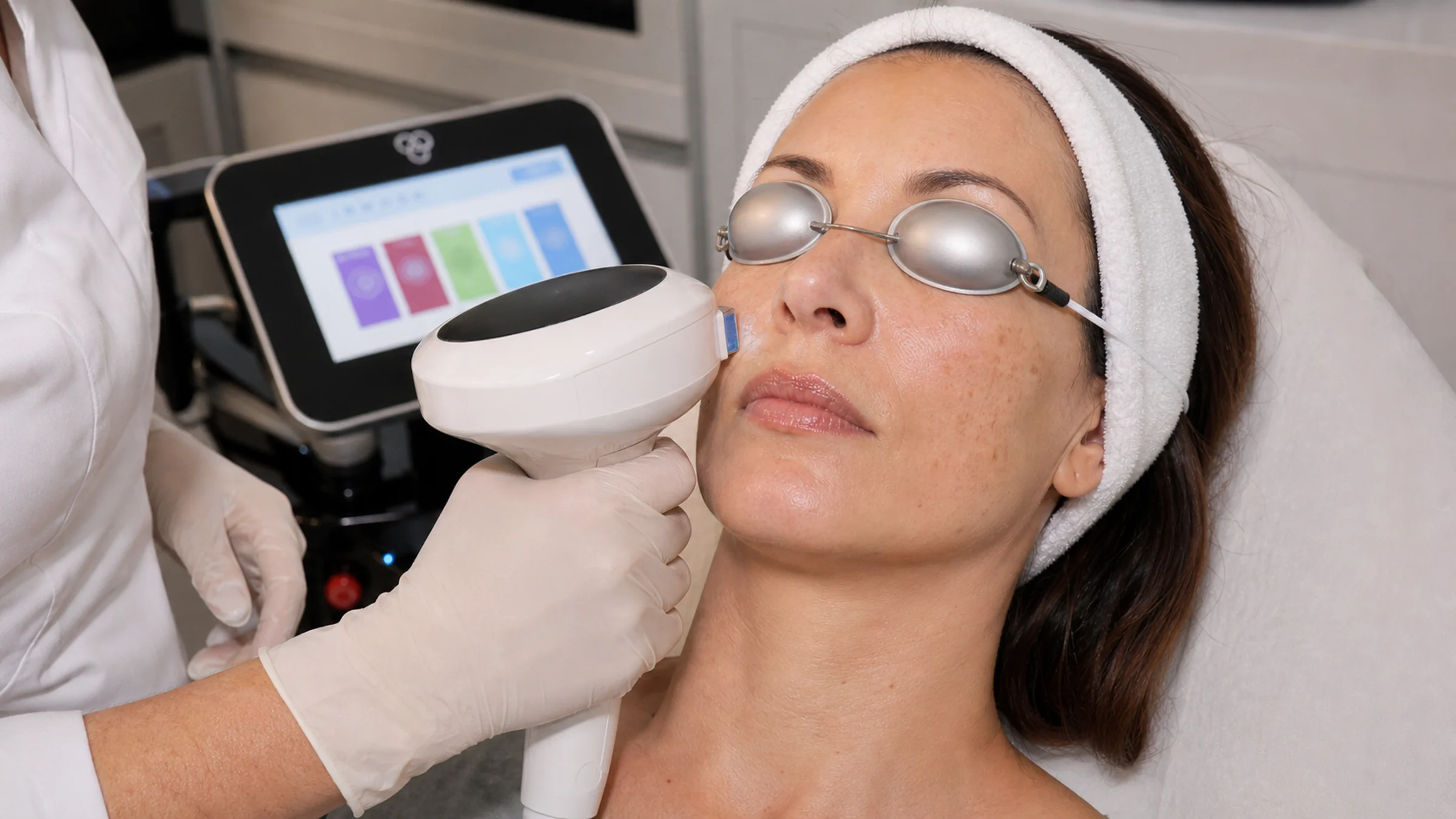
IPL technology (broad-spectrum light): An IPL device emits a wide range of wavelengths simultaneously. This makes it excellent for superficial, scattered spots such as freckles, early sun spots and mild sun damage. It is also great for generally improving skin texture and treating small blood vessels. It is a gentler treatment with minimal recovery time.
-
Single-wavelength laser (such as Nd:YAG): This technology uses a single, focused and powerful beam of light. It is the preferred solution for deeper, stubborn pigmentation, such as long-standing age spots or melasma. Its surgical precision allows us to "hunt down" the deep pigment without spreading unnecessary heat to the surrounding tissue.
Our ability at Dermacare to combine technologies is a significant advantage. We are not "tied" to a single device; instead, we tailor for each patient the precise protocol for the type and depth of the spot, the skin tone and the final goal.
And now the body gets to work: the natural clearance process
Once the laser has broken the melanin down into tiny particles, the body takes over. Our immune system identifies the broken-down melanin particles as foreign "waste" that needs to be removed from the area.
White blood cells (called macrophages, or "big eaters") arrive in the area, "swallow" the pigment particles and carry them away through the lymphatic system. This is a natural and completely safe process.
This also explains an important phenomenon: in the first days after treatment, the spot will usually look darker. That is an excellent sign! It means the treatment has worked and the broken-down pigment is "rising" to the surface before the body starts clearing it. After this short darkening phase, the spot will start to lighten gradually until it eventually becomes significantly lighter or disappears, and the skin looks more even and radiant.
The pigmentation treatment process at Dermacare: how it works step by step
So that you feel confident and at ease, it is important to us that you know exactly what happens at every stage of the laser pigmentation removal process. At Dermacare, we believe in personal guidance and full transparency from the very first moment. We have built an organised, professional process that ensures you are in good hands all the way.
The journey to even, smooth skin starts long before the laser button is pressed, and it continues afterwards too. This is how it works with us:
Step 1: Professional diagnostic consultation and setting expectations
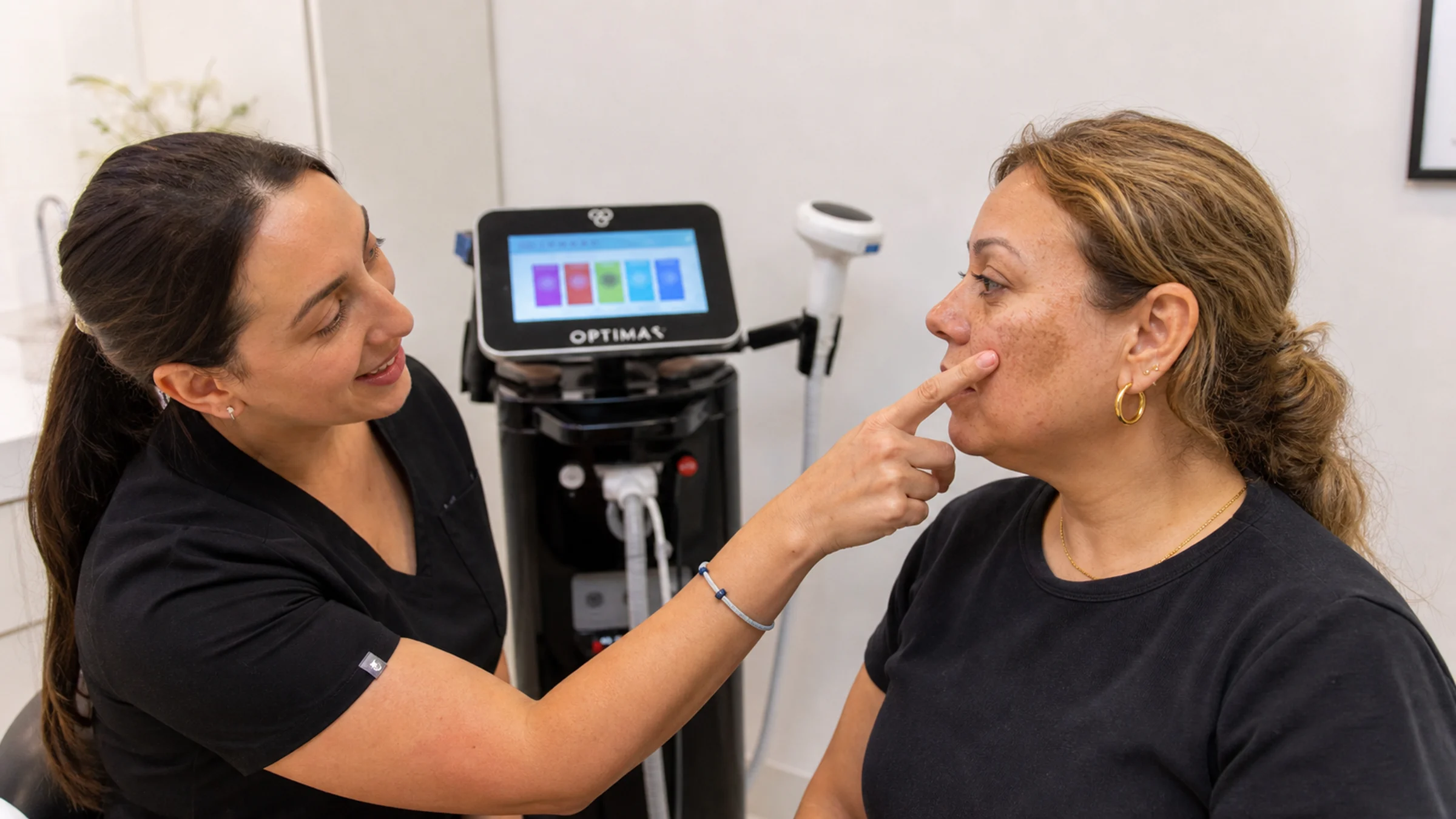
The first and most important step is the consultation. In this meeting, an experienced team member will give you their full attention in order to thoroughly understand your skin condition, your medical background and your goals.
The consultation includes:
-
A personal conversation: We will ask about your lifestyle, history of sun exposure, medications and previous treatments. Every detail matters.
-
Advanced skin analysis: We will use dedicated technology to examine the type of pigmentation, measure the depth of the spot and determine whether it is superficial or deep.
-
Setting realistic expectations: We will explain honestly what can be achieved, how many treatments we estimate will be needed, and what results to expect. This is the place to ask any question and get the full picture.
At the end of the consultation, we will build a precise, personalised treatment plan for you, like a suit tailored especially to your skin.
Step 2: Preparing for treatment
To ensure the treatment is effective and safe, the skin needs a short period of preparation. Before the first treatment, you will receive a clear and simple set of instructions from us.
The instructions will usually include:
-
Avoiding sun exposure: It is recommended to avoid tanning (natural or artificial) for about two to three weeks before treatment. Tanned skin may respond to the laser less predictably.
-
Temporarily stopping certain products: We will advise you to stop using products containing retinoids or strong peeling acids a few days before treatment.
This short preparation allows the laser energy to work optimally while significantly reducing the risk of side effects.
Step 3: The day of treatment
On the day of treatment, all you need to do is come in and relax. We will make sure the experience is comfortable, calm and professional. The process itself is quick and efficient:
-
Cleansing and disinfection: We start by thoroughly cleansing the treatment area.
-
Applying cooling gel: A layer of clear, cold gel is applied to the treatment area to protect the skin and help conduct the light energy.
-
Eye protection: You will be given special protective glasses to shield your eyes from the flashes of light.
-
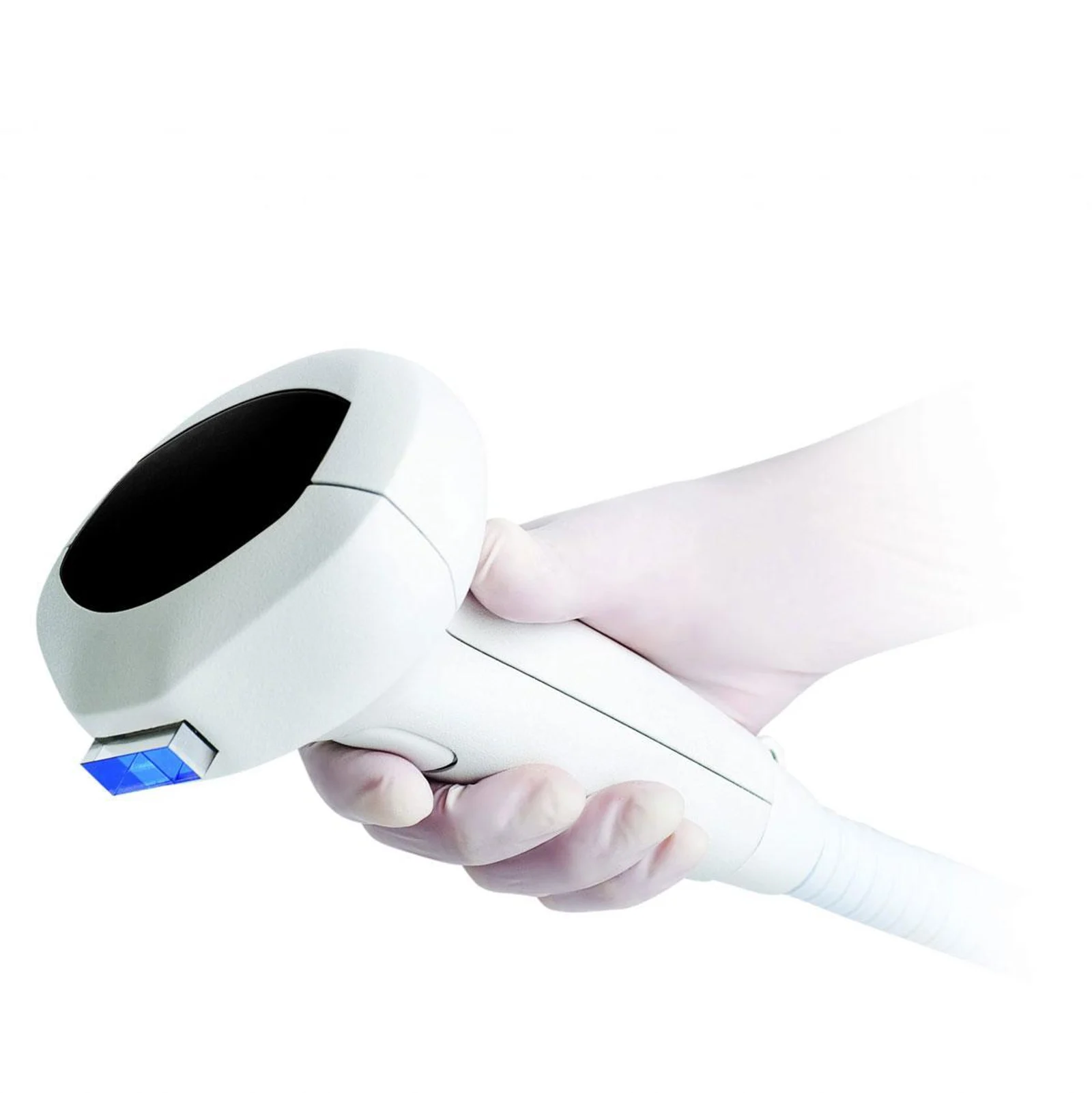
Performing the treatment: The practitioner moves the handpiece over the area, pulse by pulse. Most patients describe the sensation as "warm pinches" or short, tolerable flashes of heat.
The treatment itself is fairly short, usually lasting between 5 and 30 minutes, depending on the size of the treatment area. Most patients can return to their full routine as early as the next day.
Step 4: The treatment series, follow-up and aftercare instructions
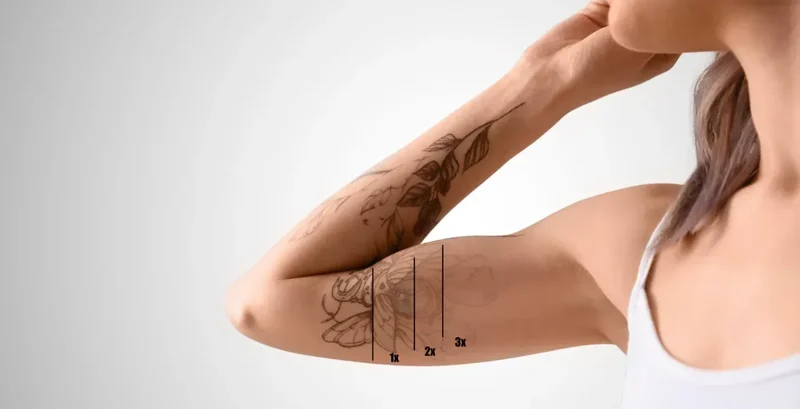
Pigmentation removal is a gradual process. To achieve a significant, stable result, a series of several treatments is usually required. The recommended interval between treatments is 3-4 weeks – the time the skin needs to recover and the body needs to clear the broken-down melanin.
After each treatment, you will receive a precise recovery protocol from us:
-
Use of a dedicated soothing cream to reduce redness.
-
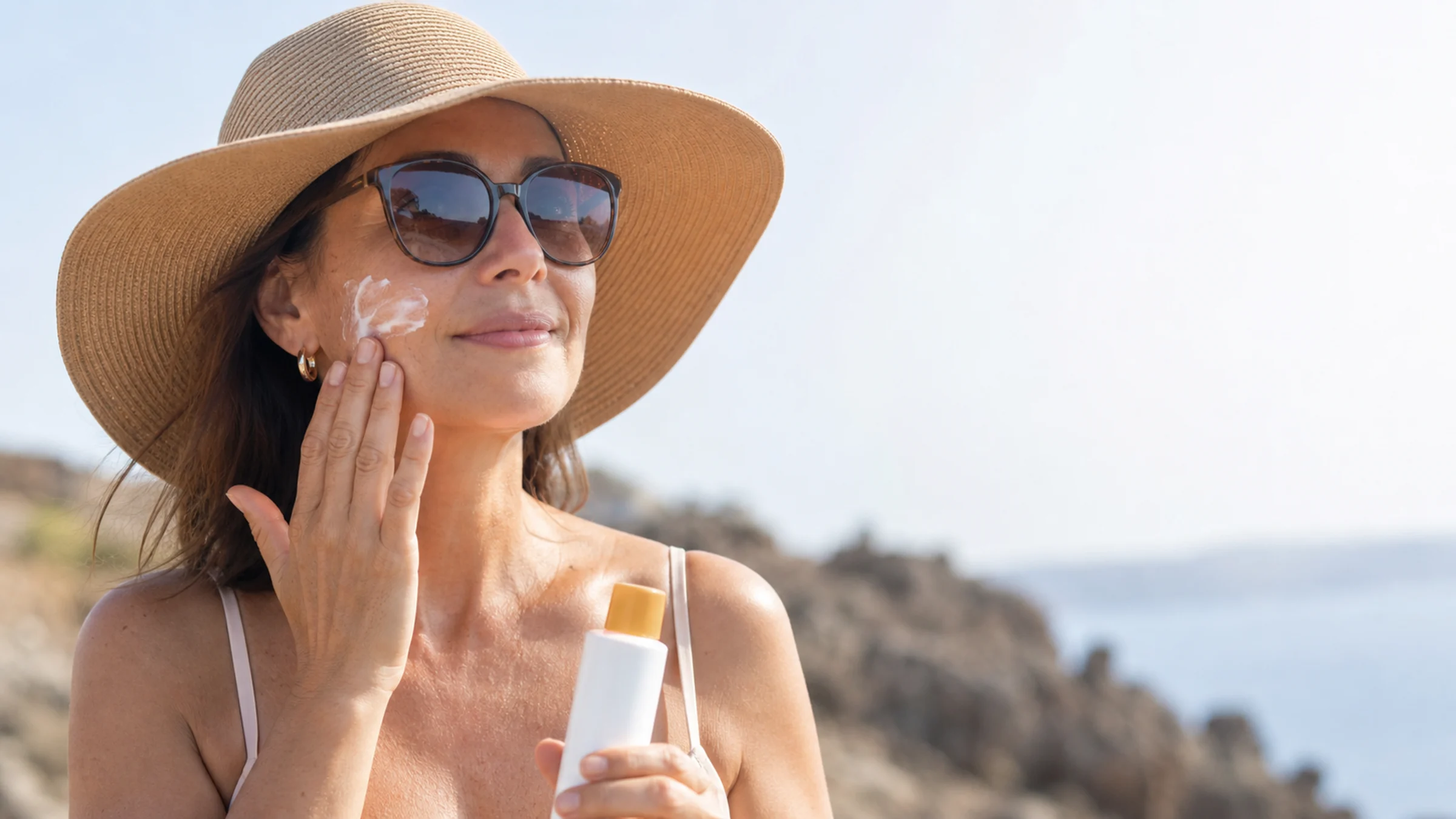
Instructions for strict, daily sun protection with a high protection factor (SPF 50). This is the most important instruction for maintaining the results.
-
Guidance on a supportive skincare routine between treatments, which sometimes includes gentle brightening products.
Risks, recovery and managing side effects: what can you really expect after treatment?
When considering a treatment such as laser pigmentation removal, it is natural to think about the result, but it is just as important to understand the path to it – the recovery process, the side effects and how to manage them correctly. At Dermacare, we believe in full transparency. It is important to us that you get a true and accurate picture.
The good news is that when the treatment is carried out correctly – after a professional diagnosis and choosing the right laser for your skin – side effects are usually mild, predictable and part of the success.
Common and expected side effects
Immediately after treatment, the skin reacts to the laser energy. These reactions are a completely normal sign that the process is working as planned.
-
Redness and mild swelling: The treated area will look slightly red and swollen, similar to a mild sunburn. This is normal and usually passes within a few hours to a day.
-
A feeling of warmth and sensitivity: The skin may feel warm to the touch and sensitive. A dedicated soothing cream and cold compresses can ease the sensation.
-
Temporary darkening of the spots: This is perhaps the most important point to understand, because it is actually a sign of success. The spots we have treated will darken significantly for a few days (usually 5-10 days). This is the stage at which the broken-down melanin "rises" before the body removes it. After that, the spot will gently flake off or lighten.
Returning to your routine is almost immediate. Most of our patients return to work and normal activity the very next day, while following the instructions.
Rare risks and how we avoid them
More significant risks are rare and are almost always related to poor diagnosis, the use of the wrong technology or not following the aftercare instructions. Our experience and professionalism at Dermacare are aimed at minimising these risks.
In our experience, one of the rare complications that can occur is excessive irritation or temporary darkening after treatment, mainly in sensitive skin or when the instructions are not followed fully. In such cases, we pause the active protocol, switch to calming and restoring the skin, introduce suitable products, and gradually resume treatment only once the skin has stabilised. Thanks to proper monitoring and adjustment of the treatment, the condition resolves without permanent damage.
The potential risks (which are rare with a correct protocol) include:
-
Permanent change in skin tone (hypo-/hyperpigmentation): lightening or darkening of the area. The risk increases with dark or tanned skin, which is why we insist on an accurate diagnosis and do not treat tanned skin.
-
Burns or blisters: These can occur when too high an intensity is used. Our expertise in adjusting the parameters on advanced equipment prevents this.
-
Infection: A very low risk, as long as hygiene is maintained and the instructions are followed.
The golden rules for perfect recovery and the best possible result
The success of laser pigmentation removal depends on your cooperation no less than on the quality of the treatment. Following a few simple rules is the key to a good result and to preventing complications.
-
Complete sun protection: This is the most important instruction. You must use sunscreen with a high protection factor (SPF 50) every day, even at home and on cloudy days. The sun is the treatment's number one enemy.
-
Do not peel the spots: Let the natural process take its course. Do not scratch or try to peel the darkening spots. They will flake off on their own when the skin is ready.
-
Use soothing products: Apply the soothing cream you received from us exactly as instructed.
-
Avoid heat and exertion: For the first 24-48 hours, avoid very hot showers, saunas and intensive physical activity that causes heavy sweating.
The close guidance, professional diagnosis and advanced technology at Dermacare ensure that your recovery is smooth, safe and supervised – on the safe path to even, smooth and healthy skin.
What affects the price of treatment, and how much should it cost?
One of the first questions in the consultation is, of course, "How much does it cost?". It is important to understand that there is no single price for laser pigmentation removal. The cost is individual and is built according to your unique skin condition, the complexity of the treatment and the resources needed to achieve the best result.
The main factors that determine the final price
To put together an accurate quote, we take several main parameters into account:
-
Size of the treatment area: Naturally, spot treatment of a single mark will cost less than a comprehensive treatment of the entire face, décolletage or backs of the hands.
-
Type and depth of pigmentation: There is a significant difference between treating superficial sun spots, which usually respond quickly, and deep, stubborn hormonal pigmentation such as melasma, which requires a longer series of treatments.
-
The chosen technology: At Dermacare we have a range of laser and IPL systems. Choosing the right device – for example, IPL for superficial spots or a targeted laser for deep spots – affects the cost.
-
Number of treatments required: In most cases, a series of several treatments is required. The exact number of sessions is determined after diagnosis and directly affects the total price.
Price ranges in Israel – and why it is important not to compromise on quality
To give a general estimate, the cost of a single laser pigmentation removal treatment in Israel usually ranges between ILS 400 and ILS 900. Since a series of 3-6 treatments is usually required, the total cost can range between ILS 2,000 and ILS 6,000 or even more. Many clinics offer discounts when a series of treatments is purchased in advance.
Important to remember: A price that sounds suspiciously low may indicate outdated equipment, an inexperienced team, or a "generic" treatment protocol that is not personalised.
Investing in a professional, experienced clinic such as Dermacare is first and foremost an investment in safety and results. Our prices reflect an accurate diagnosis, the use of advanced technologies and close guidance from a skilled team. We offer personalised treatment packages that maintain the highest professional standards.
Everything you wanted to ask about laser pigmentation removal
These are the questions that always come up in our consultations here at Dermacare. We have gathered them to give you the full picture, based on the experience we have gained at our clinic in Petah Tikva. Remember that the information here is general and is not a substitute for personal, professional advice.
How many treatments are really needed before you see results?
This is the key question, and the answer is – it depends. To achieve a significant improvement of around 70% or more in the spots, most patients will need a series of between 3 and 6 treatments.
This number varies from person to person. If the sun spots are recent and superficial, you may see a noticeable improvement after just one or two treatments. On the other hand, if we are dealing with deep, stubborn pigmentation such as melasma, or long-standing spots, more patience and a longer series will be needed. Success depends on building a precise protocol and on you following the instructions carefully.
In our experience, the winning combination is a series of treatments at the clinic together with the right skincare routine at home. For example, for a patient with pigmentation from sun exposure, we combined the treatments with a gentle brightening product for home use and a medical-grade sunscreen on a daily basis. This combination helped speed up the rate of improvement and also reduced the risk of new spots appearing. You can read more about the factors that affect the success of the treatment.
Is pigmentation treatment painful?
The simple answer is no. The vast majority of our patients describe the sensation as mild discomfort rather than pain. During the treatment, you will feel quick, warm "pinches" or slight stinging, only at the moment the laser fires. The sensation passes immediately. Here at Dermacare, we work with advanced laser systems that include built-in cooling mechanisms, which make the experience much calmer and more comfortable.
And the results? Do they last forever?
The laser breaks down and removes existing spots very effectively, but it is not a "vaccine" against new spots. Whether the results last over time depends almost entirely on caring for your skin properly.
The most important thing is consistent daily use of sunscreen with a high protection factor (at least SPF 30, and SPF 50 is recommended). Sun exposure without protection is a sure recipe for the spots to return, and sometimes they come back darker. That is why we build a personal maintenance plan for every patient to keep the skin smooth and even for years.
I have tried treating melasma before, but it always came back. Will laser help me?
Melasma (hormonal pigmentation) is without doubt the most challenging type of pigmentation to treat. It is affected not only by the sun but also by internal factors such as hormonal changes and even exposure to heat. That is why many treatments are unsuccessful or the result does not last.
Our extensive clinical experience at Dermacare in treating melasma shows that significant improvement can be achieved, but it requires a different approach. The treatment must be careful, gradual and, above all, personalised. We usually combine several laser technologies at low intensities, together with a home skincare routine whose main aim is to stabilise the melanin cells. The key to success with melasma is not just lightening the spot but stabilising the skin and preventing it from flaring up again. This requires full cooperation and avoiding triggers such as sun, heat and aggressive treatments.
Want to know exactly what is right for you? The Dermacare team is ready to assess your skin condition, the suitable type of treatment and realistic expectations in a professional, personal and precise way. To book a consultation, you can contact us here.
Frequently asked questions
IPL treatment is painless and well tolerated. During the treatment, you will feel only a pleasant warmth on the surface of the skin in the treated area.
IPL treatments are particularly gentle and do not cause visible changes. During the treatment and for about 30 minutes afterwards, slight redness may appear, but it passes quickly. IPL treatment does not cause scarring or damage to the skin.
Usually, about 4 to 8 IPL skin tightening treatments are needed to achieve an optimal result. After the initial series of treatments, it is recommended to have maintenance treatments once every 3 to 6 months to preserve the result over time. Because this is a non-ablative treatment, no recovery time is needed, and you can return to your daily activities straight away.
In general, IPL skin tightening can be performed on all areas of the body, but the treatment is particularly effective for wrinkles on the face, such as expression lines and "crow's feet", as well as for softening the appearance of under-eye bags and tightening sagging cheeks.