
In brief
- In the first 24 hours after laser treatment, avoid hot showers, saunas, jacuzzis, strenuous exercise and tight or synthetic clothing.
- After the treatment, do not apply products containing alcohol or fragrance, peels, retinoids or active acids; stick to soothing and moisturising.
- A cold compress can relieve the area, but never place ice directly on the skin, to avoid a cold burn.
- Avoid direct sun exposure and tanning for two to four weeks, as exposure can cause hyperpigmentation.
- Apply sunscreen with SPF 50 or higher every day, preferably mineral-based, and reapply it every two hours during prolonged exposure.
So you've just come out of laser treatment, your skin feels a little warm and red, and you're asking yourself – what now, and what should you avoid doing after laser treatment? The simple professional answer is: how you behave in the first few days is critical to the success of the treatment. The key to a quick recovery and excellent results lies in a few simple "don'ts", which focus mainly on avoiding heat, sun exposure and unnecessary irritation of the skin.
What should you avoid in the first 24-48 hours after laser treatment?
The first hours after treatment are the most critical window for the skin's recovery. Think of it this way: the laser energy created controlled heat beneath the skin to treat the hair roots or the pigment, and now your skin needs "cooling down" and repair in a calm environment.
The mild redness and warmth you feel are an expected and normal reaction – a sign that the treatment was effective. But precisely because of this sensitivity, following the instructions is not just a recommendation but an integral part of the success of the whole treatment. From our experience at the Dermacare clinic, we know that your cooperation at this stage determines what the final result will look like.
Avoid heat, sweating and friction
The most important rule in the first 24 hours is to keep the treated area cool and calm. The aim is to allow the internal heat created in the skin to dissipate naturally, without adding external irritation.
So, for the next 24 hours, completely avoid:
-
Very hot showers or long baths: Opt for a short, lukewarm shower. Hot water will increase redness and sensitivity.
-
Saunas, jacuzzis or hammams: These are completely off-limits. Heat and steam are a sure recipe for making irritation worse.
-
Intensive physical activity: Exercise that causes heavy sweating (running, aerobics, weightlifting) is not recommended. Sweat contains salts that can sting and irritate sensitive hair follicles.
-
Tight or synthetic clothing: Especially on areas such as the legs, groin or underarms. Loose, breathable cotton clothing will prevent unnecessary friction and allow the skin to breathe.
What should you do? If you feel the need, cold compresses (a clean towel soaked in cold water) can bring significant relief. Place one on the area for a few minutes, several times during the day. Please note: never place ice directly on the skin, to avoid a cold burn.
Give your skin a "break" from skincare products
After laser treatment, your skin needs rest. This is not the time to experiment with new products or to use your strongest formulations. Any product containing alcohol, fragrance or active acids can cause an unpleasant burning sensation and even worsen irritation.
So what should you avoid applying to the skin in the first 24 hours?
-
Alcohol-based products: such as aftershave, certain toners or perfume applied directly to the treated area.
-
Peels of any kind: Whether a grainy (mechanical) scrub or a chemical peel containing acids. Your skin has already been through a controlled process; there is no need to add to it.
-
Active formulations: Set aside creams containing retinoids (such as Retin-A), glycolic acid, salicylic acid and the like.
-
Heavy make-up: It is advisable to avoid make-up, especially liquid foundation, to allow the pores to remain open and clean and to heal.
A tip from Dermacare's experience: Instead of piling on products, focus on soothing and moisturising. Pure aloe vera gel (check that it has no added fragrance or alcohol) or a dedicated, neutral soothing cream that we have recommended will do an excellent job. They will help restore the skin's protective barrier and support a quick recovery.
What else is important to remember?
Beyond the technical rules, it is important simply to let your skin rest. This also means not scratching, rubbing or trying to remove hairs with wax or tweezers between treatments. Let the natural process take its course.
It is important to remember that effects such as redness, slight swelling around the hair follicles or a feeling of warmth are completely normal. You can read more about what you feel and see after laser treatment in our complete guide. Following these rules will ensure that your skin recovers optimally and prepares the ground for the next treatment in the series.
Timeline for a quick recovery after laser treatment
This table summarises the main restrictions and recommendations by timeframe, so that you know exactly what to do at each stage.
| Timeframe | Strictly forbidden | Recommended | A tip from Dermacare's experience |
|---|---|---|---|
| Day 0-1 (first 24 hours) | Hot showers, saunas, jacuzzis, strenuous exercise, using peels, alcohol, perfume and heavy make-up on the area. | Cooling the area with a cold compress, wearing loose, breathable clothing, using a gentle soothing cream (such as aloe vera). | If the area feels hot before bed, apply a cold compress for 10 minutes. This can ease the sensation and help reduce redness by the morning. |
| Day 2-7 (the first week) | Direct and prolonged sun exposure, using active formulations (retinol, acids), waxing or plucking hair in the area. | Make sure to apply sunscreen with SPF 50 or higher, keep the skin moisturised; you can return to moderate physical activity. | This is when the treated hairs start to "fall out". Don't help them! Let the process happen naturally. |
| Week 2-4 | Tanning (natural or artificial), deep chemical peels. | Continue using sunscreen every day. You can gradually return to your usual skincare routine. | If you are planning a sunny holiday, time your laser treatment so that at least two weeks pass between the treatment and the planned sun exposure. |
Bottom line: listen to your skin. If something doesn't feel right, or if the irritation doesn't go away after a few days, don't hesitate to contact the clinic. We are here for you at every stage.
Sun and pigmentation – why sun exposure is a critical mistake
If there is one golden rule that you absolutely must not break after laser treatment, it is this: avoid direct sun exposure. It may sound a little dramatic, but from years of experience at the Dermacare clinic, we can say with confidence that this is the most important instruction for the success of the treatment and the health of your skin.
Laser treatment, by its very nature, makes the skin particularly vulnerable and sensitive to UV radiation. Sun exposure, even for a few minutes on a day that seems cloudy, can "wake up" the melanin cells (the cells responsible for producing pigment in the skin) and make them work overtime. When sensitive skin meets the sun's radiation, the reaction can be extreme – and the exact opposite of what you wanted to achieve.
The real danger: hyperpigmentation
The main risk of sun exposure after laser treatment is the development of hyperpigmentation. Put simply, these are dark spots that appear on the skin in the treated area. The pigment-producing cells receive a double stimulus – from both the laser and the sun – and go into overproduction.
In the opposite and rarer cases, hypopigmentation may develop – that is, spots lighter than the skin colour, as a result of damage to the cells that produce colour. Both of these conditions are more difficult to treat and can become a lasting aesthetic problem. The subject is complex, and you can read more about the options for treating pigmentation to understand how important it is to prevent the spots from appearing in the first place.
A case from our clinic: We had a patient who went on a trip in the sun shortly after laser treatment, without sufficient protection and despite our having stressed to her the importance of avoiding it. The result? Prolonged redness, higher-than-usual sensitivity, and later temporary darkening (pigmentation) in the treated area. We had to pause the series of treatments and switch to a repair and soothing protocol, and only after the skin had completely calmed down could we gradually resume treatment. This is a living example of how your behaviour at home is a critical part of the success of the treatment.
Golden rules for sun protection
Our instructions are simple, unambiguous and based on years of clinical experience. Take them seriously – this is your safe path to success.
Complete avoidance:
Avoid direct sun exposure and tanning beds entirely for a period of two to four weeks after each treatment, depending on the type of laser and the instructions of the treating team. Yes, this also includes a "quick trip to the beach" or sitting outside at a café at midday. Damage can occur even with brief exposure.
Sunscreen – your new best friend:
-
A daily must: Apply sunscreen with SPF 50 or higher to the treated area every single morning. No exceptions.
-
In every situation: Even if you work from home near a window, drive a car or pop out to the supermarket. UVA radiation penetrates glass and can affect your vulnerable skin.
-
Reapplication: If you are outdoors for a long time, sweating or going into the water (once the permitted time has passed), you must reapply sunscreen every two hours.
How to choose and apply sunscreen correctly
Not every sunscreen is suitable for sensitive skin after laser treatment. It is important to choose wisely so as not to cause further irritation and to protect the skin properly.
What to look for in a sunscreen:
-
High SPF: Always SPF 50 or higher. There is no room for compromise here.
-
Broad-spectrum protection (Broad Spectrum): Make sure the product protects against both UVA radiation (which causes ageing and pigmentation) and UVB radiation (which causes burns).
-
Mineral-based (physical): Sunscreens containing zinc oxide (Zinc Oxide) or titanium dioxide (Titanium Dioxide) are usually the gentlest and safest choice. They create a physical barrier on the skin and are less likely to cause irritation.
-
Hypoallergenic and fragrance-free formula: To minimise the risk of an allergic reaction on skin that is already in a sensitive state.
How to apply it correctly:
-
A generous amount: Don't skimp. To get the level of protection stated on the packaging, you need to apply a sufficient amount (the rule is about half a teaspoon for the face and neck).
-
Absorption time: Apply sunscreen about 20 minutes before leaving the house, to give it time to absorb properly and form an effective protective layer.
-
Order of application: Sunscreen is always the last step in your morning skincare routine, right before make-up (if you wear it).
In summary, don't treat sun protection as a recommendation, but as an integral part of the treatment itself. This is your way of ensuring that your investment in laser treatment delivers the results you wanted, without unnecessary complications.
Which cosmetic products should you set aside after laser treatment?
Once you have passed the first 24-48 hours, your skin enters a deeper healing phase. This is the time to adopt an especially gentle skincare routine, one that will prepare the skin for the next treatment and keep it healthy and strong. The goal is simple: to soothe, restore moisture and repair the skin's protective barrier, without overloading it or causing unnecessary irritation.
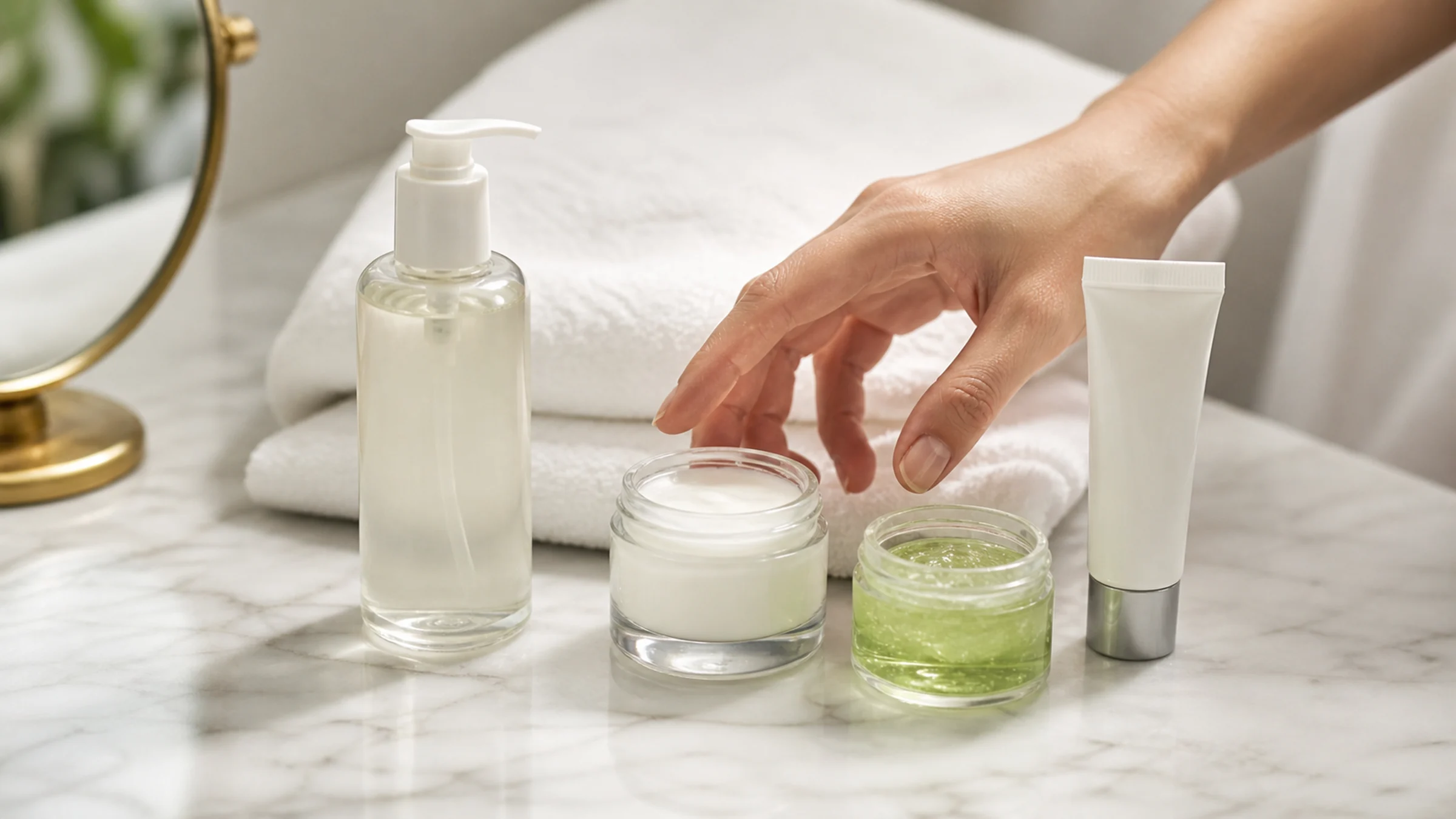
This is not the time to go straight back to your usual skincare routine, especially if it includes active ingredients. The skin is still sensitive and needs special care.
Which products should you set aside in the coming weeks?
Even after the initial redness has calmed down, the skin barrier is still working hard to repair itself. Using overly aggressive products can disrupt the process and cause irritation, dryness and even pigmentation.
Products to avoid for one to two weeks, and sometimes longer:
-
Peels of all kinds: This includes both grainy scrubs and chemical peels.
-
Retinoid-based formulations: Retinol, Retin-A and other vitamin A derivatives.
-
Alpha and beta hydroxy acids (AHA/BHA): Glycolic, lactic and salicylic acid.
-
Products with alcohol or strong fragrance: Both are known to be drying and irritating.
-
Astringent or stinging formulations: Such as toners containing alcohol.
Our clinical recommendation: Keep to a minimalist, gentle routine in the first few days. Don't load your skin with products that may sting or irritate. Less is more.
Building a "do" routine that supports recovery
So what should you do? Focus on three simple principles: gentle cleansing, moisturising and soothing.
The golden rule is to listen to your skin. If any product, even one considered "soothing", causes stinging, burning or redness – stop using it immediately.
The recommended skincare routine:
-
Very gentle cleansing: Use a hypoallergenic facial cleanser without sulphates (SLS/SLES) and without fragrance. Rinse your face with lukewarm (not hot!) water and pat dry gently with a soft, clean towel.
-
A restorative moisturiser: This is the real star of your routine. Choose a moisturiser containing ingredients that support the repair of the skin barrier, such as:
-
Ceramides (Ceramides): Natural lipids that restore the skin barrier.
-
Hyaluronic acid (Hyaluronic Acid): Attracts moisture and provides elasticity.
-
Niacinamide (Niacinamide): A multi-purpose ingredient that calms redness and supports the skin barrier.
-
-
Sunscreen (the step you must not skip): Every morning, without exception, finish your routine with a broad-spectrum SPF 50 sunscreen.
Following the right skincare routine is an integral part of the success of the treatment. You can find more information in our guide to proper skin care after hair removal to keep your skin healthy and smooth over time.
Not all lasers are created equal: instructions tailored to your type of treatment
The question "what should you avoid after laser treatment?" is critical, but the answer varies greatly depending on the treatment you have had. While the rules on sun protection and avoiding heat are universal, each treatment has its own specific points of emphasis.
At Dermacare, an integral part of the process is making sure you receive precise, clear instructions tailored to you personally.
After laser hair removal
In hair removal treatments, the laser beam needs to "see" the hair pigment inside the follicle in order to heat and destroy it. That is why the main instruction relates to keeping the follicle intact.
The most important rule: Do not remove hair from the root between treatments. This means completely avoiding:
-
Waxing
-
Tweezers
-
Epilators
-
Threading
Each of these pulls the hair out from the root. If the root isn't there, the laser will simply have no "target" to hit at the next treatment, and treatment of that area will be less effective.
What is allowed? Shaving. Shaving only cuts the hair above the surface of the skin and leaves the root exactly where we need it. In fact, we even recommend shaving the area a day or two before the next treatment.
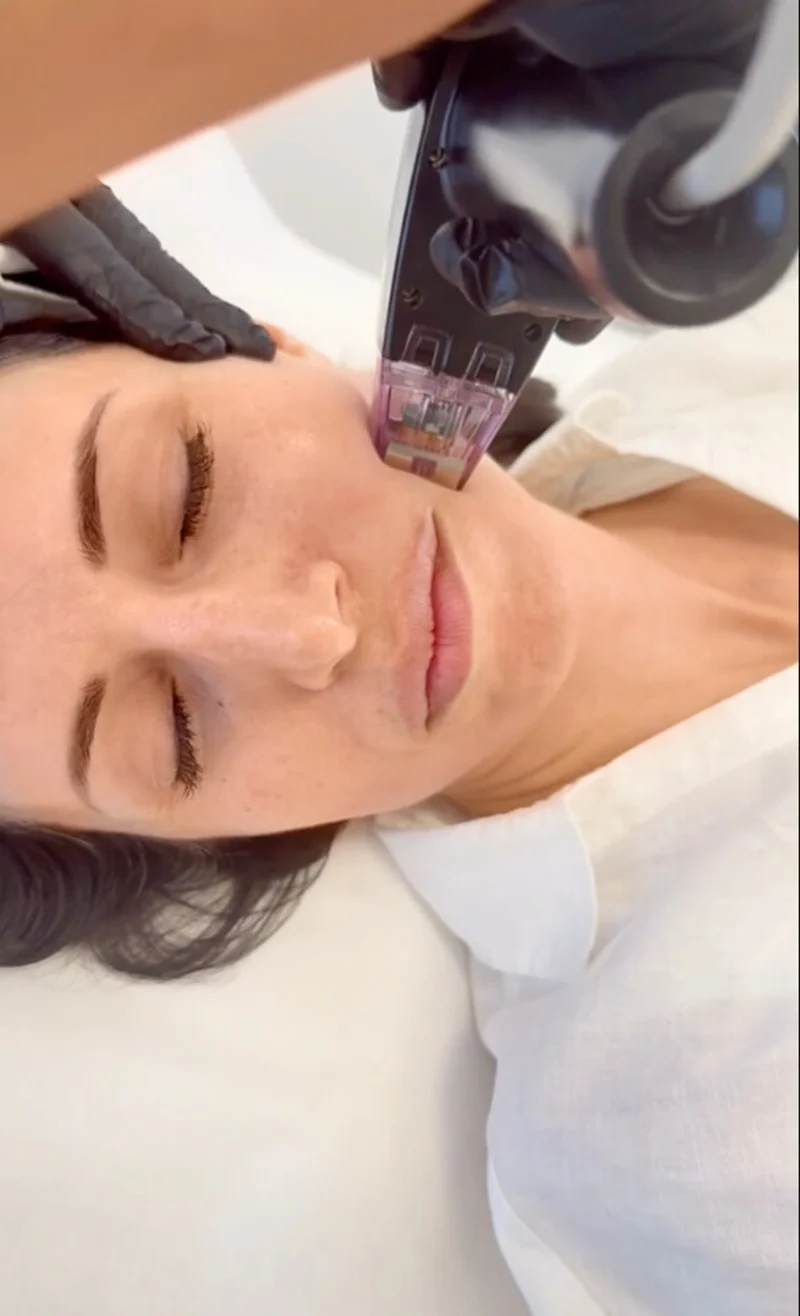
After facial laser treatments (pigmentation, tightening, skin rejuvenation)
When the target is facial skin, sensitivity increases and the emphasis shifts to skin repair. Most of the questions we hear after treatments such as IPL for pigmentation or fractional laser for tightening relate to make-up and returning to a skincare routine.
What about make-up?
Our recommendation is to avoid make-up, especially liquid foundation, for 24-48 hours. The skin needs to breathe and heal. Once the initial redness has calmed down, if you really must, choose mineral powder make-up. It clogs the pores less and is considered gentler for skin that is healing.
Returning to an active skincare routine:
As we said, in the first week or two, do not use peels, retinoids or acids. The return must be gradual. Start by using one active product every two to three days and pay attention to your skin. If redness or burning appears, it is a sign to take a step back.
A tip from Dermacare's experience: If you have had a treatment to remove pigmentation, don't be alarmed if the spots become darker in the first few days. This is an excellent sign that the treatment has worked! The spot "rises" to the surface and then flakes off. It is very important not to try to peel it off yourself, but to let it fall off naturally.
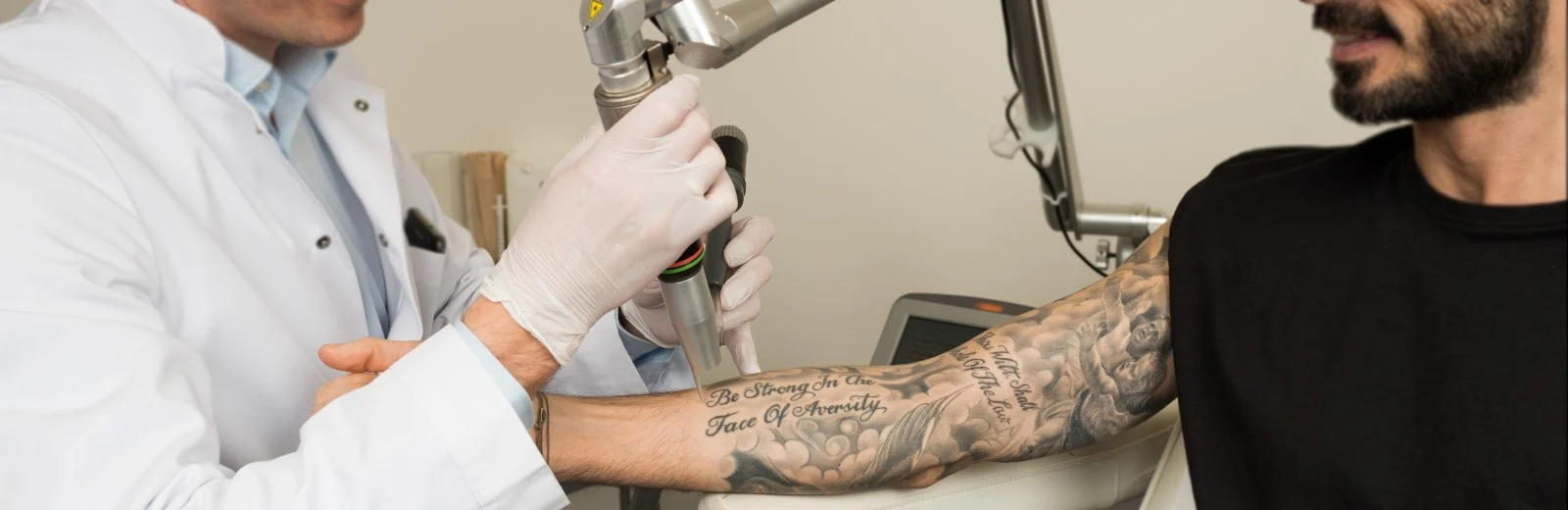
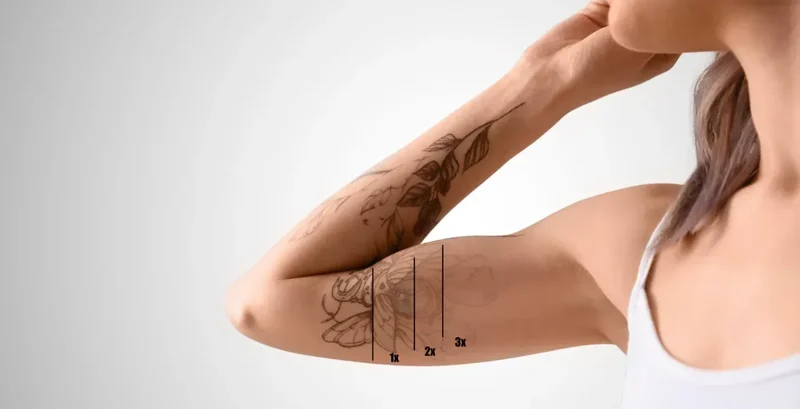
After laser tattoo removal
Tattoo removal is an intensive process. Here, the healing process is critical to preventing infections and scarring.
What is strictly forbidden after tattoo removal?
The most important rule is don't touch, don't scratch and don't peel! The area will be red and swollen after the treatment, and sometimes small blisters or scabs will appear. This is a normal and healthy reaction.
-
Don't pop blisters: They create a sterile environment that protects the skin.
-
Don't peel scabs: They act like the body's natural plaster. Peeling them off early can cause infection or scarring.
-
Avoid soaking in water: Don't immerse yourself in a bath, pool or the sea until the skin has completely healed.
What to do:
Keep the area clean and dry. Wash gently with water and a mild antibacterial soap, pat dry, and apply the ointment recommended to you at the clinic.
How to maintain your treatment results over time
You have invested time and resources to achieve the smooth skin you always wanted. A series of laser treatments is a worthwhile investment, but it is important to understand that the work doesn't end with the last treatment. The goal now is to preserve the result for years to come, and that requires adopting a few simple habits.
Think of it this way: you have finished the intensive treatment stage, and now you are entering a stage of smart maintenance.
Sun protection becomes a way of life
Here at Dermacare we always emphasise: treat sun protection as part of the treatment itself, not as an extra. Exposure to UV radiation causes cumulative damage. It can "wake up" dormant follicles and cause the growth of downy hair, or lead to the appearance of new pigmentation spots.
Our special tip: Patients who consistently use SPF 50 on exposed areas, and don't “fiddle” with the hair between treatments beyond occasional shaving, usually maintain both better skin quality and an even, attractive result over time.
The best way to do this? Make applying sunscreen part of your morning ritual, just like brushing your teeth.
Maintenance treatments – staying in control
Laser treatments achieve excellent results, but it is important to be realistic. Our body is a living, dynamic system. Hormonal changes, genetics and age can cause dormant hair follicles to wake up.
This is exactly why we recommend maintenance treatments.
-
What does this mean in practice? Usually a single treatment once a year or less often, as needed.
-
What is the goal? To "clear" the area of sparse new growth that may appear over time.
During the consultation at Dermacare, we always explain the importance of maintenance treatments as part of long-term planning. It is also worth remembering that the skin's renewal processes are ongoing, and understanding how long it takes for the skin to renew itself can help explain why maintenance is part of the picture.
Don't interfere with what works
The ban on removing hair by waxing, threading or tweezing still applies, even years after finishing treatments. Any method that pulls the hair out from the root can reactivate the follicle and ruin the results we have achieved. If you notice a few stray hairs, the only solution is spot shaving.
In summary, the two most important things you can do for your skin are:
-
Daily sun protection: Make sure to use SPF 50+ every time you leave the house, even in winter.
-
Completely avoiding plucking: If necessary, shaving is your best friend.
Adopting these two simple habits will ensure that you enjoy excellent results for many years to come.
Frequently asked questions
This is an excellent question. Our recommendation is to take a break of 24-48 hours from intensive physical activity that causes increased sweating. The reason is simple: sweat and body heat may irritate the sensitive skin after the treatment and prolong recovery time and redness. A moderate walk is perfectly fine. The most important thing is to listen to your skin. If the sensitivity has passed, usually after two days you can already return to a full training routine.
Absolutely, but with golden rules. A shower is not only permitted but recommended, but during the first 24 hours it is important to stick to lukewarm or cool water. What is strictly forbidden is a boiling-hot shower, a jacuzzi or a sauna. Hot water increases the burning sensation in the skin. In addition, avoid rubbing the area, and dry it with gentle patting.
Yes, completely. Mild redness and a local feeling of warmth are natural and entirely expected reactions. In laser hair removal treatments, it is also very common to see tiny swelling around each hair follicle (a "goosebump" look).
The truth? It is good evidence that the treatment was effective. These effects pass on their own within a few hours to a day. Cold compresses or the soothing cream we recommended will help ease them. If the redness gets worse or is accompanied by another worrying symptom – talk to us immediately.
This is the million-dollar question, and the answer requires a little patience. The hair does not fall out on the day of the treatment. What actually happens is a gradual process in which the body pushes the "burnt" hair out of the follicle, and this takes between 10 and 21 days. During this period, you may feel that the hair is "growing", but in fact these are the treated hairs being pushed out. The most important thing is not to pluck them. Shaving, on the other hand, is permitted and even recommended between treatments.
Want to understand exactly what suits you? The Dermacare team will be happy to assess your skin condition, the suitable type of treatment and realistic expectations – in a professional, personal and precise way. To book a consultation, you can contact us here.