In brief
- Pico laser is the recommended technology for tattoo removal, working with ultra-short pulses that shatter the ink into tiny particles that the body clears away.
- Compared with Q-Switched, Pico requires fewer treatments (in many cases up to 30% fewer), deals better with difficult colours and reduces the risk of burns and scars.
- Black and grey ink respond fastest, while turquoise, yellow and white are the most difficult and sometimes cannot be removed completely.
- In most cases about 4 to 12 treatments are needed, and professional, coloured or layered tattoos may require 12 to 16 treatments or more.
- The cost of a single treatment starts at about ILS 200 for a small tattoo and can reach ILS 1,500 or more for a large, complex tattoo.
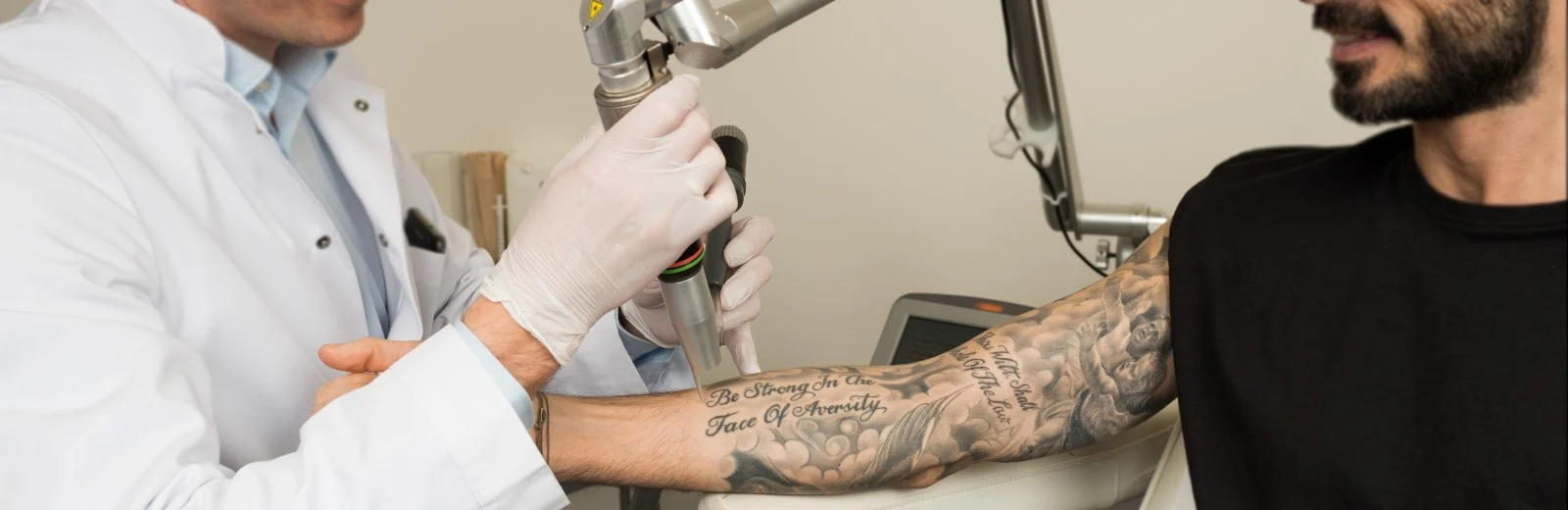
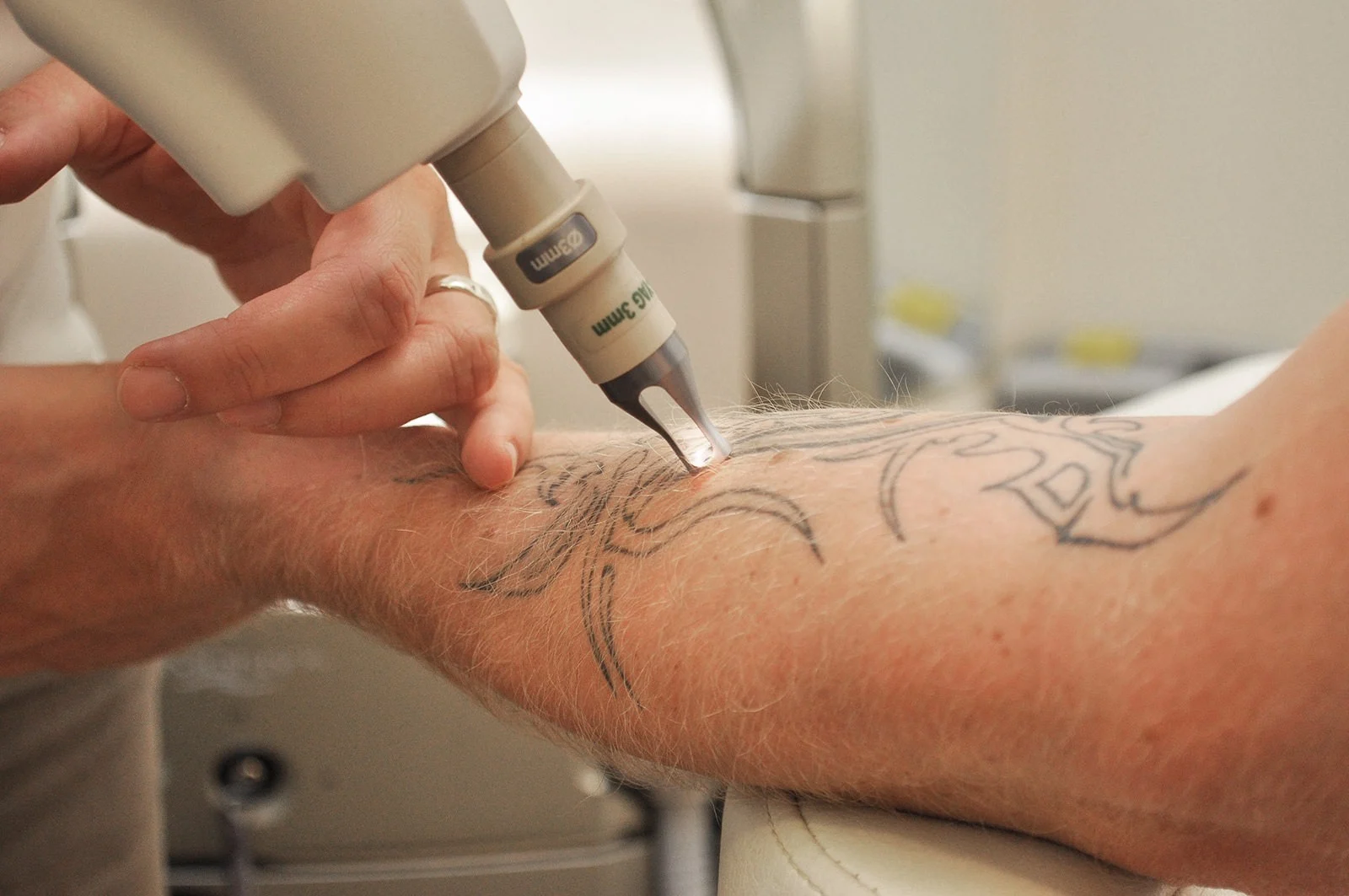
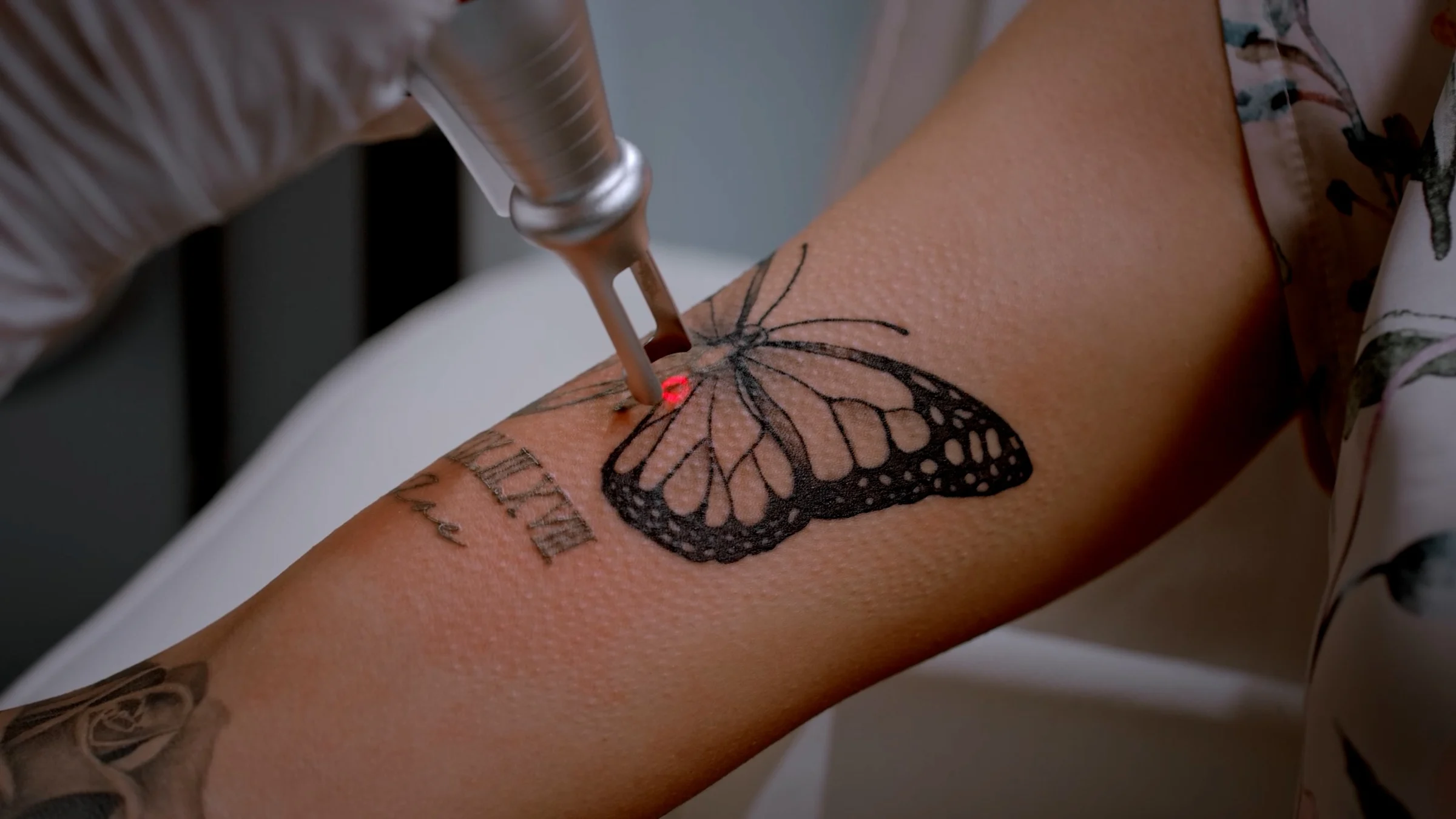
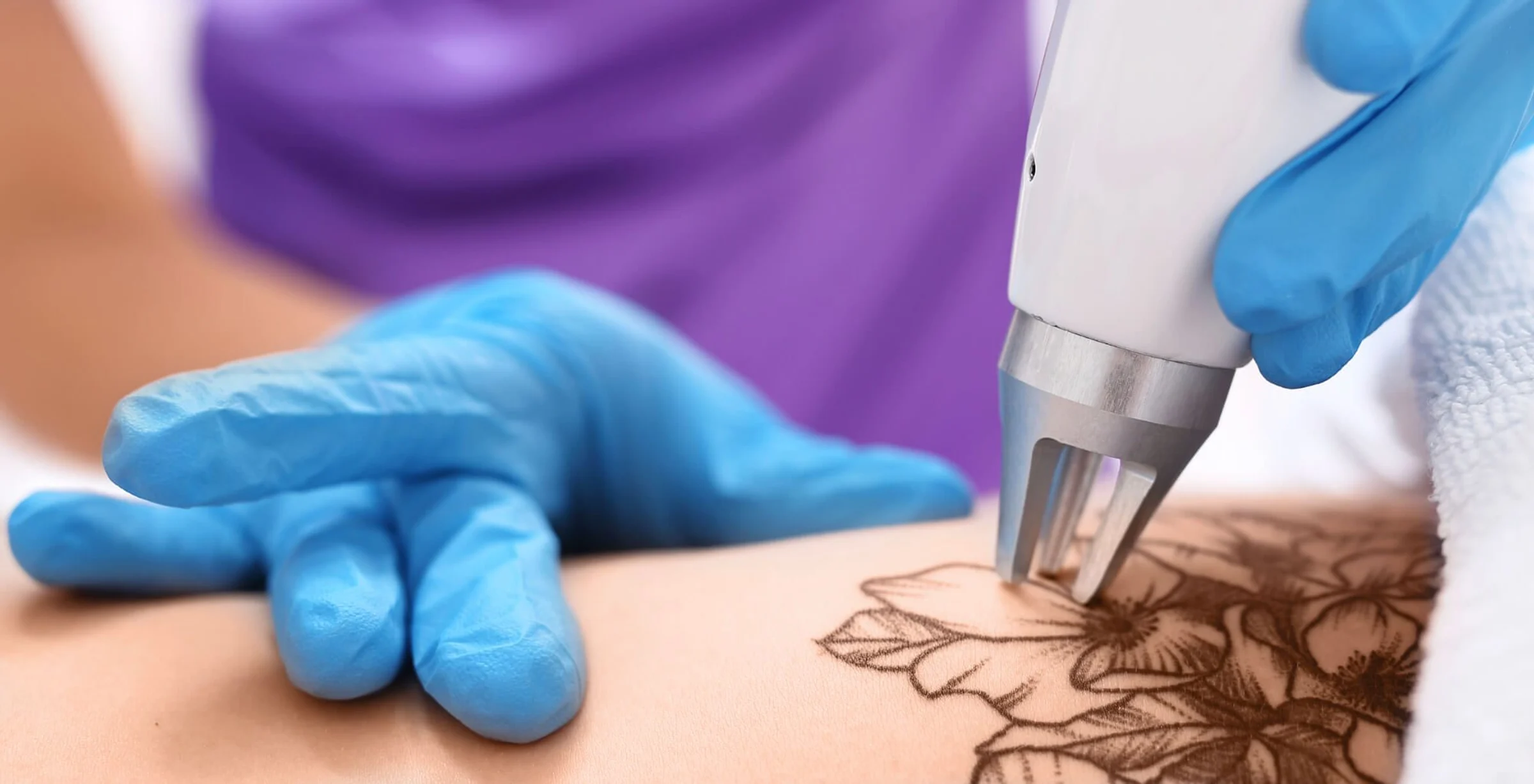
If you are wondering which device for tattoo removal is truly the most effective, the answer from our clinical experience at Dermacare is unequivocal: Pico laser technology (Picosecond) is the "gold standard" in the field today. These devices work with extremely fast pulses to shatter the ink into tiny particles, allowing the body to clear them away far more efficiently and quickly than older technologies.
How do you choose an effective tattoo removal device?
Choosing the right technology is the decisive factor that determines the success of the treatment, the number of sessions required and, above all, your level of safety. In the past, Q-Switched technology dominated the market, but today the new generation of Pico laser devices has changed the rules of the game.
The fundamental difference between Pico technology and the older generation
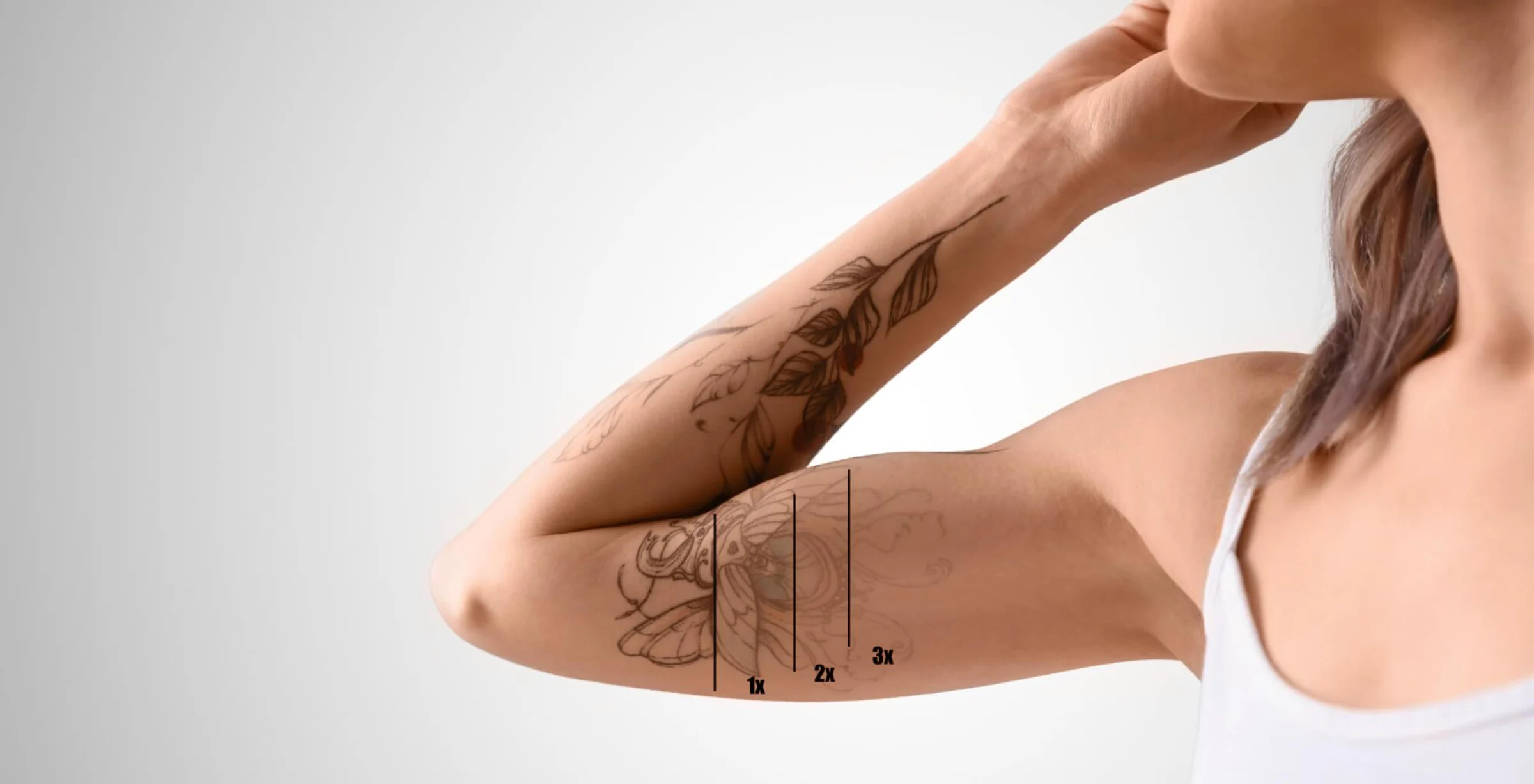
The older generation of devices relied mainly on a thermal effect (heating the ink), which sometimes caused unnecessary damage to the surrounding skin. Pico laser, by contrast, works in a smarter and more precise way. It sends ultra-short pulses, at the level of a picosecond (a trillionth of a second), creating a photoacoustic effect – a kind of tiny shock wave that shatters the ink particles into fine "dust".
To illustrate this, imagine you are trying to break a large rock. Older technologies work like slowly heating the rock in the hope that it will start to crack. In contrast, Pico technology works like a precise and powerful air hammer that shatters the rock into tiny fragments with a single, focused blow. This allows the pigment to be broken down more efficiently, with less unnecessary damage to the surrounding tissue.
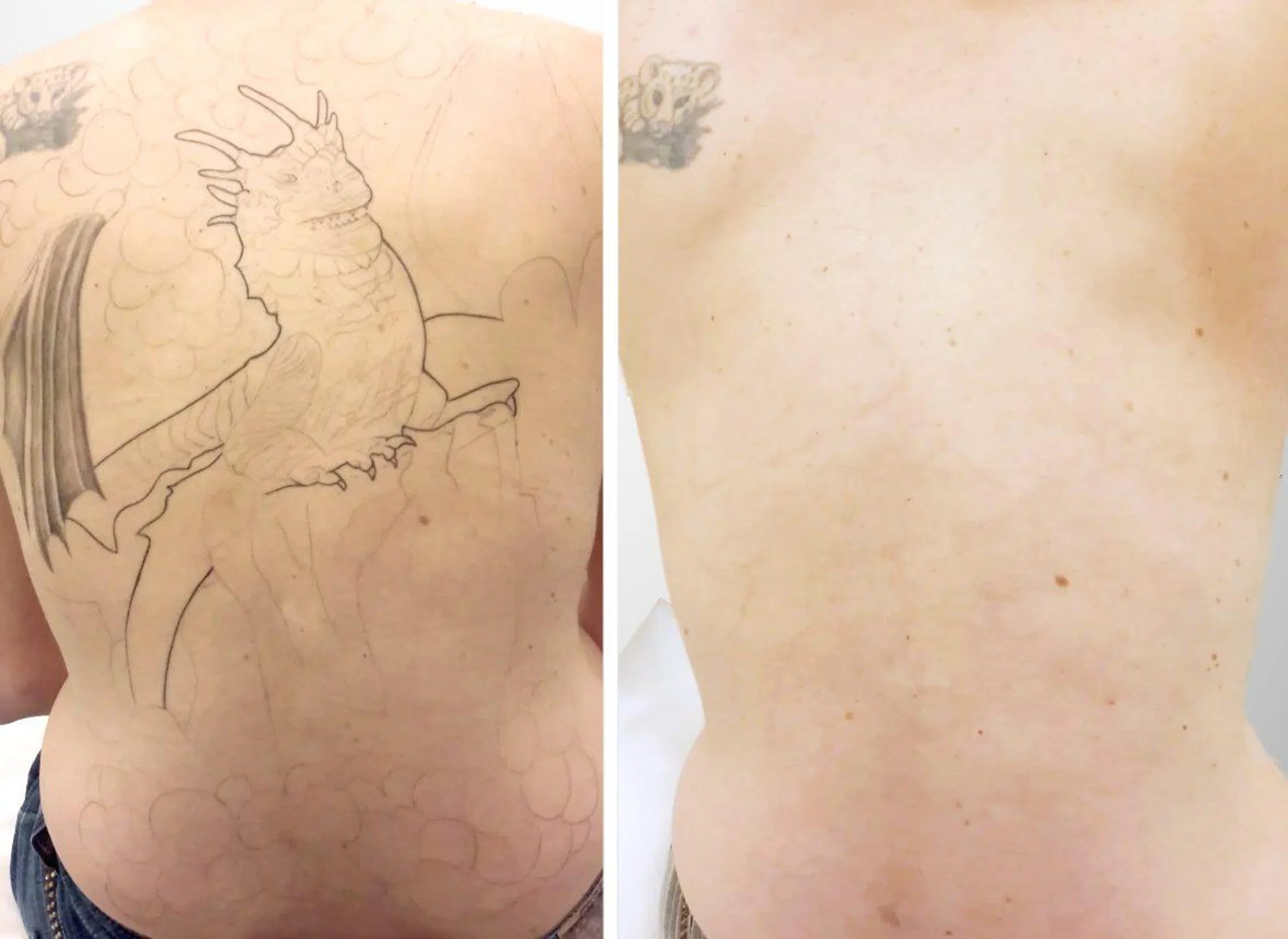
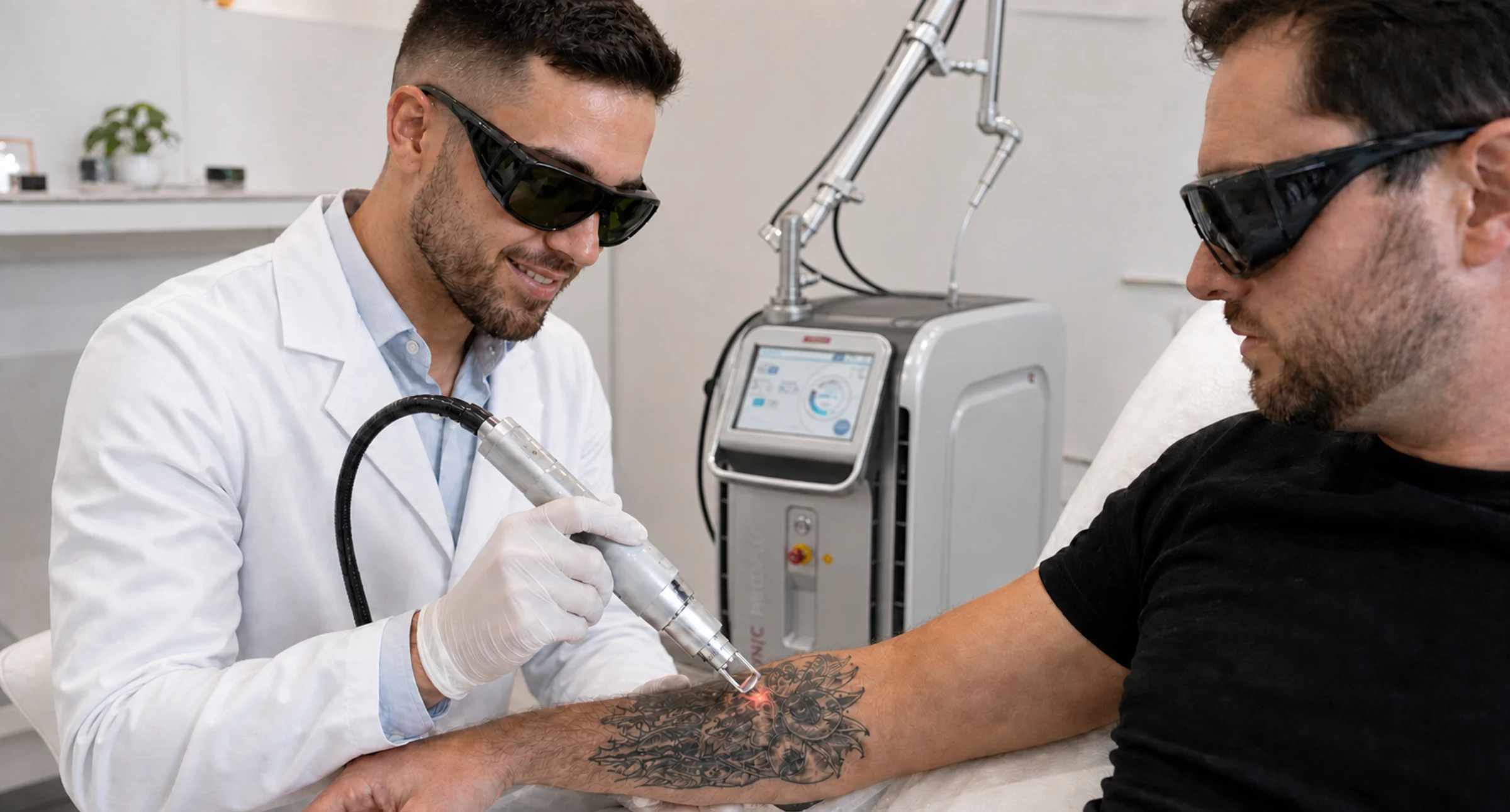
At the Dermacare clinic, the clinical experience we have gained has proven to us time and again the superiority of Pico technology. We have seen with our own eyes how tattoos once considered "stubborn" fade impressively, while reducing the number of treatments required and shortening the recovery time between sessions.
Comparing laser technologies for tattoo removal
To better understand why Pico technology is considered a breakthrough, we have prepared a table summarising the main differences between the different generations of laser devices.
| Parameter | Q-Switched laser (previous generation) | Picosecond laser (new generation) |
|---|---|---|
| Mode of action | Thermal effect (heating the ink) | Photoacoustic effect (focused shock wave) |
| Ink particle size | Relatively large particles | Tiny "dust" particles |
| Efficiency of clearance from the body | Moderate (the body takes longer to clear them) | Very high (the body clears them easily) |
| Average number of treatments | Higher | Lower (in many cases, up to 30% fewer) |
| Suitability for difficult colours | Lower efficacy (blue, green, turquoise) | Higher efficacy for challenging colours |
| Risk of scars and burns | Moderate (due to the heating effect) | Very low (the pulse is too fast to cause thermal damage) |
| Recovery time between treatments | Relatively long (time is needed for the tissue to cool) | Shorter (minimal damage to the skin) |
As you can see, the advantages of Pico technology are clear: usually fewer treatments, better results with difficult colours and a higher safety profile.
Key advantages of a Pico laser device
Using this advanced technology offers patients several clear advantages:
-
More efficient ink breakdown: The tiny ink particles are cleared far more easily by the body's immune system. It is the difference between trying to clean up gravel and cleaning up dust.
-
Fewer treatments required: In the vast majority of cases, a better result can be achieved in fewer sessions compared with older-generation devices.
-
Treating challenging colours: Modern Pico devices are equipped with several wavelengths, enabling them to treat effectively even colours such as blue, green and red, which were once considered almost impossible to remove.
-
Minimal damage to the skin: The focused photoacoustic effect dramatically reduces unnecessary heat and damage to the surrounding healthy tissue. This means faster recovery and a significantly lower risk of side effects.
It is important to remember that advanced technology requires an experienced hand. However advanced the device, it is a tool in the hands of the practitioner. The team's skill in assessing the skin and tailoring the protocol is the key to success. If you would like to learn more, you can read about the different laser technologies we use at Dermacare. Ultimately, choosing the right tattoo removal device and the team that operates it is the most important step on the way to smooth skin.
So how does the laser actually break down the ink beneath the skin?
To understand how a tattoo removal device works, we first need to ask why a tattoo is permanent. The answer is simple: during tattooing, relatively large ink particles are inserted into the deep layer of the skin (the dermis). Our immune system, which is responsible for removing invaders, simply cannot cope with such large particles. As a result, they remain "trapped" beneath the skin.
This is exactly where the laser comes in. It is important to understand that this is not "erasing" or "burning" the skin. The process is far more sophisticated: targeted breakdown of the pigment itself.
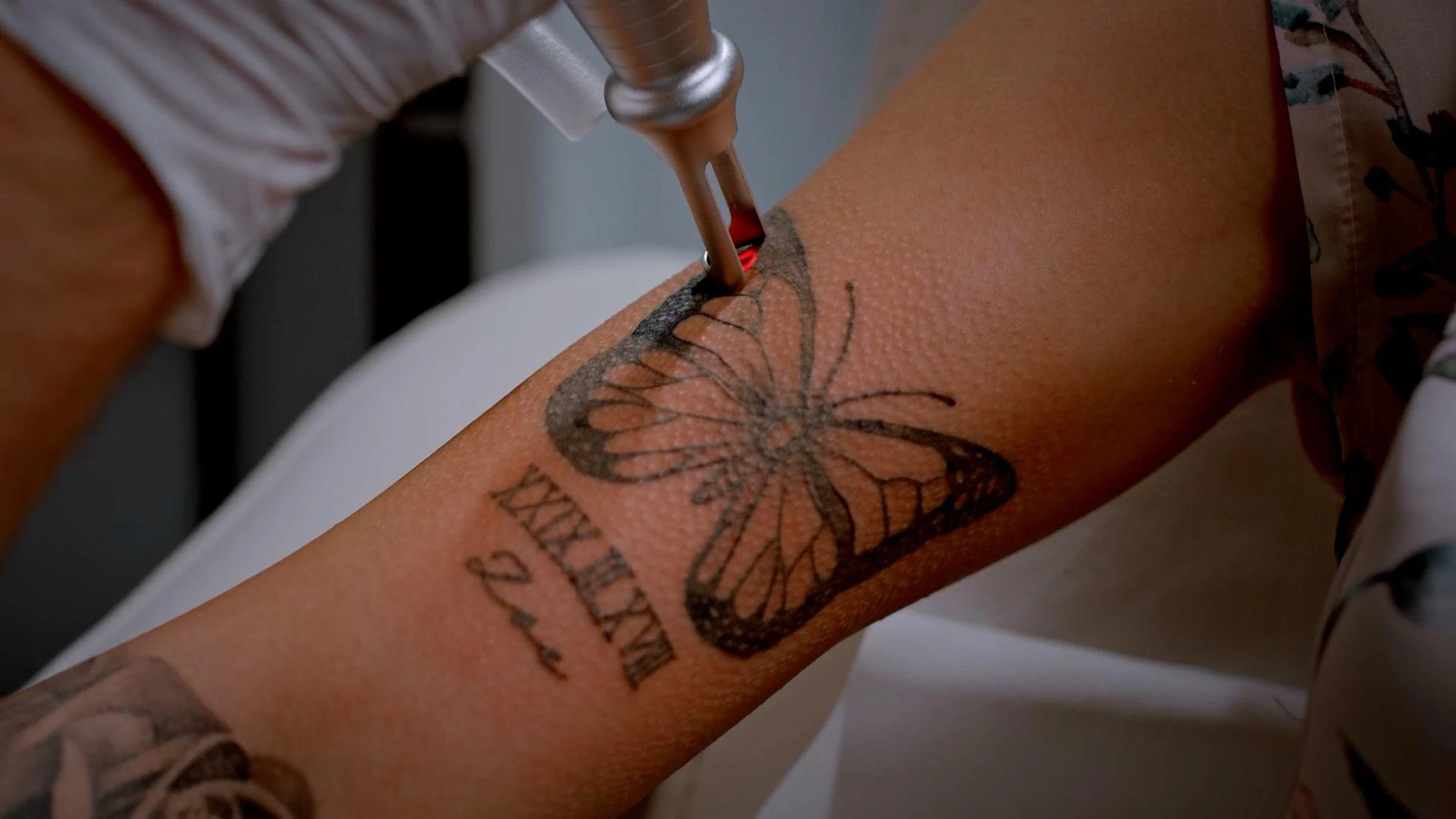
Stage 1: The laser beam penetrates directly to the ink
The treatment begins when the device sends pulses of light – short, powerful flashes. The light beam is precisely calibrated to pass through the upper layer of the skin (the epidermis) without damaging it, and to reach its target directly: the ink particles sitting in the dermis.
This principle is called selective photothermolysis. Put simply, the laser energy is absorbed selectively only by the dark pigment of the ink. The surrounding healthy tissue barely "feels" it. That is the secret to a safe and effective treatment.
Stage 2: The ink shatters into tiny particles
As soon as the ink absorbs the laser energy, it shatters.
Imagine the original ink particles as large rocks. Pico technology (Picosecond), in which we specialise at Dermacare, does not "melt" these rocks with heat. Instead, it blasts them into tiny dust particles using a precise, powerful shock wave.
The super-fast pulses of the Pico laser create a photoacoustic effect that breaks the ink down into tiny fragments. All of this happens with minimal heating of the surrounding tissue, making the treatment more effective and safer. Older technologies such as Q-Switched do similar work, but break the ink down into larger particles in a process that involves more heat. If you would like to learn more, you can read about how the Q-Switched Nd:YAG laser works.
Stage 3: The body does the clean-up work
Once the ink has been shattered into microscopic particles, our immune system can finally step in. Now that the "rocks" have become "dust", special immune cells called macrophages identify the ink fragments as foreign bodies. They "swallow" these particles and gradually clear them from the body via the lymphatic system.
This process is natural and slow, which is the main reason why:
-
A series of treatments is required, not just one. In each treatment we break down another "layer" of ink.
-
You need to wait several weeks between treatments. This is the time the body needs to "clean" the area and clear away the broken-down ink.
-
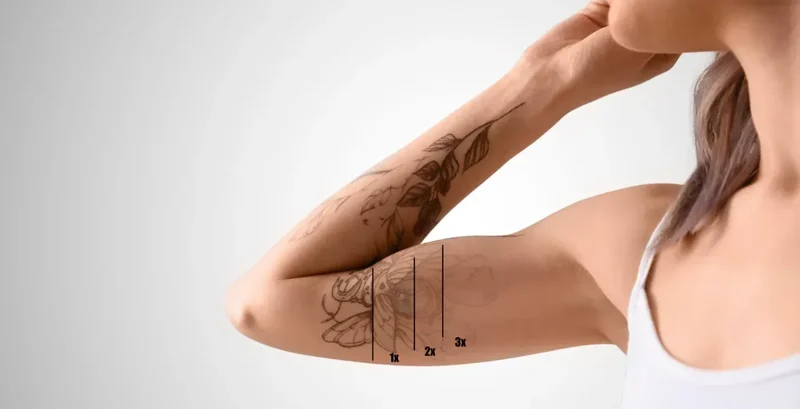
The tattoo fades gradually from session to session, until it is significantly lightened or disappears almost completely.
With each treatment we break down more and more of the ink, and the body simply continues its clearing work until the final result is reached.
The factors that determine how many treatments you will need
"So how many treatments will it take?" This is probably the first question we hear here at the Dermacare clinic – and quite rightly so. The honest answer is that there is no magic number. Every tattoo is a different story, and every removal process is completely individual.
There is no "off-the-shelf" solution here. The exact treatment plan is determined only after a consultation and assessment, in which we examine all the variables. This is the most important stage for setting realistic expectations and understanding the time frame and costs.
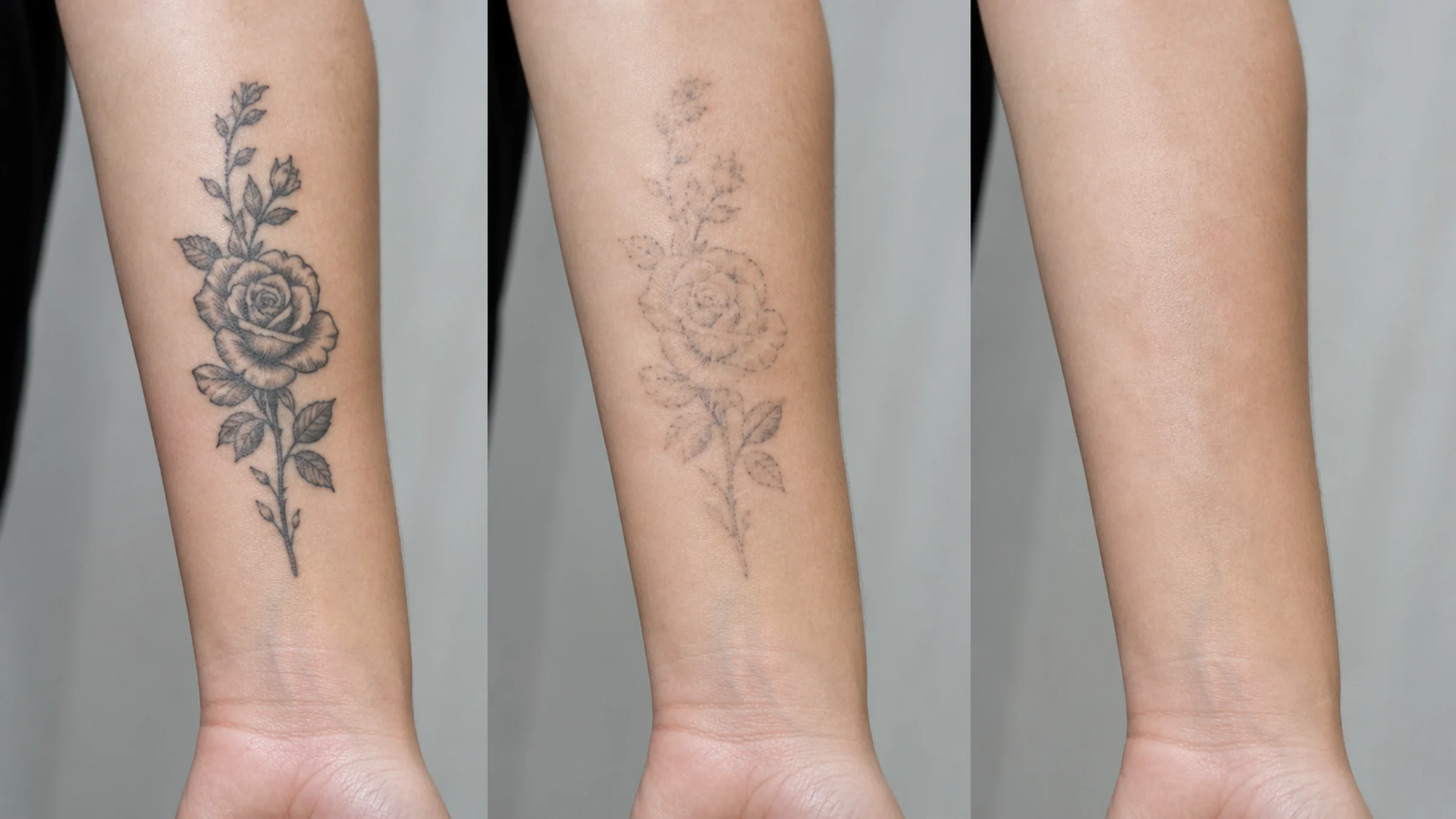
The ink colours in the tattoo
Not all colours respond to the laser in the same way. Each colour has a different "relationship" with the light beam, and this directly affects the rate of removal.
-
Black and grey ink: These are the "friendliest" colours to remove. They absorb the laser energy optimally and therefore respond to treatment the fastest.
-
Dark colours (deep blue, dark green): Considered somewhat more "stubborn", but with the right technology and a precise wavelength they can certainly be removed.
-
Light colours (red, orange): Will usually require more treatments, but respond very well to modern Pico devices.
-
The challenging colours (turquoise, yellow, white): These are the hardest shades to break down. They require a high level of skill from the practitioner and specific wavelengths. Sometimes they cannot be removed completely.
Unlike older technologies, a Pico tattoo removal device, like the one we work with at Dermacare, is equipped with several wavelengths. This allows us to specifically "target" different pigments and break them down more efficiently.
Other characteristics of the tattoo and the skin
Beyond colour, several other parameters play an important role in determining the number of treatments.
-
Age of the tattoo: Somewhat surprisingly, older tattoos (5 years old or more) tend to respond faster to treatment. The reason is simple: over the years our body has already naturally broken down a small part of the ink, making it easier for the laser to finish the job.
-
Ink density and depth: A professional tattoo, in which the ink was inserted deeply and densely, will require more treatments than an amateur, faded tattoo. The same applies to cover-ups (tattoos covering another tattoo), which contain a double layer of ink.
-
Your skin tone (Fitzpatrick scale): Darker skin contains more melanin, our natural pigment. In such cases we work with extra care and use a gentler protocol to prevent changes in skin tone (hypo- or hyperpigmentation).
-
Location of the tattoo: Areas with better blood circulation, such as the chest, back or nape of the neck, are characterised by faster healing and ink clearance. By contrast, tattoos on the extremities, such as the hands or ankles, will usually require more patience and sessions.
-
Size of the tattoo: Of course, size matters. In most cases laser tattoo removal requires a series of treatments, often in the range of about 4 to 12 treatments. Professional, coloured, deep or layered tattoos may require 12 to 16 treatments or even more, while small, old or amateur tattoos may sometimes respond faster. The exact number of treatments also depends on the ink colours, the depth of the tattoo, its location on the body, the type of laser and the body's response in clearing the pigment.
Ultimately, only a personal consultation can weigh up all the data and determine a realistic treatment plan tailored exactly to you.
How much does laser tattoo removal cost?
So we have arrived at the million-dollar question – or, more accurately, the several-thousand-shekel question: how much does it really cost to remove a tattoo? It is one of the first questions people ask, and it is important to clarify things. There is no fixed "price list" for tattoo removal. The price is individual and is determined by all the factors we have discussed: the size of the tattoo, the complexity of the colours, the depth of the ink and even its location on the body.
That said, it is certainly possible to give a general estimate to understand the orders of magnitude. The cost of a single treatment can start at about ILS 200 for a small, localised tattoo (for example, a small letter), and reach ILS 1,500 or more for one treatment of a large, complex tattoo.
The professional pricing approach: a personalised course of treatments
To allow you to pay per treatment in a flexible and clear way, we have created convenient payment options tailored to each patient's individual progress.
We do not offer "lifetime" packages, because it is impossible to predict in advance exactly how many treatments will be needed to remove each tattoo. The number of treatments varies from person to person and depends on factors such as the size of the tattoo, the ink colours, the depth of the pigment, its location on the body and the skin's response to treatment.
Instead, we offer the option of paying per treatment and, where appropriate, packages of 5 or 10 treatments. This way you can enjoy a better price without committing in advance to a number of treatments that may not be right for you.
Why is this the better way?
• Transparency and clarity: you know exactly what you are buying at every stage, without promises that cannot be made in advance.
• Personalisation: the number of treatments is determined by your actual rate of progress, not by a general estimate.
• Flexible payment: you can start by paying per treatment and, if needed, switch to a package of 5 or 10 treatments.
It is important to understand: the price is not just for "the device's time". It reflects the professional assessment, the team's experience, building a precise treatment protocol for your skin tone, and follow-up throughout the process. It is a direct investment in your safety and in the final result.
Estimated costs and timelines for tattoo removal by colour
To give an even clearer picture, we have put together a table estimating the average number of treatments by ink colour. Remember that this is a general estimate, and the exact number for your tattoo will only be determined at the personal consultation.
Estimated costs and timelines for tattoo removal by colour
The table provides an average estimate of the number of treatments required for different colours, based on clinical data.
| Ink colour | Average number of treatments required | Difficulty of removal |
|---|---|---|
| Black / dark grey | 6 – 10 treatments | Low |
| Red / orange | 8 – 12 treatments | Moderate |
| Blue / green | 10 – 15 treatments | High |
| Yellow / turquoise / white | 12 – 15+ treatments | Very high |
As you can see, different colours require a different commitment – in time and budget. A simple black tattoo will require fewer treatments and will be cheaper than a colourful, complex tattoo of the same size.
For a fuller, more detailed picture, we recommend reading more about the full price ranges for tattoo removal in our complete guide. Ultimately, choosing a clinic that offers transparent pricing and advanced technology is your way of ensuring a safe process with the best results.
The dangers of a home tattoo removal device
You have probably come across tempting online adverts for a "home tattoo removal device" promising a cheap, quick magic solution. Before you are tempted, we want to make it absolutely clear: these devices are not only ineffective, they can be dangerous and cause irreversible damage.
A professional tattoo removal device, like the Pico laser we work with at Dermacare, is sophisticated and powerful medical equipment. It requires an in-depth clinical understanding of skin types and precise adjustment of the laser intensity to the ink colour, its depth and the patient's skin tone. Operating such a device is a skill acquired through years of experience and requires the supervision of a professional.
Why home devices do not work (and are also dangerous)
The home devices offered online work on a completely different principle from a professional laser. Most of them do not break down the ink, but simply burn the upper layer of the skin. In the best case, the device is too weak to reach the depth of the ink, which lies in the dermis. The result? Wasted money and frustration, because nothing will happen.
In the worst case – and unfortunately the more common one – uncontrolled use of such a device leads to serious complications.
Let's put our cards on the table: tattoo removal is a medical-aesthetic procedure, not a cosmetic treatment that can be done in a salon. Trying to do it yourself at home, without an assessment, knowledge and suitable equipment, is simply dangerous.
What can really happen with incorrect use?
The risks are not theoretical; these are things we see at the clinic in people who tried to "save money":
-
Burns of varying degrees: These devices usually work on the basis of uncontrolled heat. It is very easy to cause a painful burn that leaves a mark.
-
Permanent scars: Uncontrolled damage to the skin can cause scar tissue. In many cases, the scar looks worse than the original tattoo.
-
Infections: Injuring the skin in a non-sterile environment opens the door to bacteria. Such an infection can become complicated and require antibiotic treatment.
-
Changes in pigmentation: Incorrect use easily causes dark (hyperpigmentation) or light (hypopigmentation) patches on the skin. These patches are very difficult, and sometimes impossible, to correct.
It is important to understand that even professional treatment has side effects, but they are controlled and expected. For example, small blisters may appear after a laser treatment at the clinic. This is a normal sign that the body is responding to the treatment and starting the healing process. The fundamental difference is that at the clinic we know to expect this, and you receive precise instructions on how to care for it properly. With home treatment, you have no supervision, guidance or idea of what is normal and what is not. You can read more about common tattoo removal mistakes to avoid.
At Dermacare, every process begins with a professional assessment and continues with a personal treatment protocol, performed exclusively with technology approved by the world's leading health authorities. Choosing professional treatment is, first and foremost, a choice to protect the health and safety of your skin.
Frequently asked questions
How many treatments are needed to remove a tattoo?
The number of treatments needed to remove a tattoo varies from person to person. Particularly small tattoos can, in rare cases, be removed within a small number of treatments, but it is usually a lengthy process. The number of treatments depends on various factors, such as whether the tattoo was done by an amateur or a professional, the ink colours and their composition, the size of the tattoo and the skin texture, the depth and density of the ink, the response of the lymphatic system, and the quality of aftercare following removal. Usually, an improvement can be seen after each treatment, with the tattoo gradually fading. For complete removal, a series of treatments is always required.
Can all tattoo colours be removed?
Yes. The laser is capable of breaking down all colour pigments. However, black or dark blue tattoos can be removed more easily. Light colours are more challenging to remove, as damage to the skin must be avoided. During treatment, the colour of the tattoo may change, in which case several additional treatments may be needed.
What is the difference between an amateur tattoo and a professional tattoo?
Amateur tattoos are usually done by hand using a simple needle and ink or paint. Professional tattoos, on the other hand, are done with a dedicated tattoo machine, which inserts the ink into the skin more precisely and evenly. Professional tattoos are usually located in deeper layers of the skin.
Can scars or pigmentation marks remain after tattoo removal?
No. Tattoo removal with Dermacare's Nd:YAG laser is gentle on the skin and does not leave scars, as long as the patient follows our practitioner's instructions. However, in people with very tanned skin, lighter areas of pigmentation may appear.
Is tattoo removal painful?
Yes. Pain may occur during tattoo removal, depending on individual sensitivity and the area being treated. The sensation is similar to that felt when getting the tattoo itself.
Can people with dark skin or of Asian descent remove a tattoo without problems?
People with dark skin or of Asian descent can also remove a tattoo. However, there is a risk of depigmentation (loss of pigment in the skin).
For full information on the process, indications and prices: laser tattoo removal.
Frequently asked questions
This is probably the first question everyone asks. The answer is: it depends. The level of discomfort varies from person to person and depends on your personal pain threshold and the location of the tattoo. Most of our patients describe the sensation as a light "pinch" or a small snap of a rubber band on the skin. It is not pleasant, but it is definitely tolerable for most people. At Dermacare, we use a local anaesthetic cream and an advanced air-cooling system to make the treatment as comfortable as possible.
When the treatment is performed by professionals with an advanced pico laser device, the risk of scarring is very low. This technology works in a highly targeted way; the laser beam breaks down only the ink pigment, with minimal damage to the surrounding healthy tissue. The most important thing for preventing scars is following the aftercare instructions, in particular avoiding sun exposure and not picking at the skin.
Tattoo removal is a marathon, not a sprint. Patience is required. It is the body that clears the broken-down ink, and it does so at its own pace. Usually, initial lightening of the tattoo can be noticed after the second or third treatment. After each session, the tattoo continues to fade over several weeks, and the final result is built gradually.
Pico laser devices are by far the most effective for treating a wide range of colours. While black ink is the easiest to remove, pico technology, with its different wavelengths, allows us at Dermacare to successfully treat colours that were once considered challenging, such as blue, green and red. Colours such as turquoise and yellow are still considered the hardest to remove and may require a longer series of treatments.
Waiting between treatments (usually 6-8 weeks) is critical to the success of the process and to keeping the skin healthy. This time allows the body's immune system to efficiently clear the broken-down ink particles, and gives the skin time to heal and renew fully. Shortening the waiting times will not speed up the final result and may increase the risk of side effects.
Want to understand exactly what suits your tattoo? The Dermacare team will be happy to assess your skin condition, match the treatment method and set realistic expectations – in a professional, personal and precise way. To book a consultation, you can get in touch here.