In brief
- Laser tattoo removal usually requires 6 to 12 treatments, sometimes more, and the overall process takes several months or even a year or longer.
- An interval of at least 6 weeks between treatments is needed so the skin can heal and the body can clear the ink particles; shortening the intervals is not recommended.
- The number of treatments depends on the ink colour, the size of the tattoo, its depth, its location and the skin type, and black ink responds best.
- Dark skin carries a higher risk of pigmentation changes, so it is important to choose an experienced practitioner and follow the instructions before and after treatment.
- Avoid tanning and direct sun for four weeks before and after treatment, and see a doctor if you have unusual pain, significant swelling or signs of infection.
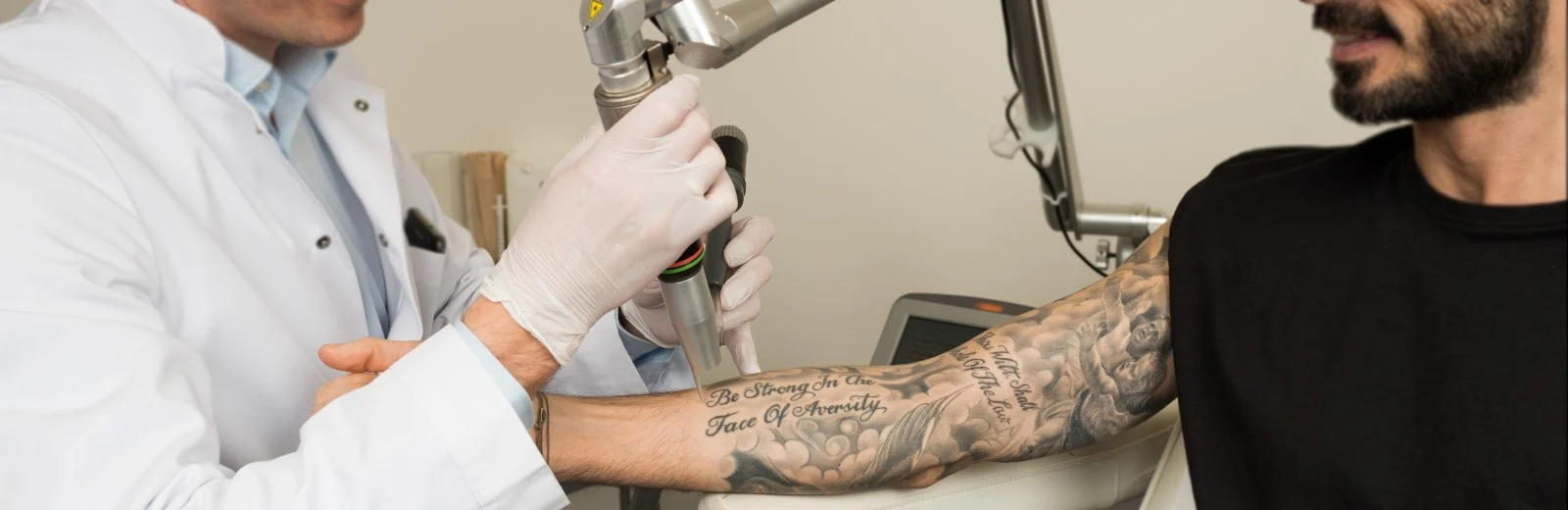
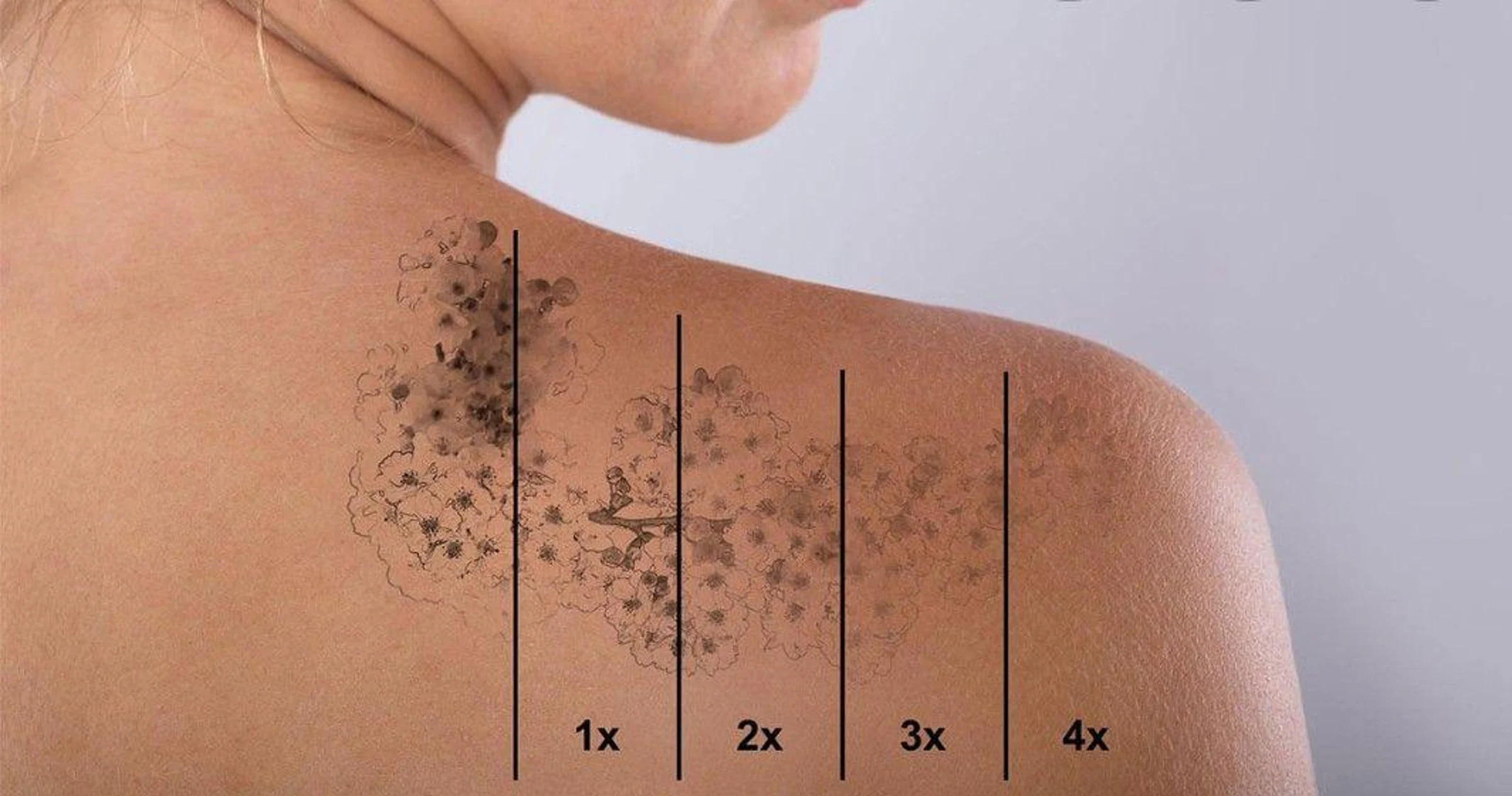
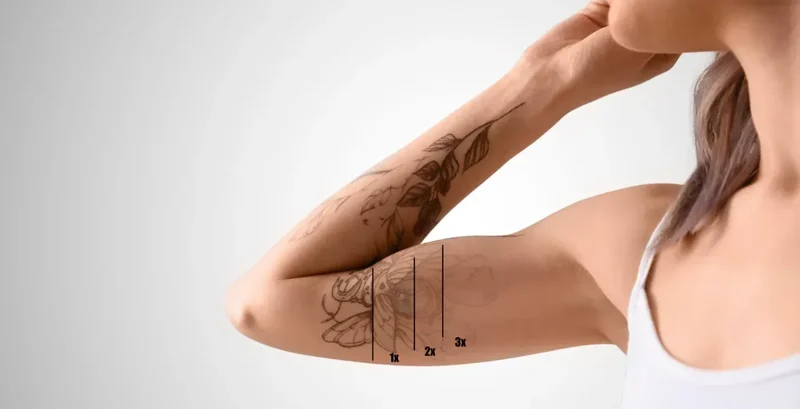
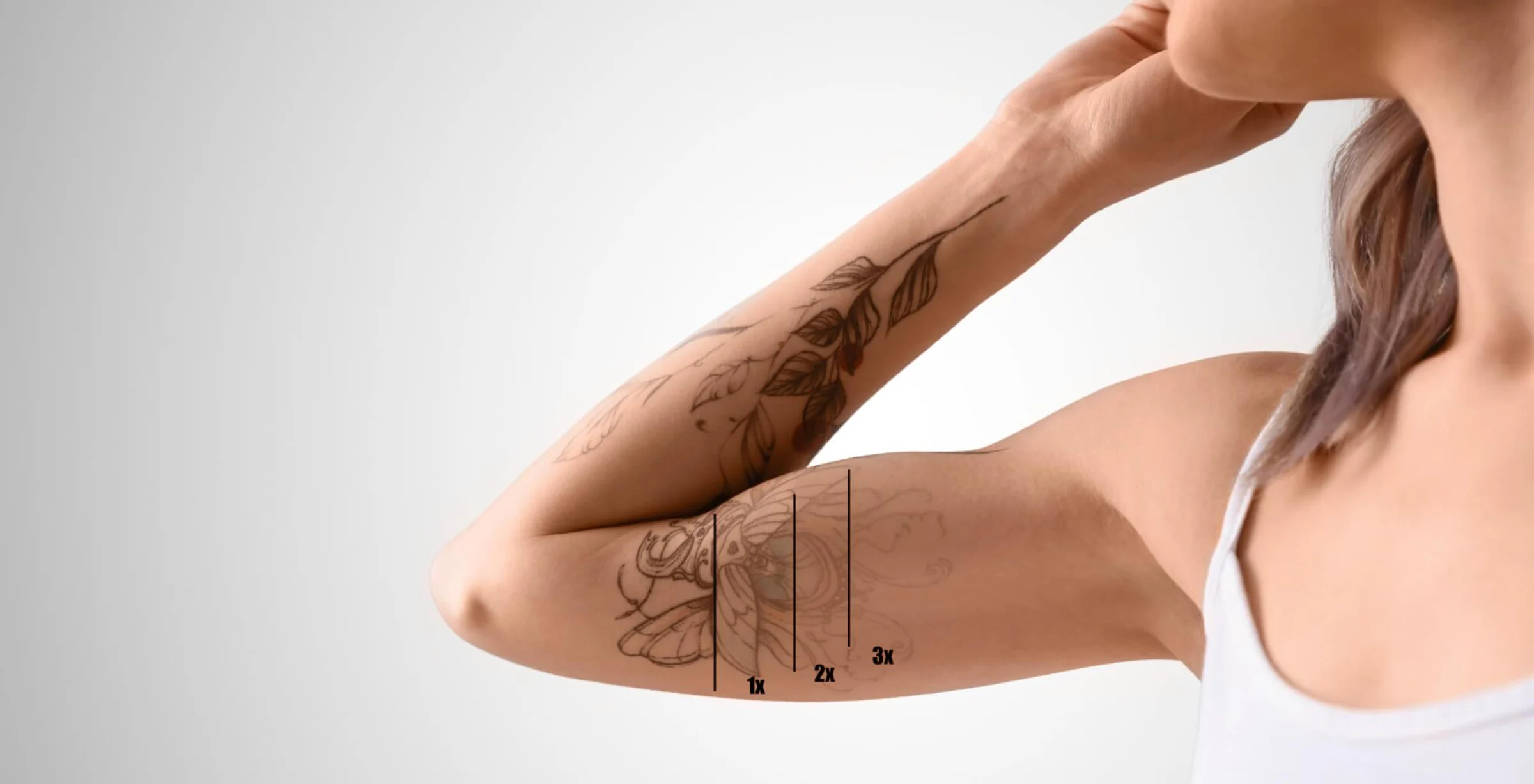
To remove a tattoo with a laser, you usually need between 6 and 12 treatments, sometimes more, at intervals of at least six weeks – and sometimes longer depending on how the skin responds. The treatment itself takes a few minutes, but the overall process takes several months, even a year or longer. The number of treatments depends on the colour of the tattoo, its size, the ink depth, its location and the skin type, so the estimate is always individual.
How does laser tattoo removal work?
How it works
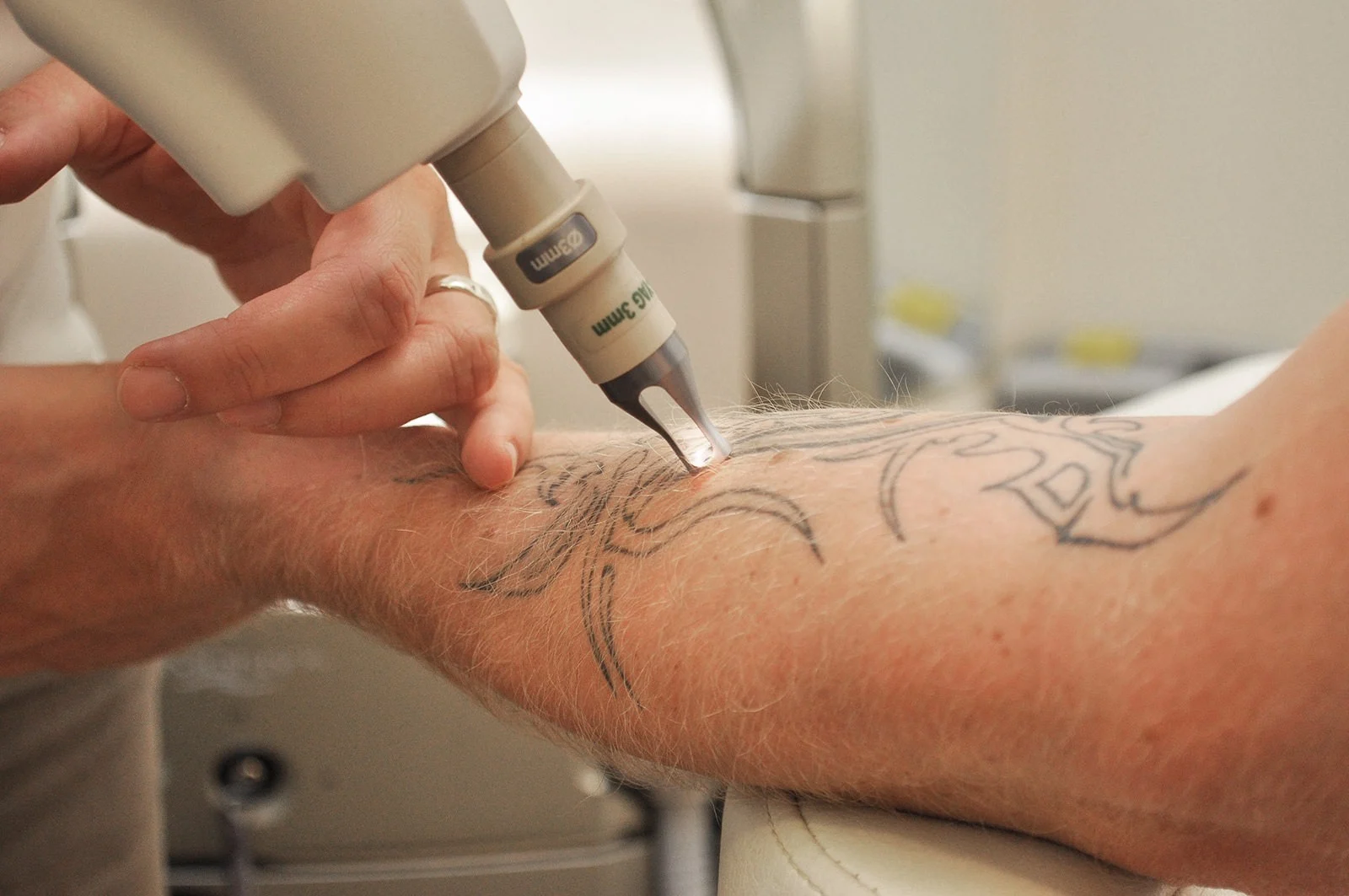
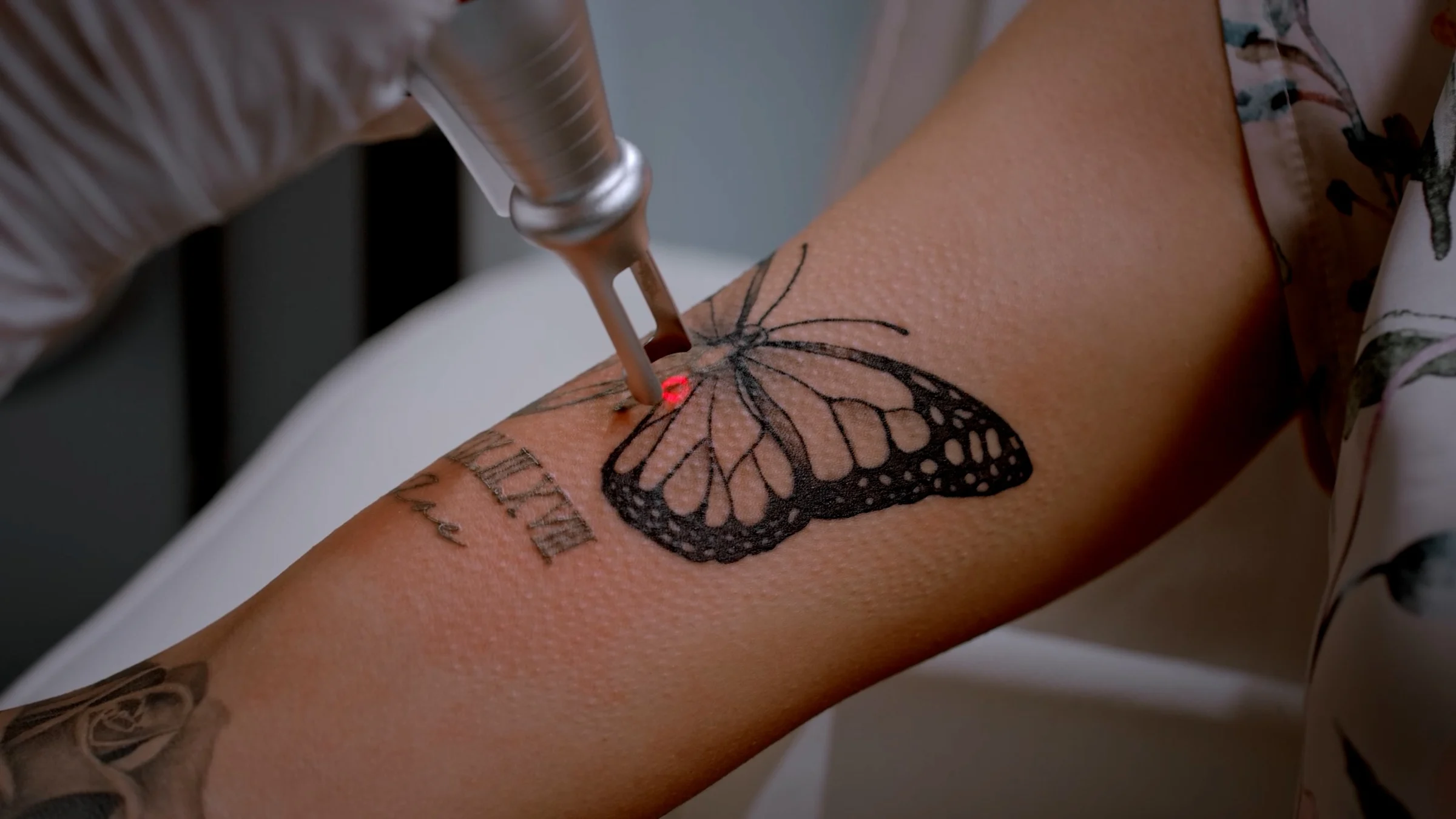
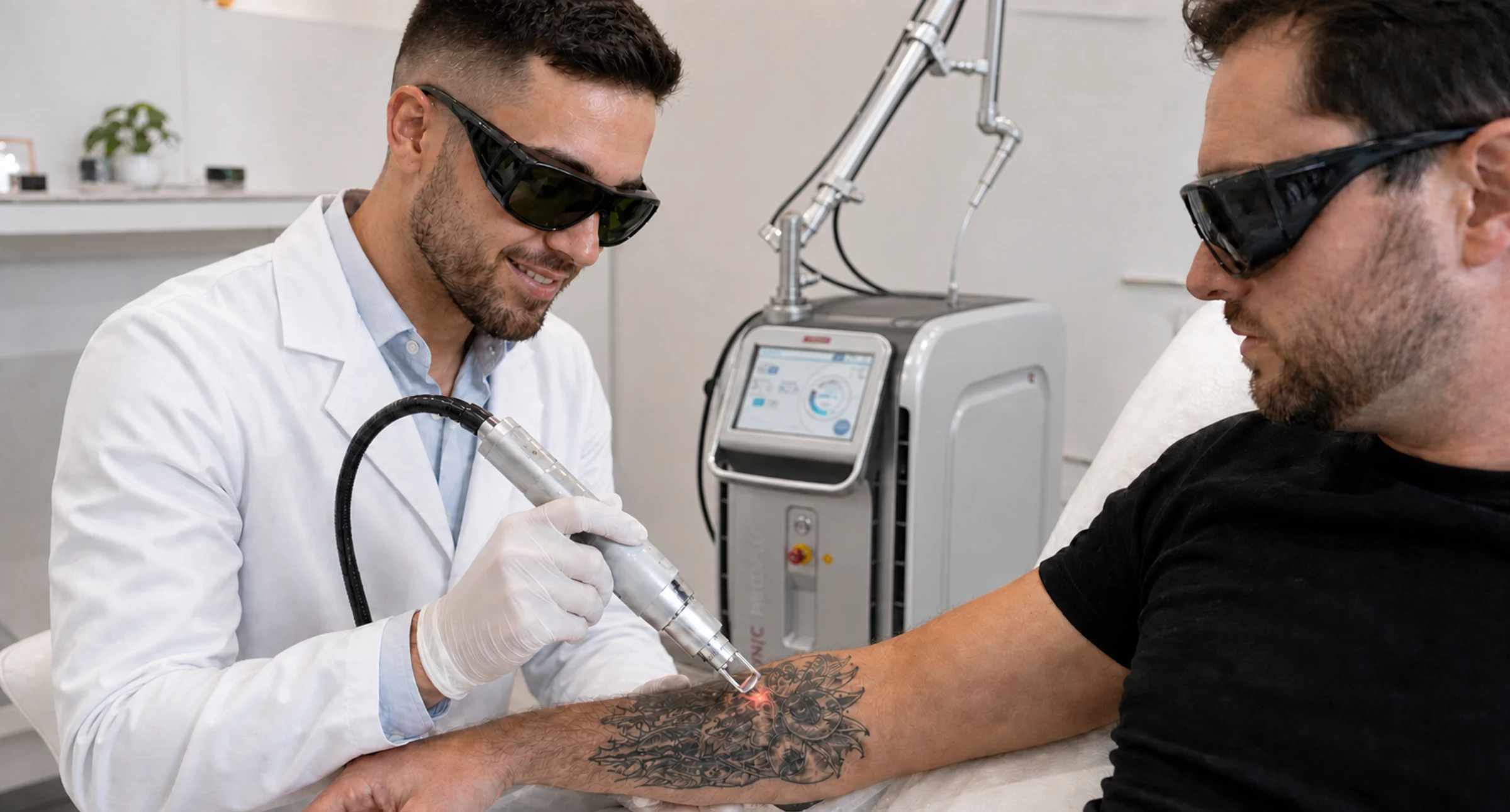
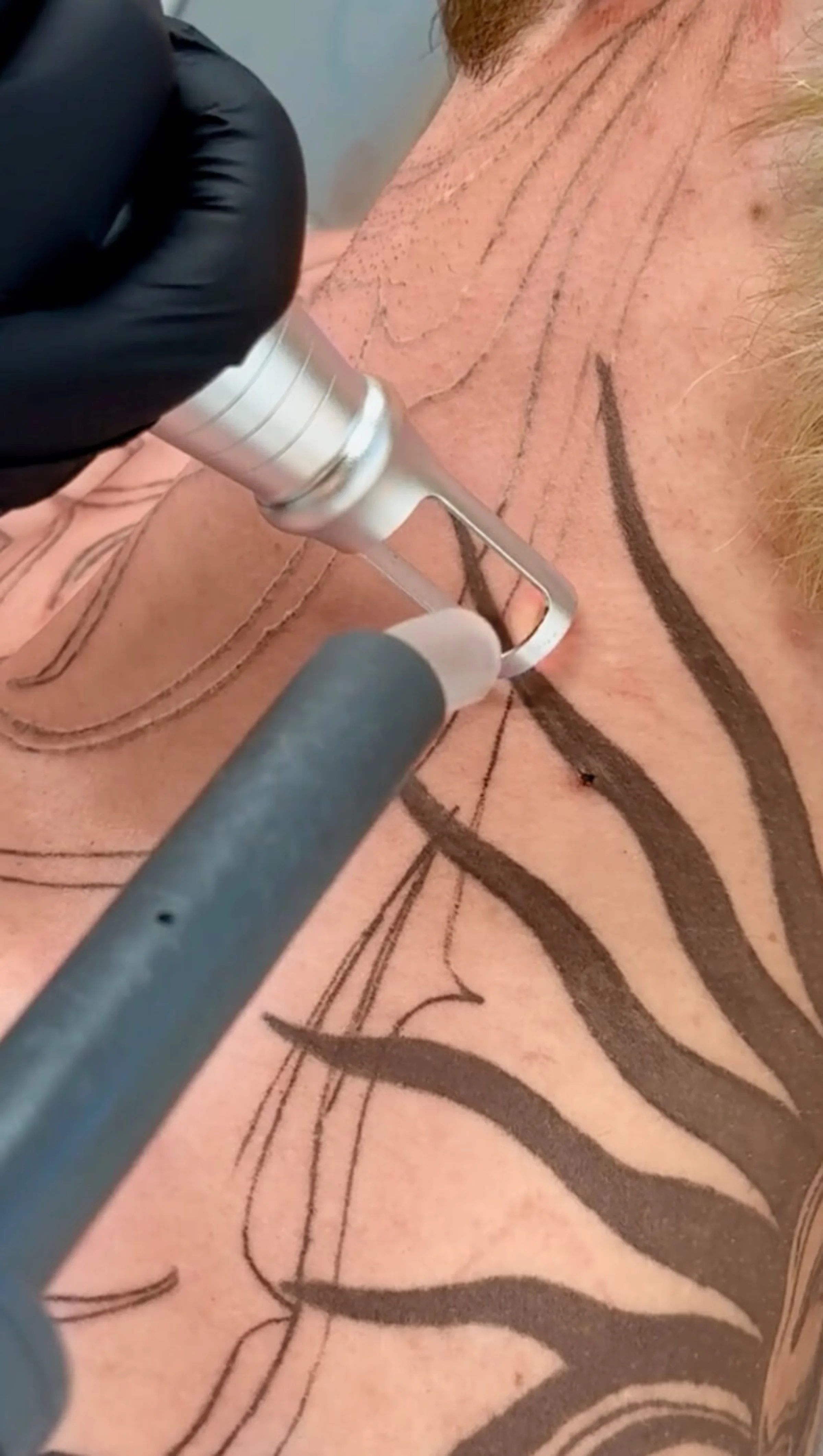
When you get a tattoo, ink is inserted into the dermis – the middle layer of the skin. The ink particles are too large for the immune system to clear, which is why the tattoo stays in the skin permanently. According to the FDA, laser energy breaks the ink down into smaller particles that the body can gradually clear through the lymphatic system. Complete removal requires several treatments, because in each treatment the laser breaks down another layer of ink, which the body clears over time.
The laser works selectively: different wavelengths are matched to different ink colours. Black ink responds best, while colours such as green and red may require additional wavelengths. As a result, removing multi-coloured tattoos may require a higher number of treatments.
Pico laser technology
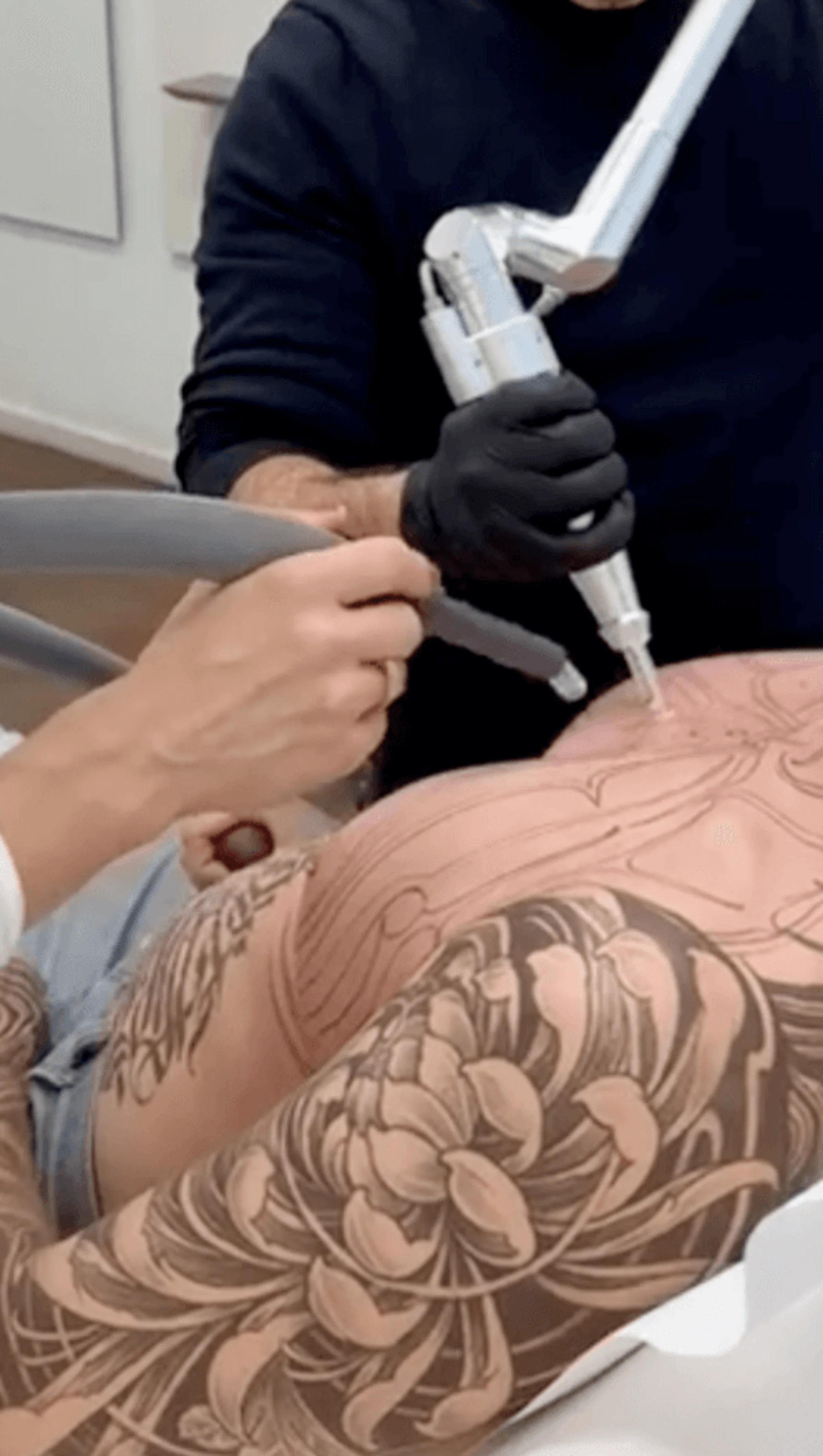
Earlier generations of lasers, which work with nanosecond pulses, served for many years as the standard for tattoo removal. Pico laser technology represents the next generation: it works with pulses that are orders of magnitude shorter, measured in picoseconds, breaks the ink down more efficiently into smaller particles and reduces thermal damage to the surrounding tissue.
A clinical study published in Lasers in Medical Science 2024 examined the effectiveness of the Nd:YAG pico laser on professional black tattoos in skin type IV (medium-dark skin). After two sessions 8 weeks apart, an average improvement of about 61% was found, with 40% of patients achieving an improvement of more than 75% without side effects. However, expected short-term effects were reported during and after treatment (such as local pain and redness). It is important to stress that even with more advanced technologies, the number of treatments and the response vary considerably between patients, so any estimate is general only.
How many treatments are needed for laser tattoo removal?
There is no one-size-fits-all answer. According to Cleveland Clinic, laser tattoo removal may require between 6 and 12 treatments. As a general guide:
Small black tattoos may require fewer treatments, as black ink absorbs laser energy most efficiently. Medium to large tattoos usually require more sessions. Tattoos with several colours or deep ink may require a longer series.
If the goal is lightening ahead of a cover-up rather than complete removal, there is a separate guide on the subject.
Factors that affect the number of treatments needed
Ink colour – black responds best to laser removal. Light colours such as yellow and white are more challenging.
For more details – colour tattoo removal.
Age of the tattoo – older tattoos tend to respond faster, because the pigment has already undergone some natural breakdown over time.
Size and location – small tattoos are removed faster. Also, tattoos in areas with good blood circulation (such as the upper body) usually respond to removal faster than, for example, those on the lower limbs.
Type of tattoo – amateur tattoos tend to be more superficial and are removed faster. Professional tattoos are placed deep in the skin and at high density.
Immune system and health – an efficient metabolism and a healthy immune system contribute to faster clearance of ink particles. Smoking, for example, may slow the process down.
How long between treatments?
It is customary to wait at least 6 weeks between treatments, to allow the skin to heal and the body to gradually clear the broken-down ink particles. In some cases the interval is longer, depending on how the skin responds, the location of the tattoo and the practitioner's judgement. According to NCBI StatPearls, it is generally recommended to wait 6 to 8 weeks between each treatment until the desired result is achieved.
What this means: even for a relatively small tattoo, the overall process takes several months. For large or complex tattoos, it may take a year or more to achieve the final result. Shortening the intervals is not recommended and may compromise results and safety. The interval is necessary because the body needs time to clear the ink particles and the skin needs to heal; speeding up the process usually increases the risk of irritation and side effects.
Is laser tattoo removal painful?
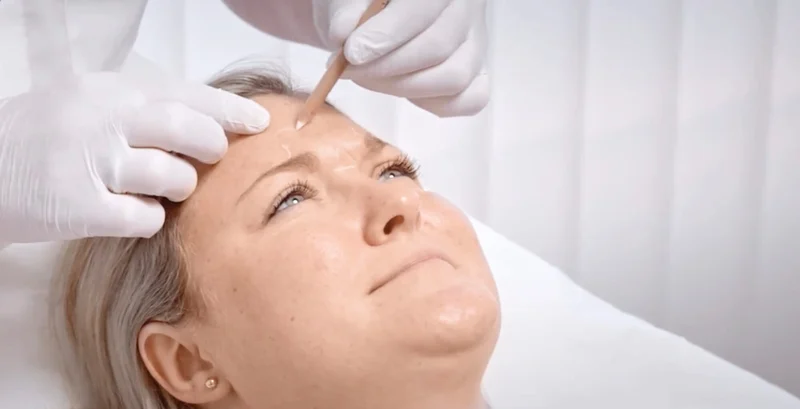
According to the FDA, the sensation is similar to a thick rubber band snapping against the skin. The intensity of the sensation varies from person to person and mainly by area of the body: sensitive areas such as the neck, ankle and wrist are felt more than areas such as the arm or back.
The fact that a laser tattoo removal session lasts only a few minutes makes the pain tolerable for most people. To minimise discomfort, a local anaesthetic cream can be applied about one to two hours before treatment, as instructed by the treating team.
Side effects and safety
Common effects
After treatment, mild and temporary effects such as redness and swelling in the treated area may appear, which usually pass within one to two days. In addition, a "whitening" reaction (frosting) may appear, which usually disappears after a few minutes, along with tenderness similar to mild sunburn. These reactions are a normal part of the healing process. Rarely, with practitioners who do not know how to use the correct intensities or when old equipment is used, blisters may appear. Do not pop them; let them heal on their own. Depending on your practitioner's instructions, you may be asked to gently wash the area, apply a suitable ointment for a few days and cover the area until the skin heals.
Less common effects
After laser tattoo removal, the skin in the treated area may be lighter than the surrounding skin. According to NCBI StatPearls, dark skin is more prone to hypopigmentation or hyperpigmentation after exposure to laser energy. It is therefore important to set the treatment intensity and parameters precisely, to follow the instructions before and after treatment, and to choose an experienced practitioner with proven experience in tattoo removal on dark skin.
Rare but important – when to see a doctor
According to Cleveland Clinic, you should see a doctor immediately if symptoms appear such as unusual, increasing pain, significant swelling that does not subside, a yellow-green discharge that may indicate infection, or marked local warmth in the treated area. A permanent scar is a rare outcome, but the risk exists, especially when treatment is performed with old equipment, by an inexperienced practitioner, or when the skin aftercare instructions are not followed. Pinpoint bleeding may occur, but it usually does not last long.
Instructions before and after treatment
Before treatment: avoid tanning and direct sun exposure for four weeks before and after treatment. Tell the practitioner about any medication you take or medical conditions.
After treatment: avoid friction from clothing and saunas for 24 to 48 hours after treatment. For complex or colourful tattoos, also keep the area clean and dry for the first two days. Do not scratch the area, and if crusts form, do not pick them off.
Sun exposure: tanned skin absorbs more energy from the laser, which increases the risk of burns and pigmentation changes. Sun exposure after treatment delays healing and may cause changes in skin colour.
Aftercare: the treating team will advise you on using a soothing ointment suited to your skin's condition. The principle is to keep the skin moisturised, protect the area and soothe the skin. Do not apply products without guidance, and do not use products with strong fragrances or active ingredients on the treated area.
Further reading on tattoo removal prices – tattoo removal prices.
Why choose laser tattoo removal at the Dermacare clinic
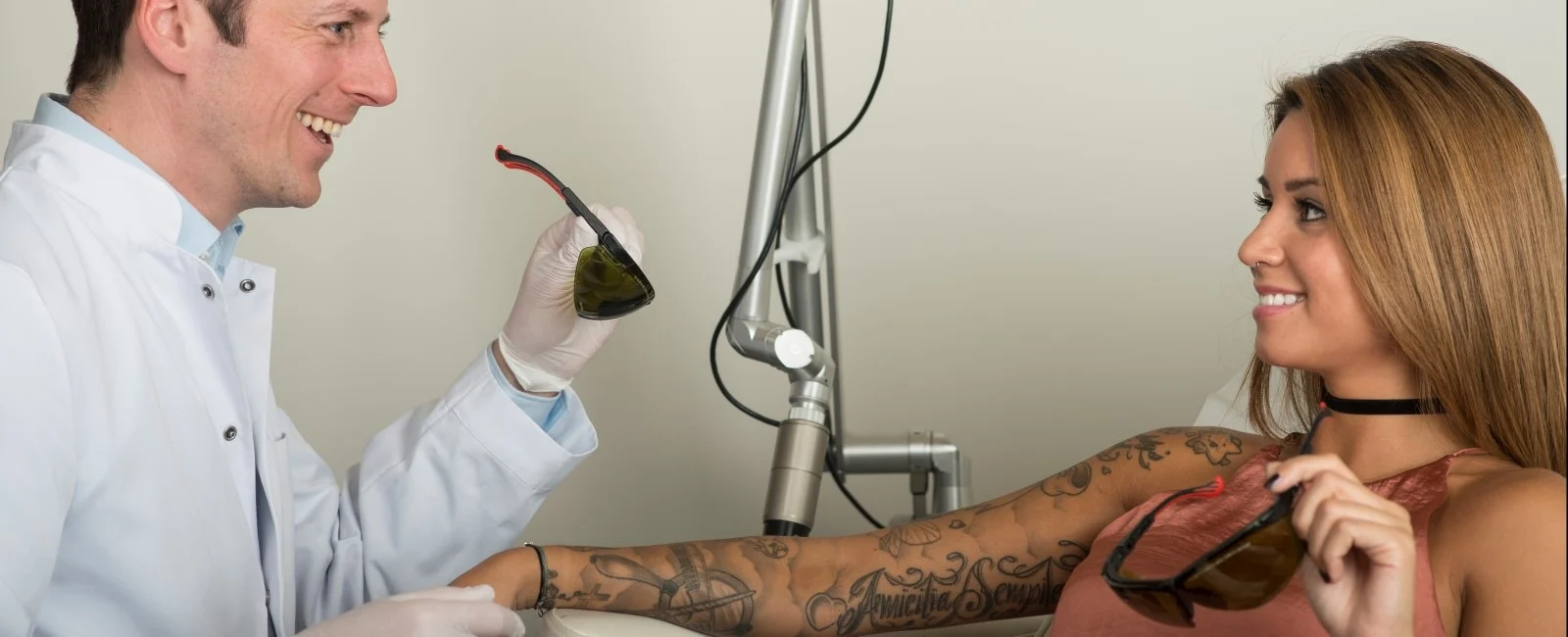
At Dermacare, laser tattoo removal starts with a thorough examination of the tattoo and the condition of the skin. Our expert team will assess your skin type, the tattoo's colours, the depth of the pigment and the goal of treatment, and build a personalised treatment plan accordingly. Before the process begins, you will receive a clear explanation of the estimated number of treatments, the limitations of treatment and the instructions to follow between treatments. Treatment is carried out with advanced pico laser technology, combining experience, professional judgement and structured support throughout.
The information in this article is general and does not constitute medical or personal advice. For a tailored assessment and treatment plan, we recommend booking a consultation with the professional team.
Contact us: 03-6127888 | info@dermacare.co.il | Book an appointment online
Written by: Eduard Yusupov, owner of the Dermacare clinic chain in Austria and Israel since 2010, an expert in tattoo removal and aesthetic treatments with over 100 thousand satisfied patients.
Frequently asked questions
Usually between 6 and 12 treatments, and sometimes more. The number of treatments depends on the ink colour, the size of the tattoo, its depth, its age, its location on the body and the individual body's response. Small black tattoos may require fewer treatments, while complex, multi-coloured tattoos may require more. An accurate estimate is given only after a personal examination with the practitioner.
It is customary to wait at least 6 weeks between treatments. In some cases the practitioner may extend the intervals according to the pace of healing and the skin's response. The intervals are essential to allow the skin to heal and the body to clear the ink particles.
Most patients describe the sensation as similar to a thick rubber band being stretched and released against the skin. The intensity of the sensation depends on the area of the body and on individual sensitivity. A local anaesthetic cream can be used about 1 to 2 hours before the treatment, as instructed by the treating team, to reduce discomfort. In addition, the fact that the treatment itself usually lasts from a few seconds to a few minutes makes it easier for most patients.
Immediately after the treatment, the area may be red and slightly swollen. Over the course of the treatment series, the tattoo fades gradually. By the end of the process, the skin returns to a natural appearance. You can view before and after photos to get an impression.
Blisters and scabs are not a normal part of the healing process; this happens when the practitioner is inexperienced and does not know how to use the equipment properly, or when old equipment is used. Blisters and scabs usually disappear within one to two weeks. The important rule: do not pop blisters and do not pick at scabs. Keep the area sterile and protected. If a blister bursts on its own, clean it gently and contact the treating team.
Sun exposure before the treatment may raise the level of melanin in the skin, thereby increasing the risk of burns and pigmentation changes. Even after the treatment, prolonged exposure to direct sun may delay healing and cause uneven colour changes in the treated area.
No, when the treatment is performed by an experienced professional team with suitable equipment and innovative technology. The most important factor in preventing scarring is following the aftercare instructions after the treatment: not picking at scabs, maintaining good hygiene, and protecting the area from the sun.
No. Tattoo removal is a gradual process. With each treatment, the laser breaks down another layer of ink, and the body needs several weeks to clear the particles naturally. Anyone who promises complete removal in a single treatment is presenting unrealistic expectations.
For information on how complete the removal can be – Can a tattoo be removed 100%?