In brief
- The laser breaks the ink in the dermis into small particles and the body clears them over weeks, so this is a gradual process rather than a single treatment.
- 6-12 treatments are usually needed, sometimes more, about 6-8 weeks apart.
- Black responds best, and colours such as green, light blue and yellow may be stubborn and require additional treatments.
- Picosecond is a more advanced generation than Q-Switched, but its advantage depends on the tattoo, the colours, the depth and the skin type.
- Sun exposure before and after treatment is the number 1 factor in the risk of pigmentation changes.
Laser tattoo removal: how it works, how many treatments you need and what to know before you start
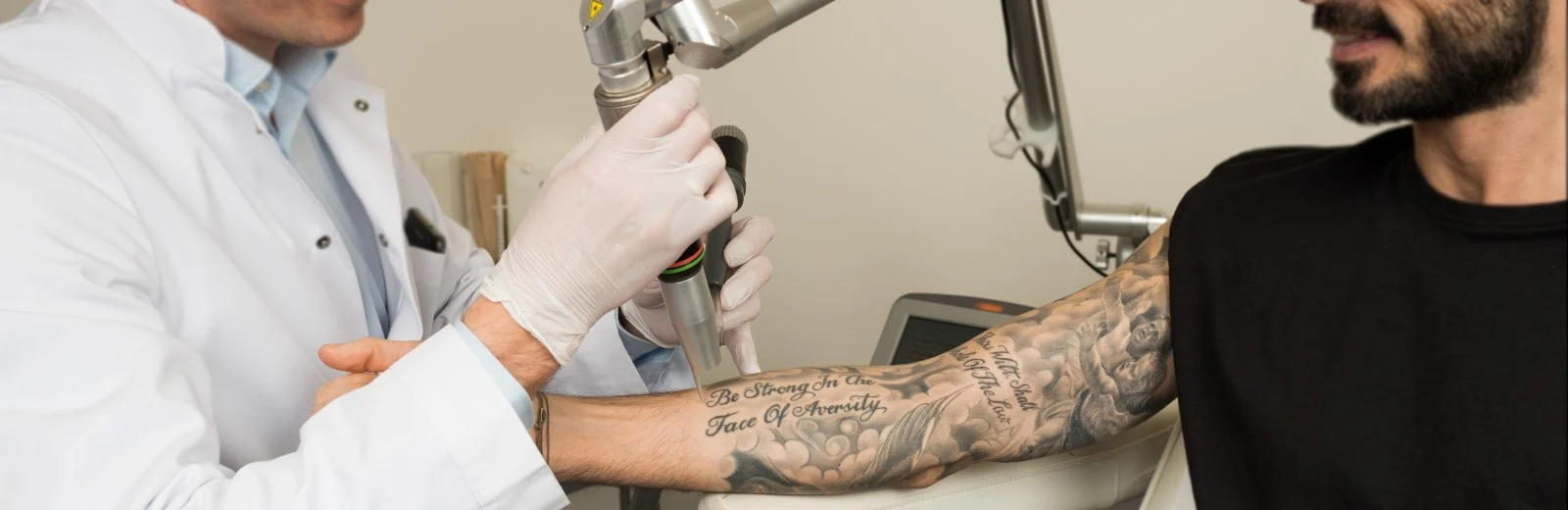
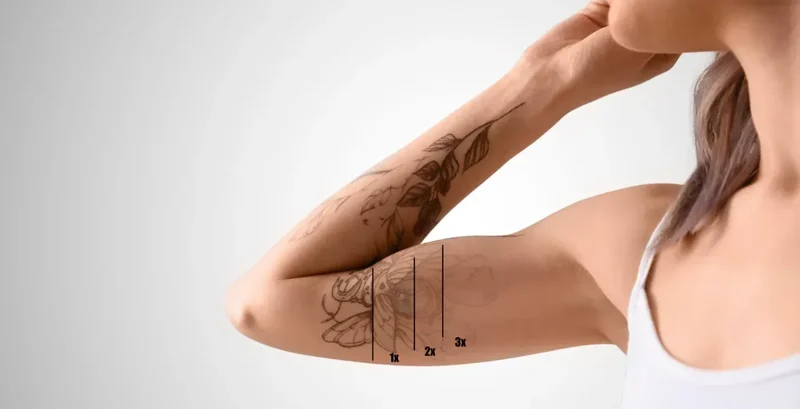
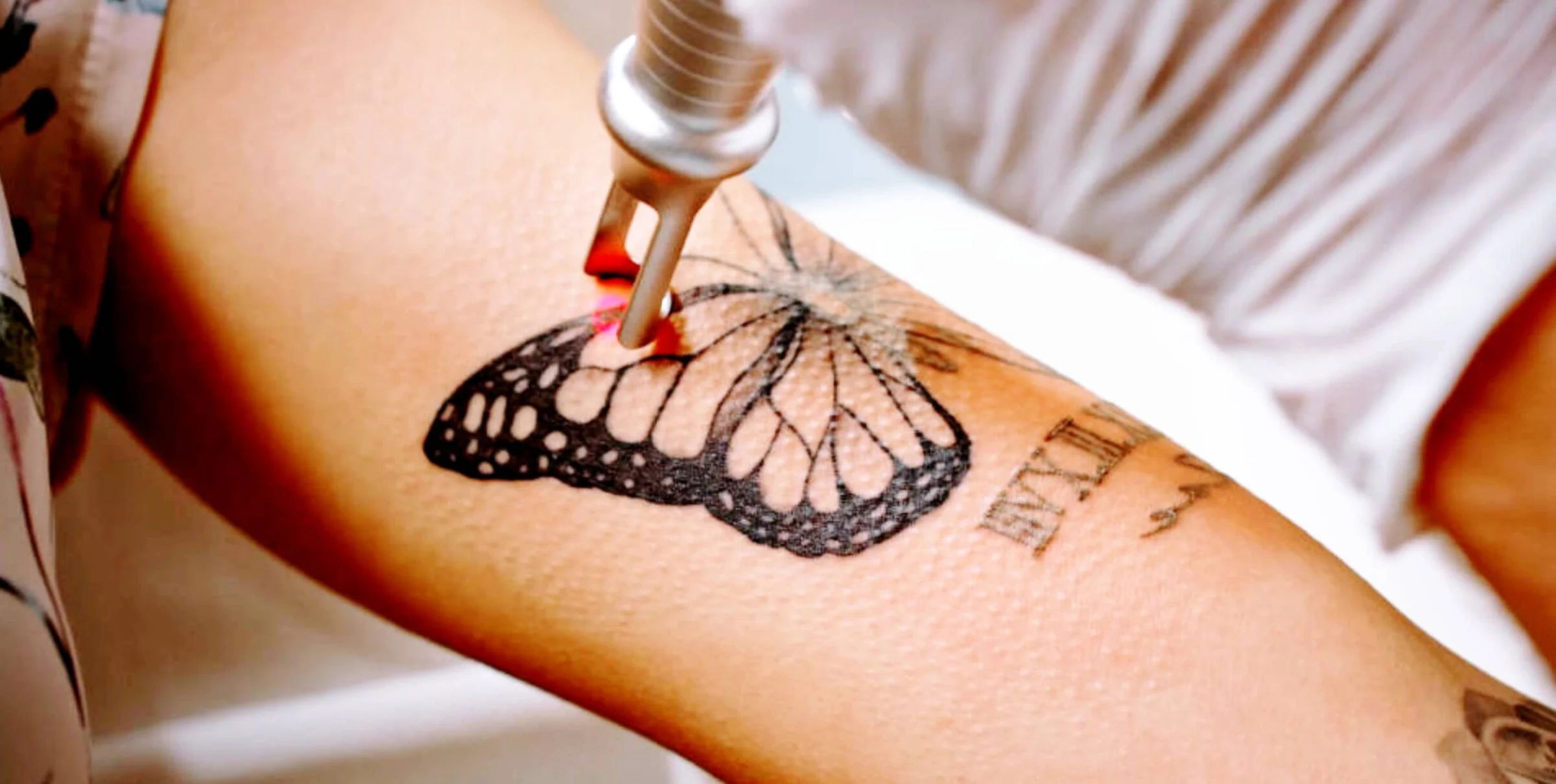
Laser tattoo removal is today the most common and well-established method for significantly lightening tattoos, and sometimes for removing them almost completely – but it is important to understand that it is not “one-treatment magic”. It is a gradual process in which the laser breaks the ink in the skin into smaller particles, and the body clears them over a period of weeks. The result is therefore built up over a course of treatments with the right intervals between sessions.
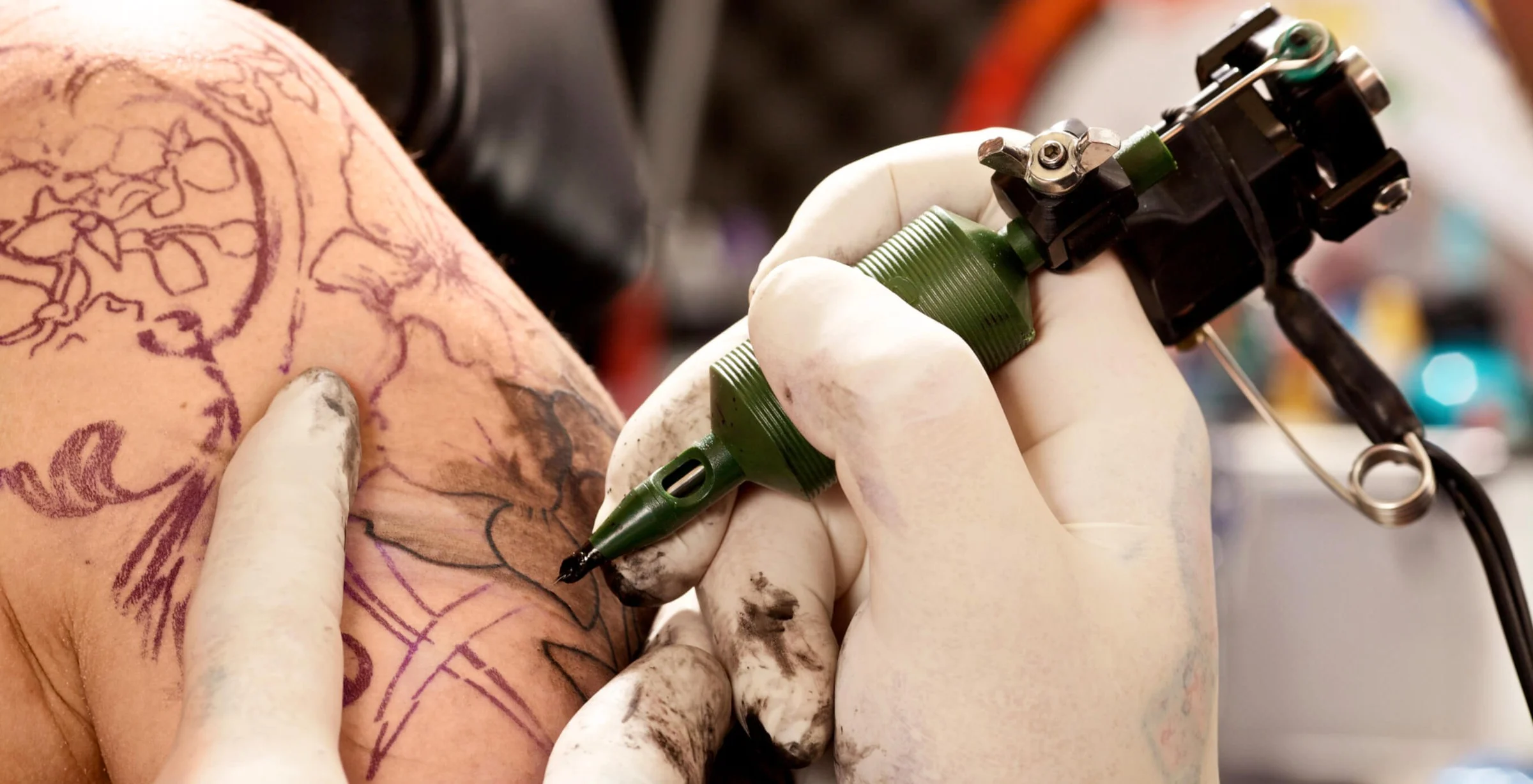
A tattoo does not sit in the outer layer of the skin. During tattooing, the ink is introduced deep into the dermis (the middle layer), where it is “trapped” inside cells and tissue. This is exactly why tattoos stay sharp for years – and also why removal requires suitable technology, adjustment to the skin type and colours, and careful attention to healing and sun protection.
How does laser tattoo removal work?
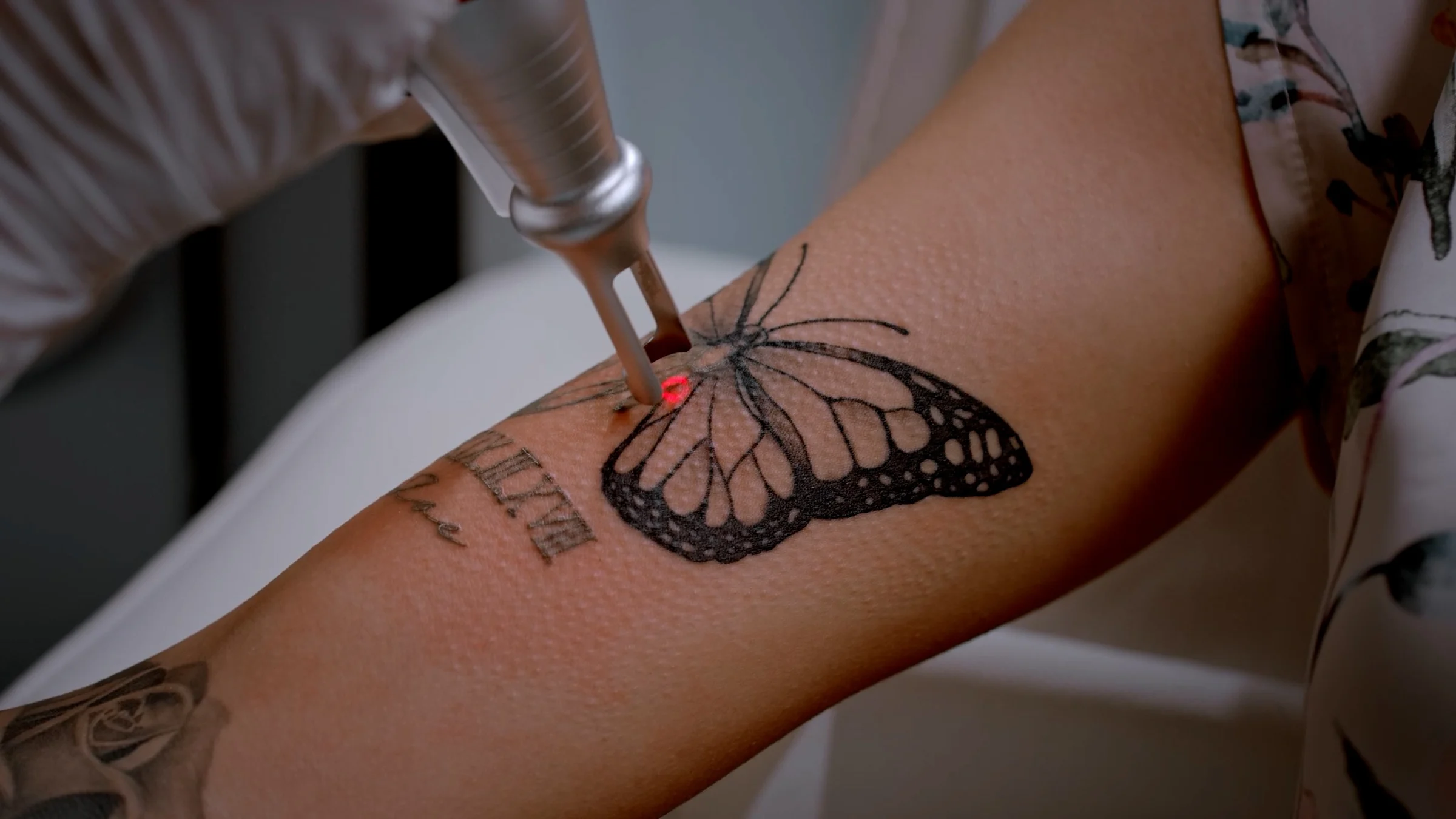
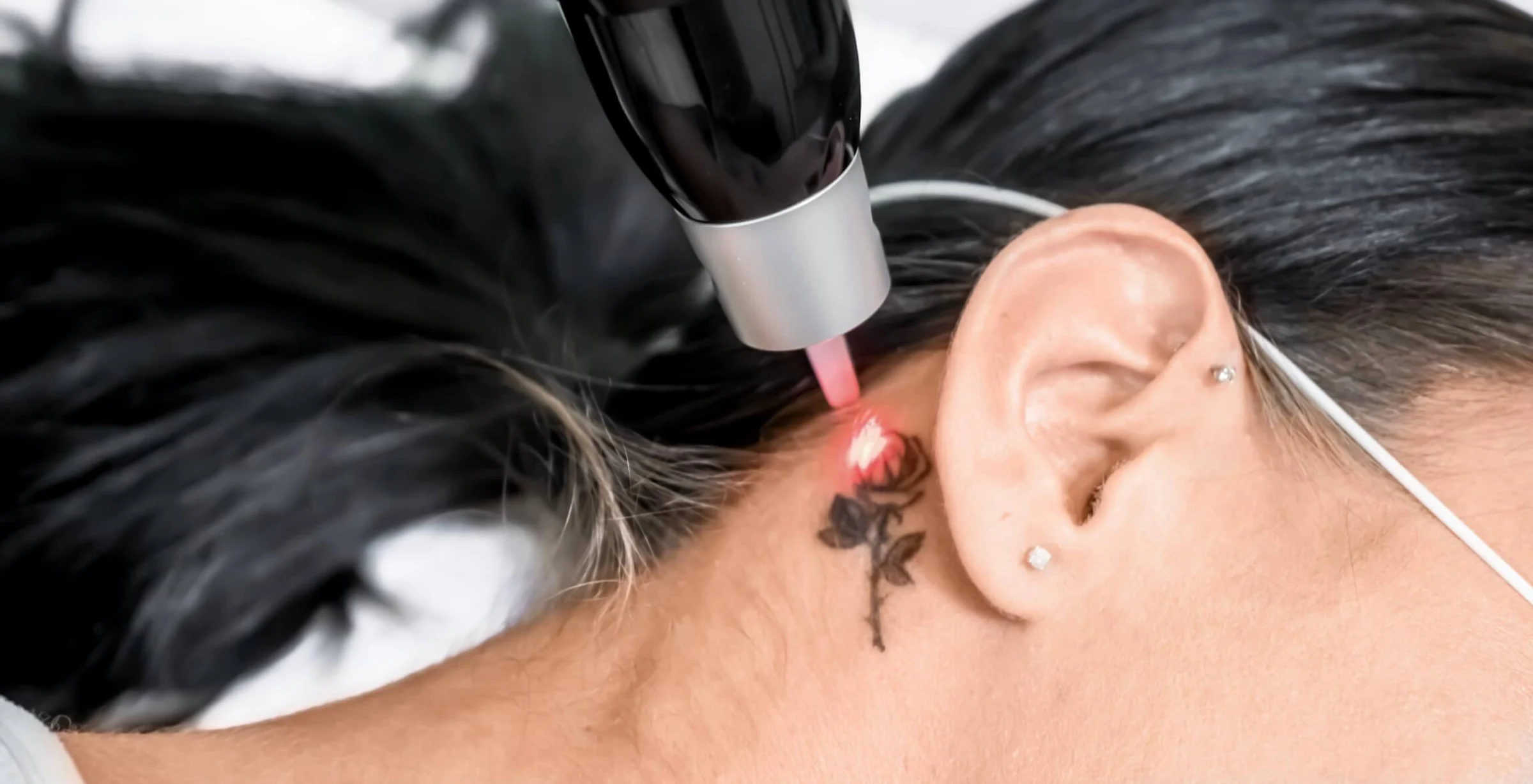
Laser tattoo removal works by means of short pulses of light aimed at the ink pigment in the skin. The pulses “shatter” the ink particles into smaller particles. The immune system then gradually clears the particles through the lymphatic system over a period of weeks. 6-12 treatments are usually needed (and sometimes more), about 6-8 weeks apart, depending on the tattoo's colours, ink density, tattoo depth, skin type and location on the body.
Why does a tattoo stay in the skin for so long?
To understand removal, you need to understand why a tattoo “sticks” to the skin. The ink is injected into the dermis. The body recognises the ink as a foreign substance and triggers an immune response: cells such as macrophages “swallow” some of the pigment and try to clear it. But many ink particles are large and hard to break down, so they remain trapped inside cells and tissue. When cells are replaced, the ink passes to other cells – and the tattoo is preserved.
The important conclusion: “tattoo removal” creams or scrubbing do not reach the depth where the ink is located, so they usually do not solve the problem and may damage the skin.
How does the laser actually remove tattoos?
The key principle can be put simply: targeted action on the pigment with minimal damage to the surrounding skin.
Selective photothermolysis (in simple terms)
The laser emits light at a wavelength that matches the absorption of the ink colours. When the pigment absorbs the energy, a local effect is created that breaks down the ink.
The “photoacoustic” effect – why do short pulses work well?
In most tattoo removal laser systems (especially picosecond lasers), the pulse is very short and very powerful. Instead of “cooking” the ink with prolonged heat, the pulse creates a pressure wave that shatters the ink particles. The smaller the particles, the better the immune system can clear them.
A point you must understand: the laser does not “suck” the ink out
The laser breaks it down. The body is what clears it. Therefore:
- Results continue to improve for weeks after the treatment.
- Intervals between treatments are needed to allow clearance and healing.
- Patience is part of the process.
Types of lasers and wavelengths: why does the colour of the tattoo matter?
Different tattoos are made up of different pigments. Different colours respond differently to the laser, so advanced clinics combine different wavelengths/handpieces as needed.
Common wavelengths
- 1064nm – particularly suitable for black and dark blue; also considered “friendlier” for relatively dark skin types.
- 532nm – suitable for red, orange and some browns.
- 650nm / 585nm – sometimes used for colours such as green/light blue/certain blues (depending on the pigment).
In practice, a good match is based on:
- the colours of the tattoo (and whether there are combinations),
- skin type (light/dark/prone to pigmentation),
- ink density and depth,
- the location of the tattoo.
Picosecond vs. Q-Switched: what is the difference and what does it mean for you?
Q-Switched is the “classic standard” for tattoo removal and is very well proven.
Picosecond is a more advanced generation, with even shorter pulses (picoseconds instead of nanoseconds). In practice this can lead to:
- more effective shattering of certain pigments,
- a better response in some coloured tattoos,
- and sometimes fewer treatments (but not necessarily for everyone).
It is important to be wary of sweeping promises. The advantage depends on the tattoo, the colours, the depth and the skin type.
What happens during the treatment itself? (step by step)
- Assessment and medical history
Medical history, medications, tendency to scarring (keloids), sensitivities, sun exposure, the condition of the skin in the area and more are checked. - Documentation and photography
Helps to measure progress and set realistic expectations. - Anaesthesia and cooling
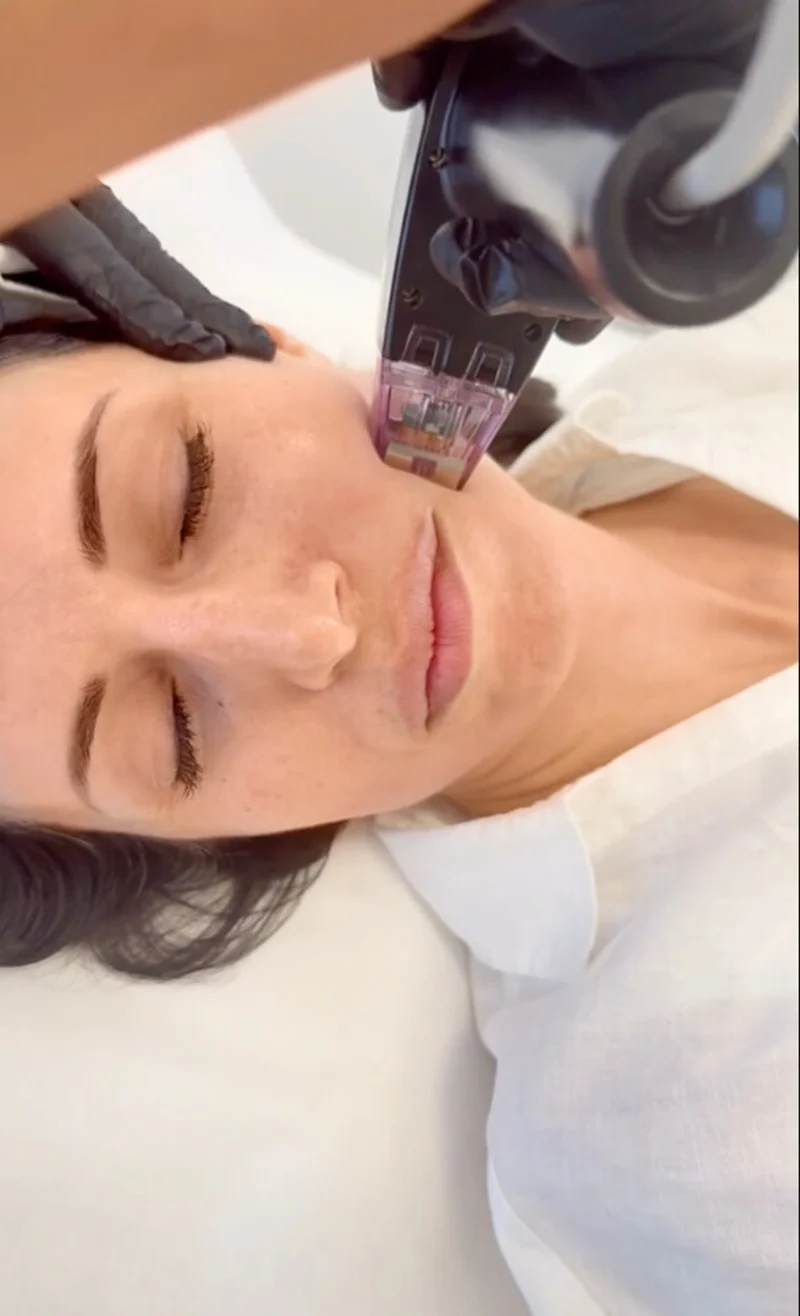
Anaesthetic cream, advanced cooling and sometimes local anaesthetic injections can be used – depending on the area and size. - The laser treatment
Treatment time varies: a small tattoo can take minutes, a larger tattoo longer. - A typical reaction during treatment (“Frosting”)
A momentary “whitening” of the skin in the area sometimes appears – a temporary reaction that indicates interaction with the pigment. - Dressing and aftercare instructions
You receive clear instructions for care at home, especially regarding hygiene and sun protection.
How many treatments are needed for laser tattoo removal?
In most cases it is a course of 6-12 treatments, and sometimes more. The exact number depends on:
- Professional vs. amateur tattoo: a professional tattoo is usually denser and deeper.
- Colours: black usually responds best. Colours such as green/light blue/yellow may be stubborn.
- Ink density and depth: the more pigment there is, the more sessions are needed.
- Location on the body: areas with good blood/lymph flow tend to respond faster than “extremity” areas (such as the ankle/hand).
- Skin type and tendency to pigmentation: darker skin sometimes requires a gentler approach to reduce the risk of changes in skin colour.
- Age of the tattoo: old tattoos sometimes break down faster.
Why do you have to wait between treatments?
Because the body needs time to clear the ink particles and heal. The usual interval is about 6-8 weeks (and sometimes longer, depending on the response). Treating too frequently does not always speed up results – and sometimes only increases irritation and the risk of side effects.
Does it hurt?
Most people feel brief pain/stinging during the pulses, sometimes described as being like “a rubber band stretched and snapped” against the skin. With anaesthetic and cooling, the treatment is usually quite tolerable.
What affects the pain?
- a sensitive area (ribs, ankle, fingers, neck),
- the size and density of the tattoo,
- the number of colours and the nature of the pigments.
Side effects and risks: what is normal and what needs attention?
Common, temporary effects
- redness and swelling (24-72 hours),
- local tenderness/stinging,
- light scabs,
- sometimes small blisters.
Possible effects that require follow-up
- particularly large/painful blisters,
- signs of infection (increasing pain, discharge, local warmth),
- pigmentation changes:
- hyperpigmentation (darkening)
- hypopigmentation (lightening)
- scarring (rare when the work is done correctly and aftercare is followed).
The number 1 factor that increases the risk of pigmentation changes: sun exposure before/after treatment.
Preparing for treatment: what to do and what to avoid
Before the treatment
- Come without a tan (avoid significant sun exposure for at least 2-4 weeks).
- Report any medications, sensitivities, history of scars/keloids, previous isotretinoin treatment and so on.
- Come when the skin is healthy – with no open wound/active inflammation.
What not to do
- Do not have an aggressive peel in the area before treatment.
- Do not come after tanning or “strong sun” a few days beforehand.
Recovery: how to look after your skin and increase the chance of a good result
Instructions vary according to the type of treatment and the skin's response, but common principles are:
- Gentle cooling on the first day as instructed.
- Keeping the area clean and hygienic.
- Applying a soothing/antiseptic product as instructed by the practitioner.
- Do not pick scabs or pop blisters.
- Avoid the pool/sea/sauna for a few days (depending on the condition of the skin).
- High SPF + covering up throughout the course, especially in the weeks after treatment.
Can 100% of the tattoo be removed?
Sometimes complete or almost complete removal can be achieved – especially with black tattoos that are not too dense, and in areas of the body that respond well. However, there are cases in which a faint “shadow” remains, especially with certain coloured tattoos or very dense tattoos. A professional approach sets realistic expectations from the very first consultation.
Who is the treatment less suitable for (or requires special caution)?
- a tendency to keloid scars,
- very tanned skin or recent sun exposure,
- active skin disease in the area,
- medical conditions/medications that require adjustment,
- tattoos with certain pigments (for example: white/skin-tone ink) that may react unpredictably and sometimes darken – so in such cases a test spot is sometimes considered before starting a course.
Ready to say goodbye to an unwanted tattoo?
Want to know how many treatments your tattoo will need and what the chances are of it disappearing completely? A short consultation with assessment based on the tattoo's colours, ink depth and skin type will help build a treatment plan and realistic expectations – safely and precisely.
Frequently asked questions
In most cases 6-12 treatments, and sometimes more – depending on the colours, the density and depth of the ink, skin type and the location of the tattoo.
The treatment is noticeable, but discomfort can be reduced with anaesthetic and cooling.
Temporary redness and swelling are common. Sometimes there are scabs or small blisters. It is important to protect the area from the sun to reduce the risk of pigmentation changes.
Sometimes yes, but certain colours are more stubborn and require a combination of wavelengths and much more patience. Picosecond may help in some cases.
In most cases no, when the treatment is carried out correctly and the healing instructions are followed. The risk of scarring rises if scabs are picked, if the skin is exposed to the sun, or if there is a personal tendency to scarring.
Because the body clears the ink particles gradually over weeks. Proper intervals improve healing and reduce the risk of side effects.
You can, but it requires very high discipline in sun protection. Tanning raises the risk of pigmentation changes.
Usually not, because the ink is in the dermis and not in the upper layer. Home attempts may harm the skin.
Read more about laser tattoo removal at the Dermacare clinic in Petah Tikva.