In brief
- A cover-up and laser removal serve different goals: a new tattoo in place of the old one, or completely clear skin.
- A dark, dense or coloured tattoo usually gets a better result if it is lightened with a laser before the cover-up.
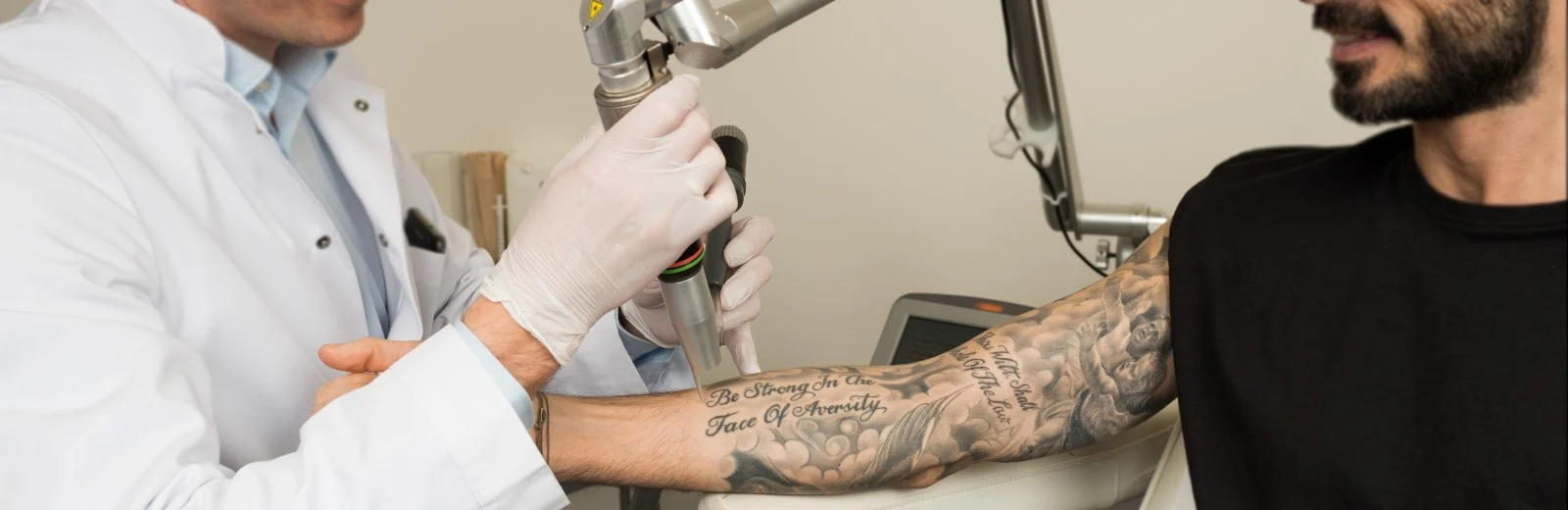
- At Dermacare, a Pico laser is used for lightening before a cover-up, and the number of treatments is significantly lower than needed for full removal.
- It is recommended to wait at least 6-8 weeks after the last treatment before the cover-up, and 3-4 months usually produce better lightening.
- Full removal is preferable when the goal is clear skin, when the tattoo is in a place that is hard to cover, or when any cover-up would be too dominant.
In short: a tattoo cover-up and laser removal are two different answers to two different questions. A cover-up suits those who want a new tattoo in place of the old one – and it is usually quicker, and sometimes more cost-effective, depending on the size, the ink density and the result you want to achieve. Laser tattoo removal suits those who want completely clear skin. And what if the tattoo is too dark or too large to cover with a new tattoo? When the old tattoo is dark, large or coloured, it can be lightened with a laser to the extent needed for the cover-up to work as well as possible.
Key points
- The first question is not "which is better" but "what is your goal"? – a new tattoo/cover-up/complete removal?
- In recent years, laser lightening before a cover-up has become a very common method, including among professional tattoo artists.
- Black, dark and coloured tattoos in most cases produce a better result with prior lightening.
- Full tattoo removal for clear skin requires patience: a longer time and a larger number of treatments.
What is a tattoo cover-up – and how does it differ from laser?
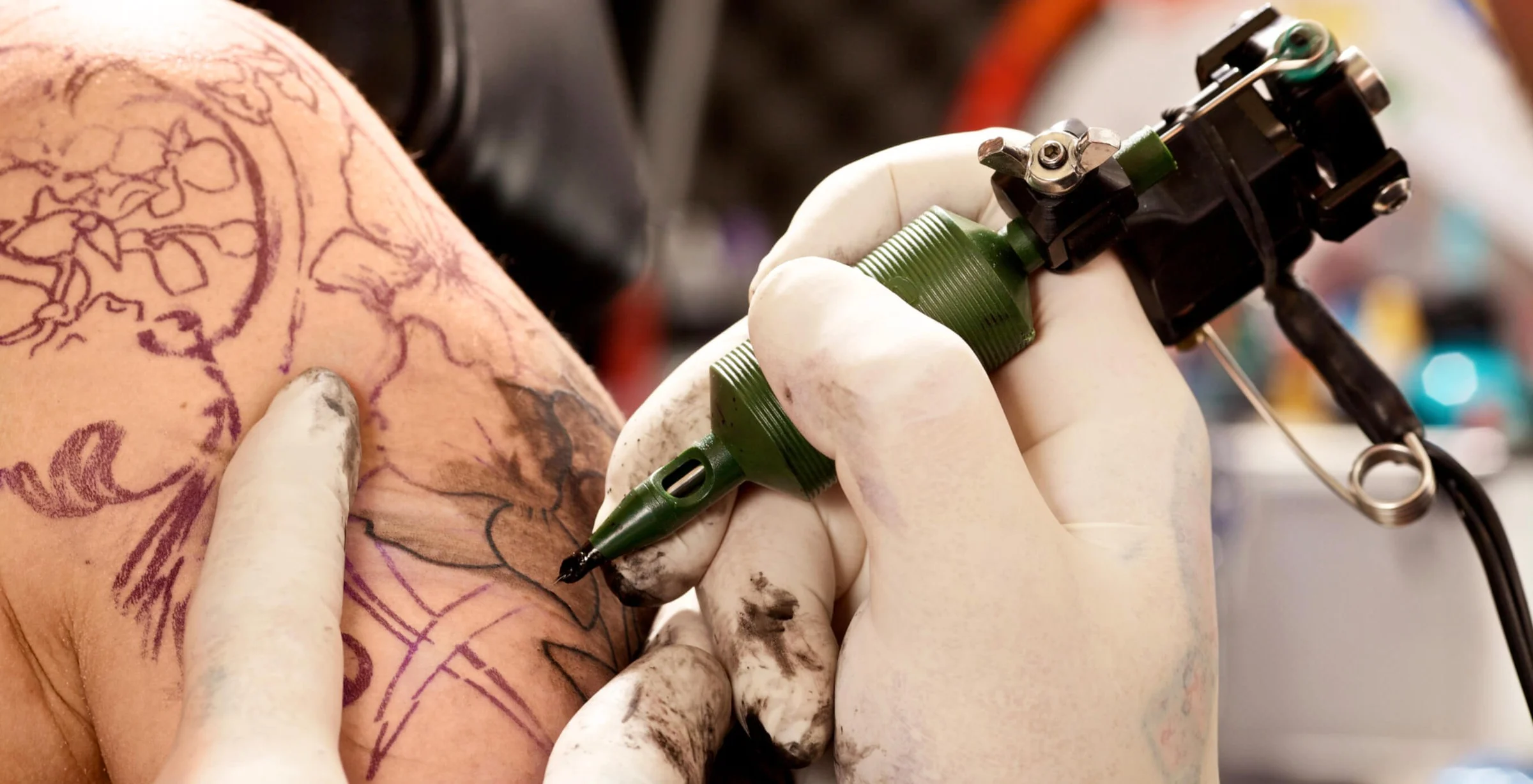
A tattoo cover-up (Cover-up Tattoo) is a process in which a professional tattoo artist designs a new tattoo over an old one. The old tattoo is not erased – it is incorporated into the new design, usually by means of dark layers of ink, a larger size, or clever use of the existing lines.
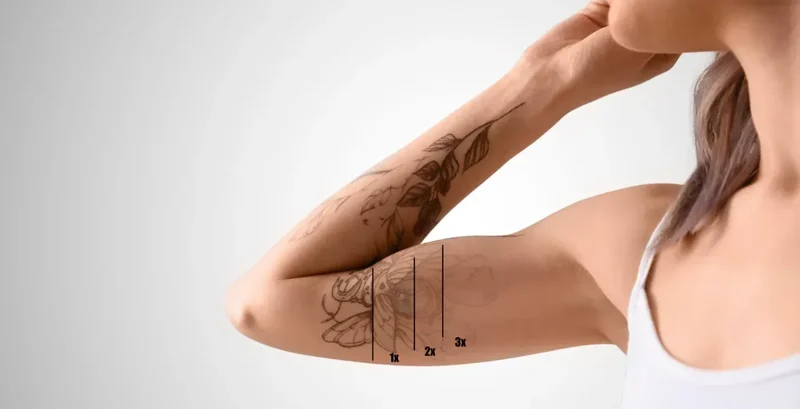
The laser process breaks down the ink pigments and aims to lighten or remove them over a course of treatments. The result varies between people and tattoos, and changes in colour or marks may sometimes occur.
What is the essential difference between the two?
A cover-up will leave a tattoo on the skin – simply a different, improved tattoo. Full tattoo removal aims for clear skin with no tattoo. These are not interchangeable options – they are solutions for different goals. For those aiming for clear skin with no tattoo at all, there is a separate guide to laser tattoo removal covering the process, timing, risks and costs.
In this article we focus on the decision between the two – and on the cases in which laser lightening before a cover-up is the right way to go.
When a cover-up is the right answer
A tattoo cover-up is suitable when:
- You want a new, upgraded tattoo – not skin free of tattoos.
- The old tattoo is relatively small and light enough for the artist to work on it.
- You want a large, detailed tattoo that will incorporate the old motif.
- Your schedule or personal considerations do not allow a long course of laser treatments.
Tattoo cover-ups on the arm, leg and back
The location of the tattoo affects how complex the cover-up is. A cover-up on the arm, especially on the outer side, is challenging because the skin is thinner and there is less space for the design. A cover-up on the leg, the back or the rib area usually gives the artist more flexibility. Wherever it is, early coordination with the artist and with a laser specialist (if lightening is needed) is the critical step.
Cover-ups for large tattoos
The larger the original tattoo, the larger the new design will have to be – sometimes 1.5 to 2 times as large. A cover-up for a large tattoo requires advance planning and close cooperation between the artist and the client. Preparing a tattoo for a cover-up by lightening the old tattoo significantly increases the artist's scope for the new design.
When full removal is preferable to a cover-up
There are situations in which full removal is the right choice:
- The goal is completely clear skin with no tattoo at all.
- Any cover-up offered would be too large and dominant compared with what you want.
- The tattoo is in a place that is hard to cover (face, eyebrows, fingers).
- There are professional considerations that require completely clear skin.
- An emotional wish for a completely fresh start, without any trace of the old design.
When the work is done correctly and the instructions are followed, the risk of scarring is low – but there are risks such as temporary pigmentation changes or an inflammatory reaction, so professional advice and follow-up are essential in every case.
When laser lightening before a cover-up is the best solution
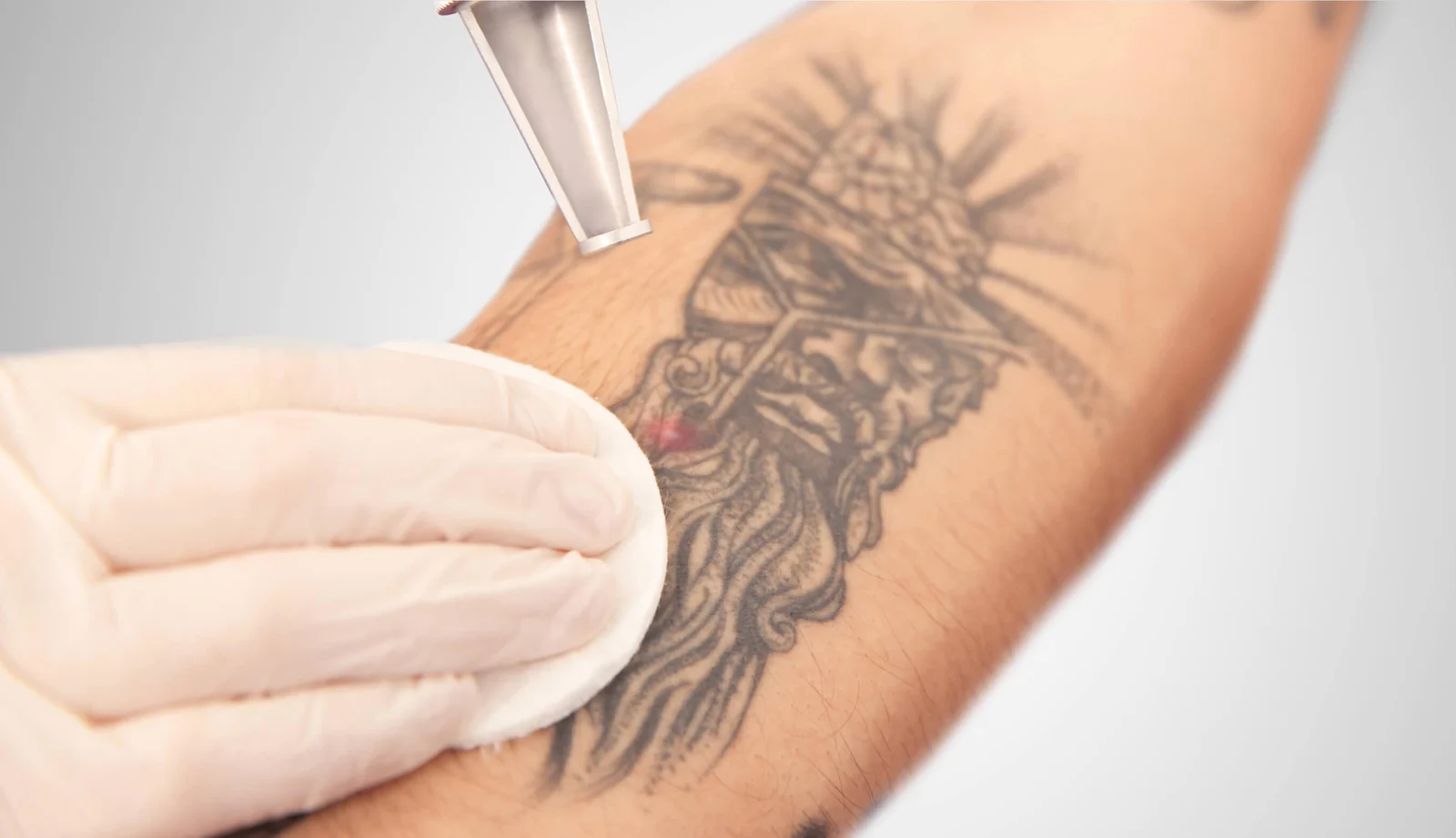
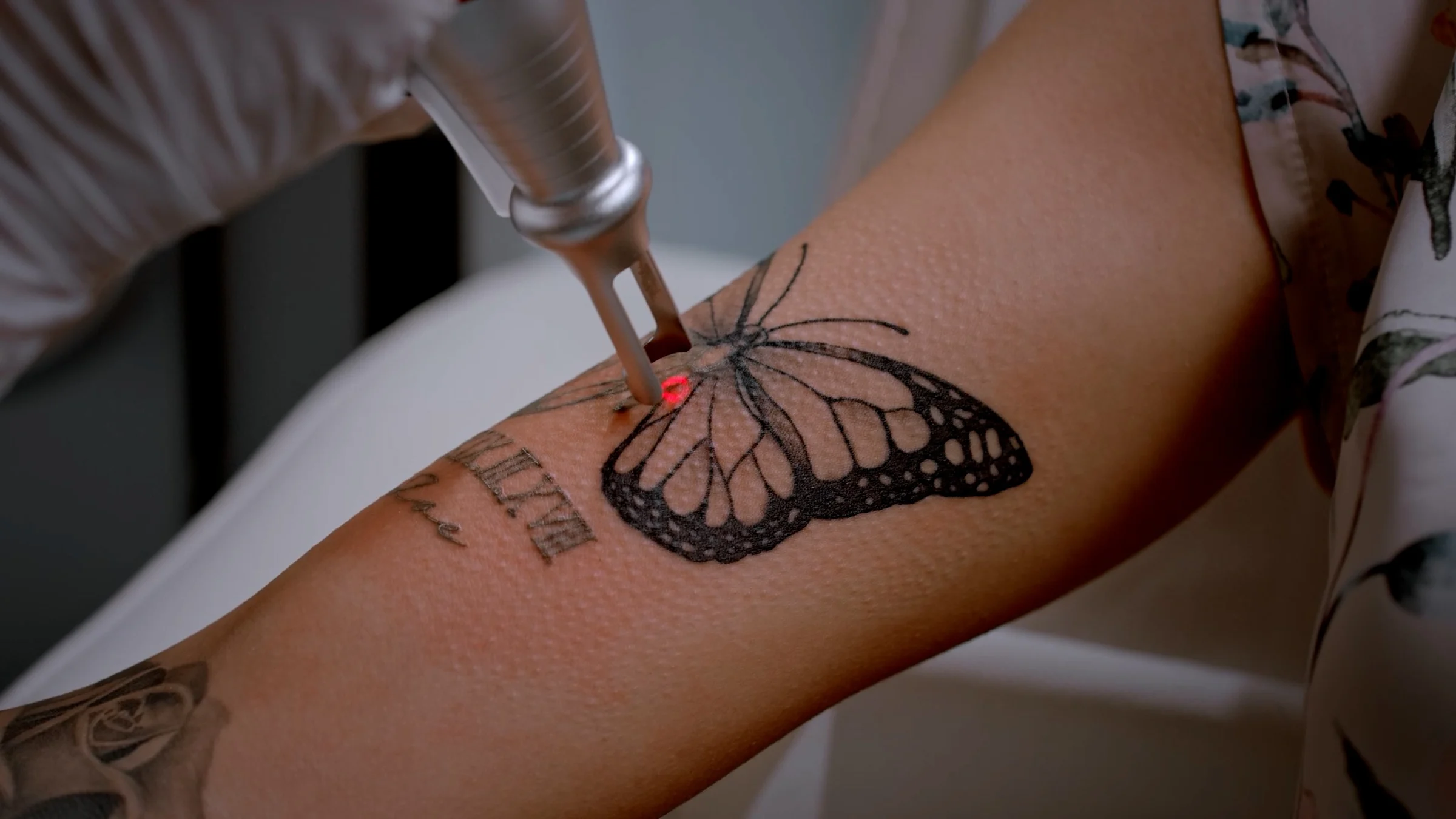
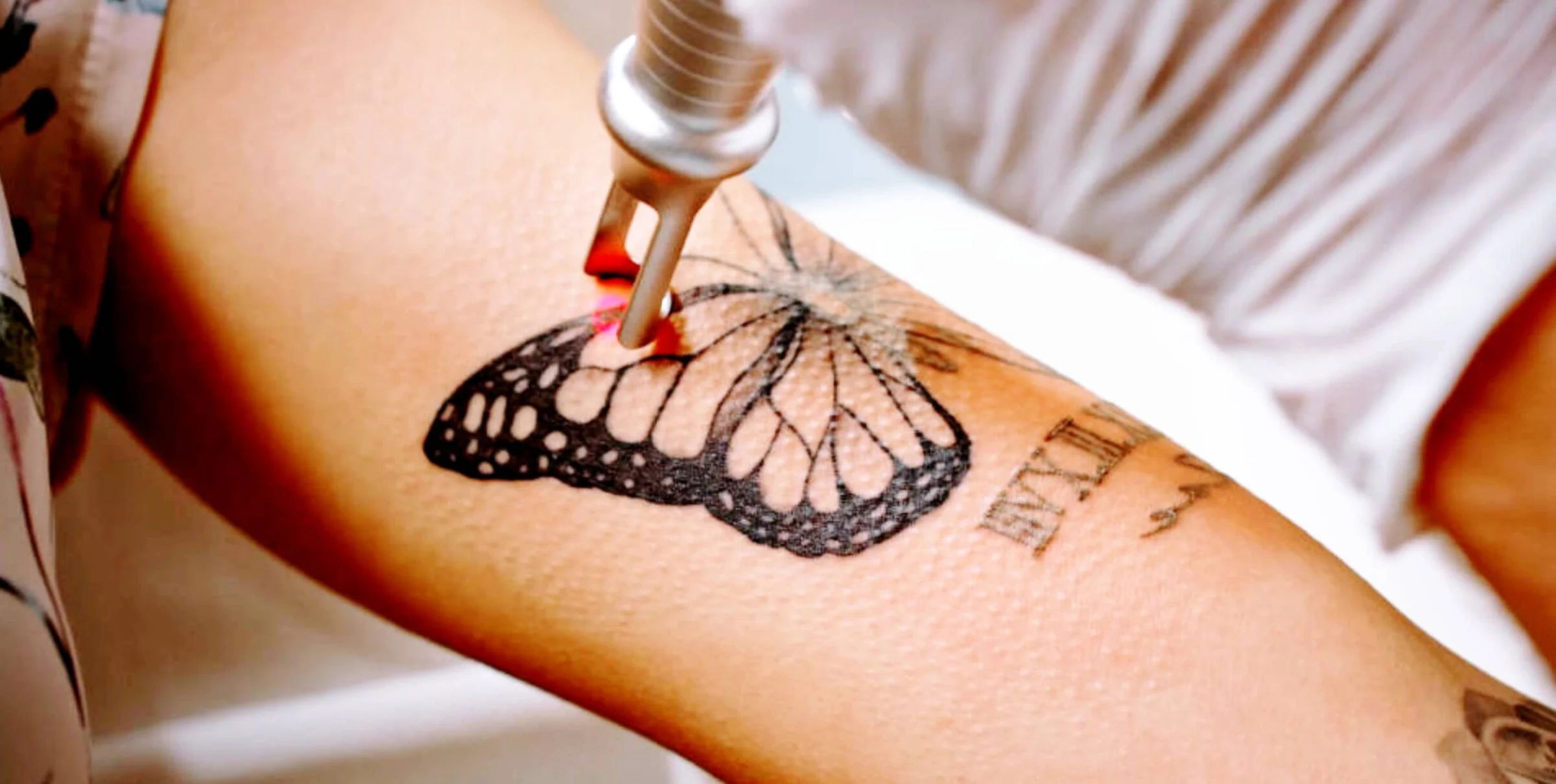
Many patients come with an old tattoo that makes a direct cover-up difficult – it is too dark, too dense or too colourful. The solution in these cases is not full removal instead of a cover-up, but laser lightening before the cover-up. At Dermacare we use a Pico laser (Picolaser) for lightening before a cover-up, based on a personal assessment.
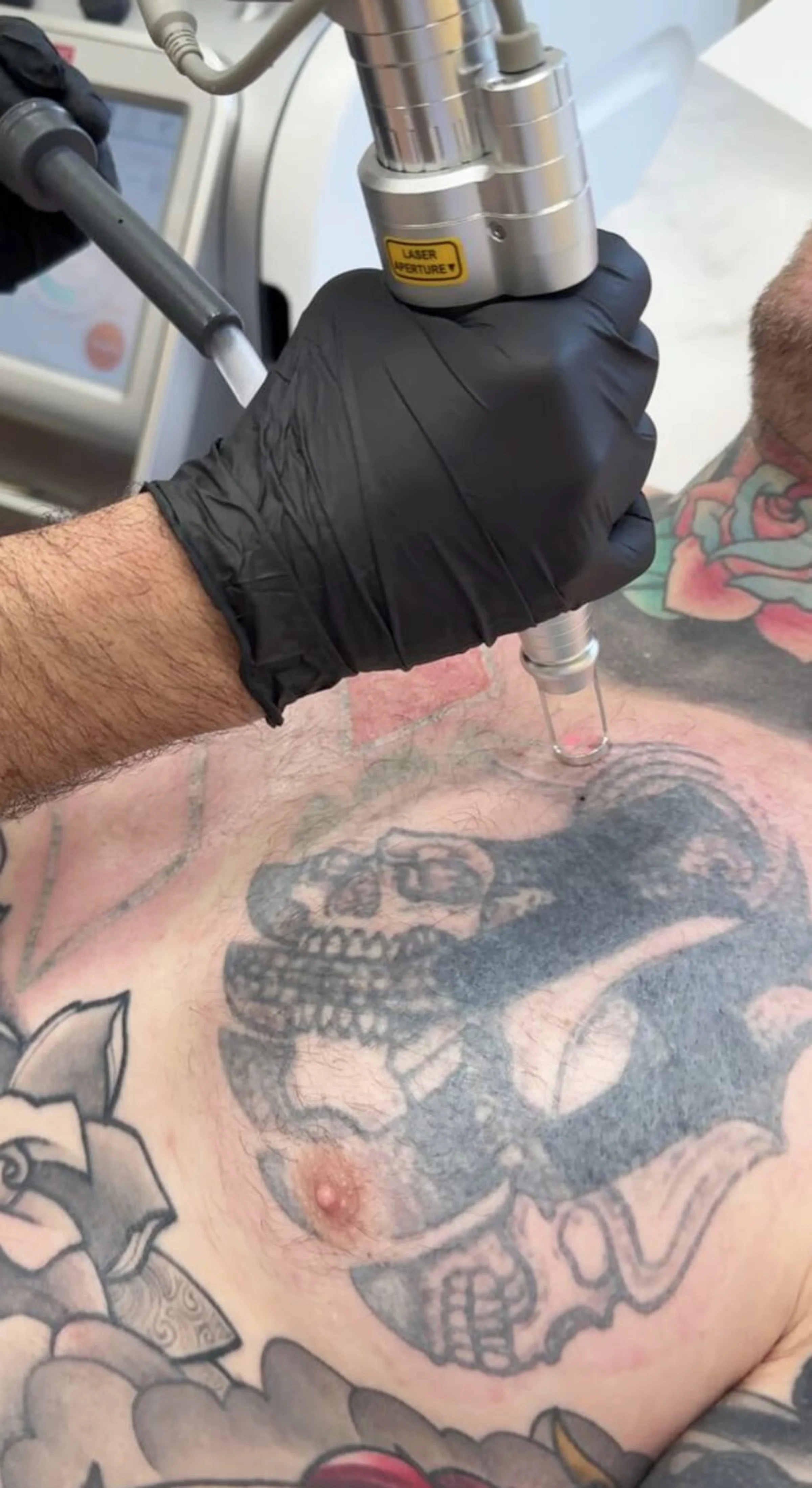
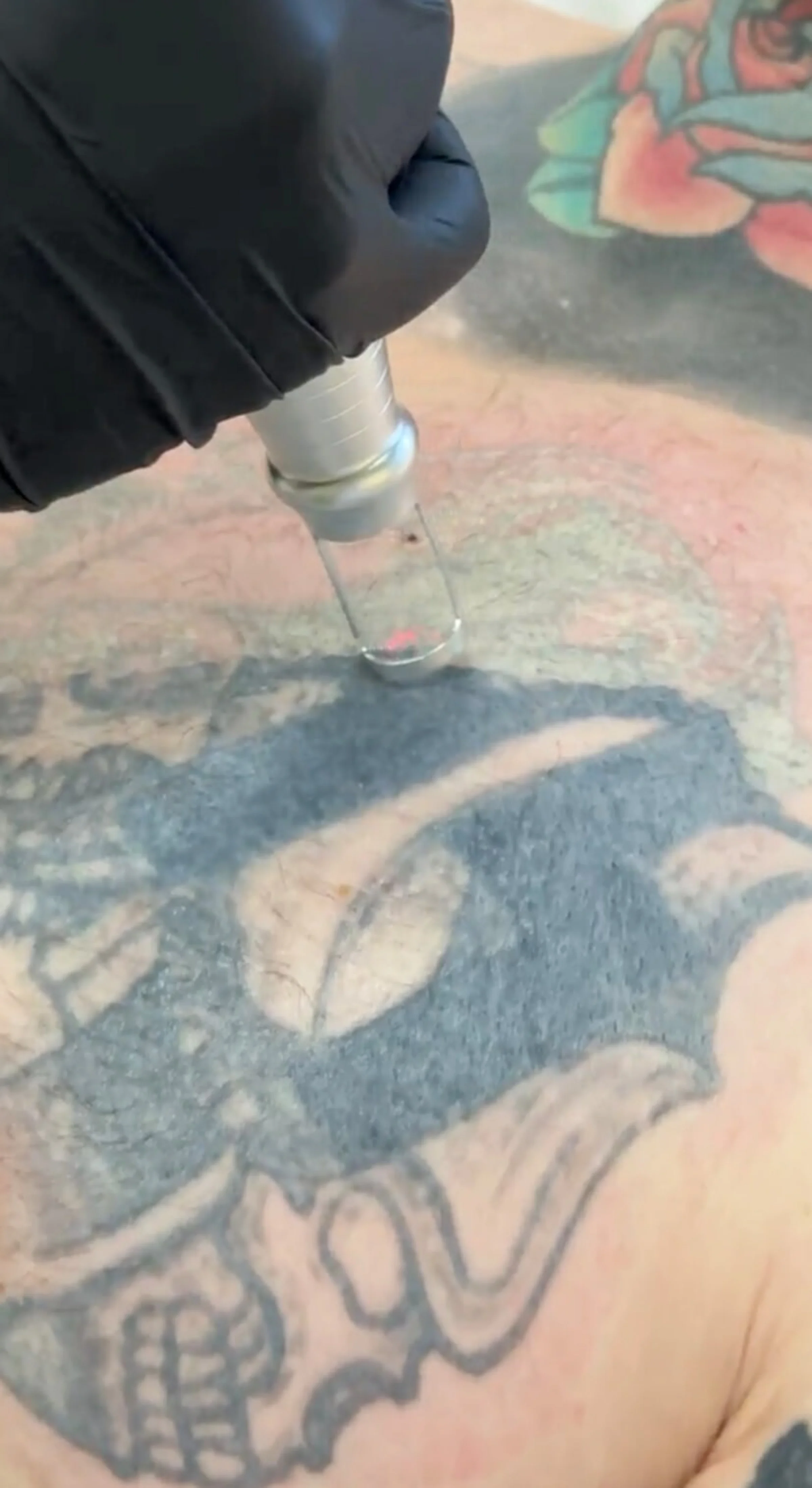
Good to know: lightening before a cover-up is not a full removal process. The aim is to reduce the intensity of the ink to a level that gives the artist freedom to work. The number of treatments is significantly lower than that required for complete removal.
For those who want numbers and ranges by type of tattoo – a focused guide: how many laser treatments you need before a cover-up.
How long should you wait between laser lightening and a cover-up?
The recommended minimum wait is 6-8 weeks after the last laser treatment, to allow the skin to heal and the pigments to be cleared from the body. Waiting 3-4 months before the cover-up usually produces better lightening, which gives the artist greater design freedom. Coordinating the schedule between the removal clinic and the tattoo artist is an integral part of the process.
Direct cover-up vs. cover-up after lightening
A direct cover-up over a light or faded tattoo
For example, a client with a small name tattoo on her wrist that had faded considerably. The ink was no longer deep, the lines were blurred and the tattoo was light enough. The artist incorporated it directly into a new, slightly larger floral design, without the old letters showing through. In cases like this, laser lightening beforehand is not necessary – a direct cover-up is the right way to go.
A cover-up after lightening a dark, dense or coloured tattoo
For example, a client with a deep black sleeve tattoo on his forearm. The ink was deep and even, with no signs of fading. The artist explained that any new design was likely to let the old one show through. After several laser lightening treatments (based on a personal assessment), the tattoo became light enough for the artist to work on it freely. The result: a detailed cover-up with clear contrast and no stylistic compromises.
How to make the right decision – comparison table
One simple question for initial screening: do I want a new tattoo on my body – or completely clear skin?
| Criterion | Direct cover-up | Laser lightening before a cover-up | Full removal process |
|---|---|---|---|
| Final goal | A new, upgraded tattoo | A new tattoo on a lighter "base" | Aiming for clear skin with no tattoo |
| When it is suitable | A light/faded, small to medium tattoo | A dark/dense/coloured tattoo that makes a direct cover-up difficult | When the goal is for the tattoo to disappear as far as possible |
| Main limitations | A dark base may show through the new tattoo | Requires coordination and waiting time | A longer process |
| Time/process | According to the tattoo artist's plan | Several lightening treatments + waiting + cover-up | A course of treatments |
| What to check beforehand | The artist's cover-up portfolio | Coordination between the tattoo artist and the tattoo removal practitioner | A comprehensive consultation and realistic expectations |
The cover-up process in practice – from the first step to the new tattoo
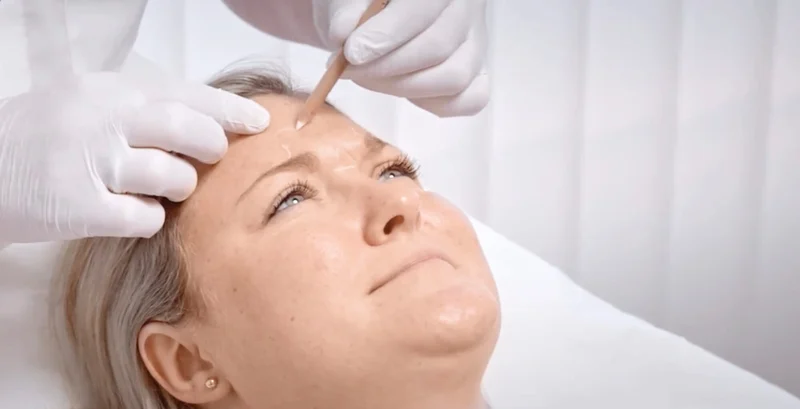
- Assessing the old tattoo: examining the colour, size, ink depth and location of the tattoo – both at the clinic and with the tattoo artist.
- Talking to the artist about design limitations: an artist experienced in cover-ups will explain what is possible – and what is not realistic – based on the existing tattoo.
- If laser lightening is needed: if the tattoo is dark, dense or coloured, prior lightening will significantly improve the final result.
- Carrying out the lightening treatments: the exact number will be determined after a personal assessment, depending on the specific tattoo.
- Waiting for full healing: at least 6-8 weeks after the last treatment, preferably 3-4 months for the best result.
- Doing the cover-up: sometimes it is completed in one go; large, complex cover-ups may require several sessions.
An important point before booking a cover-up
It is important to remember that even after laser lightening, a good cover-up starts with proper planning and not just with a lighter colour. It is a good idea to come to the artist with photos of the existing tattoo after each treatment, explain what bothers you about the old design, and agree in advance on a sketch you like.
At the same time, it is important not to rush into booking a cover-up before the skin has fully healed and there is no significant sensitivity, redness or dryness. The right combination of patience, choosing an experienced artist and a professional assessment of the state of the ink greatly increases the chances of a natural, stable and aesthetic result. If in doubt, it is better to get an opinion from both a laser specialist and a tattoo artist, to avoid a hasty decision that limits the final design.
In summary
A cover-up can be an excellent solution for anyone who wants to replace an old tattoo with a new design, but not every tattoo is suitable for direct covering. When the tattoo is dark, dense or coloured, laser lightening before the cover-up can make a significant difference to the final result. The right choice depends on the condition of the tattoo, your personal goal and the professional opinion of a laser specialist and an experienced tattoo artist. The better the process is planned, the greater the chances of a cover-up that looks natural, clean and lasting.
Contact: 03-6127888 | info@dermacare.co.il | Book an appointment online
The information in this article is general and is not a substitute for personal advice. Suitability for a cover-up or a laser process is determined by colour, ink depth, skin type and personal medical history.
Written by: Eduard Yusupov – owner of the Dermacare chain of clinics in Israel and Austria since 2010 | Specialist in laser tattoo removal and aesthetic treatments.
Frequently asked questions
There is no single right answer – everything depends on the goal. A cover-up is preferable when you want a new tattoo or a new design, relatively quickly. Full tattoo removal is preferable when you want completely clean skin. When the old tattoo is too dark for a direct cover-up – laser lightening before the cover-up is usually the best solution.
A tattoo cover-up is a new design tattooed over an old tattoo, so that it covers or incorporates it. The old tattoo is not erased – it is hidden behind the new design. Unlike the laser process, which breaks down the ink over a series of treatments, a cover-up is a new-tattoo solution, not a clean-skin one.
The recommended minimum wait is between 6-8 weeks from the last treatment, to allow the skin to heal and the pigments to clear from the body. In practice, a wait of 3-4 months usually produces better lightening, and allows the artist greater design freedom.
The cost of a tattoo cover-up is affected by the size of the old and new tattoo, the darkness and density of the ink, the style of the new design, the number of treatments required, and whether preliminary lightening is needed.
When choosing an artist for a cover-up, it is recommended to check: a portfolio of cover-ups specifically, with before and after photos; the ability to work over a "dark base"; hygiene and sterility; transparency about limitations; and the recommendation to align expectations with a laser specialist if preliminary lightening is needed. A professional artist will not promise to "cover everything" – they will explain what is realistic.
Technically yes, but in most cases the result is limited. A deep black tattoo shows through the new ink unless the cover-up is also dark and solid. Preliminary lightening significantly widens the design options and improves the final result.
Sometimes only a few treatments are needed – the number varies greatly according to the colour, density and depth of the ink of the specific tattoo.
A cover-up performed by an experienced artist, on top of a tattoo that has been properly lightened, looks good for years. The main causes of early fading are: prolonged unprotected sun exposure, the quality of the ink chosen by the artist, the location of the tattoo (areas with friction fade faster), and ongoing maintenance. A light touch-up after a few years is normal for any tattoo.
Colourful tattoos are among the most challenging to cover. Green, blue and red may show through the new ink, so preparation with a picosecond laser that can treat a range of wavelengths is especially important.