In brief
- Laser tattoo removal usually requires 6 to 12 sessions at intervals of 6 to 8 weeks, so the process takes several months and can last up to a year or two.
- The session itself is short, between 30 seconds and a few minutes, and does not require a long recovery period.
- At Dermacare, treatment of a small tattoo starts from ILS 250, a medium tattoo from ILS 400 and a large tattoo from ILS 800, and an exact quote is given after an assessment.
- Black responds best to laser, while light colours such as yellow, green and blue are more resistant and require more sessions.
- Preparing for a cover-up with a new tattoo sometimes requires only 2 to 4 sessions, and in some cases a faint shadow may remain.
Tattoo removal cost and time: how long does laser tattoo removal take and how much does it cost?
In most cases this is a process lasting several months and possibly up to a year or two, not a one-off treatment. The session itself is short, but between sessions the body needs time to clear the ink particles naturally.
In this guide you will find general time frames for removal and costs by tattoo size, as well as what affects the number of sessions and how to reduce the risk of pigmentation or scarring.
How does laser tattoo removal work?
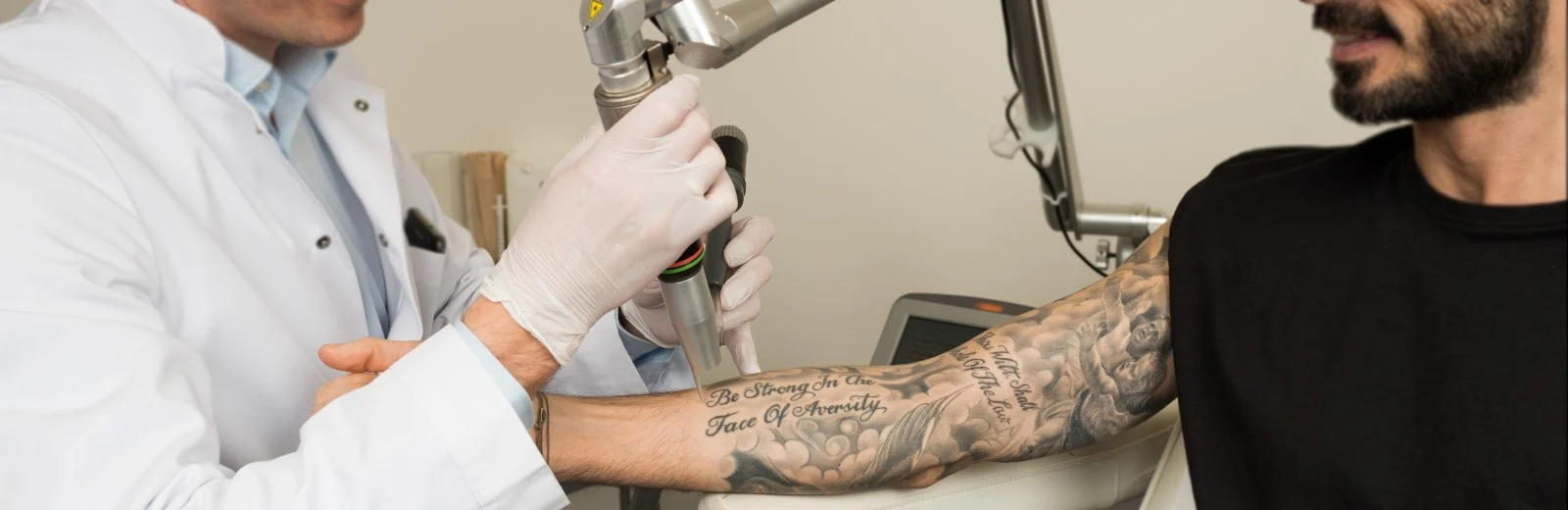
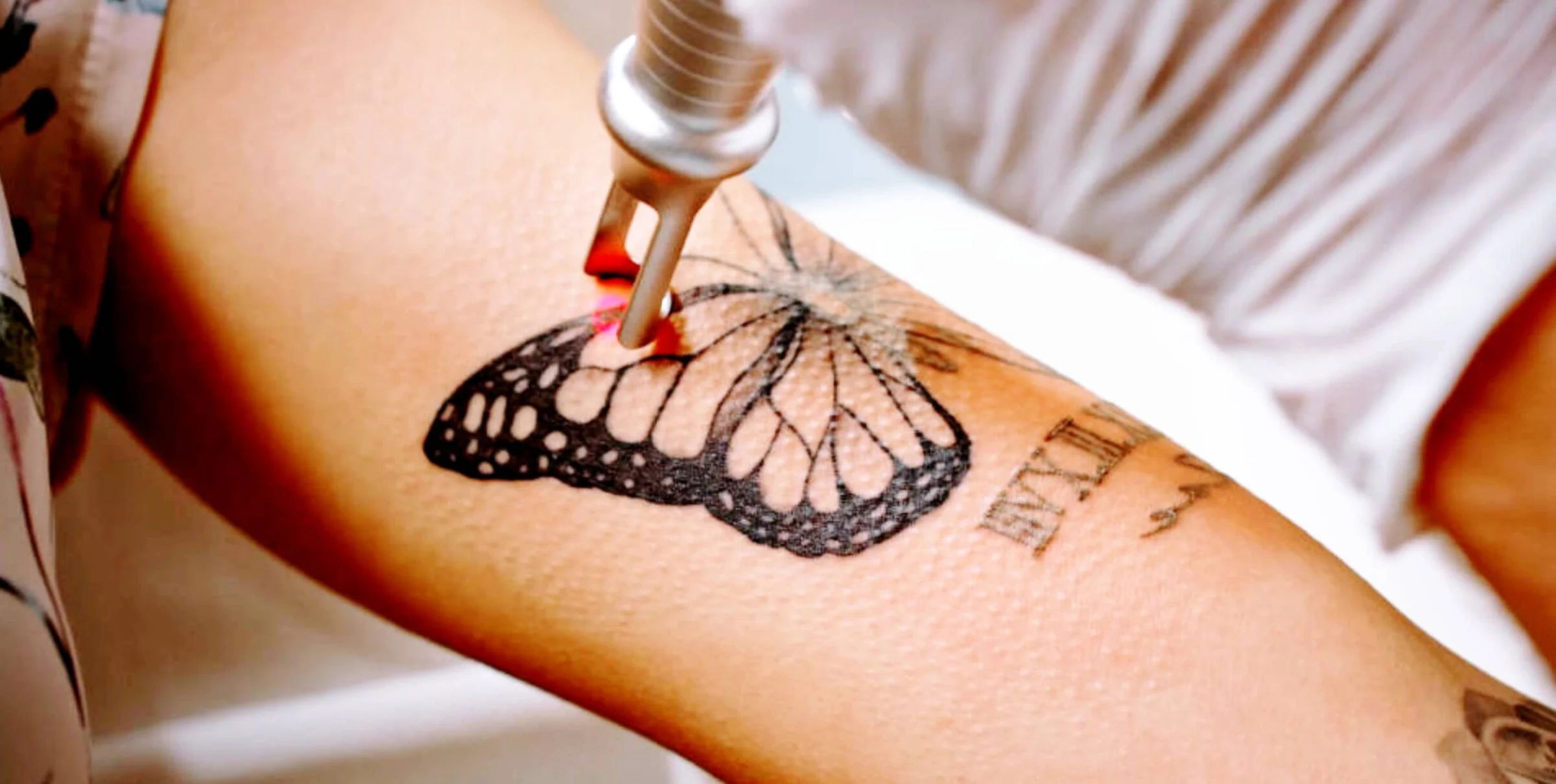
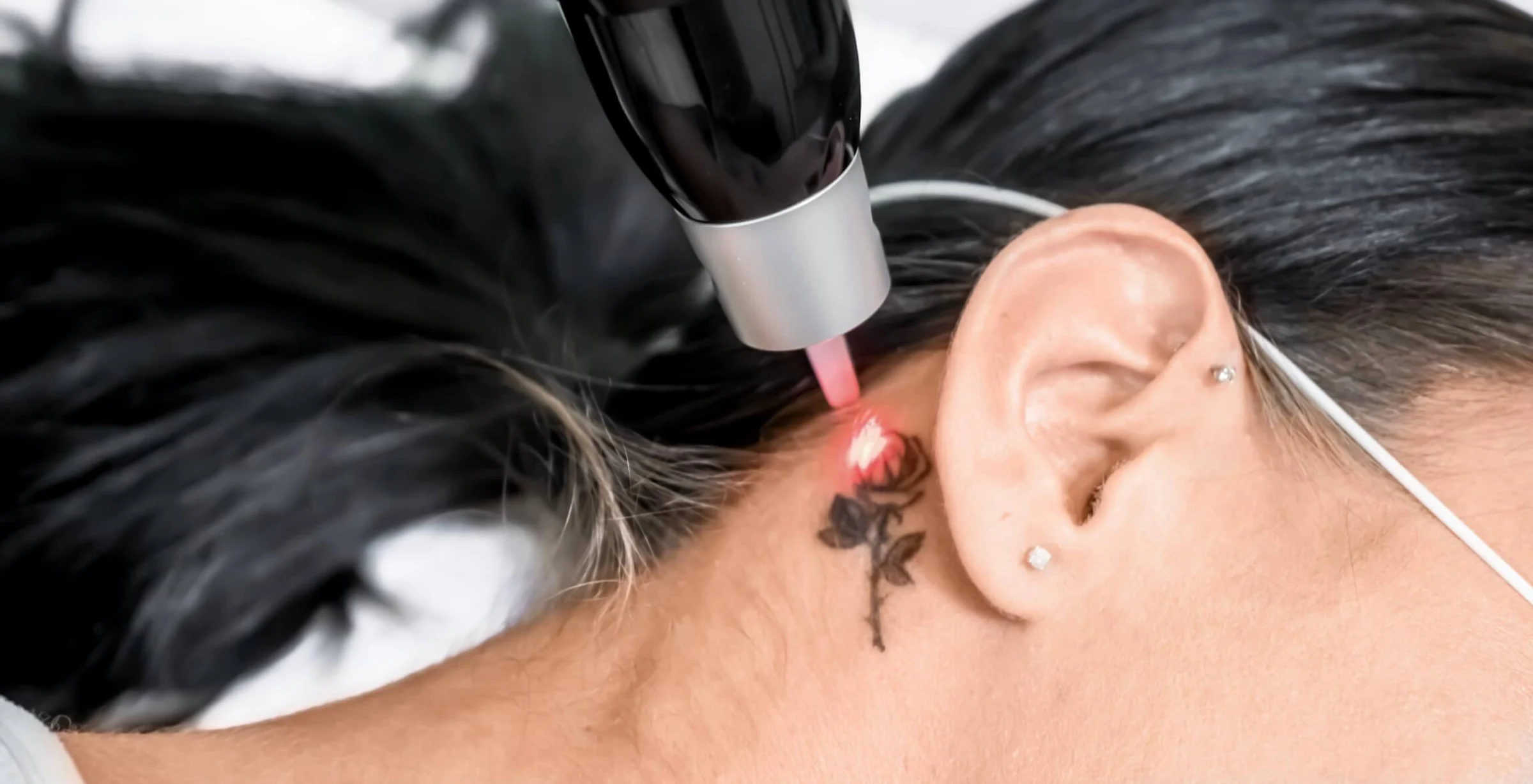
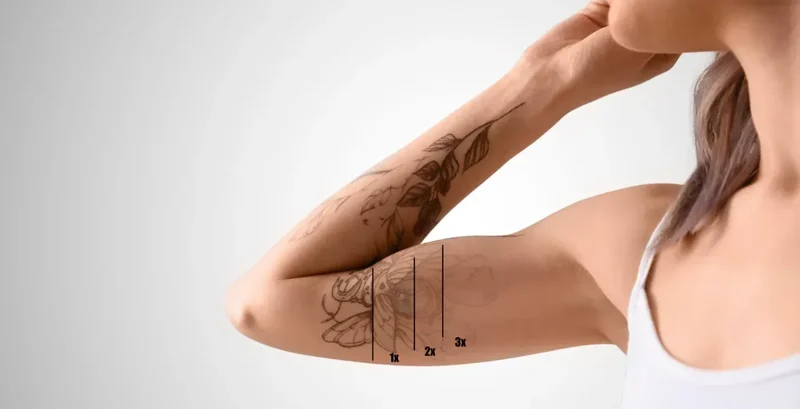
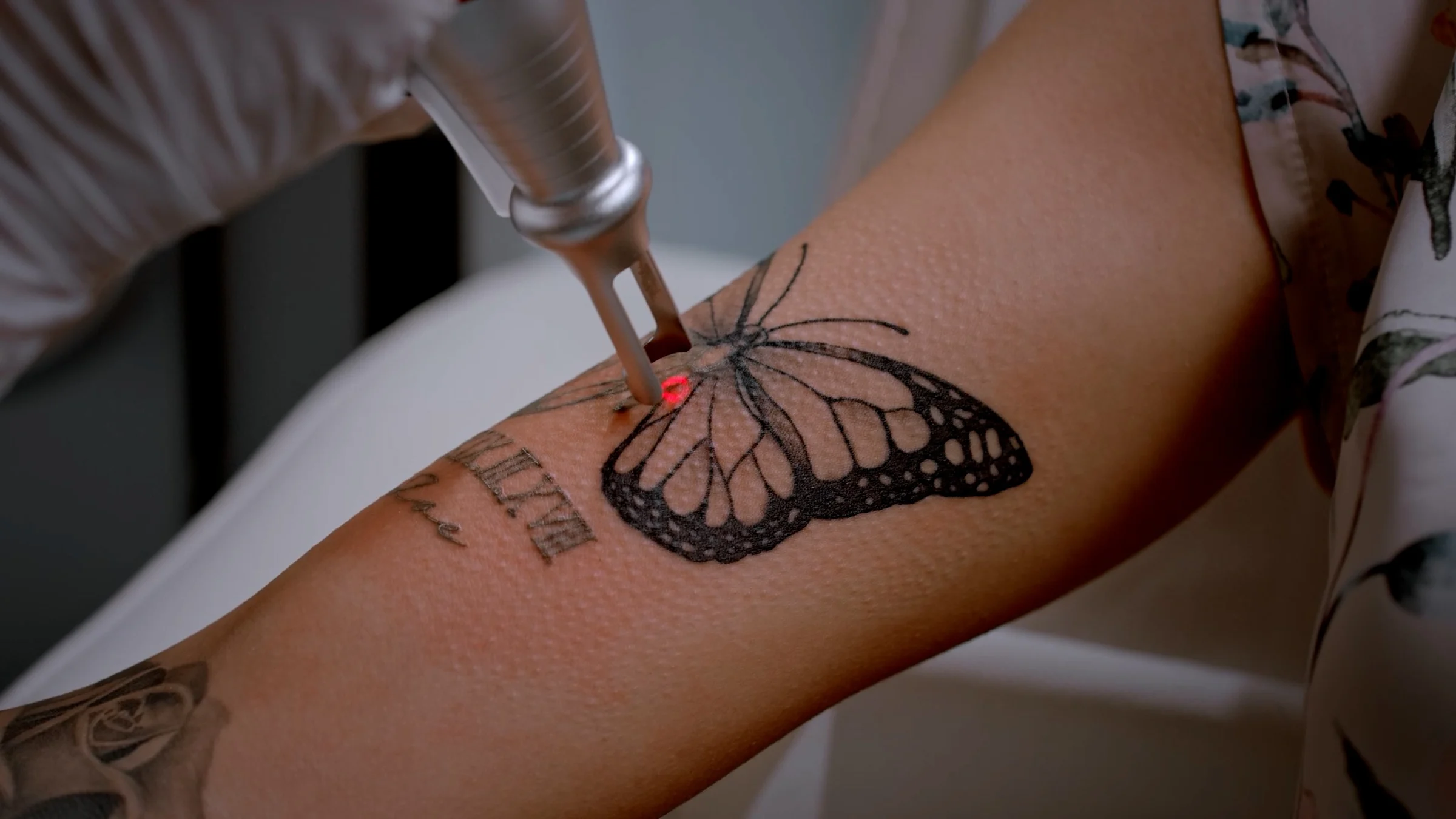
Many people want to know exactly how a tattoo can be removed with a laser and what happens beneath the surface of the skin. Laser tattoo removal is based on extremely precise laser energy. The laser beam penetrates the skin without damaging the surrounding tissue and breaks the colour pigments down into tiny particles. These particles are gradually cleared through the body's lymphatic system, so the tattoo fades gradually from one treatment to the next. Studies and clinical follow-up indicate that the removal process is effective and safe and does not harm the skin when the treatment is performed correctly, with suitable technology and with the aftercare instructions followed.
Comparing laser technologies:
Nanosecond laser technology – the traditional, older technology; effective, but requires more sessions.
Picosecond laser technology – lasers using this technology work with very short pulses and break down pigments more efficiently – especially certain colours. However, the actual number of sessions depends on the size of the tattoo, its colours, the ink depth and the individual response of the skin.
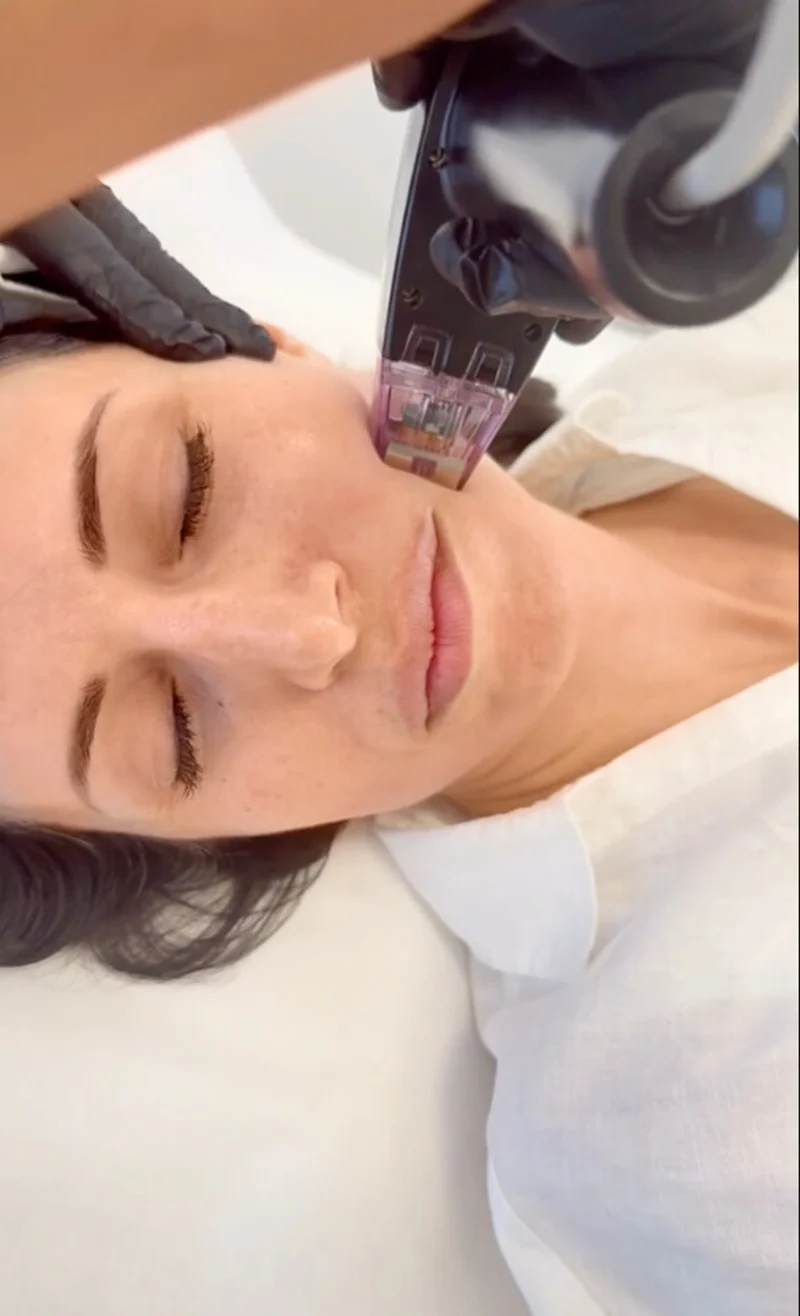
At the Dermacare clinic in Petah Tikva we use PICOPULSE, an advanced picosecond laser. At a preliminary consultation we examine the tattoo and can give you a realistic estimate of the number of sessions needed to remove it. Challenging colours such as blue or green can also be removed, but may require more sessions.
How long does a tattoo removal session take?
The session itself takes just a few minutes: depending on the size and complexity of the tattoo, it usually lasts between 30 seconds and a few minutes. It is an outpatient treatment that does not require a long recovery period. However, the key to success is not the length of the session but the number of treatments required and the intervals between them.
After each session, the skin needs time to regenerate. The body clears the pigments gradually, a process that depends on each patient's metabolism and individual immune system. These processes cannot be accelerated, but they ensure a good result while protecting the skin, depending on the individual response.
How many sessions does laser tattoo removal need?
In most cases, 6-12 sessions are needed for complete removal, depending on the size, colour and depth of the tattoo.
Small black tattoos: 6-8 sessions are sometimes enough, as black ink responds best to laser because of its high absorption of the laser wavelength.
Large colour tattoos: these usually require an average of 8-14 sessions, depending on the depth of the colour in the skin and the type of pigment. Colours such as yellow, green and blue are more resistant to treatment.
Preparing for a cover-up: if the goal is only to lighten the tattoo ahead of a new one, 2-4 sessions are sometimes enough.
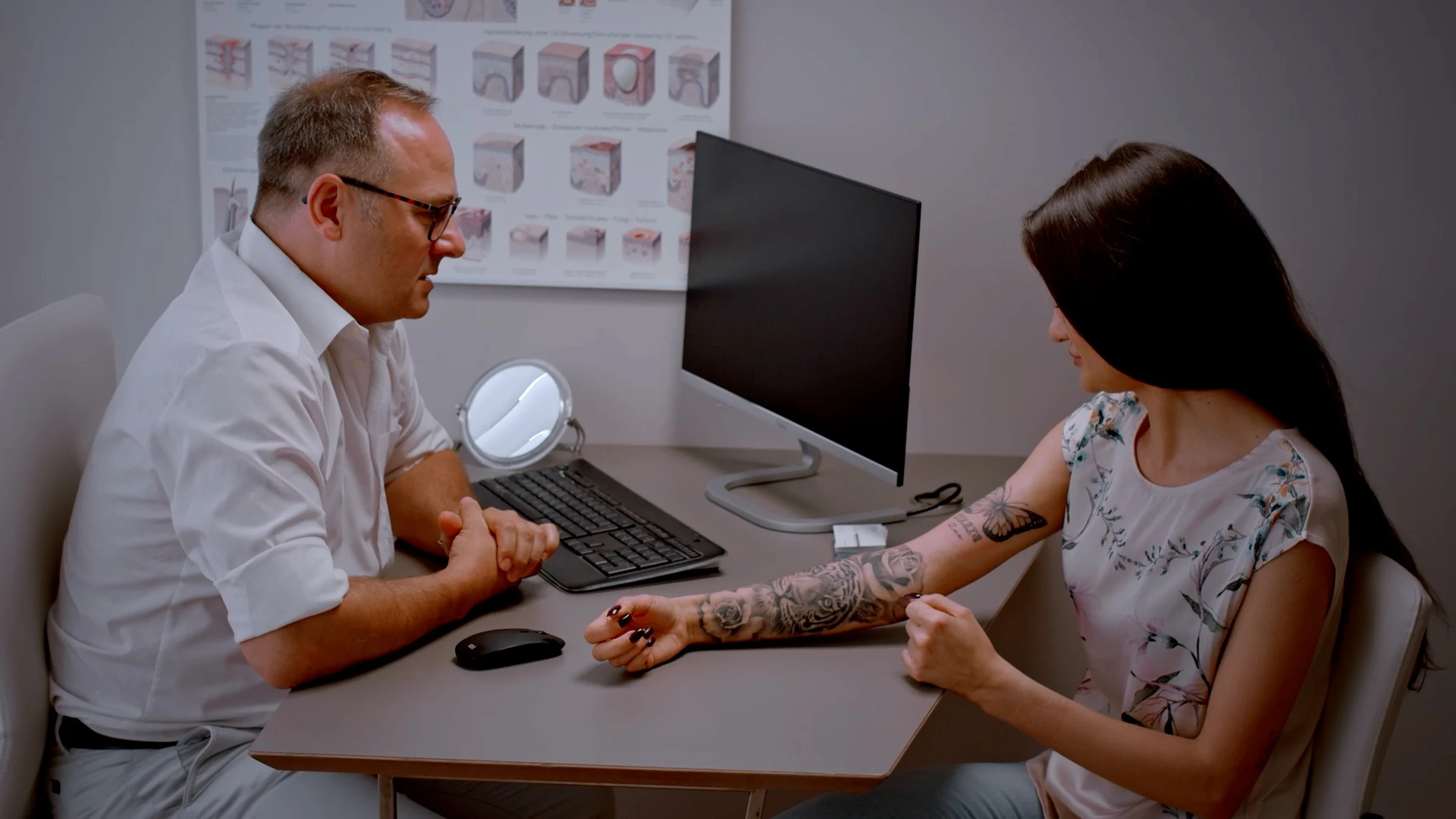
It is important to remember that every skin and every tattoo is unique. At the Dermacare clinic you will receive a personal assessment during a preliminary consultation, so you will know in advance what your treatment plan will look like.
How often are treatments done, and why you should not shorten the intervals
In most cases it is recommended to wait 6-8 weeks between treatments. For large tattoos, sensitive skin or if there was a significant reaction after treatment, we may recommend waiting 8-12 weeks.
Shortening the intervals does not speed up removal – it mainly increases the risk of irritation, pigmentation and slower healing.
This means that even for a small tattoo, the overall process takes several months. For large or colourful tattoos, it may take a year or more to achieve the final result. Patience pays off, because at the end of the process you will have natural, smooth, tattoo-free skin.
Tattoo removal cost by size (estimated ranges)
When it comes to tattoo removal cost, it is important to understand that the price is based on the area, colours and ink depth – not just on "size" – so an exact quote is given after an assessment.
Interval between sessions: 6-8 weeks
Estimated number of treatments: 6-12 treatments on average
Estimated length of the series: 6-18 months
- Small tattoo: from ILS 250 per treatment | ILS 1,500-3,000 for the series of treatments
- Medium tattoo: from ILS 400 per treatment | ILS 3,000-6,300 for the series of treatments
- Large tattoo: from ILS 800 per treatment | at least ILS 5,600 for the series of treatments
What affects the number of sessions needed (and therefore the total cost)?
- Tattoo size – larger area = more treatment time
- Number of colours – multiple colours require different laser settings
- Ink depth and quality – professional versus amateur tattoos and how deep the ink sits in the skin
- Location on the body – sensitive areas require gentler treatment
- Age of the tattoo – old, faded tattoos are easier to remove
What is included in the session price?
At the Dermacare clinic, the price per session includes:
- A consultation and assessment of the tattoo
- Removal treatment with the PICOPULSE laser
- Cooling before and after treatment
- Aftercare instructions
- A follow-up check (if needed)
Why does the type of removal device matter? Because advanced technology reduces the number of treatments needed by 30%.
Which colours fade fastest and which are the most stubborn?
Why are some colours more stubborn?
Light colours absorb less laser energy, so it is harder to break down the pigments. In addition, ink composition varies between manufacturers – some types of ink contain components that are particularly resistant to breakdown.
Can stubborn colours be removed too?
Yes, but it takes patience. PICOPULSE technology allows more effective treatment of challenging colours too, but you should be prepared for a higher number of sessions.
Possible side effects and how to reduce the risk
Laser tattoo removal is generally safe, but as with any medical treatment, there are possible side effects.
Common effects: redness, mild swelling and occasionally local tenderness.
Less common: thin scabs, blisters or a temporary change in skin tone.
To reduce the risk: avoid exposing the tattoo to the sun, maintain good hygiene, do not scratch or pick scabs, and use SPF 50+ daily throughout the process. Dermatological information on laser tattoo removal is available on the American Academy of Dermatology website.
When should you get checked?
If there is unusual pain that does not improve, large blisters, unusual discharge/odour, or worsening redness more than 48 hours after the removal treatment.
When treatment is postponed or adjusted
We will recommend postponing or adjusting treatment if you have a fresh tan, an open wound in the area, a tendency to keloid scarring, or if you are taking medication that increases sensitivity to the sun. Finally, we do not perform treatments during pregnancy or breastfeeding, so it is important to inform our team in advance. In any case, the final decision is made at the consultation after examining the skin and the tattoo.
Adjusting for different skin types:
Dark skin or a tendency to pigmentation:
In these cases, care must be taken to adjust the power and frequency of treatment. At the Dermacare clinic, the team is experienced in treating a wide range of skin types with adapted protocols, including dark skin (Fitzpatrick IV-VI), and adjusts the protocol to prevent hyperpigmentation and hypopigmentation.
Can a tattoo be removed completely? And what if a "shadow" remains?
This is one of the most frequently asked questions, and it is important to understand what realistic expectations are.
The honest answer:
In most cases: a tattoo can be removed completely or almost completely, to the point where the skin looks natural and clear.
In some cases: a faint "shadow" or a subtle change in skin tone may remain, especially with tattoos in stubborn colours (yellow, or white).
What can be done if a shadow remains?
Options:
- Wait – the shadow sometimes fades further over time (several months)
- An additional session – in some cases one more session can improve the result
- Acceptance – understanding that your skin has undergone a change and accepting the natural result
What factors affect how long laser tattoo removal takes?
Not every tattoo can be removed at the same speed. Several factors affect the number of sessions and the length of the process:
Tattoo colour: black responds best to removal, while light colours such as yellow or green are more stubborn. Colours such as red and brown are in the middle in terms of treatment effectiveness.
Age of the tattoo: older tattoos are easier to remove, as the pigments have already undergone some natural breakdown by macrophages in the immune system.
Depth and quality: professional tattoos are placed more evenly in the skin, which makes removal easier. Amateur tattoos may be more superficial (which is good for treatment) but are sometimes less even.
Skin type and immune system: a fast metabolism speeds up the clearance of ink particles from the body. Factors such as smoking, systemic diseases or immunosuppressive medication may slow the process down.
Skincare: proper skincare after sessions, including avoiding sun exposure, supports healing and contributes to faster results. Using SPF 50+ sunscreen is critical to prevent hyperpigmentation. Sun protection (SPF) guidelines are available on the AAD website.
Is tattoo removal painful? How is pain managed?
The treatment is generally well tolerated, but the level of pain varies between patients. Most patients describe the sensation as similar to getting the tattoo. Bony areas without fat are more sensitive (for example the ankle/ribs), and this varies from person to person.
How to reduce discomfort:
- Cooling before and after treatment – reduces the burning sensation
- Topical anaesthetic creams – an anaesthetic cream can be applied about one to two hours before treatment
- Short sessions – the shorter the treatment, the less time spent in discomfort
More sensitive areas:
Areas such as the ankles, ribs and face may be more sensitive. In these cases the laser intensity can be adjusted or stronger local anaesthesia can be used.
Good to know:
The discomfort is temporary and passes within a few minutes after treatment. Most patients experience some discomfort and mild redness that passes within 24-48 hours.
Why choose the Dermacare clinic for tattoo removal?
Since 2010, the Dermacare clinic has been the leading address in Austria for medical aesthetic treatments and tattoo removal, and since 2025 also in Petah Tikva. Our clinics have been operating for over 16 years, with over 100,000 successful treatments. Our patients value not only the advanced technology, but also the personal, professional support.
Summary: tattoo removal cost, duration and what you need to know
In most cases, 6-12 sessions are needed at intervals of 6-8 weeks, so it is a process that takes several months.
The bottom line: the cost of tattoo removal can range from ILS 250 per treatment for a small tattoo up to ILS 800 or even more for large, colourful tattoos. The cost depends on the size, colours, ink depth and the skin's response – and an accurate estimate can be given after a short assessment during the consultation.
In the end, you will enjoy natural, smooth, clear skin and the liberating feeling of leaving an old decision behind.
Want to know how many sessions your tattoo will need and what the exact cost will be? Book a personal consultation by phone on 03-6127888 or by email at info@dermacare.co.il at the Dermacare clinic in Petah Tikva and receive professional support tailored precisely to you.
Written and medically reviewed
Written and reviewed by Eduard Yusupov. Last updated: February 2026.
Treatment is performed after a short medical questionnaire and with the protocol adjusted to the skin type and the tattoo.
This information is general and does not replace a personal consultation; results and the number of sessions vary between patients.
Want to see all prices in one place? Dermacare's full treatment price list — laser hair removal by area, Botox and more.
Frequently asked questions
A small tattoo requires on average 6-10 sessions, with an interval of 6-8 weeks between treatments. In total the process lasts between 6-12 months.
Yes, but with caution. You must avoid prolonged direct sun exposure for at least four weeks before and after the treatment, and use SPF 50+ sunscreen on the tattoo area every day. If you spend a lot of time in the sun, it is better to plan treatments for the winter or autumn seasons.
Full removal requires on average 6-12 sessions to make the tattoo disappear completely. Lightening for a cover-up requires only 2-4 sessions so that a new tattoo can cover the old one.
The risk of scarring is minimal when the treatment is performed correctly. A scar may form if scabs are removed manually or hygiene instructions are not followed.
Yellow, blue and green are the hardest colours. These pigments absorb laser energy less, and some contain titanium dioxide, which is highly resistant to breakdown.
PICOPULSE technology is suitable for all skin types, with protocol adjustment, including removal on dark skin. The treatment is personally tailored to the skin type to prevent pigmentation.
Size and colours are the main factors, followed by the depth of the ink and its location on the body, and therefore the exact estimate is given after a short examination.
In isolated cases blisters or scabs may appear. There is no need to panic, because this is part of the natural healing process. If so, it is very important not to scratch or pick at the skin in such cases! Maintain hygiene, use a soothing ointment such as Biafine or Bepanthen, and see a doctor if the condition worsens.
A colourful tattoo requires more sessions (10-14 compared with 6-12), and therefore the total cost is higher. Different colours require different laser adjustments and extend the treatment time.