In brief
- Before covering up a dark, dense or large tattoo, 2 to 4 laser sessions are usually needed to lighten it by 50-70%.
- Very dense black fill may require 80-90% lightening, usually 5 to 8 sessions.
- The preparation process takes between 3 and 6 months, with a wait of 6 to 8 weeks between sessions so that the body can clear the ink particles.
- Black tattoos are easier to lighten, while green and blue are the most difficult.
- Pico technology breaks the ink down mechanically and requires fewer sessions and a shorter recovery than the older nano laser.
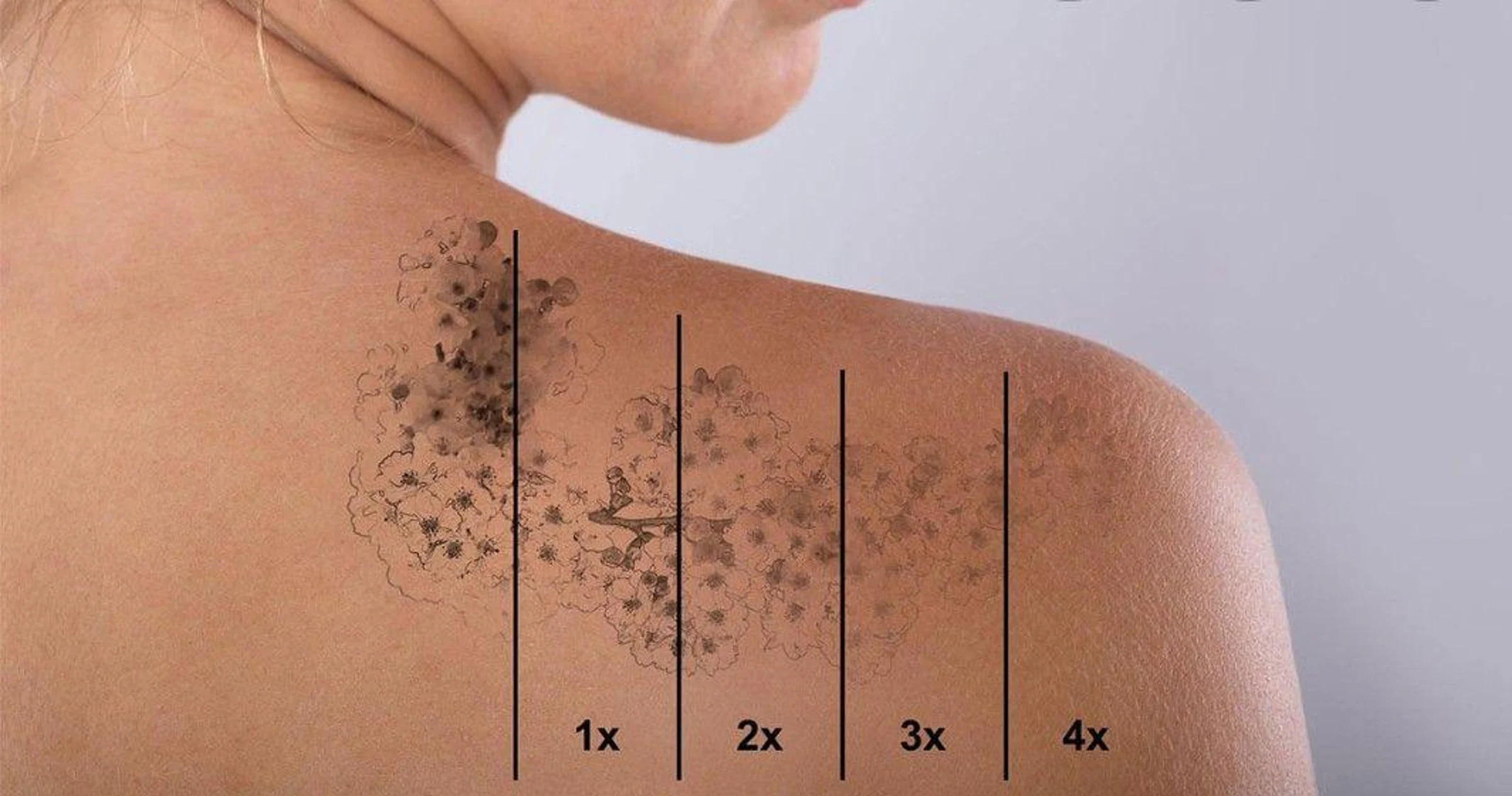
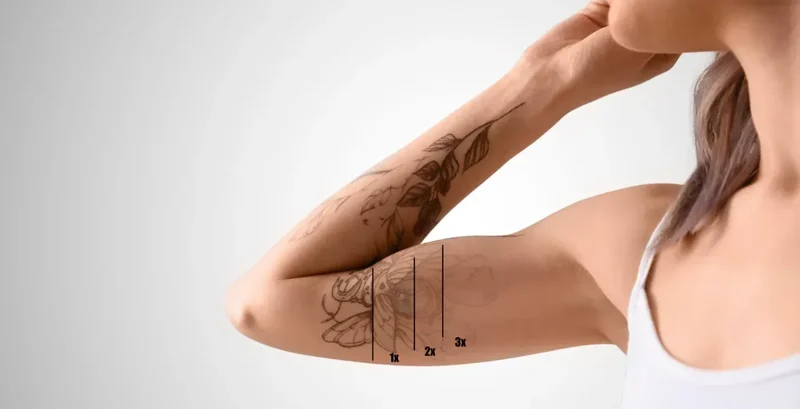
In most cases, a dark, dense or large tattoo will require 2-4 laser sessions before a cover-up. The aim is not to remove the tattoo completely, but to lighten it by 50-70% to give the tattoo artist creative freedom and to prevent the old colour showing through the new tattoo. The preparation process takes 3-6 months, including a wait of 6-8 weeks between sessions.
What is a tattoo cover-up and when is laser lightening needed?
A tattoo cover-up is a process in which an old tattoo is covered with a new design. Unlike full tattoo removal, the aim is not to erase the tattoo but to lighten it enough for the tattoo artist to work on it and cover it with a new design that reflects your style and personality today.
When can you have a cover-up without laser?
A direct cover-up without lightening is suitable only in certain cases: small, light tattoos, designs with a lot of space, such as fine lines or minimalist designs, and tattoos that have already faded over the years. In these cases you can go straight to the tattoo artist for a cover-up.
When is partial lightening (50-70%) required for a cover-up?
This is the most common type of cover-up. It requires 2-4 laser sessions to fade the tattoo by 50-70%. It is suitable for medium black tattoos, dense but not too large designs, and tattoos with a range of colours that can be worked with. The aim is to lighten the tattoo enough to give the tattoo artist creative freedom, but not to remove it completely.
When is almost complete lightening (80-90%) required for a cover-up?
For tattoos with dense, heavy black or tattoos with very dark pigments that cannot be covered – 80-90% lightening is required. This process usually requires 5-8 laser sessions.
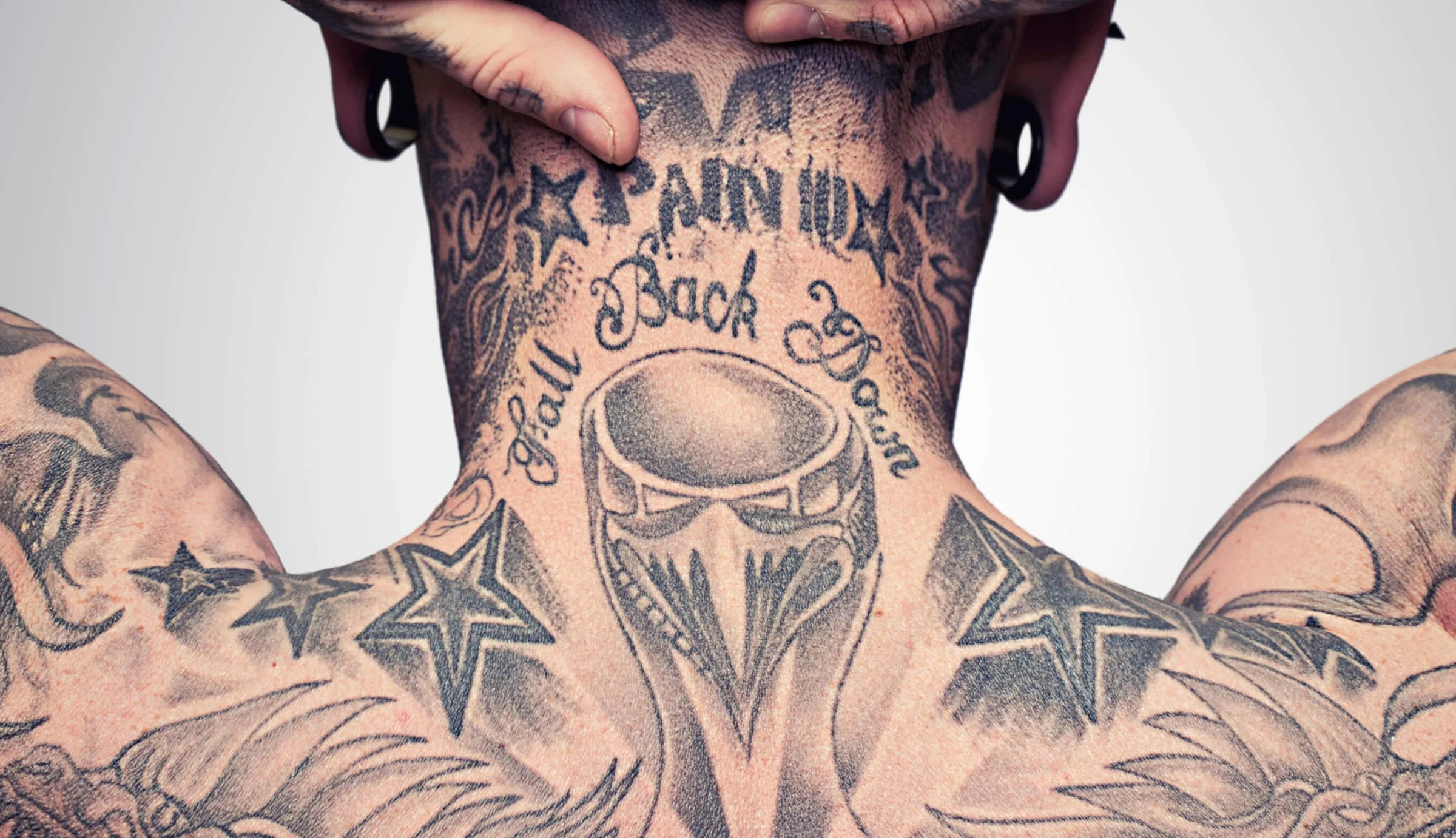
Preparing the skin for a new tattoo with laser is needed for dark, deep tattoos, areas of dense black fill or dark pigments, particularly large tattoos, names or thick text that would remain prominent under the new design, or when the colours of the old tattoo might show through the new tattoo and affect the colour result.
Without adequate lightening, the old tattoo pigment can show through the new ink, create a muddy or uneven result, and limit the tattoo artist's choice of colours and designs. Ultimately, it is your tattoo artist who will decide whether lightening is needed and to what level, based on their artistic and technical judgement.
How many laser sessions do you need before a tattoo cover-up?
The number of sessions depends on the colour of the tattoo, the depth of the ink and its size. Simple black tattoos usually require 2-3 sessions, tattoos with light colours usually require 3-4 sessions, and deep or dark colour tattoos usually require 4-6 sessions.
Other factors that affect the number of sessions needed include the colour of the ink, with black being the easiest to lighten and green and blue the most difficult. The depth of the ink also has an effect – professional tattoos are usually deeper and therefore require more sessions. The age of the tattoo – old tattoos are sometimes faded and require fewer sessions. Skin tone plays a role, as fair skin responds faster, and the laser technology is decisive – the pico laser requires fewer sessions than older technologies such as the nano laser.
Want an accurate estimate of how many sessions you will need? Send us a photo of the tattoo or contact us for a personal consultation with no obligation.
How long does the whole process take, from the start of lightening to the tattoo cover-up?
A complete process of preparing a tattoo for a cover-up through laser lightening takes on average between 3 and 6 months, depending on the number of sessions required.
A typical timeline looks like this:
Week 0: professional consultation and first laser session.
Week 6-8: second laser session.
Week 12-16: third session, if needed.
Week 18-20: fourth session in complex cases.
Week 24-26: waiting period for the skin to heal completely.
From week 26 onwards, in about 90% of cases the skin is ready for a cover-up by the tattoo artist.
Why is the wait so long? Because the body needs time to clear the ink particles naturally through the lymphatic system – and this biological process cannot be sped up.
What is the difference between full tattoo removal and preparation for a cover-up?
Full removal and partial lightening are two processes that differ in their aim, duration and result. Full removal is intended to erase the tattoo completely and usually requires 6-12 sessions over 12-24 months, with the final goal being completely clear skin. In addition, a series of sessions for full removal costs more, because more sessions are needed to remove the tattoo completely.
In contrast, preparing a tattoo for a cover-up is intended for partial lightening of 50-70% and usually requires only 2-4 sessions over 3-6 months, with the final goal of preparing the skin for a new tattoo. A series of sessions in preparation for a new tattoo will cost less, because it requires fewer sessions than full removal.
The key message is that if your goal is a tattoo cover-up, there is no need to remove the tattoo completely. Partial lightening is enough and will save you time and money.
How is a tattoo lightened before a cover-up with PicoPulse technology?
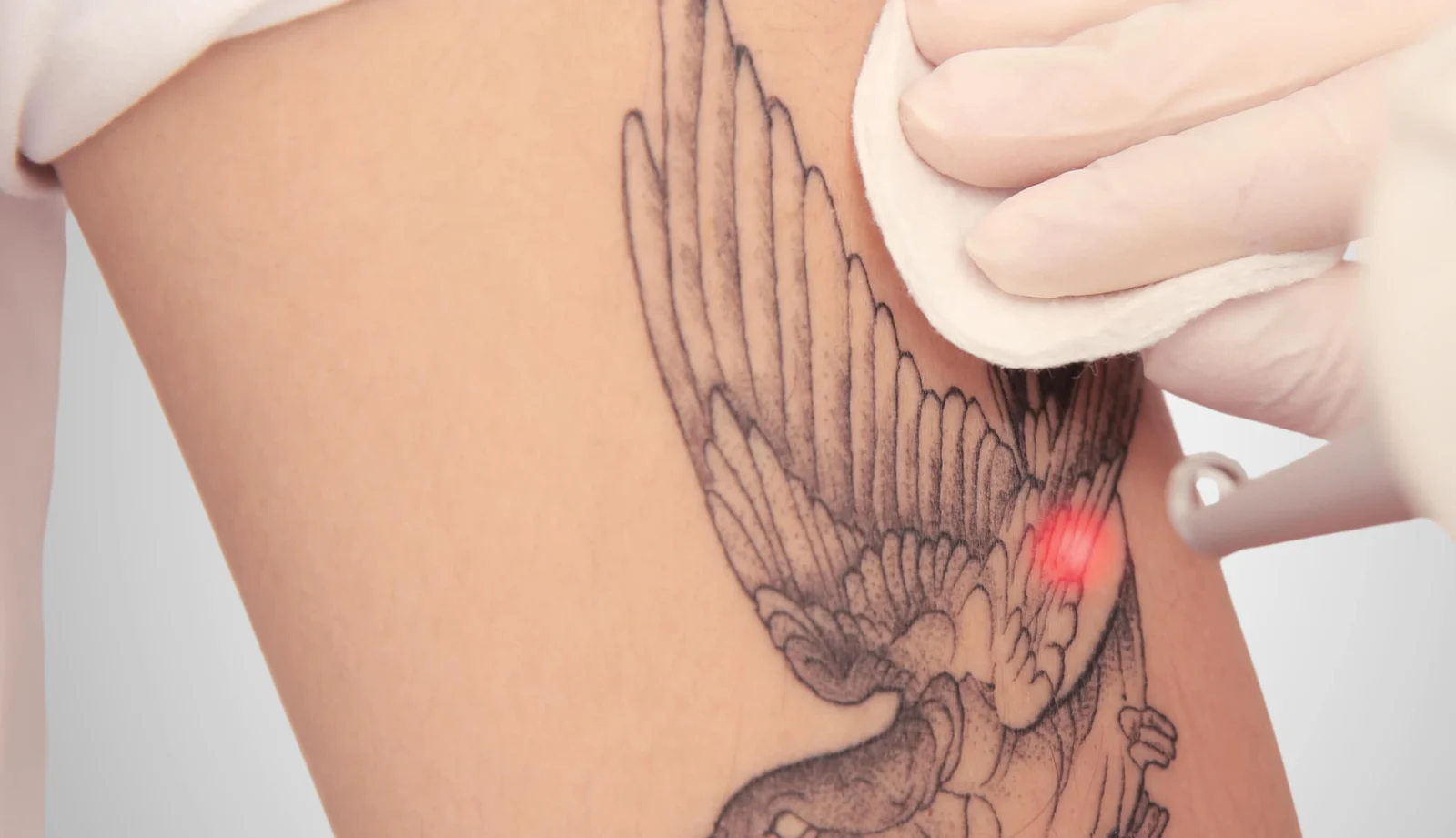
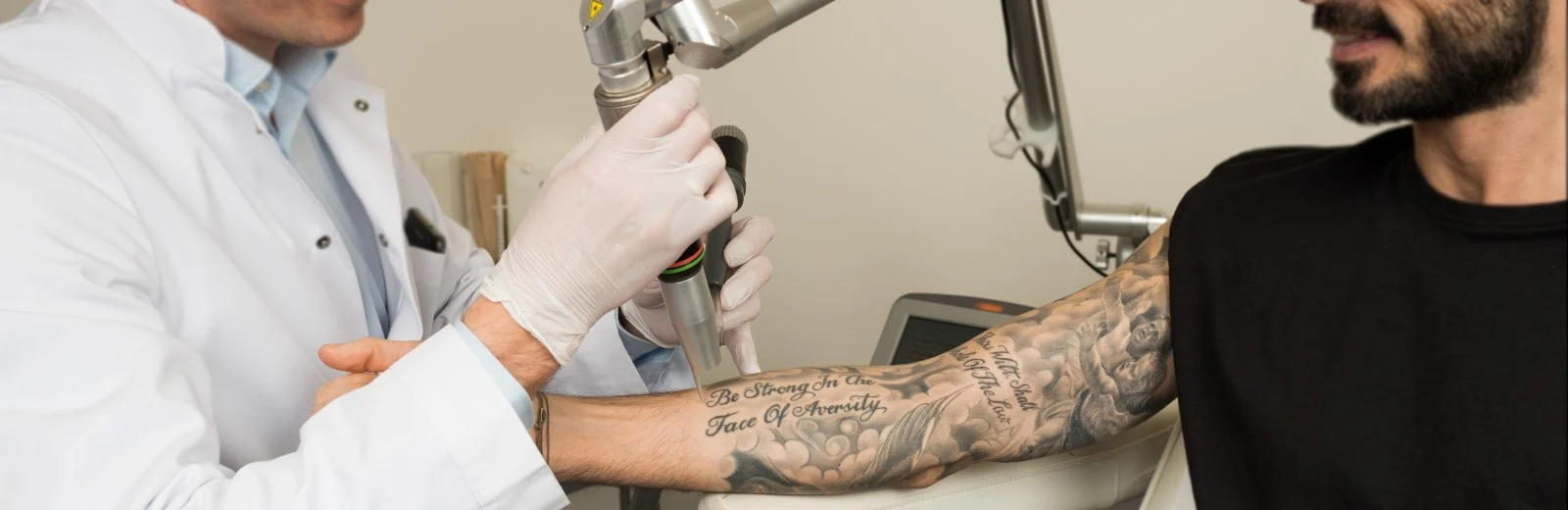
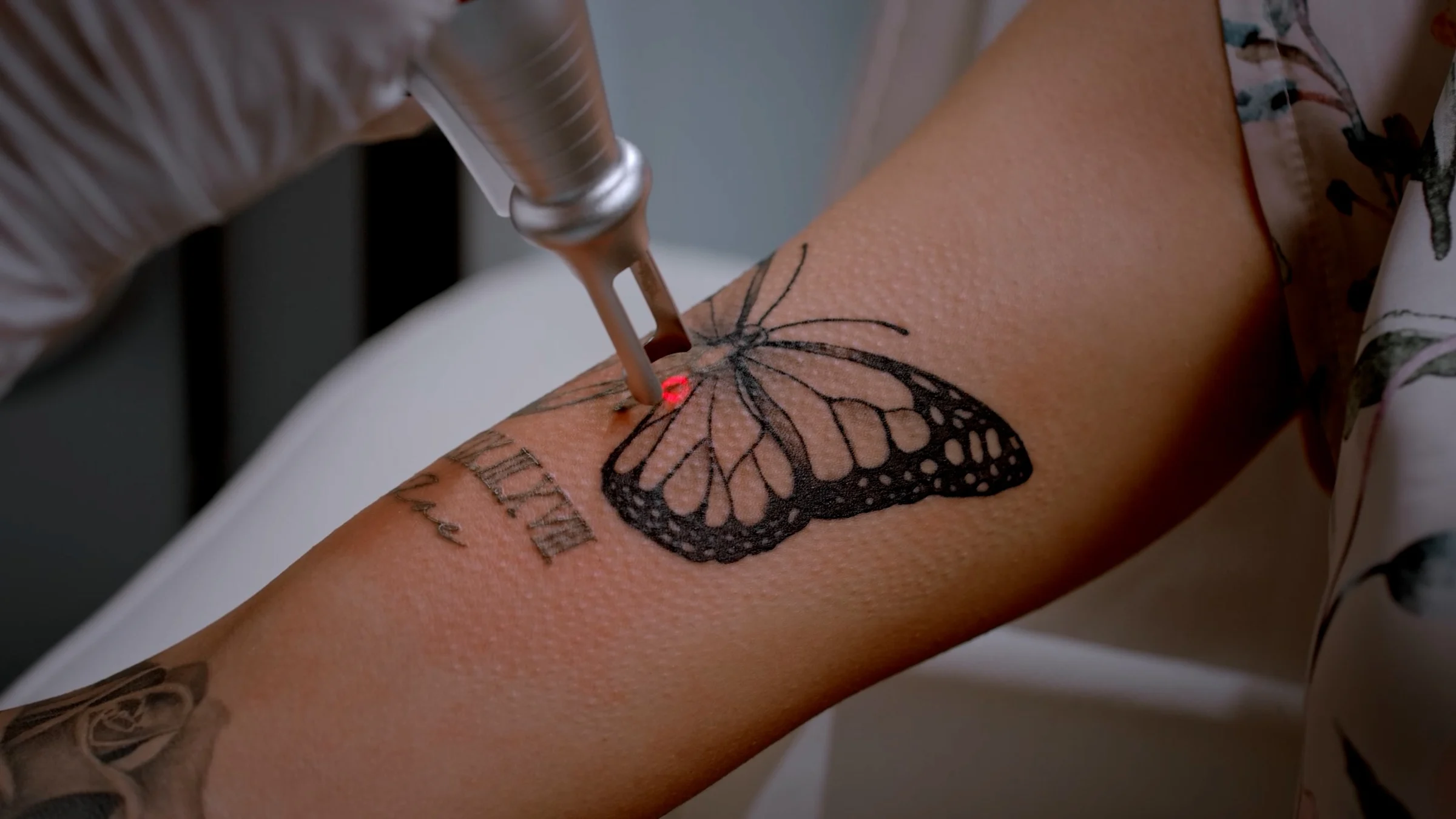
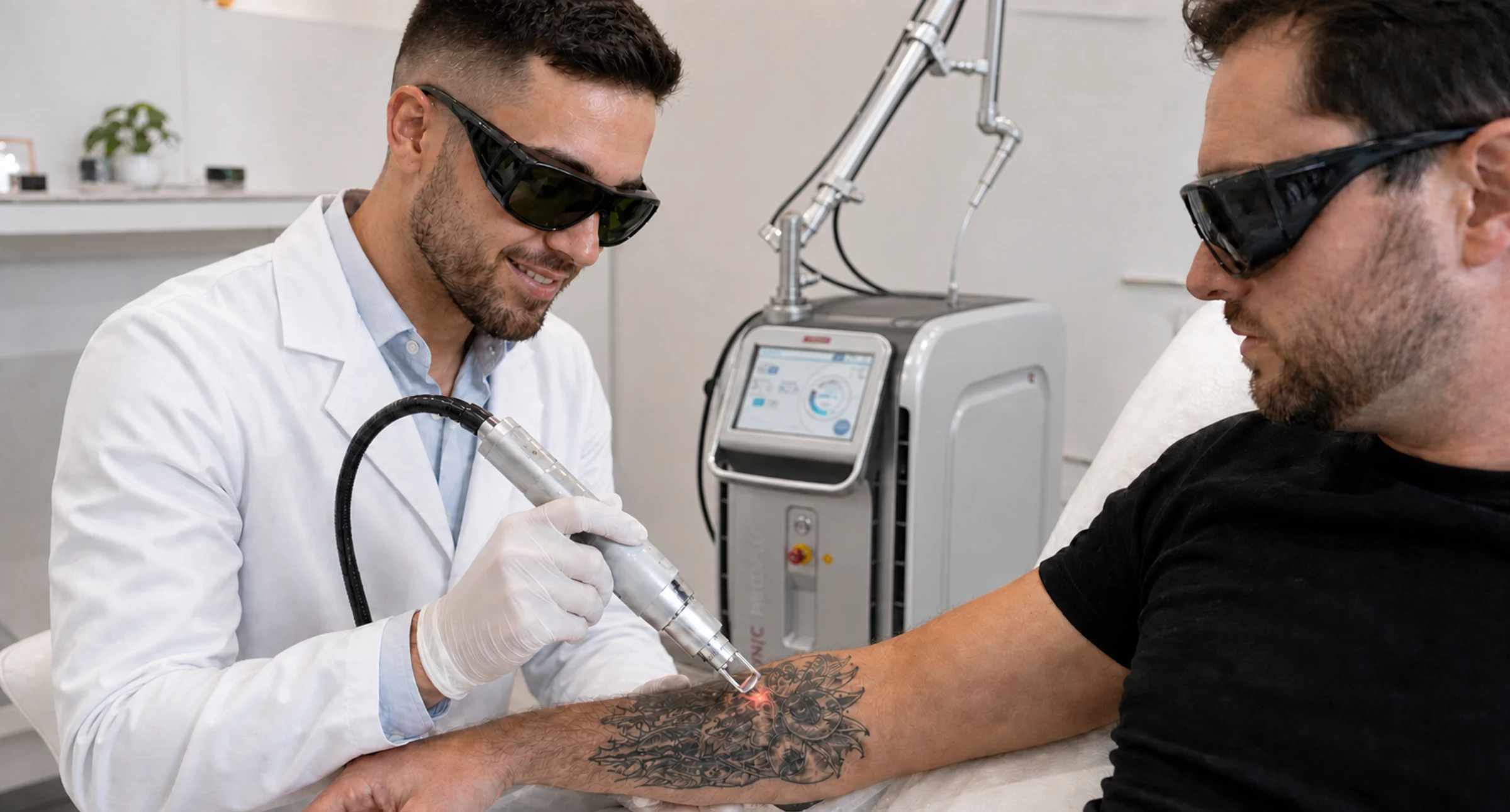
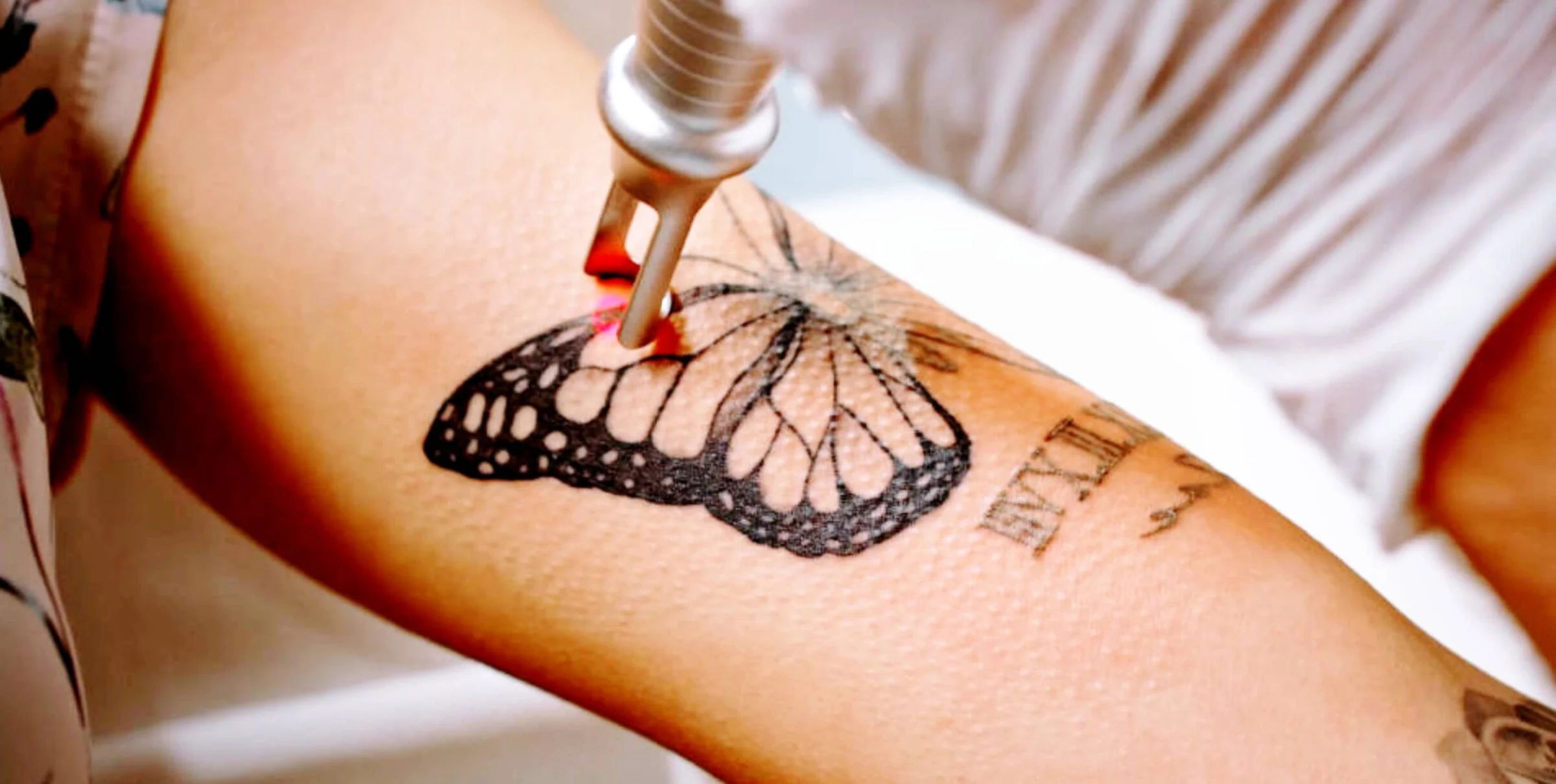
At Dermacare clinic we use PicoPulse technology, an advanced pico laser that represents the next generation of tattoo lightening and removal. PicoPulse works with ultra-short pulses of 450 picoseconds, a picosecond being one trillionth of a second.
The process begins with the mechanical breakdown of the ink, as the short pulses create a pressure wave that breaks the tattoo ink into tiny particles. Natural clearance then takes place, as white blood cells engulf the tiny particles. The particles are transported to the lymphatic system and excreted via the liver and kidneys, leading to gradual lightening of the tattoo after each session.
The advantage of picosecond laser technology is that the pigment is broken down mechanically rather than thermally, which contributes to minimal damage to the skin around the tattoo and a negligible risk of scarring.
What is the difference between the pico laser and the old nano laser? Why is pico better for a cover-up?
There are two main technologies for removing and lightening tattoos before a cover-up. Pico technology works with pulses of 450 picoseconds and uses a mechanical breakdown method through a pressure wave. Pico technology breaks the tattoo ink into tiny particles that are easy for the body to eliminate.
With this technology the thermal damage to the skin is minimal, the average number of sessions for a cover-up is lower, ranging from 2-4 sessions. Recovery time is fast, lasting 2-5 days, the risk of scarring is negligible, suitability for dark skin is higher, and effectiveness on hard-to-remove colours such as green and blue is higher.
In contrast, nano laser technology works with pulses of 5-10 nanoseconds, that is 10-20 times slower than pico technology. The method is thermal and heat-based, and breaks the ink down into larger particles, which makes it harder for the body to clear them.
The thermal damage is moderate to high, the number of sessions is higher, and on average about 30% more sessions are needed compared with advanced technologies. In addition, the recovery time is longer, lasting 5-10 days, the risk of scarring is moderate, suitability for dark skin is lower, and effectiveness on difficult colours is low.
Studies have found that pico technology lasers (for example 532/1064 nm) may reduce the number of sessions needed for removal by 30% compared with lasers operating in nanoseconds, especially for colour tattoos. However, the result depends on the ink colours, the treatment protocol and the skin type.
The pico laser is the most advanced technology available today for tattoo removal and cover-up preparation. It is faster, safer and more effective than the previous generation of lasers.
So what is the difference? Fewer sessions, less heat and damage to the skin and a shorter recovery time. With the pico laser, the process is faster and more targeted, which completely eliminates the risk of scarring and pigmentation changes.
It is important to make sure that the treatment is performed by a tattoo removal specialist and that you follow the aftercare instructions after removal sessions, to ensure that there is no harm or damage to the skin.
Why do you need to wait 6-8 weeks between tattoo removal sessions?
The wait between laser tattoo removal sessions is important for two reasons:
- The skin needs time to recover from the local reaction to the treatment (redness, swelling and tenderness).
- The body needs time to gradually clear the ink particles broken down in the session, via immune system cells (such as macrophages) and the lymphatic system.
Shortening the intervals between sessions usually will not speed up the result, but may increase the risk of irritation, slower healing and even pigmentation changes. The interval between sessions is determined by the skin's response, the size of the tattoo, the type of ink and the skin type, and sometimes a longer interval is recommended.
Treatment tailored to all types of tattoos and colours
PicoPulse is a versatile tool suitable for lightening all types of tattoos and colours for a cover-up and for full removal. The technology includes a range of different wavelengths to break down different pigments.
How different colours respond to laser treatment:
- Black: usually responds well to treatment and is the easiest to lighten
- Red and orange: usually respond well to treatment
- Green and blue: more stubborn and therefore require more sessions
- Yellow: among the most difficult, and sometimes the response is partial
It is important to note: the response varies between people and depends on the type of ink, the depth of the pigment and the skin type. A personal assessment is therefore required before starting a series of removal sessions.
Why are black tattoos the easiest to remove? Black pigment absorbs all wavelengths of light, while light colours such as yellow and green reflect some of the light and are therefore harder to break down.
Picosecond technology enables effective removal of challenging tattoos such as amateur tattoos done deep in the skin or unevenly, complex colour tattoos combining several pigments, and very large tattoos covering a wide area. Whether your tattoo is small and simple or large and complex, our technology delivers an even, clean result that will serve as an ideal base for your new cover-up tattoo.
Ready for a new tattoo? We are here for you
At Dermacare clinic in Petah Tikva we specialise in tattoo lightening and removal with advanced PicoPulse laser technology, with more than 16 years of experience that ensures results of the highest standard.
If you dream of a tattoo cover-up that will cover your old tattoo with a new design, our professional team is here to make the dream a reality – with a professional preparation process that ensures a clean, smooth base ready for your next piece.
Contact us by phone on 03-6127888, send an email to info@dermacare.co.il, or fill in the contact form on the website to book a consultation – your first step towards a perfect cover-up starts here.
About:
Eduard Yusupov, manager of the Dermacare clinic chain and an expert in aesthetic medicine and laser treatments. His areas of expertise include tattoo lightening and removal using advanced laser technologies.
Medical disclaimer: The information in this article is for educational purposes only and is not a substitute for medical advice. Every treatment requires an individual examination and personal tailoring to the patient's health and skin condition. The article was edited and medically reviewed by the expert Eduard Yusupov and last updated in March 2026.
Read more about laser tattoo removal at Dermacare clinic in Petah Tikva.
Frequently asked questions
In most cases between 2-4 laser treatments are needed before a tattoo cover-up. The aim is usually to lighten the tattoo by about 50-70% in order to give the tattoo artist creative freedom and a cleaner result.
Not always. If the tattoo is small, light, faded or minimalist, a cover-up can sometimes be done without laser. For dark or dense tattoos, lightening with laser before the cover-up is usually recommended.
The aim is not to remove the tattoo completely, but to lighten it enough so that the old ink does not show through the new tattoo, and to allow the tattoo artist to choose the design and colours more freely.
In most cases it is enough to reach lightening of between 50%-70%. In cases of a very dense black tattoo or exceptionally dark pigment, lightening of between 80%-90% may be needed.
The usual wait is 6-8 weeks between treatments. This time is important for the skin to heal and for the ink particles to be cleared gradually, naturally, through the immune and lymphatic systems.
On average, the lightening process before a cover-up takes between 3-6 months, depending on the number of treatments required and the skin's response.
Yes. Pico laser allows more effective lightening in fewer treatments, with less heat, a lower risk of burns and scarring, and a shorter recovery time, but the result also depends on the ink colour and skin type.
Black tattoos usually respond best. Red and orange usually respond well too. Green and blue are considered more stubborn, and therefore sometimes require more treatments.
In practice, the final decision on the level of lightening required for a cover-up is determined by the artistic and technical vision of the tattoo artist. The laser practitioner assesses the skin's response and the possibility of reaching the desired lightening safely.
No. You need to wait for the skin to heal fully before a cover-up. The exact wait varies according to the skin's response.
The sensation of pain varies from person to person and depends on the area of the body, the size of the tattoo and the type of laser. Many describe a brief tingling or burning sensation that lasts only during the treatment.
As with any laser treatment, possible risks exist such as irritation, pigmentation changes or prolonged healing, especially if the post-treatment instructions are not followed. Tailored treatment, advanced technology, correct intervals between treatments and avoiding prolonged direct sun exposure help reduce the risk.
The best way is a personal assessment based on a photo of the tattoo or a consultation. The number of treatments is determined by several factors, such as the ink colours, the density of the tattoo, the depth of the pigment, the size of the tattoo and the skin type.