
In brief
- In most cases, the side effects of radiofrequency treatment are mild and temporary: redness, slight swelling and a local feeling of warmth.
- With RF microneedling there may also be sensitivity, temporary dryness and faint needle marks, which are part of the skin's expected repair response.
- In 2023 the FDA issued a warning about the risks of RF microneedling, such as burns, scarring and nerve damage, and the risk of serious complications is estimated at less than 1% of cases.
- Rare complications include burns, pigmentation changes, scarring and infection, and most of the risk can be reduced through accurate assessment and tailored parameters.
- Unusual pain, persistent worsening or signs that do not fade at a reasonable pace require an examination, and the treatment should be performed in a medical setting.
If you are reading this now, you are probably interested in radiofrequency treatment but have stopped at exactly the same point where many people stop. Not whether the treatment can help, but what happens to the skin afterwards, how safe it is, and which side effects you really need to take into account.
The short answer is that in most cases the side effects of radiofrequency treatment are mild and temporary, such as redness, slight swelling or a local feeling of warmth. At the same time, there are also rarer risks that are important to know about, mainly in RF microneedling treatments, which is why the quality of the assessment, the choice of device and the clinical execution matter just as much as the technology itself.
Introduction: what radiofrequency treatments are and what their main side effects are
Radiofrequency (RF) treatments are based on a relatively simple principle. The device generates controlled heating deep in the tissue to stimulate repair and renewal processes. In aesthetics, this technology is used to improve skin texture, stimulate collagen production, help with gentle tightening and address fine lines, pores and certain scars.
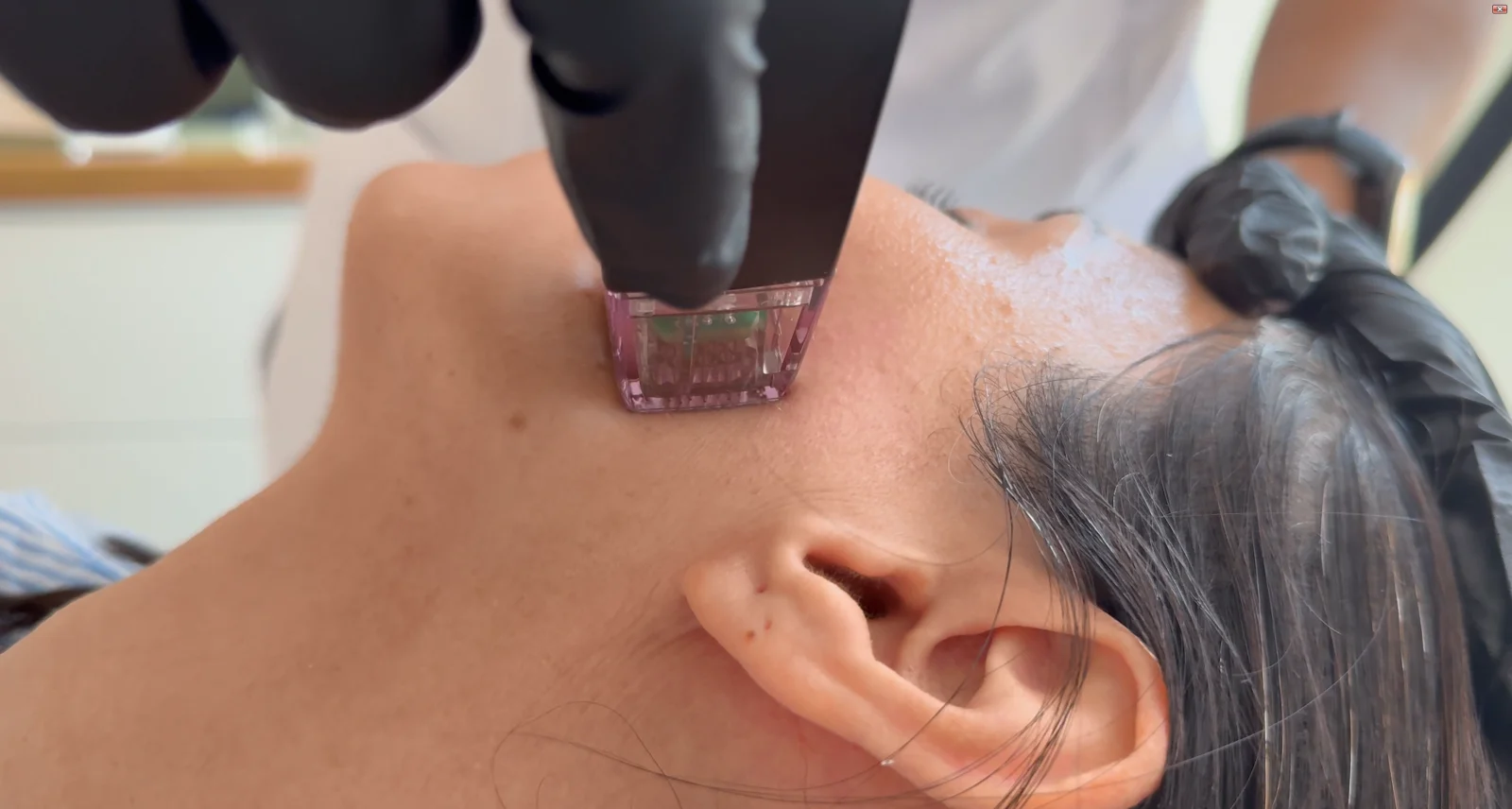
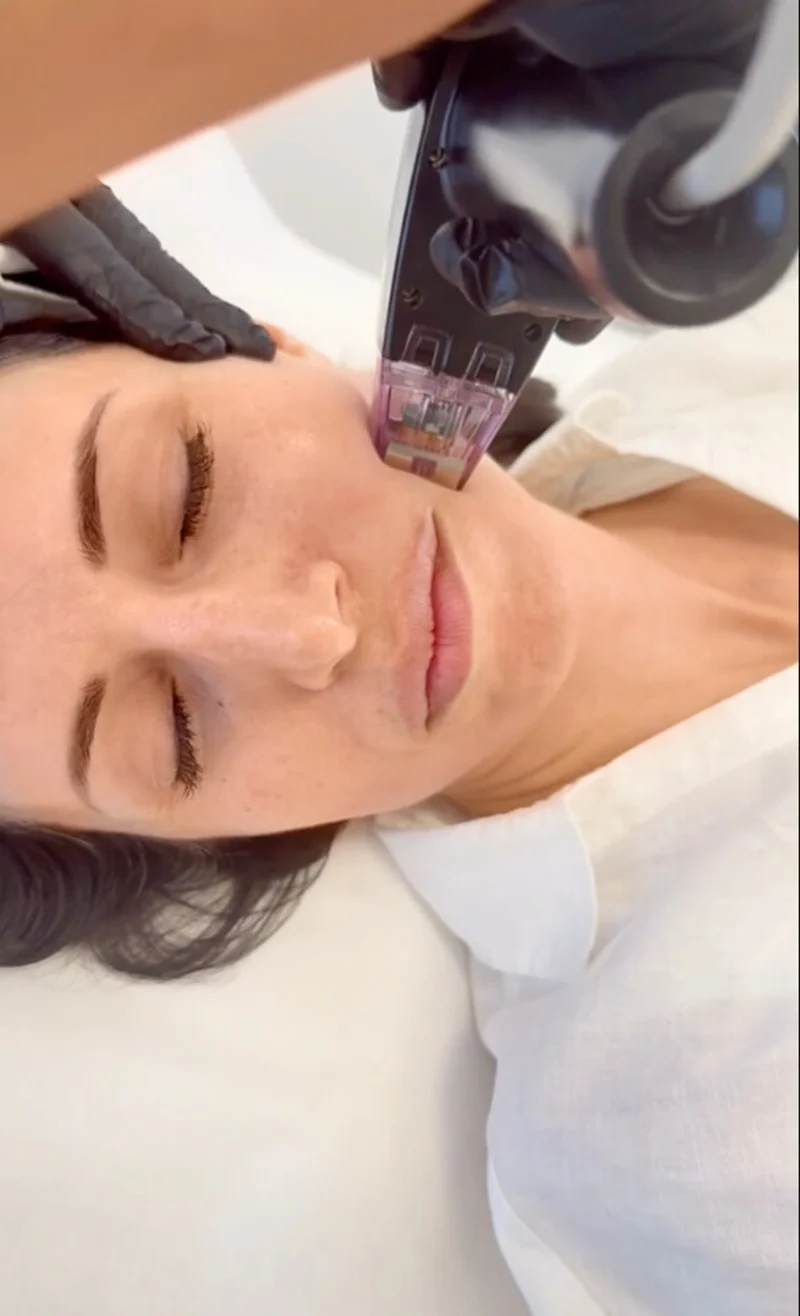
When RF is combined with microneedling, as in treatments known to the public under various brand names, the tiny needles deliver the energy to a more precise depth. This means a more targeted treatment of the relevant layers, with relatively less damage to the upper layer of the skin.
People interested in radiofrequency treatment for the face usually ask about recovery first. That is the right question. The skin reacts to heat, and sometimes also to the microscopic penetration of needles, so an immediate reaction after treatment is not a sign that something has gone wrong. Quite the opposite. In most cases it is an expected tissue response.
What counts as a normal reaction
The most common reactions are:
-
Local redness
-
Slight swelling
-
A feeling of warmth or sensitivity
-
Temporary dryness
-
A slightly rough appearance or faint needle marks, in the case of RF microneedling
These effects appear because the skin enters a state of repair. The heat energy creates controlled stimulation, and the body responds exactly as it is supposed to. So the key is not to look for a treatment with no reaction at all, but for a treatment in which the reaction is controlled, predictable and properly managed.
A mild, short-term side effect is not necessarily a problem. Sometimes it is simply evidence that the treatment has activated the desired mechanism.
When a reaction should be viewed differently
Not every effect after RF treatment is "part of the process". Unusual pain, persistent worsening, a significant change in skin texture or signs that do not fade at a reasonable pace require an examination. This is exactly where the difference lies between an aesthetic treatment that looks simple from the outside and a medical procedure that requires real clinical judgement.
This is also the basis for understanding the whole article. It is not enough to know what might happen. It is important to understand why side effects occur, what is considered normal, and how a proper clinical protocol reduces the risk before treatment even begins.
Common and expected side effects after RF treatment
After RF treatment, especially RF microneedling, most patients do not experience a "complication" but a natural healing response. The difference matters. When you understand what to expect, it is easier to get through the first few days calmly and not be alarmed by every bit of redness.
In medical data on RF treatments, local redness appears in about 90% of cases and usually subsides within 24 hours, while effects such as numbness or temporary weakness, which are more relevant to pain treatments but illustrate the nerve response to heat, occur in 15-20% of cases. In addition, these effects resolve on their own in 95% of cases without any need for intervention.
Mild redness and swelling
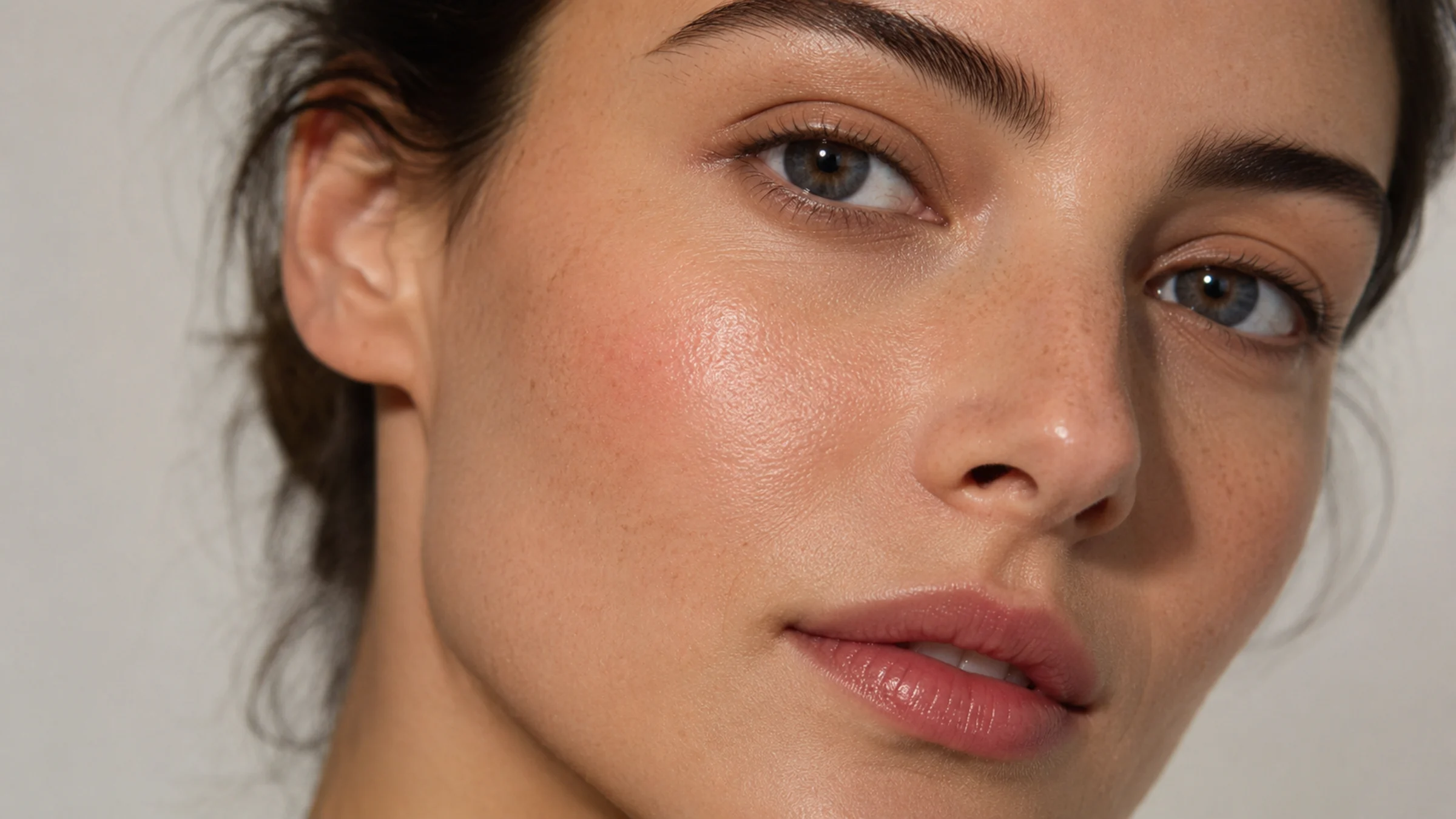
This is the most common reaction. The skin warms up, the blood vessels dilate, and sometimes there is also slight oedema in the tissue. To the patient it looks like pinkish, slightly swollen skin, sometimes with a feeling of "warmth from within".
This is usually short-lived. In many cases the redness goes down relatively quickly, and sometimes it lasts a little longer, depending on the intensity of the treatment, the skin type and the area treated.
Burning, tingling or sensitivity
Some patients describe the first few hours after treatment as feeling like a mild sunburn or "awakened" skin. This is not necessarily burning in a worrying sense, but the expected sensitivity of skin that has undergone thermal stimulation.
With RF microneedling the sensation can be a little more pronounced, because heat energy is combined with controlled penetration of the skin. That is why there is sometimes also sensitivity to touch, especially when washing or applying cream.
Needle marks and temporary texture
When the treatment involves a needle tip, you may see tiny dots, slight roughness or a "speckled" appearance for a short time. This is a direct result of the way the energy is delivered into the skin.
The more precise the treatment, the "cleaner" the skin's reaction usually is, with an orderly and predictable recovery.
Why this happens at all
To understand the common effects, you need to understand the purpose of the treatment. RF does not "caress" the skin. It creates controlled stimulation designed to trigger tissue repair. So redness, slight swelling and sensitivity are not random by-products, but part of the physiological response on which the treatment relies.
What does not work is trying to judge the success of the treatment only by how the skin looks an hour later. What does work is looking at the whole picture: the skin type, the treatment parameters, how you feel in the first few days, and whether recovery is progressing normally.
Rare risks and side effects worth knowing about
The fact that most reactions to RF treatment are mild and temporary does not mean there are no risks. There are. They are simply uncommon, and the practical implication is not to panic but to choose wisely, ask the right questions and make sure the treatment is carried out in a responsible medical setting.
In 2023 the FDA issued an official warning about the risks of radiofrequency microneedling treatments, following reports of complications such as burns, scarring and even nerve damage. The same report stated that the risk of serious complications is estimated at less than 1% of cases, but stressed the critical importance of the treatment being performed by qualified doctors and tailored to the individual, as reported in the article by ynet on the FDA warning about radiofrequency and microneedling treatments.
Which rare complications may occur
The complications usually being discussed are not redness or passing sensitivity, but conditions such as:
-
Burns resulting from incorrect heating of the tissue
-
Blisters or a superficial wound
-
Pigmentation changes, mainly in people who tend to react easily to irritation or sun
-
Scarring
-
Infection
-
Loss of subcutaneous fat or distortion of texture, in exceptional cases
-
Nerve damage, a very rare condition, but one that highlights the need for anatomical precision
These are not scenarios to be expected as a normal part of treatment. They are a reminder that RF is a genuine medical procedure, even when it is sometimes marketed as "light" aesthetics.
Why such complications occur
In a professional clinic, we almost never look at the device alone. The technology matters, but complications usually arise from a combination of several mistakes:
| Factor | How it can cause a problem |
|---|---|
| Unsuitable parameters | Depth or energy that does not match the skin and the treatment area |
| Incomplete assessment | Ignoring skin type, inflammation, sensitivity or previous treatment |
| Imprecise technique | Working on sensitive areas without sufficient anatomical control |
| Unclear instructions | Early return to the sun, irritating products or unnecessary friction |
| Insufficient follow-up | An abnormal reaction that is not identified in time |
The important point is that much of the risk can be managed. This does not mean that zero side effects can be guaranteed. It does mean that they can be significantly reduced when the treatment is approached as a medical procedure rather than an off-the-shelf cosmetic service.
Who should be particularly careful
There are groups of patients for whom the threshold for clinical judgement should be higher. For example, very sensitive skin, a history of pigmentation after irritation, a tendency to scarring, active skin conditions in the treatment area or a health condition that requires a thorough prior examination.
When there is doubt about suitability, you do not "try and see what happens". First you assess, and sometimes you postpone, change technology or choose a more conservative protocol.
What you should not do
You should not choose a treatment based on the name of the device alone. You should not assume that because a treatment is common, it is necessarily simple. Nor is it right to think that an abnormal reaction will always sort itself out.
What is right is to choose a place that explains in advance not only the benefits, but also the limits of the treatment, the possible side effects, and what is done if something does not progress as usual.
How the treatment protocol at Dermacare reduces risks
The best way to reduce the side effects of radiofrequency treatment is not to start with the treatment itself, but with the assessment that precedes it. Many complications do not start with the device. They start with an imprecise decision about who the treatment suits, at what depth, at what intensity and in which area.
Assessment before choosing the parameters
In RF treatment, the question "which device is best" has no real meaning without first understanding the condition of the skin. What actually determines safety is the match between the patient and the protocol.
That is why a serious process usually includes:
-
A full medical history, including sensitivities, skin conditions, previous treatments and a tendency to pigmentation.
-
Examination of the skin type and the treatment area. The skin of the face, neck and body do not react in the same way.
-
Setting a realistic goal. Tightening, improving texture, scars, pores or a combined treatment.
-
Deciding whether RF is the right choice at all right now. Sometimes it is right to postpone, prepare the skin in advance or choose a different route.
Personalisation reduces risk
There is no single protocol that suits everyone. Penetration depth, working density, energy level, number of passes and even the decision whether to treat the whole face or only a specific area all affect the recovery profile.
In a well-organised clinical setting, dedicated technologies are also used for different goals. If you are exploring options for skin tightening, you may also come across solutions such as RF MAX, the advanced generation of skin tightening, where the choice between different systems is made according to the treatment goal rather than a trend.
What risk management looks like in practice
A careful protocol is built in layers. Not in a single step.
-
Choosing the right patient is just as important as the execution. If there is a factor that increases risk, it is better to change the plan than to "make do".
-
Control of the parameters is the heart of the matter. More energy does not necessarily mean a better result.
-
Anatomical knowledge is especially important in thin or sensitive areas, or those where the fat layer is more superficial.
-
Sterility and an orderly workflow reduce the risk of infection and unnecessary irritation.
-
Follow-up and precise instructions complete the treatment. Correct execution without the right aftercare is only half the process.
In medical data on RF treatments for pain, which belong to a different field but illustrate the safety principle of radiofrequency technology, the risk of infection was reported at 0.5% with strict sterility, and the complication rate was below 2% in the situations described there. The practical conclusion is similar in aesthetics. When you work with an orderly protocol, the risk does not disappear, but it becomes more controlled.
What works and what does not
What works is a gradual approach. Starting with the right dose, assessing the skin's response, and building a plan that respects the limits of the tissue.
What does not work is chasing too dramatic a change in a single treatment. Trying to "get more out of it" can actually lead to longer recovery, more inflammation and sometimes more risk.
This is where the advantage of working in a medical clinic such as Dermacare comes in. Not because the name itself reduces risk, but because real safety comes from an orderly process: assessment, choosing the right technology, personalisation and support even after you leave the room.
A good treatment is not measured only by the result. It is also measured by how predictable, controlled and safe the path to it was.
Before and after treatment instructions to minimise side effects
Even a correctly performed treatment can look less good if the preparation was not right or if the recovery stage was handled carelessly. Here the patient has a real role. Not a symbolic one.
Before the treatment
-
Avoid significant sun exposure. Tanned, irritated or already heated skin reacts differently, and sometimes less well.
-
Give a full medical update. If you have started a new medication, or if herpes, irritation, a rash or any change in the skin has appeared, it is important to say so before the treatment and not afterwards.
-
Temporarily stop active ingredients according to the instructions you received. Especially acids, retinoids and irritating products.
-
Come with accurate expectations. It is worth understanding in advance what the goal is, what the estimated recovery time is and what is considered normal afterwards.
Some patients come for treatment after a busy week of sun, peeling, waxing or several active products at once. This is usually not a good idea. The skin needs to arrive in a stable condition.
On the first day after treatment
This stage has a big influence on what the recovery will look like.
-
Do not rub the skin, even if it feels rough or dry.
-
Use only approved or extra-gentle products.
-
Avoid unnecessary heat: saunas, intense workouts, very hot showers and anything else that puts strain on the blood vessels.
-
Keep your hands clean and touch the treated area as little as possible.
In the days that follow
Here the goal is to protect the skin while it repairs itself.
-
Sunscreen is especially important, even if you hardly go outside.
-
Moisturising and soothing are preferable to experimenting with new products.
-
Postpone further aggressive treatments such as peels, lasers or scrubs until you receive approval.
-
Watch for unusual reactions. If something does not feel like healing but like worsening, get it checked.
One of the most common mistakes is returning to an active skincare routine too quickly. The skin does not need "more work" in these days. It needs rest.
What does help with good recovery
A simple routine. Gentle cleansing, sun protection, avoiding irritation and patience. This usually works better than ten "restorative" products all at once.
Radiofrequency compared with other treatments in terms of side effects
To understand the safety profile of RF, it is worth comparing it not only with itself but also with common alternatives. Not to decide which is "better", but to understand which types of reaction are typical of each approach.
Compared with laser
Laser and RF treatments do not work through the same mechanism. In RF treatments the heating is delivered through radiofrequency energy, and it is sometimes possible to work at depth with more limited damage to the upper layer of the skin. So in some cases the recovery time feels more comfortable.
With certain laser treatments, especially ablative technologies, recovery may be more noticeable, with peeling, more pronounced redness and longer-lasting sensitivity. On the other hand, there are situations in which laser is actually the right therapeutic choice.
Compared with injections
With Botox or filler injections, the side effect profile is fundamentally different. There we are talking more about puncture marks, bruising, localised swelling, sensitivity and sometimes asymmetry or a reaction to the product.
RF does not add volume and has no neuromodulating effect like Botox. It acts on the tissue itself. So its common effects belong more to the world of heating, redness and skin healing.
Compared with microneedling without RF
Here the difference is subtle but important. In both cases there is controlled injury, but with RF heat energy is added as well. This means the potential for a deeper and more targeted effect, but also a greater need for precision in choosing the parameters.
If you want to understand when this combination is suitable, you can also read about how microneedling combined with radiofrequency helps, mainly in relation to skin texture and scars.
The practical conclusion
There is no treatment without a side effect profile. The right question is not "what is the safest in absolute terms", but which treatment suits the goal, the skin type, the recovery time you can allow, and the level of risk you are willing to accept.
Summary: an informed choice for safe treatment and an impressive result
In most cases, the side effects of radiofrequency treatment are an expected, mild and temporary part of the skin's renewal process. The rarer risks do exist, so choosing a responsible medical setting, an accurate assessment and a personalised protocol is not a technical detail but a condition for safety. When the treatment is carried out correctly, tailored to the skin type, the goal and the recovery time, you can enjoy the benefits of the technology without taking lightly what needs to be managed.
Book a consultation at Dermacare
If you are considering RF treatment for the face or neck or to improve skin texture, the most important thing is to understand what is really right for you. Not every skin needs the same depth, not every goal requires the same type of device, and not every patient needs the same intensity.
In a professional consultation you can check suitability, go over the risks relevant to you, understand what the expected recovery looks like, and build a realistic and safe plan.
Want to understand exactly what is right for you? The Dermacare team will be happy to assess your skin condition, the suitable type of treatment and realistic expectations, in a professional, personal and precise way. To book a consultation and a personalised assessment, you can contact us here.
Frequently asked questions
The sensation varies according to the type of device, the depth of the treatment and the treated area. Some patients feel warmth and a tolerable burning sensation, and with RF microneedling the sensation is usually more tangible. With the right suitability and appropriate preparation, in most cases the discomfort is manageable.
Usually not. In most cases the effects are mild and temporary. What matters is distinguishing between a normal healing response and a situation that is not progressing as it should. Unusual pain, worsening, discharge, a significant change in skin colour or a wound that does not close as expected require contacting a medical professional.
Sometimes yes, but not automatically. With dark skin, one must work with greater caution because of the possible tendency to pigmentation changes after irritation. This requires an assessment, precise selection of parameters and sometimes also prior preparation of the skin.
Sometimes yes, but it depends on the type of material, the area and the timing. For this reason, it is important to report any injection, threads, laser or other treatment carried out in the past. Not every protocol suits every situation, and sometimes the depth is changed or treatment is postponed.
In many cases yes, especially if it is non-aggressive RF. With RF microneedling, you may prefer to allow for a day or two of a redder appearance, depending on your sensitivity and the nature of your work.
Seek an examination if anything appears that seems disproportionate to what was explained in advance. For example, worsening pain, unusual swelling, an unusually dark or white area, a blister, significant local heat, discharge, or any change that feels more like a complication and less like healing.
It depends on the goal. For improving fine texture or a refresh, you can sometimes see a change even after a single treatment, but in many cases a course or maintenance needs to be planned. From a safety standpoint, the desire to achieve everything at once is not always the right approach.
In RF treatment, a good result is usually one that is built correctly, not one that you try to force too quickly.