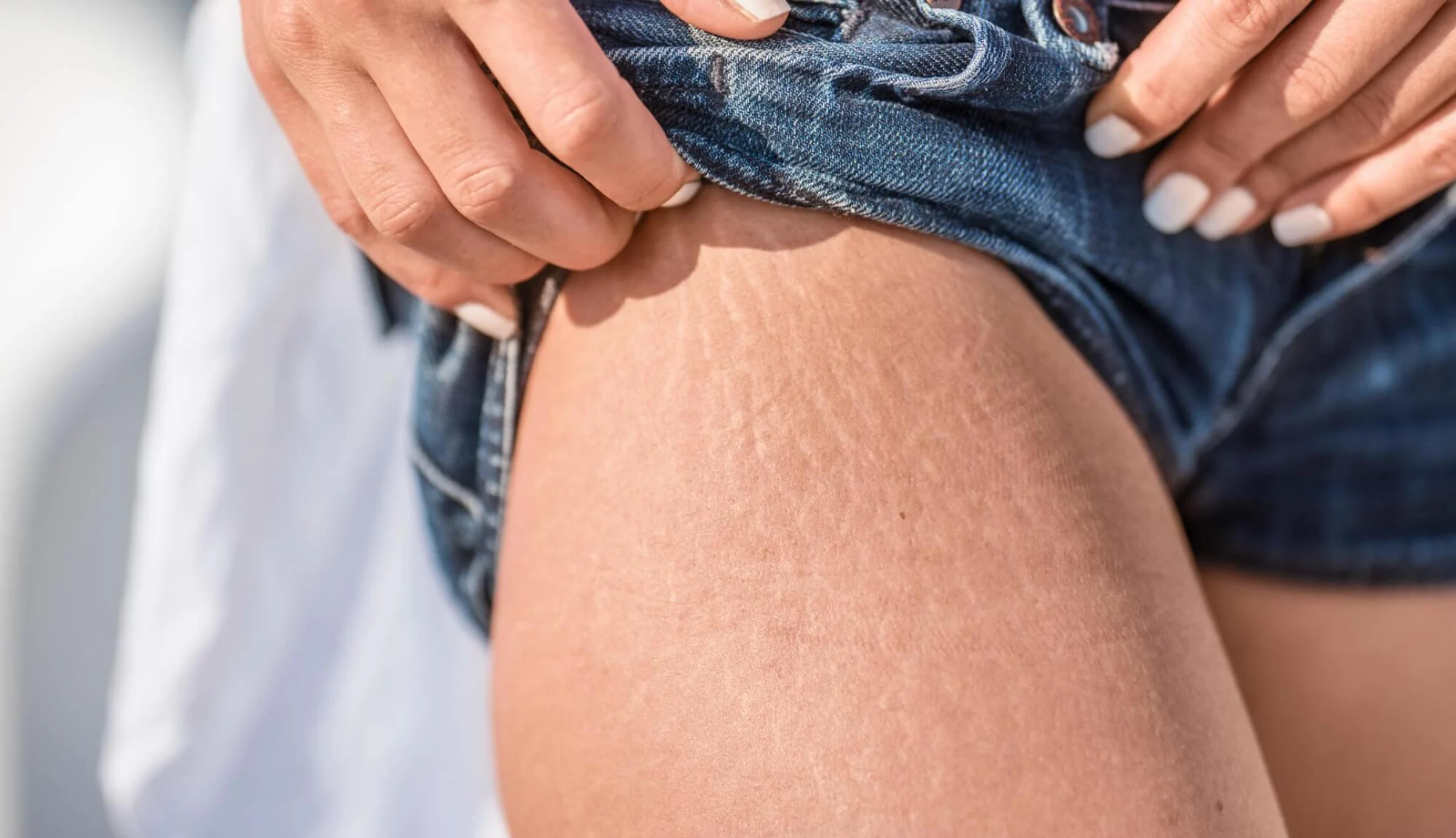
In brief
- Stretch marks are tears in the dermis that form when the skin is stretched rapidly; at first they are red or purplish and over time they turn white.
- New red marks respond better to treatment than old white marks, so early treatment is preferable.
- No method guarantees complete removal; the realistic goal is to fade them, improve texture and make the marks less noticeable.
- Accepted methods include microneedling, radiofrequency microneedling (such as Morpheus8 and RF MAX) and fractional CO2 laser, while chemical peels are mainly used as a complementary treatment.
- In most cases a single treatment is not enough and a series is needed, and most creams and oils have not been consistently proven effective.
Stretch marks are tiny tears in the dermis layer of the skin, caused when the body grows or changes rapidly and the connective tissue cannot keep up. At first they appear red or purplish, and over time they fade and turn white. New (red) stretch marks respond better to treatment than old, white ones. No treatment guarantees complete removal, but there are advanced medical methods that can significantly improve their appearance and texture, and improvement is sometimes easier to achieve when treatment starts early.
What are stretch marks?
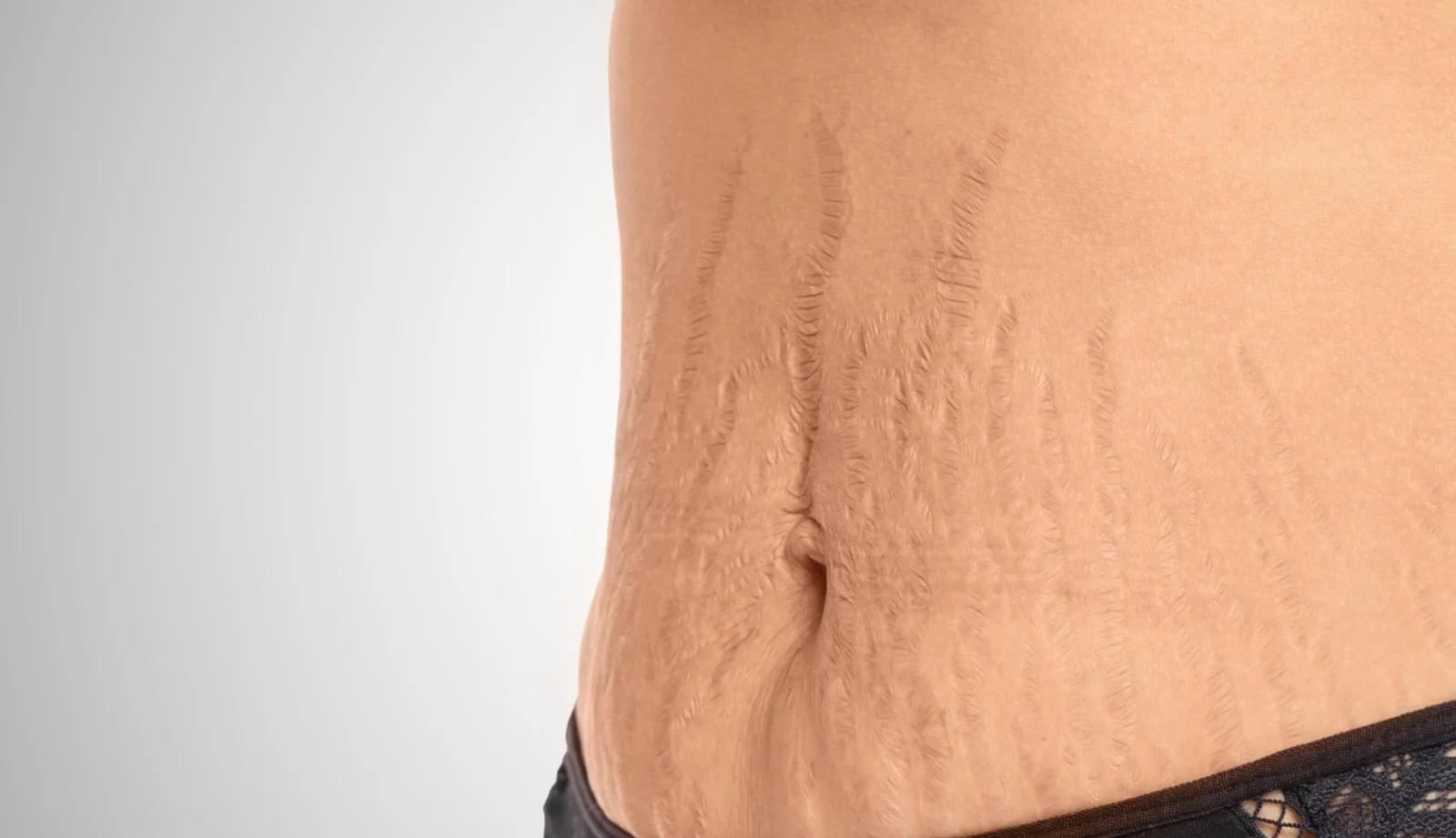
Stretch marks, known medically as striae distensae, are a type of scar that forms in the middle layer of the skin (the dermis). When the skin is stretched quickly, the collagen and elastin fibres responsible for its elasticity tear. Scar tissue forms where the tear occurred, appearing as long, thin lines on the surface of the skin. This is a structural change in the skin and not just a surface flaw, which is why ordinary creams usually cannot treat it significantly. According to the American Academy of Dermatology (AAD), stretch marks are scars in every sense, forming when collagen and elastin tear as a result of rapid stretching of the skin.
Why do stretch marks appear?
The causes of stretch marks vary, but what they have in common is rapid stretching of the skin that exceeds the connective tissue’s ability to adapt.
Common causes include rapid changes in body weight, growth spurts, pregnancy, intensive muscle building and hormonal changes. According to Ichilov Medical Centre, stretch marks are particularly common when the body grows quickly and the skin is under prolonged stretching. Long-term use of steroids – in the form of ointments or medication – can also weaken the structure of the skin and increase the likelihood of stretch marks. Genetics plays a significant role: people born with weaker connective tissue are more likely to develop stretch marks, even with relatively moderate stretching.
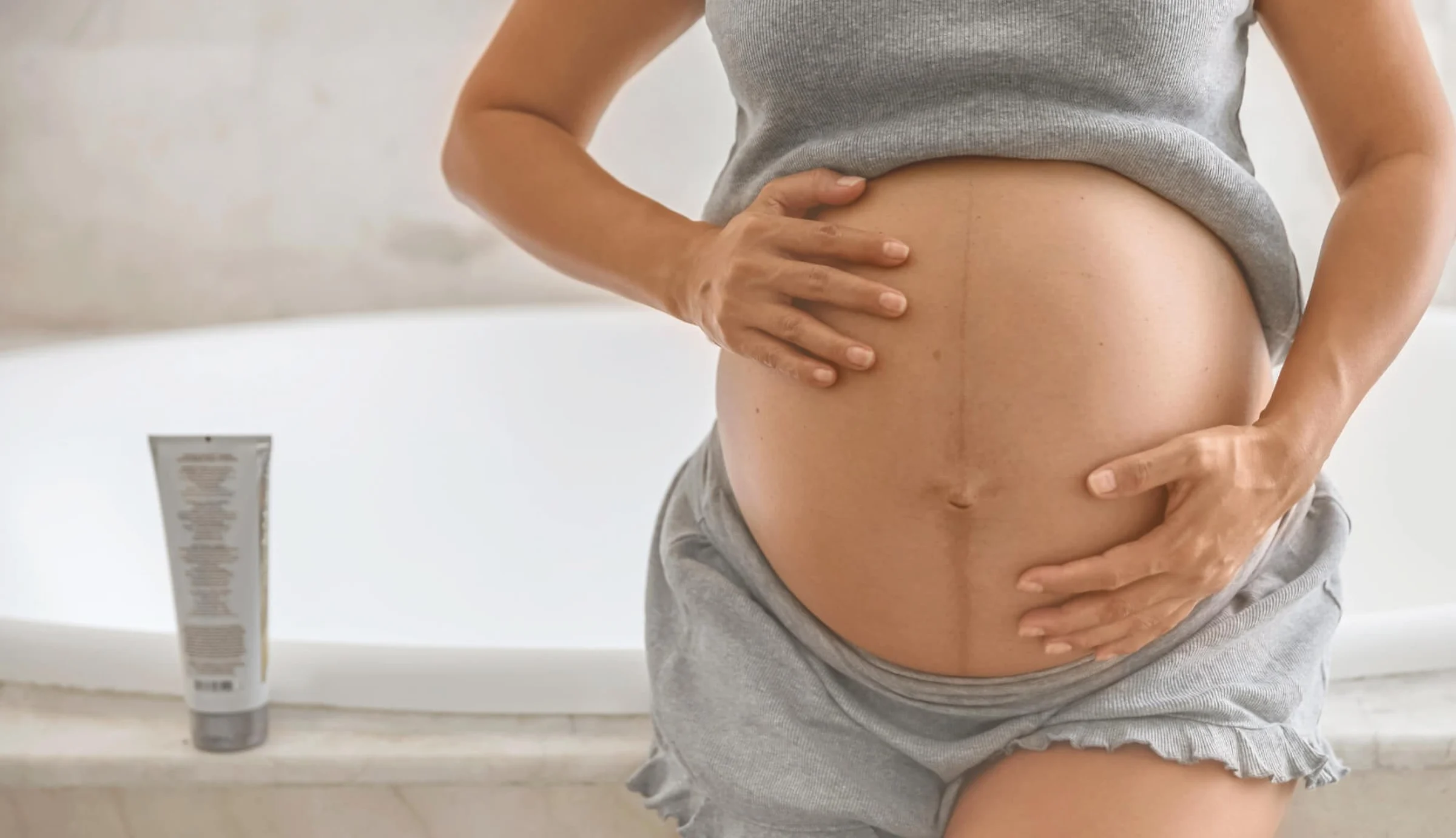
For pregnant women noticing new marks, the article Treating stretch marks during pregnancy was written especially for you!
What is the difference between red and white stretch marks?
The distinction between red and white stretch marks is critical, because it directly affects the choice of treatment and realistic expectations of the results.
Red stretch marks (striae rubrae) are marks in their early stage. The reddish-purple colour indicates an active inflammatory process and dilated blood vessels in the affected area. At this stage the tissue is still “responsive” and can be influenced: treatments that encourage collagen production and tissue healing will achieve the best results.
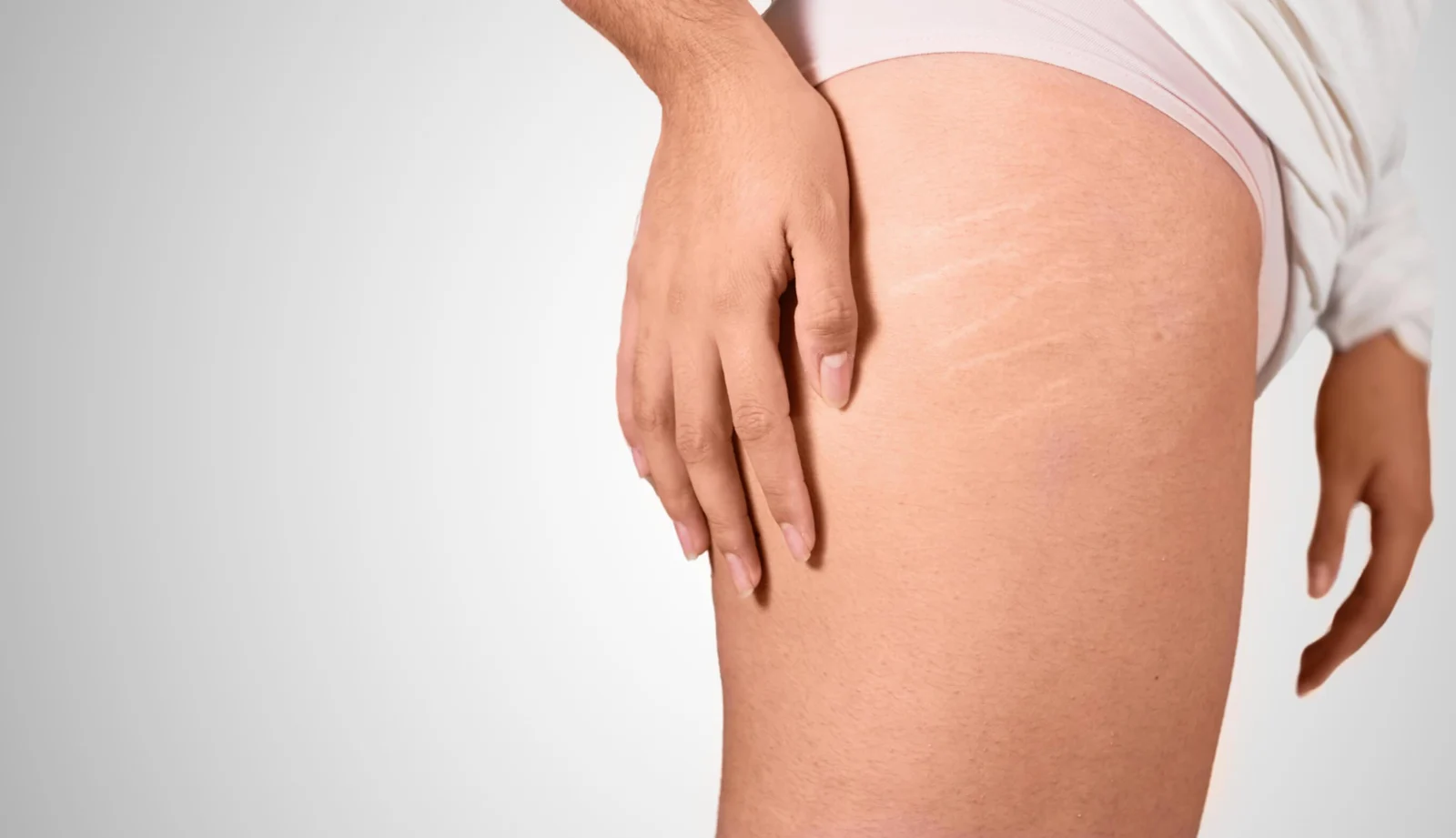
White stretch marks (striae albae) are long-standing marks that are no longer in the active inflammatory stage. They are pale, flat and thinner in texture than the surrounding skin. Treating them is more challenging because the tissue has already “stabilised”, but even in these cases the appearance and texture can be improved with advanced treatments.
In practical terms: the earlier you start treatment, while the marks are still red, the greater the chances of significant improvement. A scientific review published in the Indian Journal of Dermatology shows that fractional CO2 laser and microneedling, with or without radiofrequency, are considered among the accepted professional options for treating stretch marks.
Do stretch marks fade?
The direct answer: in most cases, not completely. Stretch marks are a type of scar, so they do not disappear completely on their own. What does happen over time is that the marks fade: from reddish-purple they become pale white, flatten out and become less noticeable.
Before starting treatment, it is important to understand that the realistic goal of professional treatment is to fade the marks, improve skin texture and reduce their visibility – not “complete removal”. Ichilov Medical Centre makes the same point: no method has yet been found that smooths the skin completely, but the advanced medical treatment methods of recent years achieve significant improvement compared with the past.
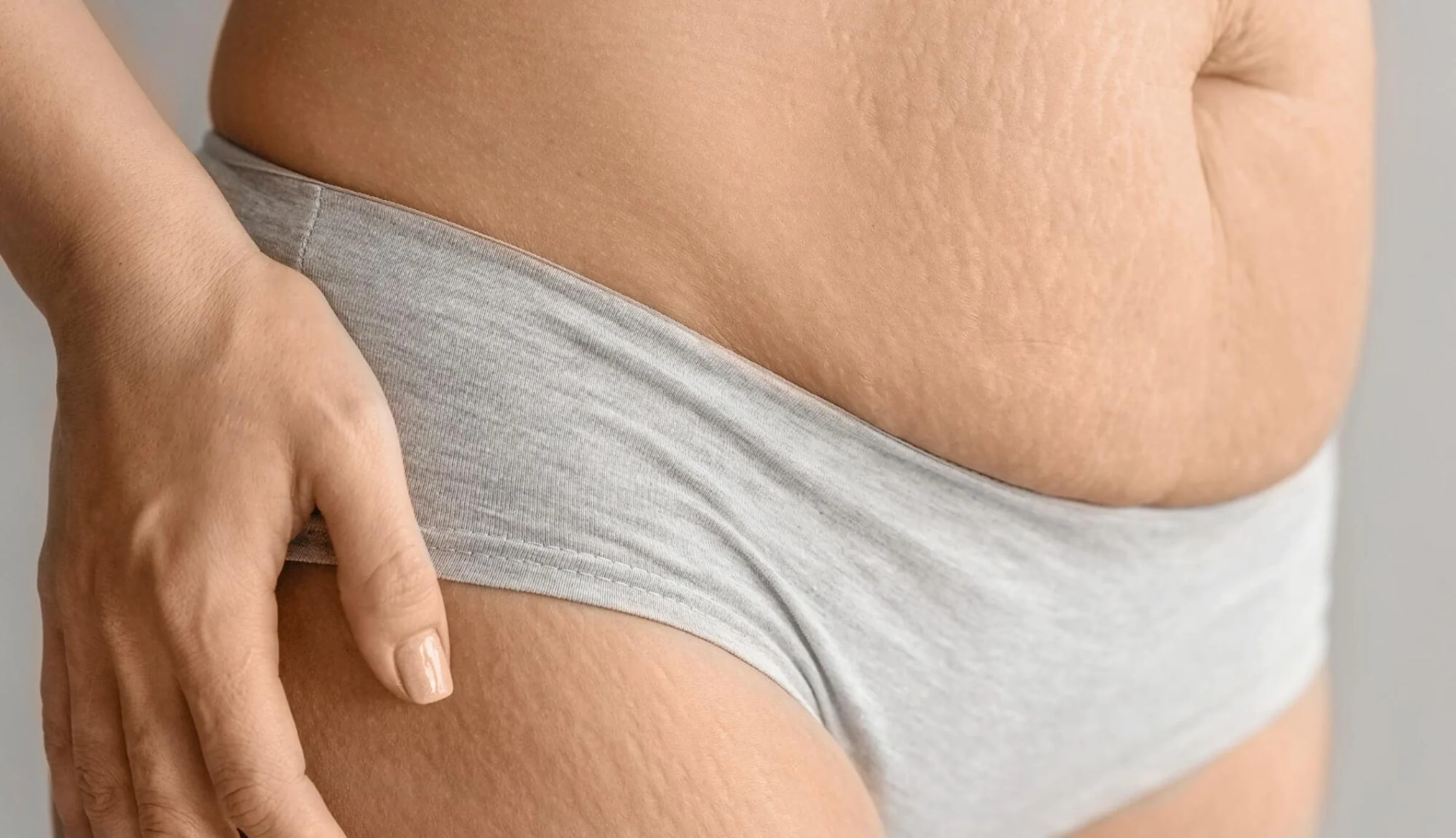
Improving the appearance of stretch marks requires a professional medical approach. There is currently no single method that is considered consistently more effective than all the others for every patient, so the choice of treatment is based on various factors such as the age of the marks, their colour, skin type and expectations of the result. Below are the four most common methods:
Microneedling
Microneedling creates controlled micro-injuries in the skin using fine needles. The injuries activate the body’s natural healing mechanism, which produces new collagen and elastin naturally. The treatment may be more suitable for “fresh” marks. A series of several treatments is needed to improve the texture and appearance of the skin. While the treatment will not restore the skin to its original condition, it may improve its texture and appearance.
More information about the method and the treatment process.
Radiofrequency microneedling
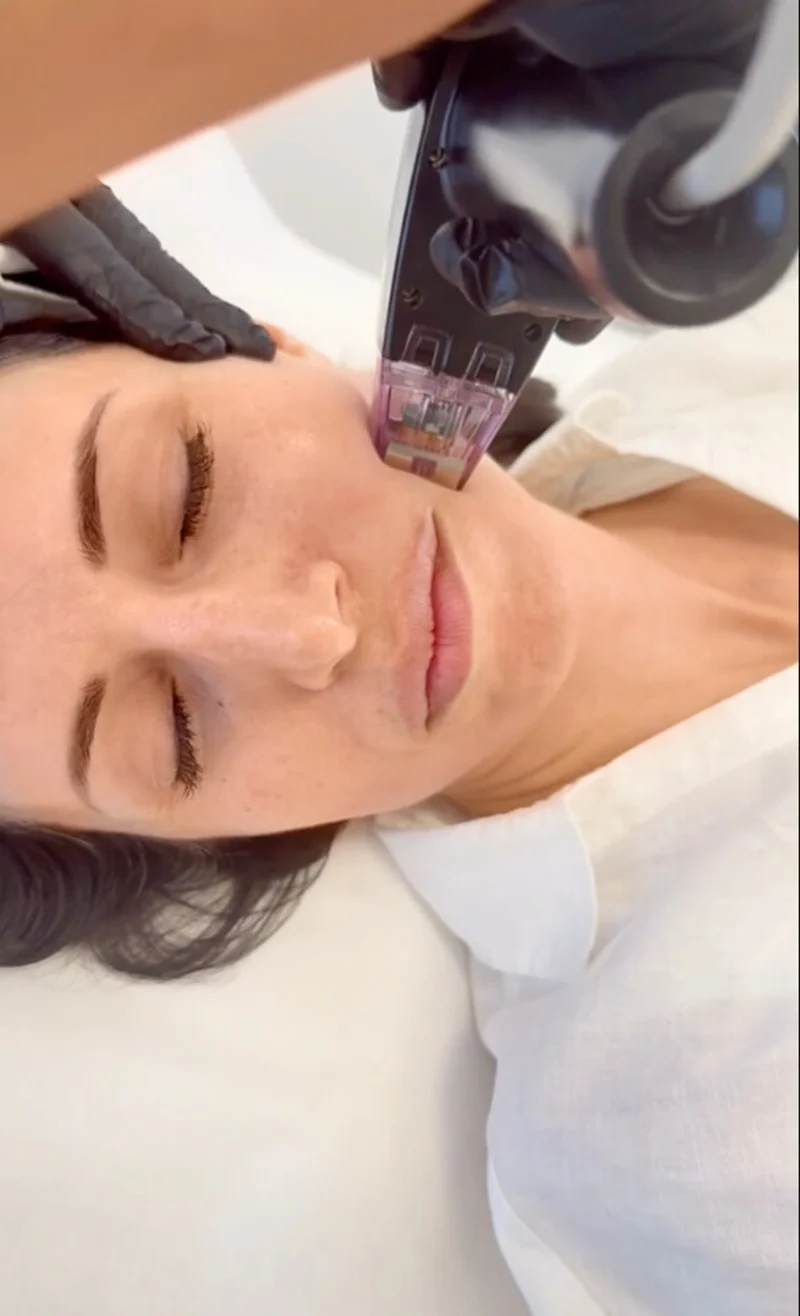
Radiofrequency microneedling, such as RF MAX or Morpheus8, is an advanced treatment that combines controlled micro-injuries in the skin with targeted heat energy delivered to the deep layers of the skin. Unlike regular microneedling, which works mainly through mechanical stimulation of the natural renewal processes, the combination with radiofrequency also allows controlled heating of the skin at depth, and may therefore strengthen the stimulus for collagen and elastin production. As a result, the treatment is considered more powerful and is particularly suitable for cases where the aim is to work not only on the surface texture of the skin but also on more prominent or deeper stretch marks
Information about the technology and equipment.
Fractional CO2 laser
Fractional CO2 laser is an advanced skin resurfacing treatment that works in a controlled, precise way to remove thin layers of damaged skin and encourage natural repair processes and collagen rebuilding. Thanks to its ability to work deep in the skin, it may be particularly suitable for long-standing white stretch marks, or for situations where a deeper, more significant stimulation of the tissue is desired. It is important to stress that the laser does not “erase” stretch marks, but it may well improve their appearance, the texture of the skin and its overall evenness. A recovery time of several days is to be expected after treatment, depending on the intensity of the treatment and the individual response of the skin.
More details about all the treatment options for stretch marks.
Chemical peel
A chemical peel helps remove dead skin cells and encourages the renewal process of the upper layer of the skin. In the context of stretch marks, it is usually a complementary treatment rather than a main method in its own right, as its direct effect on the depth of the marks and the structure of the skin is relatively limited. A peel is therefore considered mainly as part of a broader treatment plan, for example as preparation for more intensive treatments or as a maintenance and support step between treatments.
What you can do at home – and what doesn’t really work
Keeping the skin hydrated and restoring the skin barrier may support the skin’s comfort, elasticity and quality, which is why they are considered an important part of supportive skin care. Keeping the skin hydrated and restoring the skin barrier may support the skin’s comfort, elasticity and quality, which is why they are considered an important part of supportive skin care. Certain retinoids, such as tretinoin, may help improve stretch marks when they are relatively new. According to the Mayo Clinic, tretinoin may support the restoration of collagen structure in new stretch marks (a few months old). However, for most creams and oils marketed to prevent or fade stretch marks, significant effectiveness has not been consistently proven.
Important: tretinoin and other retinoids are not intended for use during pregnancy or breastfeeding without medical advice, due to possible risks to the foetus.
Who is stretch mark treatment suitable for, and when should you start?
Professional treatments for stretch marks are suitable for both women and men of any age who want to improve the appearance of their skin. The guiding rule is that early treatment is preferable: red marks respond better than old, white ones.
But people with old, faded stretch marks need not give up. Treatment methods such as CO2 laser and radiofrequency microneedling can also improve white stretch marks, although the process may require more treatments.
The choice of suitable treatment is based on various factors such as the age of the mark, its colour, its depth, skin type and the patient’s medical history. That is why every process begins with a consultation and assessment, in which the condition of the skin is examined and a personalised treatment plan is drawn up.
What does the success of stretch mark treatment depend on?
Not every stretch mark responds to treatment in the same way, so it is important to understand what affects the results. The main factors are: the age of the mark – new marks respond better than long-standing ones; the colour of the mark – red versus white, as explained above, the depth and width of the marks – deep, wide marks require more intensive stimulation, skin type and skin tone – which affect the choice of technology and the risk of side effects, and commitment to a full series of treatments – in most cases a single treatment is not enough, and a complete series with the right intervals between sessions is needed.
Important: the goal usually achieved is to fade the marks, improve texture and make them less noticeable. No method guarantees complete erasure, but the right combination of technology, timing and a tailored series of treatments can produce significant improvement.
When should you see a doctor?
In most cases stretch marks are a benign phenomenon that does not require urgent medical investigation. However, there are situations in which it is worth seeking advice: if stretch marks appear suddenly without an obvious cause such as weight change, pregnancy or a growth spurt, if the marks are very extensive and cover a large area, if there is long-term use of corticosteroids, or if there are accompanying symptoms such as unexplained weight gain, extreme fatigue or skin changes. Marks that appear without any connection to physical stretching may indicate hormonal disorders that require investigation.
Disclaimer: the information in this article is general and is not a substitute for medical advice.
Summary
Stretch marks are a common phenomenon caused by rapid stretching of the skin, and they can appear at different stages of life. Although in most cases they cannot be removed completely, correct diagnosis and the choice of a suitable treatment can significantly improve the appearance and texture of the skin. The earlier treatment begins, and especially while the marks are still red, the greater the chance of achieving a better result. The first step is a professional assessment of the type of marks, their age and the condition of the skin, followed by a personalised treatment plan.
For information on options to improve the appearance of existing stretch marks, contact us for a personal consultation: 03-6127888 | info@dermacare.co.il | Book an appointment online
This article was written by Dr. Iris Fadlon, a psychiatrist and aesthetic physician at Dermacare. Dr. Iris Fadlon treats patients at Dermacare with an approach based on a preliminary assessment (type of marks, their age, skin condition), setting realistic expectations and creating a personalised treatment plan to improve the appearance of the skin.
Frequently asked questions
Stretch marks are tears in the connective tissue of the middle layer of the skin (the dermis), formed when the skin is stretched too quickly. They appear as long, thin lines, initially reddish-purple in colour and later fading to white. They are a type of scar – a structural change in the skin and not just a surface mark.
In most cases, stretch marks do not disappear completely on their own. Over time they fade from red to white and become less noticeable, but they remain part of the skin's structure. Professional treatments can significantly improve their appearance, but no treatment guarantees complete disappearance.
Red marks are new marks in which an active inflammatory process is still taking place. White marks are long-standing marks that have already completed the healing process. The difference is critical in terms of treatment: red marks respond to treatment much better, so it is recommended to seek treatment as early as possible.
Red marks respond well to professional treatments such as microneedling, radiofrequency microneedling and chemical peels as a supporting treatment. These methods encourage the body to produce new collagen and elastin, reduce inflammation and improve the skin texture in the area. It is recommended to start treatment while the marks are still in the red stage.
Yes, although the treatment is more challenging. Methods such as fractional CO2 laser and microneedling combined with radiofrequency can improve the appearance even of long-standing marks. Combining several treatment methods increases the chances of good results. It is important to align expectations in advance: significant improvement is possible, but complete disappearance does not always work.
There is no single answer that suits everyone. The choice between radiofrequency microneedling and fractional CO2 laser depends on the age of the marks, their colour, their depth, the skin type and the desired recovery time. Sometimes stretch marks are treated with microneedling combined with radiofrequency for earlier marks, and sometimes fractional CO2 laser is considered when deeper stimulation is needed. In many cases, a combination of methods produces the best results. The final recommendation is determined at a consultation, after assessing the skin condition, the type of marks and the treatment goals.