

In brief
- Stretch marks in pregnancy are tiny tears in the connective tissue caused by rapid stretching and hormonal changes; they are common and not medically dangerous.
- Estimates suggest they appear in 55% to 90% of pregnant women, and the risk rises with a family history, rapid weight gain and multiple pregnancy.
- There is no way to guarantee complete prevention, but moisturising, gentle massage, gradual weight gain, good nutrition and cotton clothing may reduce the chances and the discomfort.
- The marks move from a red or purplish stage to a white stage, and usually do not disappear completely but become less noticeable over time.
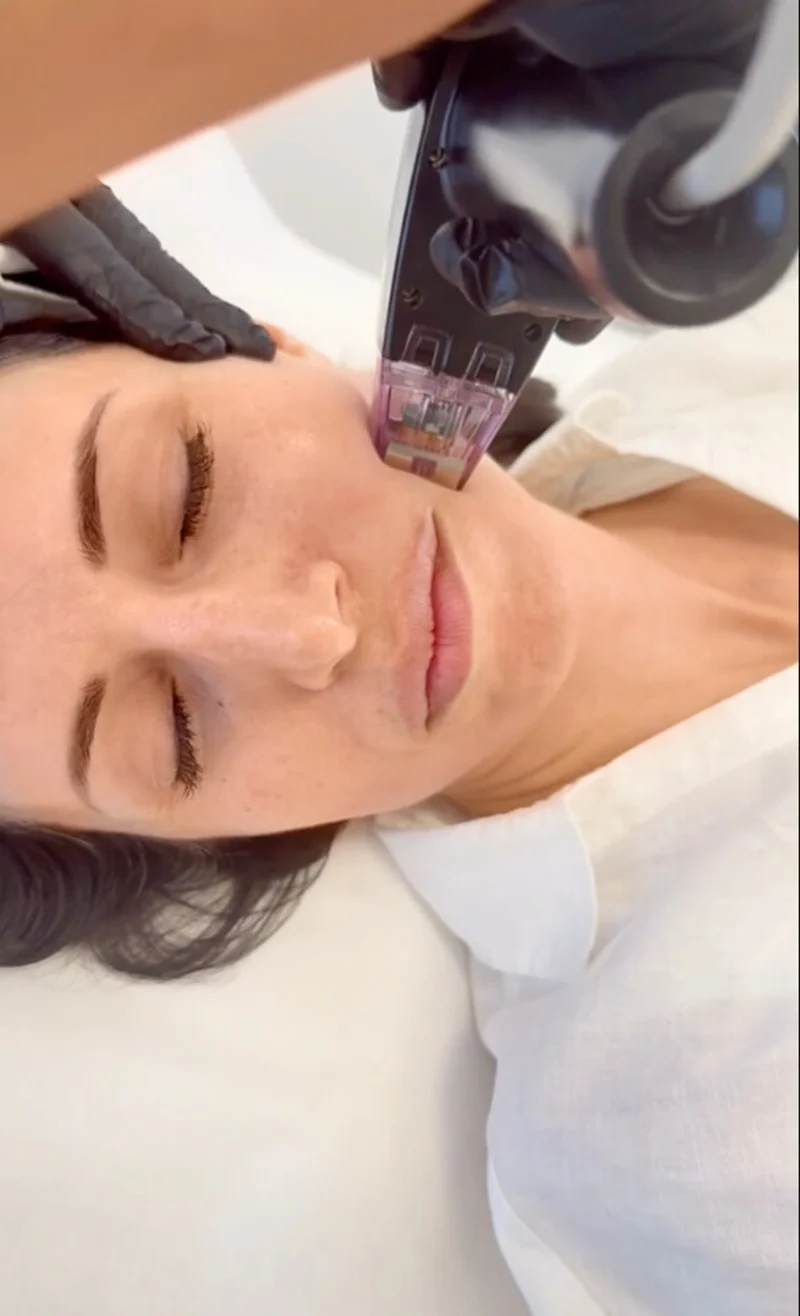
- To improve marks that have already appeared, you can consider radiofrequency microneedling such as Morpheus8 and RF MAX, or fractional CO2 laser.
Stretch marks in pregnancy (Striae gravidarum) are tiny tears in the skin's connective tissue, caused by rapid stretching and hormonal changes. The phenomenon is common and affects many women during pregnancy, usually when the belly is growing at an accelerated pace, although the exact timing varies from woman to woman. Stretch marks are not medically dangerous. There is no way to guarantee complete prevention, but you can reduce the chances and the severity of the marks.
This article was written for women who are pregnant or have recently given birth, with the aim of presenting reliable medical information based on current professional literature. The content is not a substitute for personal medical advice and does not guarantee specific results.
What are stretch marks in pregnancy?
Stretch marks in pregnancy are skin changes that appear as thin stripes or lines on the body. They are considered one of the most common skin changes during pregnancy. According to data published in the medical literature, estimates range from 55% to 90% of pregnant women, depending on factors such as genetics, age and skin type. Although the phenomenon is harmless to health, it can concern many women aesthetically and emotionally.
What actually happens in the skin
The skin is made up of three layers: the epidermis (the outer layer), the dermis (the middle layer) and the hypodermis (the deep layer). Stretch marks form in the dermis, when the collagen and elastin fibres responsible for the skin's elasticity and firmness cannot keep up with the pace of stretching and tear. During pregnancy, the belly grows quickly, and at the same time hormones are released that change the structure of the connective tissue and reduce its elasticity. The result is tiny tears that appear as stripes on the skin.
Red versus white stretch marks – what is the difference
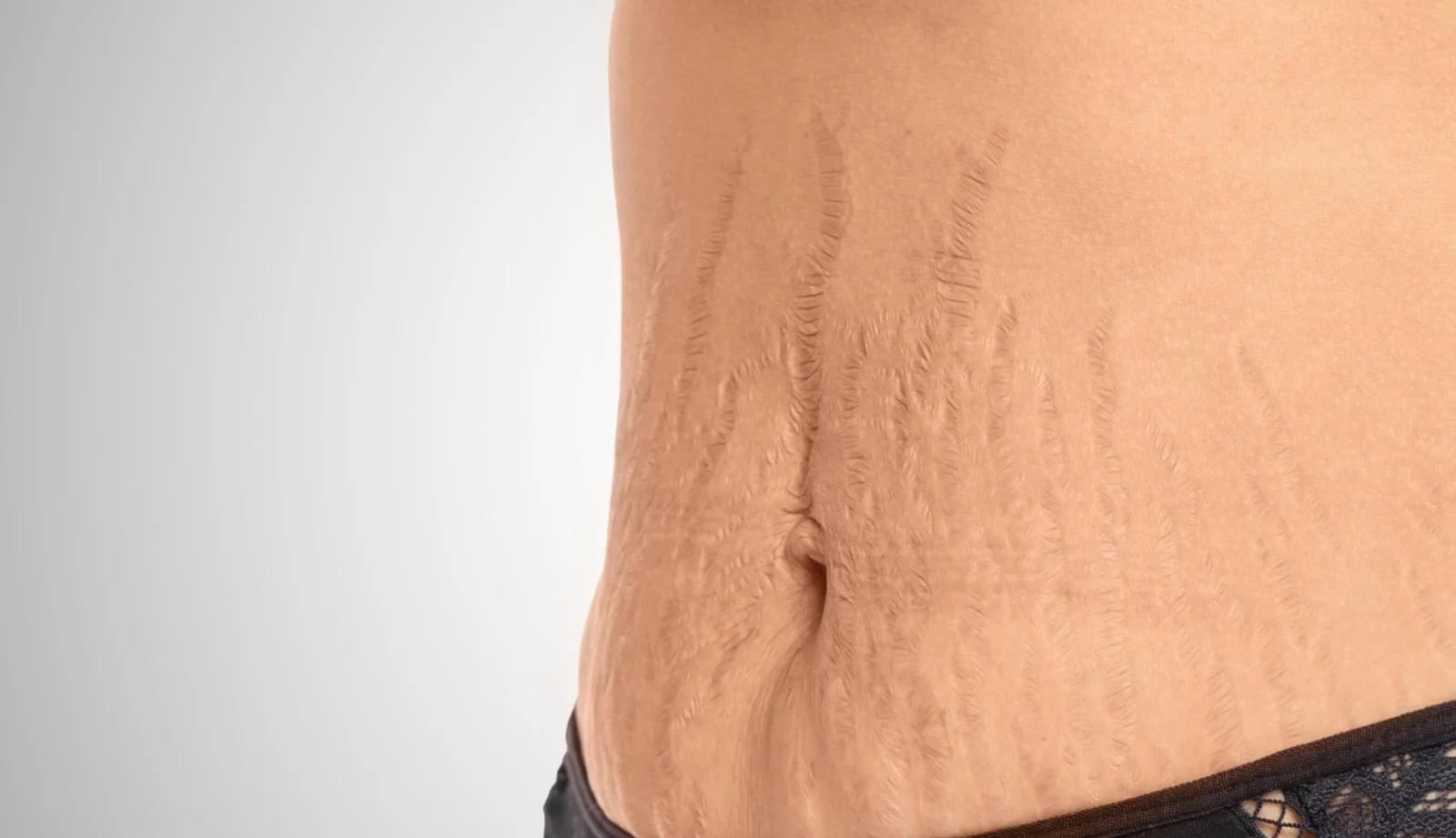
Stretch marks go through two stages. In the first stage they appear red, pink or purplish – a stage called Striae rubra. At this stage there is still an active inflammatory process in the area, the tiny blood vessels are dilated, and the colour is prominent. Many women also report local itching at this stage.
Over time, stretch marks fade and change to a light or whitish shade – a stage called Striae alba. At this stage they are older, stable scars that are usually less visible, but generally do not disappear completely on their own. The difference between the stages is also relevant for treatment options: marks in the early, active stage usually respond better.

Why do stretch marks form in pregnancy?
Stretch marks in pregnancy result from a combination of three main factors working together.
Mechanical stretching of the skin
The most direct factor is the rapid expansion of the belly to make room for the growing baby. Other areas of the body, such as the breasts, thighs and buttocks, also change in volume. When the skin is stretched beyond its natural ability to adapt, the connective tissue fibres in the dermis tear.
Hormonal changes
During pregnancy, the levels of several hormones rise, including cortisol and oestrogen, which affect the structure of the connective tissue and the process of collagen production. Hormonal changes reduce the skin's natural elasticity and make it more vulnerable to tearing. This is why stretch marks are more common in pregnancy than with ordinary weight gain.
Personal tendency and genetics
Not every pregnant woman will develop stretch marks, and there is great individual variation. A scientific review published in the International Journal of Women's Dermatology identifies several main risk factors: a family history of stretch marks (if your mother had them, the chance increases), higher body weight before pregnancy and towards delivery, sharp and rapid weight gain during pregnancy, and a multiple pregnancy or a baby with a high birth weight.
When do stretch marks appear in pregnancy?
Not every woman will develop stretch marks, and even among those who do, their appearance varies. In general:
- In some women the marks begin as early as the second trimester, when hormone levels in the blood are particularly high.
- In many, the marks become more prominent in the third trimester, when the belly reaches its largest size and the skin is stretched to its limits.
- Sometimes the first marks are accompanied by itching, a feeling of tightness or local discomfort in the abdominal area.
In which areas of the body do stretch marks appear?
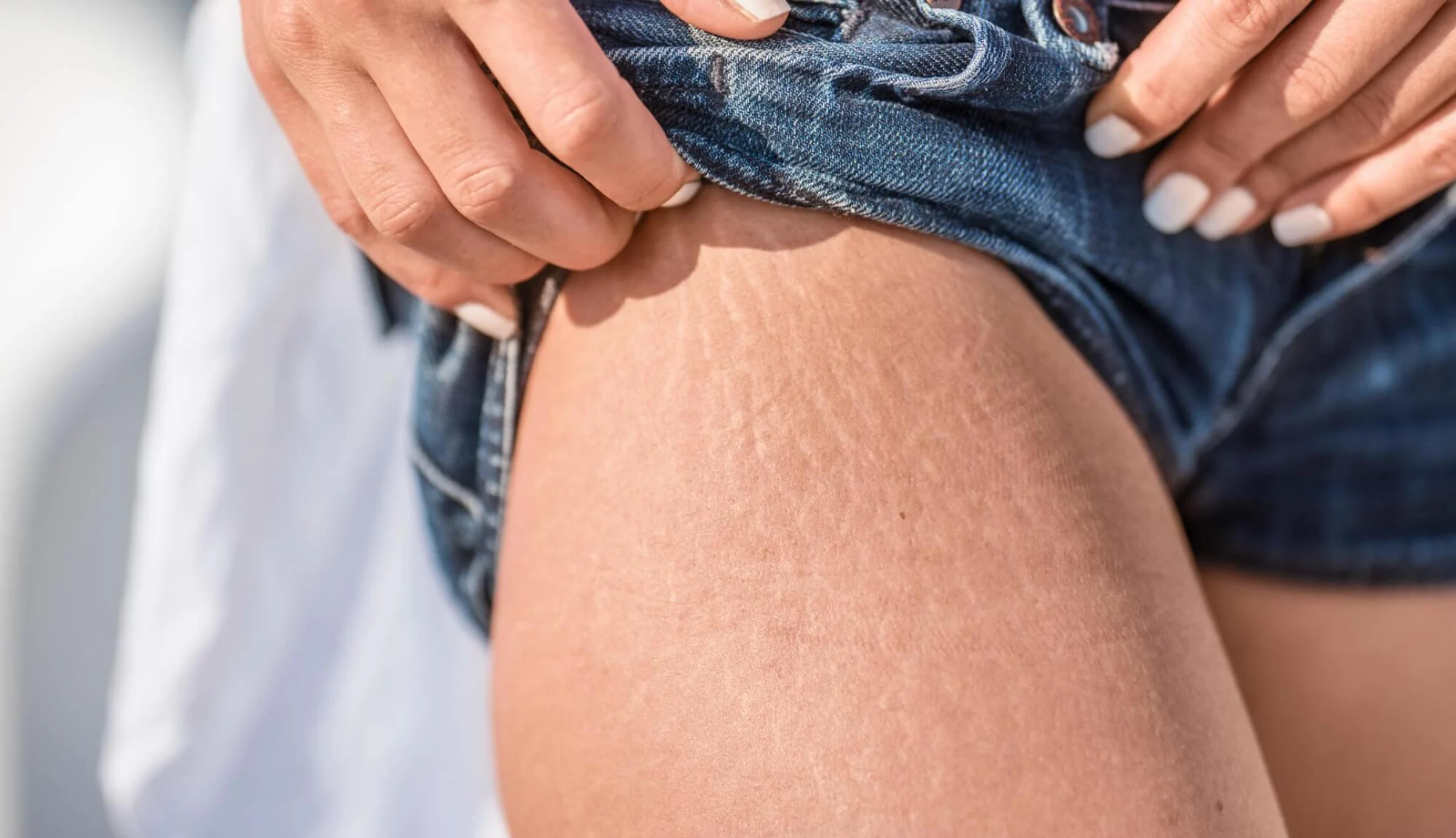
The most common area is the belly, where the most significant stretching takes place. Other areas include the breasts (due to breast growth), the thighs, the buttocks and sometimes the upper arms. The distribution varies from woman to woman and depends on how the body distributes fat and fluids.
How can you reduce the chance of stretch marks in pregnancy?
An important point for setting expectations: there is no way to guarantee complete prevention of stretch marks in pregnancy. Genetics and hormonal factors play a central role that cannot be controlled. However, a few simple steps may reduce the chance, the severity of the marks and the accompanying discomfort.
Moisture and gentle massage
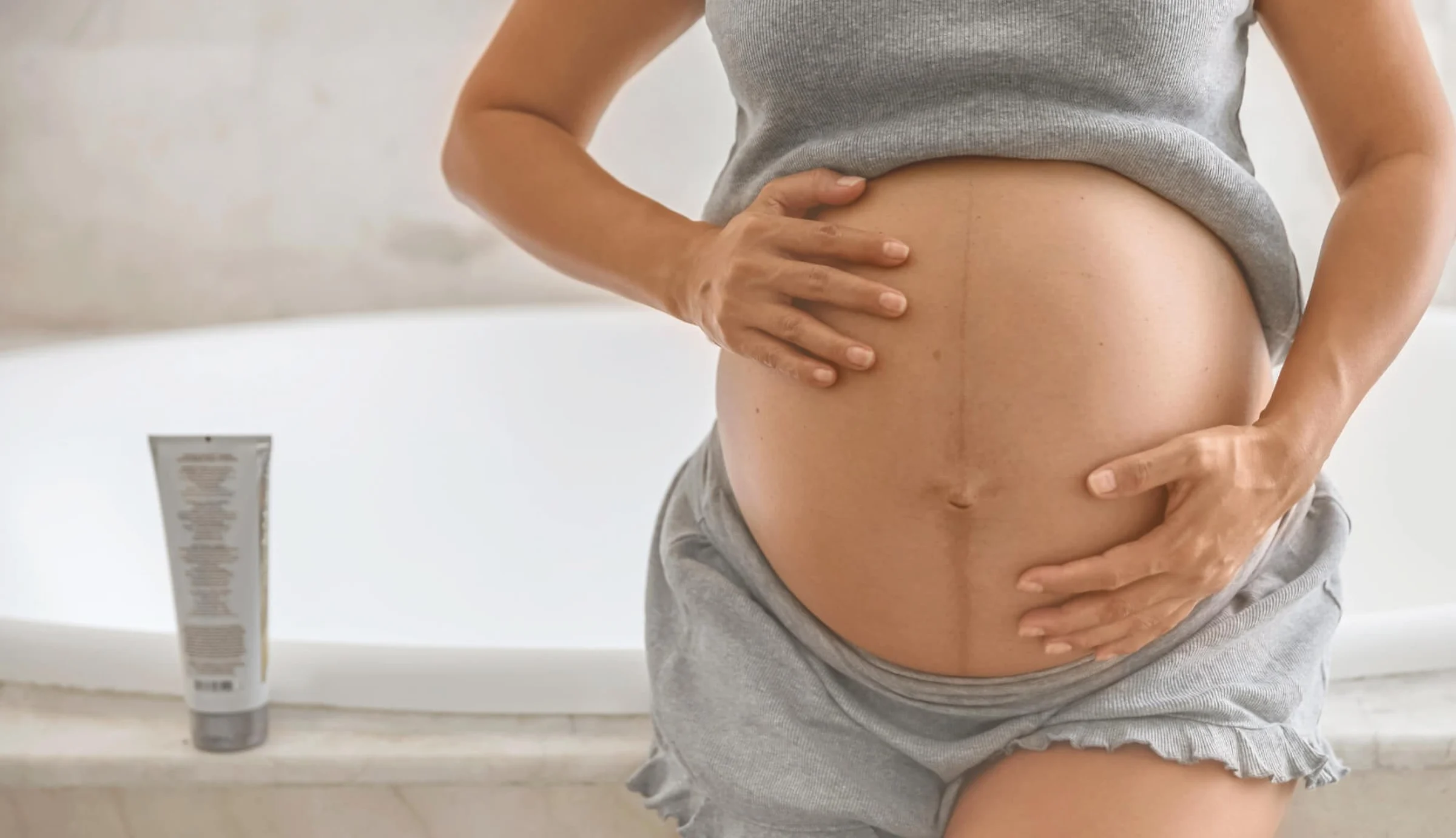
Keeping your skin moisturised is the most basic step. Applying a cream or oil to prevent stretch marks in pregnancy, about twice a day on the belly, breasts, thighs and buttocks, may contribute to skin hydration, general comfort and reduced dryness and itching. A gentle, circular massage while applying may also improve blood flow in the area.
In terms of ingredients, a review published in the British Journal of Dermatology notes that extracts of Centella asiatica and hyaluronic acid showed more promising results compared with other preparations. There are studies with promising results for some products, but the evidence is not consistent, and no product guarantees complete prevention. Plant oils, such as almond oil or olive oil, have also been studied but have not been consistently shown to reduce the incidence of the marks. Even if a product has not been proven to prevent stretch marks, regular application keeps the skin moisturised, reduces dryness and itching and improves comfort – and that has great value in its own right.
Gradual weight gain, nutrition and hydration
Controlled, gradual weight gain reduces the strain on the skin. Recommendations on weight gain in pregnancy vary according to your starting weight and state of health, so it is worth consulting the doctor following your pregnancy.
A balanced diet contributes to the body's health in general. Vitamin C (citrus fruits, peppers, berries) is essential for collagen production, vitamin E (nuts, seeds, plant oils) helps protect skin cells, and zinc (pulses, whole grains, seeds) supports healing processes. Drinking enough is also important; skin that receives enough fluid is more elastic and less prone to dryness.
Supportive clothing and a routine that reduces itching and dryness
Wearing soft, breathable cotton clothing reduces friction and irritation of the skin. Synthetic fabrics can increase itching. A supportive, well-fitting bra can help reduce stretching in the breast area.
A few more habits that may help: prefer showers at a comfortable rather than very hot temperature (very hot water dries the skin), avoid rubbing your belly hard – pat it gently with a towel instead, and if itching occurs, try applying moisturiser instead of scratching – scratching can worsen the appearance of the skin.
Moderate physical activity, such as walking, swimming or pregnancy yoga, may contribute to general wellbeing and to managing gradual weight gain. Of course, it is important to consult your doctor about the right type of activity.
Stretch marks after birth – do they disappear?
Stretch marks that formed during pregnancy are not dangerous and do not require medical treatment. Over time, the red or purple marks fade and become lighter, less noticeable lines. Fading is a natural process, but it varies greatly from woman to woman: in some, the marks become almost imperceptible, while in others they remain more visible. How long fading takes depends on the depth of the marks, skin type and personal tendency.
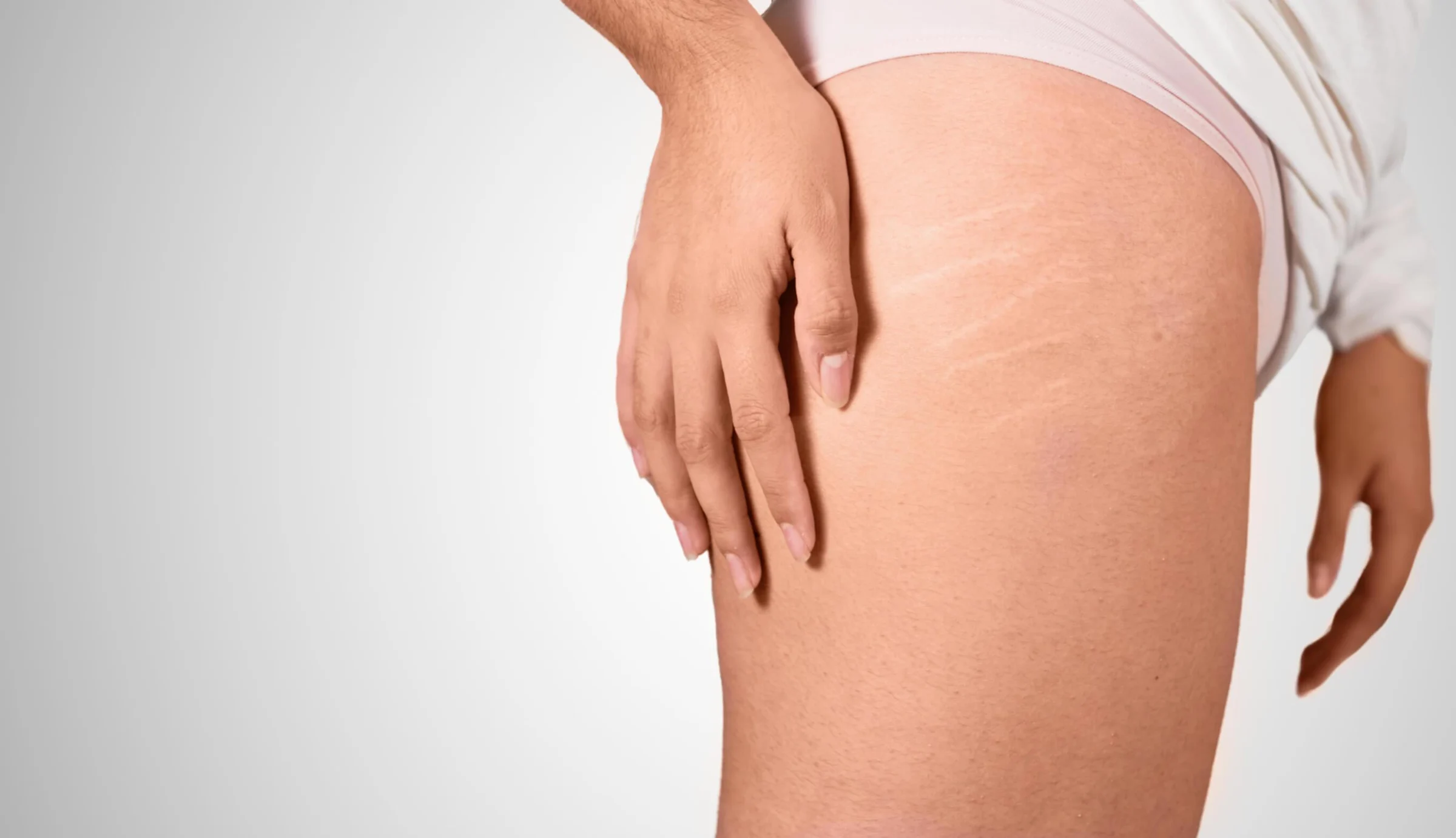
Stretch marks usually do not disappear completely on their own, but they tend to become less noticeable as time passes. Many women learn to live with them peacefully as part of the changes their body has been through. For those who would like further improvement in appearance, there are professional options that can be explored in a personal consultation.
Are there treatments to improve stretch marks?
Once stretch marks have appeared, they usually do not disappear completely on their own. However, there are medical and aesthetic methods that can improve skin texture and reduce their visibility. These treatments work mainly by encouraging the formation of new collagen and the renewal of skin tissue. The right treatment depends on several factors, such as the age of the marks, their depth, skin type and the area of the body where they appear.
Microneedling combined with radiofrequency
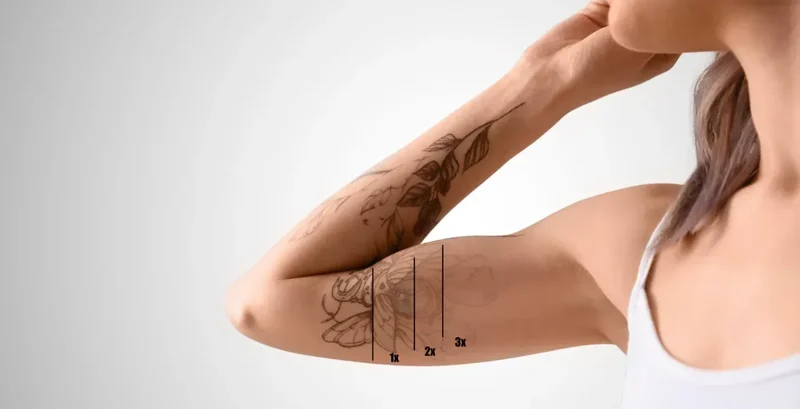
Microneedling combined with radiofrequency, such as Morpheus8 or RF MAX treatment, uses very fine needles that create microscopic injuries in the skin. These tiny injuries activate the body's natural healing mechanism and encourage the formation of collagen and elastin. As a result, the skin can become more even and smoother over time, and the depth of the stretch marks decreases. The treatment is usually carried out as a series of sessions a few weeks apart.
Fractional CO2 laser
Fractional CO2 laser is a treatment in which the laser beam creates tiny, controlled points in the layers of the skin. This encourages a process of tissue healing and renewal and increases the production of new collagen. The aim of the treatment is to improve skin texture and reduce the depth of the marks so that they are less visible. This treatment is often used for older, lighter stretch marks.
Summary
Stretch marks in pregnancy are a natural, common and harmless phenomenon. They form as a result of rapid stretching of the skin and hormonal changes, and are influenced by factors, some of which cannot be controlled, such as genetics. However, keeping the skin moisturised, a balanced diet and gradual weight gain may help reduce the chances and improve comfort. If the marks have already appeared and bother you, options to improve their appearance can be explored in a personal, tailored consultation.
For information on options to improve the appearance of existing stretch marks, contact us for a personal consultation: 03-6127888 | info@dermacare.co.il | Book an appointment online
This article was written by Dr. Iris Fadlon, a psychiatrist and aesthetic medicine physician at Dermacare. Dr. Iris Fadlon accompanies patients at Dermacare with an approach based on assessing the type of marks, their age, the condition of the skin and realistic expectations from treatment. The aim of the medical assessment is to choose a suitable method and build a realistic plan to improve the appearance of the skin.
Read more about stretch mark removal at the Dermacare clinic in Petah Tikva.
Frequently asked questions
In some women, the first marks can be noticed as early as the second trimester of pregnancy. In many, the most prominent marks appear in the third trimester, when the belly grows rapidly. Some women do not develop stretch marks at all. The timing varies from woman to woman and depends on a variety of personal factors. It is recommended to start preventive care from the early stages of pregnancy.
Stretch marks do not disappear completely on their own, but they fade over time. Red marks gradually turn into lighter, less noticeable lines. How long the fading takes and how far it goes varies from woman to woman and depends on the depth of the marks, the skin type and personal predisposition.
Complete prevention cannot be guaranteed, but the chance can be reduced. Keep the skin hydrated by applying a suitable cream or oil twice a day, maintain a balanced diet, and drink enough water in line with your treating doctor's recommendation. Moderate physical activity may contribute to general wellbeing and weight management.
The research evidence on prevention with creams or oils is still limited and inconsistent. Some studies show promising results with certain products, but no product guarantees complete prevention. Even if a product does not demonstrably prevent stretch marks, regular application keeps the skin hydrated, reduces dryness and itching and improves comfort – and that has great value.
Red or purplish marks (Striae rubra) are new marks in which an active inflammatory process is still taking place. They are more noticeable but also respond better to professional treatments. White marks (Striae alba) are old marks that have already healed and become scars. They are less noticeable but harder to improve.
Yes, genetics plays a significant role. If your mother had stretch marks during pregnancy, the likelihood that you will also develop marks increases. The reason is related to the type of connective tissue that is inherited and the degree of the skin's natural elasticity. However, even women with a genetic predisposition can reduce the severity of the marks by keeping the skin hydrated and gaining weight in a controlled way.
No. Stretch marks during pregnancy are a common and medically harmless phenomenon. They do not indicate a health problem and do not require medical treatment. It is an aesthetic change only. If you experience unusual itching, pain, or an unusual skin change that does not look like ordinary stretch marks, it is worth consulting your doctor.
In most cases, stretch marks cannot be removed completely. Over time they tend to fade and become less noticeable, but sometimes they remain as light lines on the skin. Various treatments can improve the skin texture and reduce their visibility, but the result varies from person to person and depends on factors such as skin type, the age of the marks and the treatment method.
The itching results from the rapid stretching of the skin and from the inflammatory reaction that occurs when the connective fibres are stretched and torn. Dry skin worsens the sensation. Keeping the skin hydrated with suitable creams or oils, wearing soft cotton clothing and avoiding overly hot showers may all help relieve the itching. It is important to avoid scratching, which may cause further irritation and worsen the appearance of the skin.