
In brief
- Laser tattoo removal is a gradual process: the laser breaks down the ink particles and the body clears them away over time.
- The result depends on the ink colours, the depth of the tattoo, its location, your skin type and your personal healing rate.
- Dark tattoos respond better than light shades such as green and yellow, and the palms and soles require more sessions.
- Pico technology delivers precise energy to the ink particles with less heat spreading to the surrounding tissue.
- In the interim stage the tattoo may look broken up or uneven before it fades, and shortening the intervals between sessions harms the process.
There comes a moment when you look at an old tattoo in the mirror and don't always feel a connection to it. Sometimes it's a tattoo from a different period of your life, sometimes it simply no longer sits right on your body or in your life, and sometimes the reason is purely practical: work, a new relationship, a wish for clearer skin, or an inner feeling that it's time to close a chapter.
The short answer is that tattoo removal before and after is not a one-off event but a gradual process. The laser does not “erase” the tattoo on the spot; it breaks down the ink particles so that the body can clear them away gradually. That is why the final result depends on the ink colours, the depth of the tattoo, its location, your skin type and your personal healing rate.
What is important to understand from the outset is this: in most cases it is possible to achieve very significant fading, and sometimes even an almost clear appearance, but this requires the right treatment plan, precise intervals between sessions and patience. People who enter the process with realistic expectations usually feel more confident in the "before" stage, during the interim period and in the "after".
Introduction: what really happens when you decide to remove a tattoo
The decision to remove a tattoo is almost always a combination of aesthetic and emotional considerations. Many patients come to us already sure that they want it removed, but still don't understand what the process will actually look like. Others know they want a change but are worried about how the skin will look temporarily while the tattoo fades.
This is where it helps to put things in order. Laser tattoo removal is a controlled series of treatments, not an instant solution. In each session the laser acts on the ink particles, and the body then continues the work between one treatment and the next. That is why the real "before and after" is not measured only by a first photo and a last photo, but by the whole journey.
What you actually see along the way
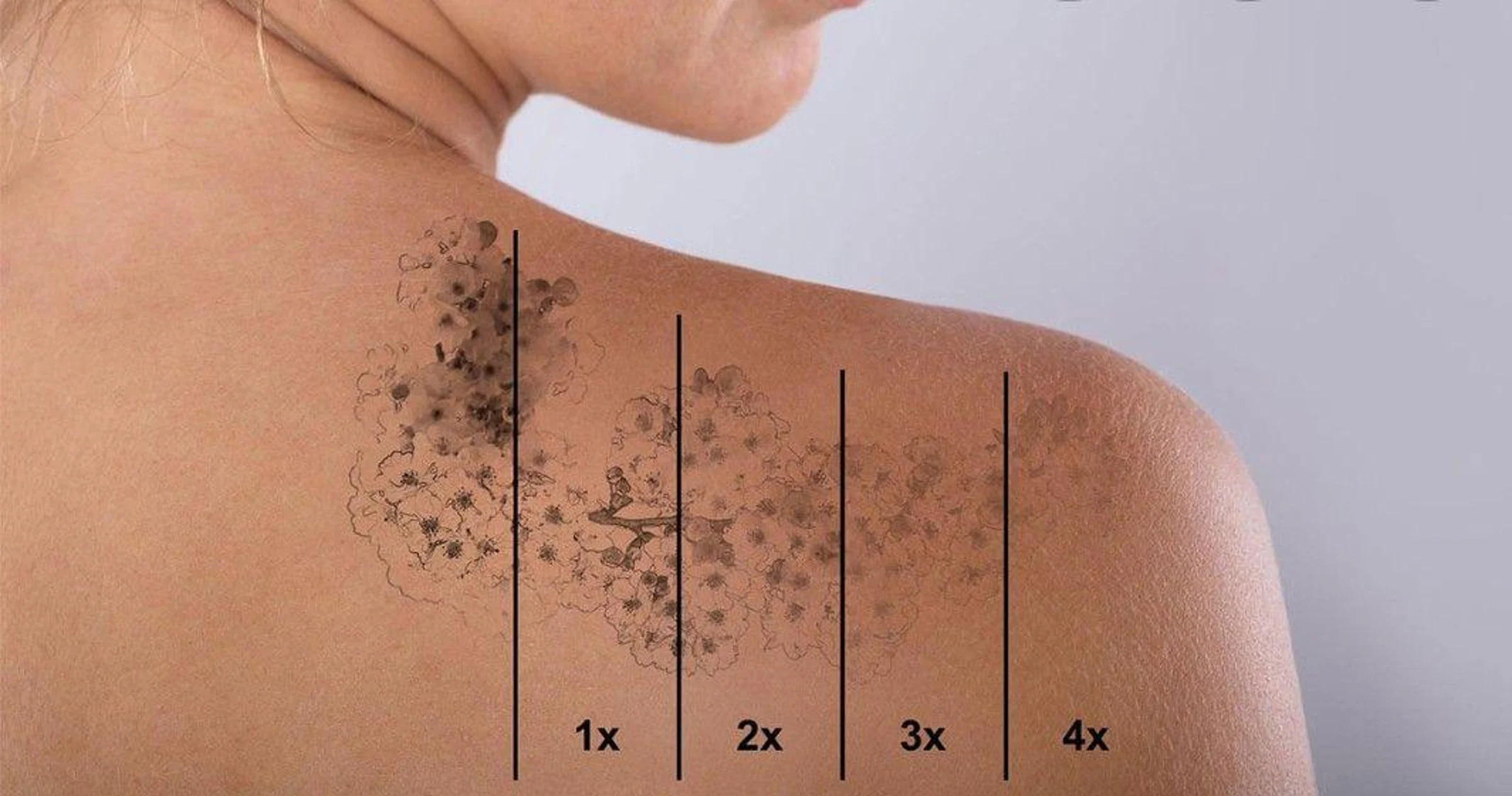
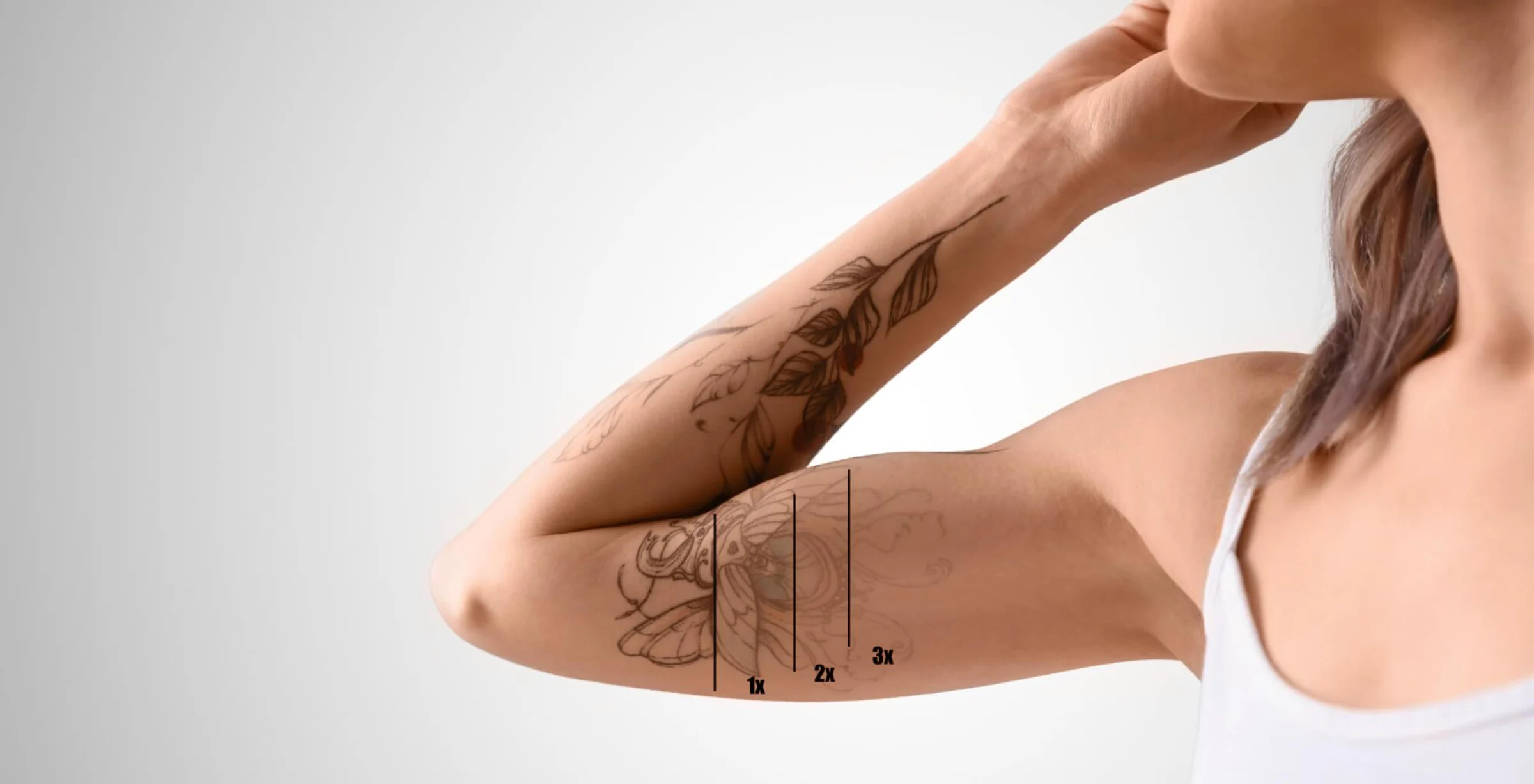
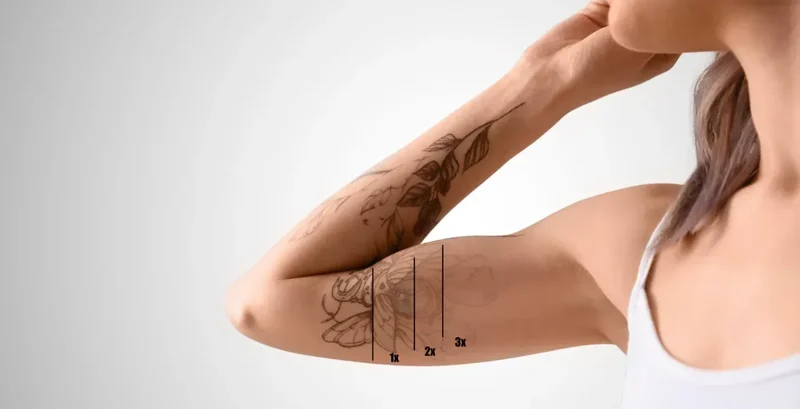
At the start, the tattoo is still clearly visible. After the first treatments it begins to look less sharp, less even and sometimes slightly "broken up" in certain areas. For some patients this is an encouraging stage, because they can see the treatment is working. For others it is actually the challenging stage, because the tattoo no longer looks the way it used to, but it hasn't disappeared yet.
This is a significant point both socially and emotionally. The skin can be medically fine yet still look "in progress". That is why good expectation management is not only about the number of sessions, but also about how you will feel during the interim period, what you will see in the mirror, and how best to plan for it if the area is exposed.
People who understand in advance that the change happens gradually usually cope better with the interim stages and don't interpret every temporary change as a problem.
Why there is no single answer that suits everyone
There is no "magic number" of sessions that suits every tattoo. Two tattoos that look similar from a distance can behave completely differently during treatment. The difference comes from the type of ink, its density, the location on the body, the age of the tattoo, the skin tone and the individual biological response.
In an advanced aesthetic clinic, our role is not just to operate a device. Our role is to assess correctly what can be achieved, how long it may take, what the risks are, and what the smartest way is to reach a good result without overloading the skin. This is the basis for a safe, calm and precise process.
How laser tattoo removal with pico technology works
Once you have decided to remove a tattoo, the next question is usually very simple: what exactly happens in the skin from the moment the laser meets the ink? The answer matters not only from a technical point of view. It helps you understand why the result builds up gradually, why patience is needed, and why you sometimes see a change after just one treatment, but not yet the final result.
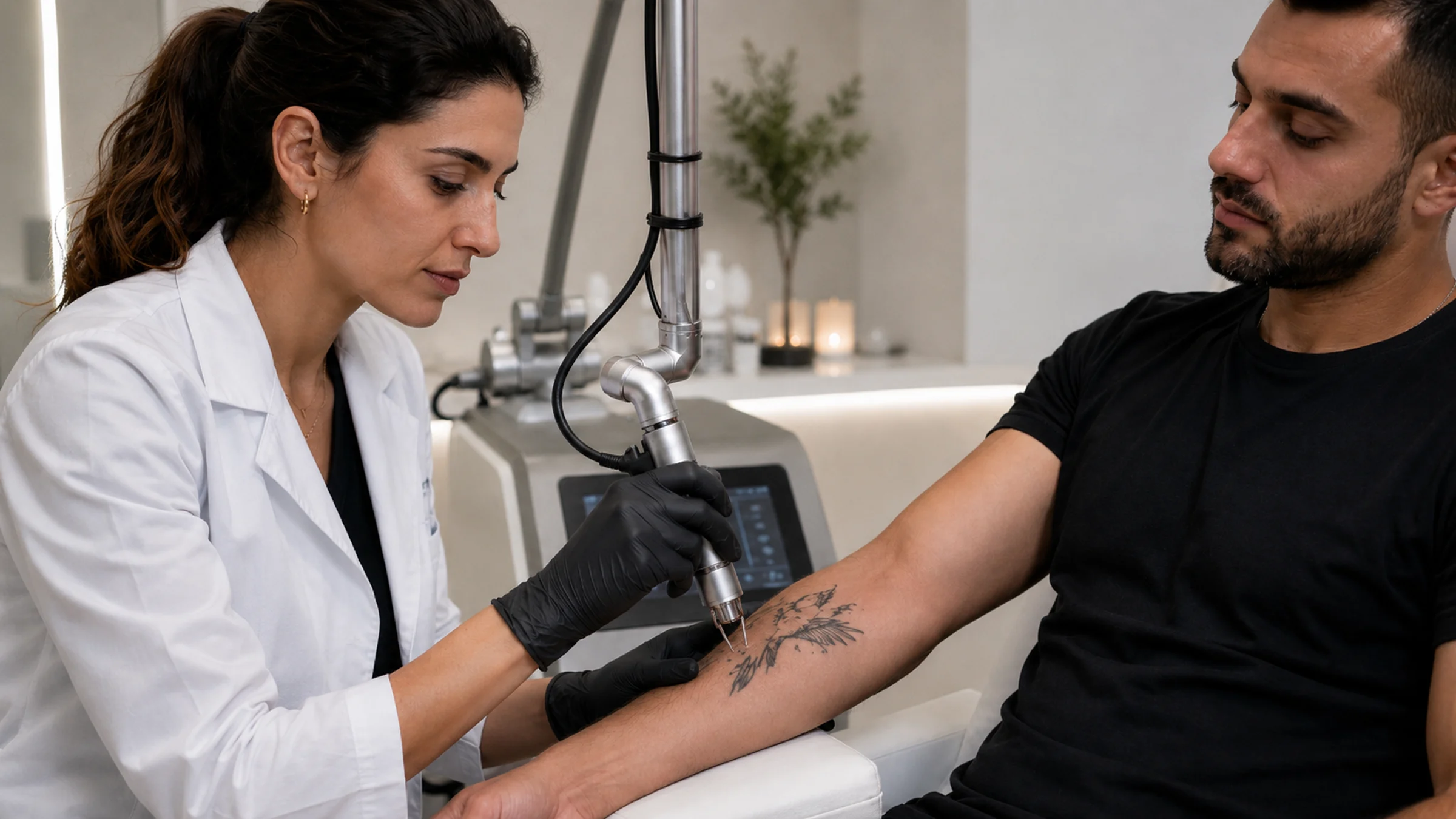
The laser does not draw the ink out of the skin. It breaks the pigment particles into smaller particles so that the body can clear them away afterwards. The laser beam is aimed at the colour in the tattoo, and the energy is absorbed mainly by the pigment itself. Then a biological stage begins, in which the immune and lymphatic systems take part in gradually clearing away the microscopic fragments.
This is why many patients leave the first session expecting to see an immediate "after", but in practice they mainly see the beginning of a response. This is normal.
Why pico technology changes the course of treatment
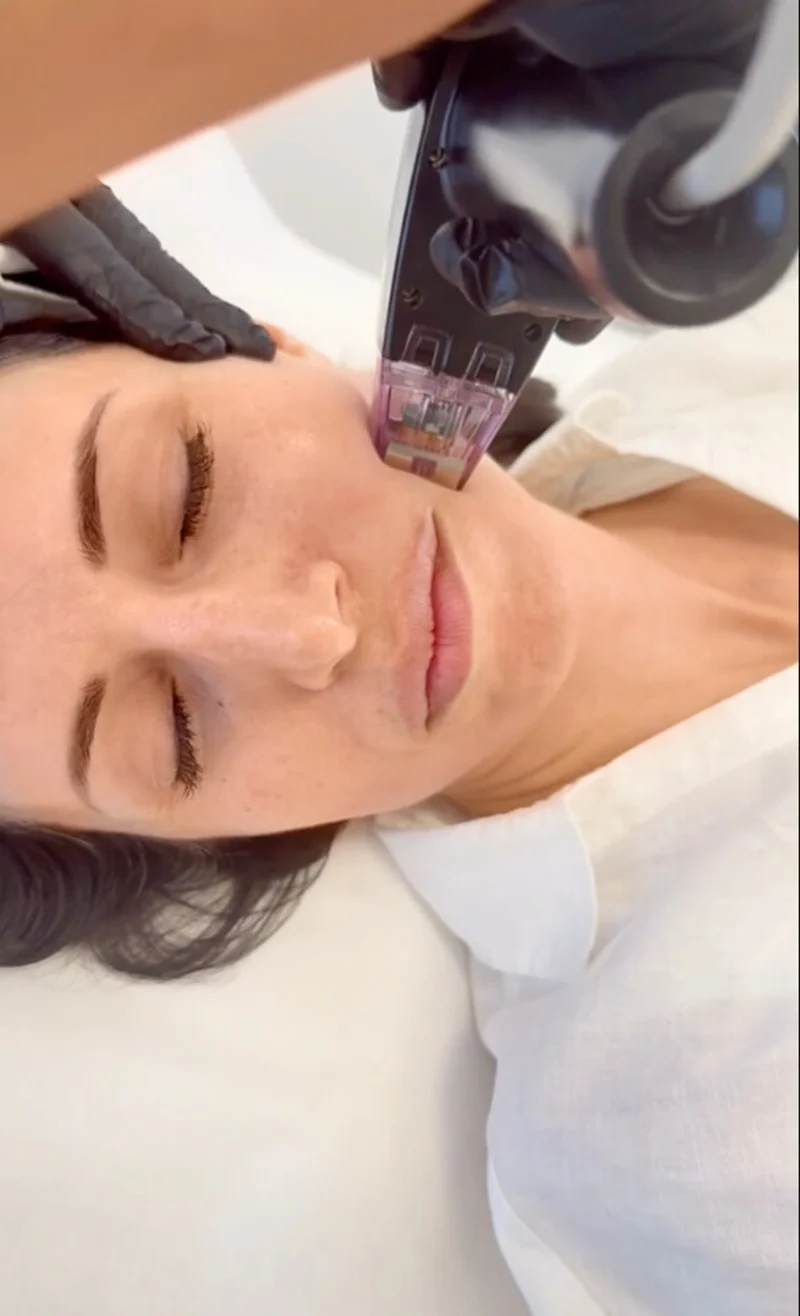
With pico technology, the pulse is delivered in a very short time, in the range of picoseconds, and at several wavelengths. The clinical significance is a more precise transfer of energy to the ink particles, with less heat spreading to the surrounding tissue. In practice, this allows more targeted work, especially with tattoos that have different layers of colour or in areas where the skin reacts easily.
This advantage also matters for healing. Less thermal load on the skin can contribute to a more controlled process, but it does not eliminate the need for a correct assessment and careful choice of parameters. A good device does not replace clinical judgement.
If you are interested in the differences between shades and how coloured ink responds, you can also read about coloured tattoo removal with pico laser, where you can see more clearly why black, red, green or blue do not always respond at the same pace.
What happens during the session itself
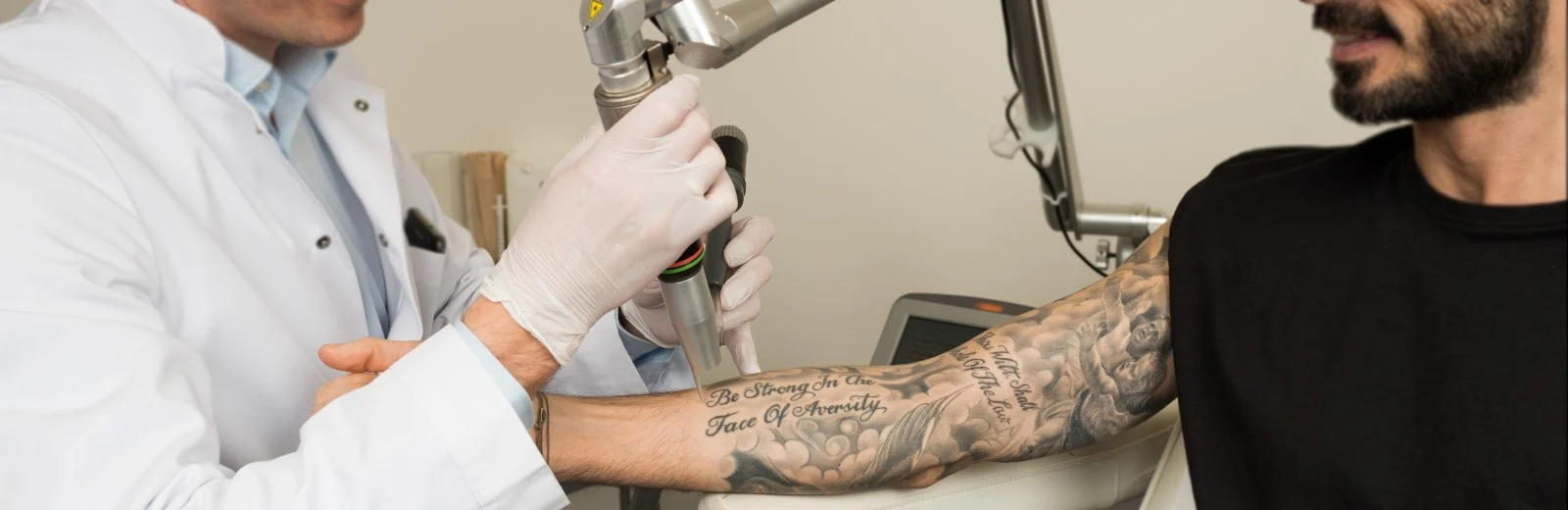
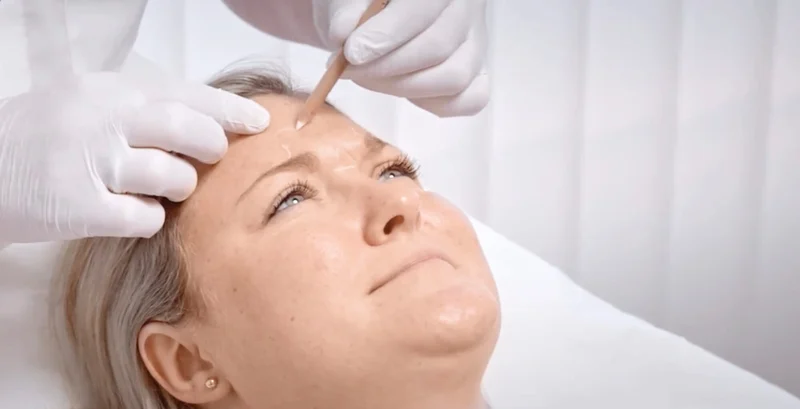
At the clinic, the session itself is relatively short, but the preparation for it determines a great deal. We start by cleaning the area, taking proper photos and documentation, and then choose the wavelength and intensity according to the tattoo colours, the skin tone, the location on the body and the response to previous treatments, if there were any.
During the treatment you usually feel a localised burning, local heat or a sensation reminiscent of a small rubber band snapping against the skin. In thin or sensitive areas the sensation is more noticeable. In other areas it is very tolerable and lasts a short time.
Immediately after the laser passes over, you may see temporary whitening of the area, redness and sometimes slight swelling. These are familiar signs of the tissue's response. In themselves they do not indicate a problem, but rather that the skin has responded to the energy and the treatment has started its work.
What affects effectiveness in practice
Successful breakdown depends on matching the type of ink with the chosen wavelength, on the density of the pigment and on the depth at which the tattoo sits. The skin itself also plays a role. With darker skin we work with greater caution to reduce the risk of damage to the melanin, and with sensitive or irritated skin it is sometimes better to progress at a more conservative pace.
There is also a gap that is important to explain to patients in advance. The laser breaks down the ink during the session. The body clears it away in the weeks that follow. That is why one patient will see a clear reduction in the density of the tattoo at an early stage, while another will see a slower change even though the treatment was carried out correctly.
Emotionally, this is one of the most confusing stages of the process. The tattoo can look "broken up", blurred or uneven before it really disappears. People who understand the mechanism in advance usually cope better with the interim period and are less alarmed by temporary changes in appearance.
What promotes a good result and what holds it back
A good result relies on a few simple principles: precise choice of parameters, correct intervals between sessions, and regular monitoring of the skin's response, not just of the tattoo's colour. The patient's adherence to the instructions between treatments also has a real effect on the quality of healing.
What mainly harms the process is overly aggressive treatment. Shortening the intervals, increasing the intensity too sharply or trying to "finish quickly" can overload the skin without giving any real advantage in the pace of fading.
With the right treatment, the laser is only the beginning of the work. The final result comes from a combination of precise technology, responsible planning and the time the skin needs to heal and gradually clear the ink.
What determines the success of the treatment and what a personal plan looks like
A very common question is why one person's tattoo fades quickly while another's seems to "insist on staying". The answer almost always lies in the assessment. The success of the treatment depends on the small details, not just on the device.
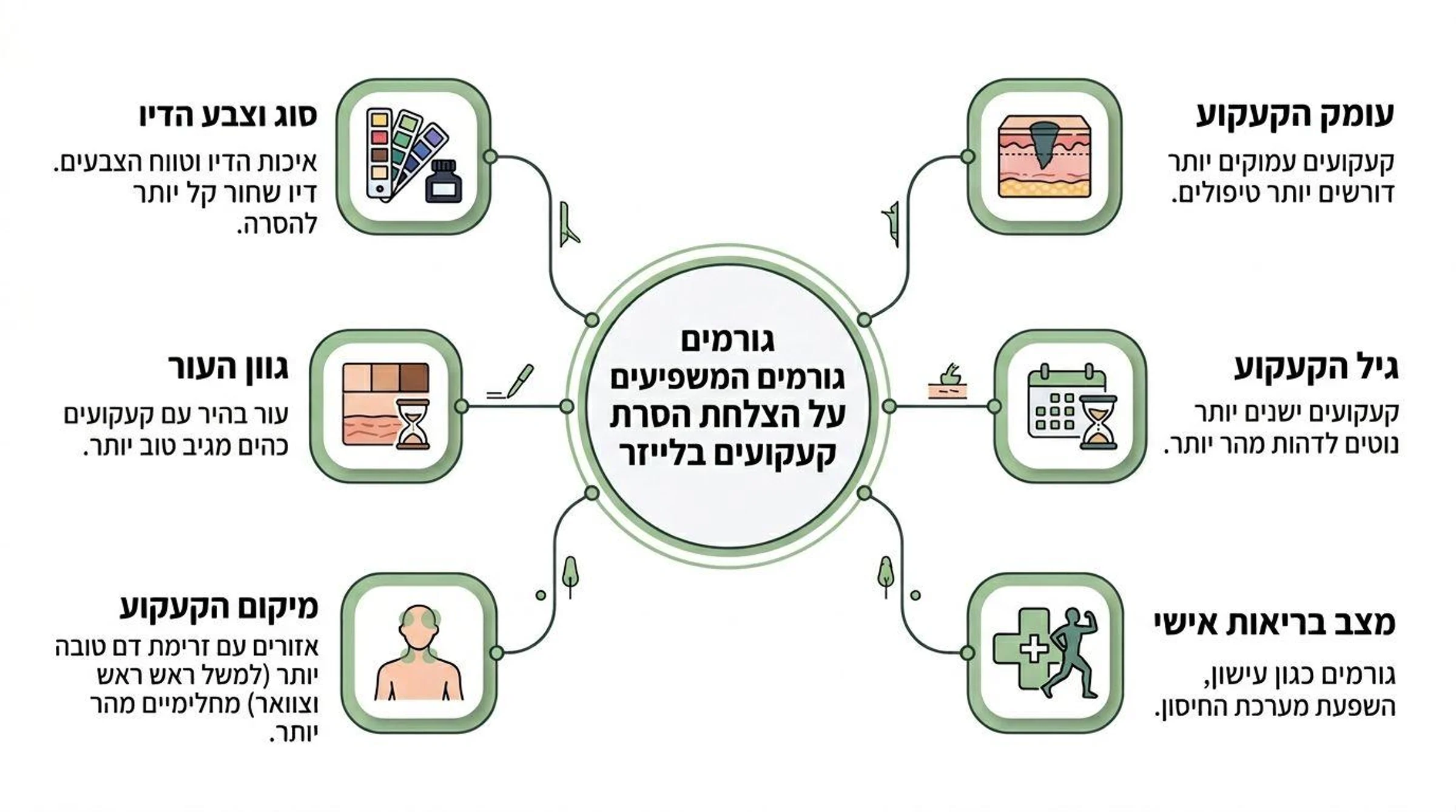
The factors with the greatest influence
-
Ink colours
Dark tattoos, mainly black and blue, respond better. According to Midrag, removal effectiveness reaches 95% for dark tattoos, while for light shades such as green or yellow effectiveness drops to 70-80%. -
Location on the body
Not every area of the body responds at the same pace. According to the same source, tattoos in peripheral areas such as the palms of the hands and soles of the feet require more sessions because of reduced blood flow. -
Pigment depth
A relatively superficial tattoo behaves differently from a tattoo in which the ink was placed deeper. The deeper and denser the ink, the more gradual and careful the treatment needs to be. -
Age of the tattoo
Older tattoos have sometimes already undergone some natural fading. This does not always make them easy to remove, but sometimes it does work in favour of the process. -
Skin type
Different parameters are chosen for different skin tones. The aim is to target the tattoo pigment without overloading the melanin of the skin itself. -
The body's individual response
Ultimately, part of the treatment's success also relates to how the body clears the ink particles over time. This is one of the biggest differences between patients.
How a personal plan is built in practice
A good plan does not start with the question "how many sessions are needed?", but with the question "what are we trying to achieve?". There is a difference between complete removal, significant fading, or lightening before a cover-up.
During a consultation we usually check:
| Parameter | Why it matters |
|---|---|
| Tattoo colours | Determines which wavelengths will work best |
| Size and density | Affects the scope of work in each session |
| Location | Affects the pace of fading |
| Skin type | Determines the level of caution and adjustment |
| Medical history | Helps assess suitability and safety |
One of the things I always make a point of explaining to patients is that there is no real point in blindly comparing yourself with a friend who has had a removal. Even if the tattoo is of a similar size, the result and the pace can be different.
If you want an in-depth understanding of how long the process takes, you can also read about how long it takes to remove a tattoo with a laser, where the question is examined from the practical angle of timelines.
What a poor plan misses
A poor plan is one that promises results too quickly without addressing the real variables. It may also ignore the question of what the tattoo will look like halfway through, which is exactly the stage at which many patients need guidance.
A good personal plan does not just build the first treatment. It builds the entire journey, including healing, follow-up and managing expectations about the interim stages.
Tattoo removal before and after: the fading process step by step
This is the part most people really want to understand. Not just whether it can be removed, but what it looks like along the way. Because between the "before" photo and the "after" photo there is a whole period in which the tattoo changes, fades and sometimes looks different from what you expected.
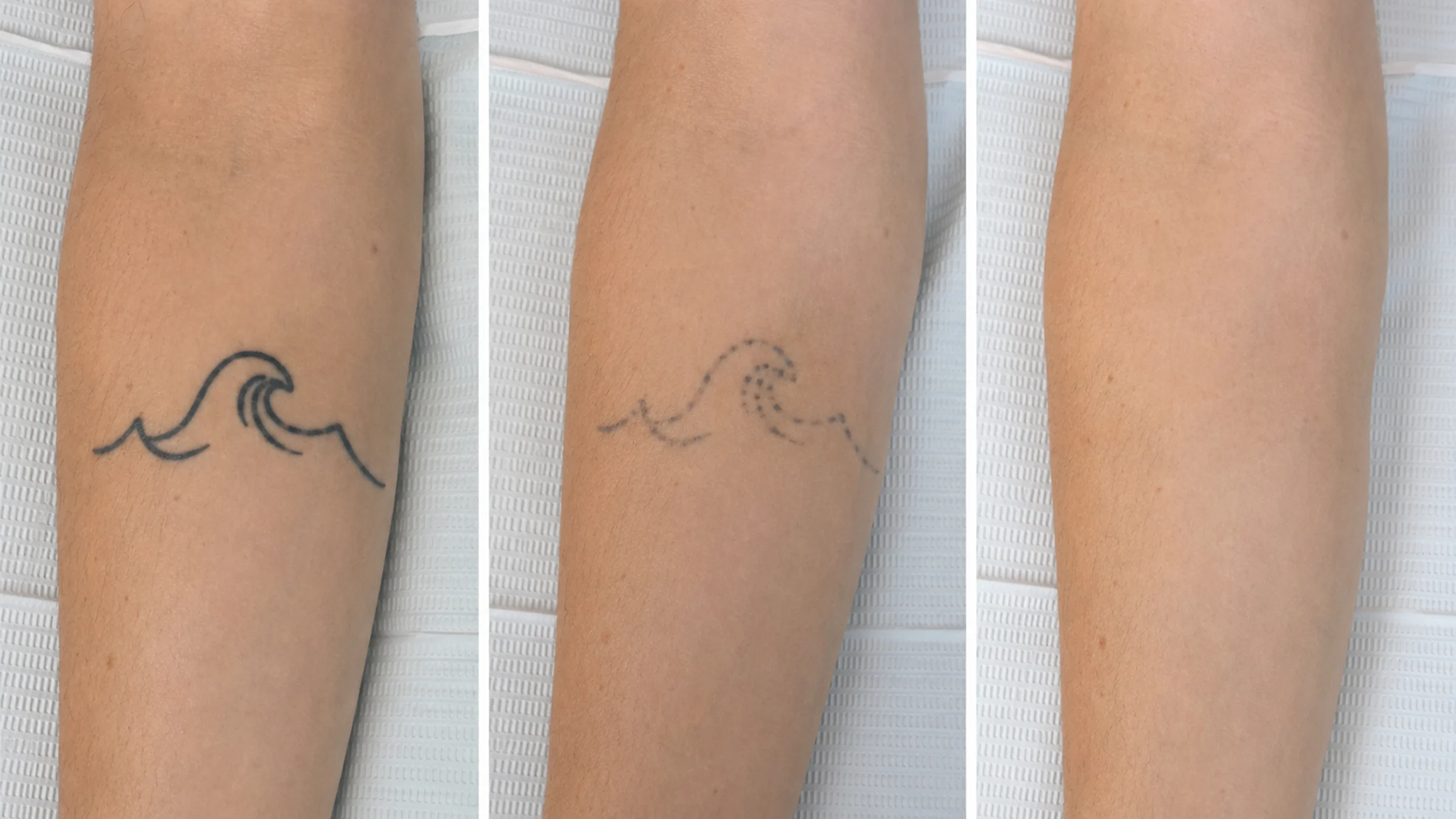
According to the data on tattoo removal before and after, the number of sessions required usually ranges from 4 to 15, with most patients needing 6-10 sessions for removal of up to 95%, and after the first 2-3 sessions you can already expect around 50% of the tattoo to have faded.
The first stage
After the first treatment you usually don't see an "erasure". What you see is the beginning of a change. Sometimes the tattoo looks slightly lighter, sometimes the lines are less sharp, and sometimes some areas respond before others.
Emotionally, this is a delicate stage. Anyone expecting an immediate dramatic change may be disappointed, even though the treatment is working exactly as it should. The body is still in the middle of the process.
The stage of clear fading
Between the early treatments and the middle of the series, a clearer picture begins to emerge. Certain parts of the tattoo are already losing density, dark areas are breaking up, and sometimes an uneven "shadow" remains.
This is exactly the stage at which many patients ask whether it is normal for the tattoo to look less attractive than before they started. The answer is yes. During the interim period the tattoo does not always look aesthetic, because it is no longer complete, yet it is still there.
This is also where the social aspect comes in. Some patients feel comfortable with an interim appearance, while others prefer to time the process for a season when the area is less exposed. This is not purely a medical question but also a question of personal comfort.
Real "recovery" is not just when the skin stops being red, but when you feel it looks natural again in social terms.
Towards the end
In the advanced stages, more stubborn remnants usually remain. These can be faint outlines, delicate clouds of colour, or pigment that sits deeper. Patience is needed here, because sometimes the final stretch is actually the slowest.
In such cases it is important not to panic and not to "push" the skin too fast. The common mistake is to think that if only a little remains, the pace should be increased. In practice, it is often the right interval and precise adjustment that make the difference.
How it feels in the time between before and after
It is hardly ever talked about, but the interim stage is a significant part of the process. Some patients feel relief as soon as they start the removal, because the decision itself gives a sense of control. Others go through a more mixed period, especially if the people around them notice that the tattoo looks "strange" or faded.
At the clinic I see again and again how important it is to talk about this in advance. Not only about how many sessions are needed, but about how you will feel when the tattoo no longer represents you, but hasn't disappeared yet either. This preparation changes the whole experience.
If you would like to see visual examples throughout the stages of the process, you can also look at before and after photos of tattoo removal to better understand what gradual fading looks like in reality.
Recovery guidelines and skin care after tattoo removal
Proper care at home has a major influence on the quality of healing. Even excellent treatment at the clinic can be compromised if the skin is exposed to the sun, rubbed, or not given the rest it needs.
The principle is simple. After the laser, the skin goes through a controlled reaction. Your goal is to soothe, protect and give the body time to do its job.
In the first one to two days
At this stage the area may be red, sensitive or warm to the touch. It is important to keep it clean and to treat it gently.
-
Local cooling can help soothe the area, especially if it feels hot
-
Gentle touch only. Do not scratch, do not rub, and do not "check" the area again and again
-
Avoid unnecessary heat such as very hot water, saunas or strong friction
If you were given instructions for using a soothing ointment or gel, it is important to follow them exactly.
In the first week
By now most of the initial reactions are already starting to settle, but the skin is still in the process of healing.
Keep the area dry and clean, avoid activities that may cause significant friction, and do not remove scabs or peeling skin if they appear. The skin needs to complete its healing at its own pace.
Signs such as mild redness or local sensitivity can be normal. If there is an unusual worsening, unusual pain or a suspected infection, it is important to contact the clinic for a check-up.
Between treatments
This is the stage people tend to underestimate, even though it is critical. It is especially important to avoid sun exposure for about 4 weeks before and after each treatment and to use SPF50+ sunscreen regularly on the treated area. This dramatically reduces the risk of hyperpigmentation and increases the effectiveness of the treatment.
The reason is simple. Skin that has been exposed to the sun arrives at the treatment more irritated, and also heals less well afterwards. In addition, a tan or sun irritation makes it harder to safely adjust the laser intensities.
If there is one instruction worth taking completely seriously, it is sun protection. It is not a cosmetic recommendation. It is part of the safety of the process.
Risks, side effects and who is not suitable for treatment
Laser tattoo removal is an accepted treatment and is generally safe when performed correctly, but it still requires medical responsibility and expectation management. Not every skin reaction is a complication, and not every person is suitable to start treatment immediately.
Side effects you may see
The more common effects are usually temporary and can include:
-
Local redness
-
Mild swelling
-
A burning sensation or sensitivity
-
Sometimes a more superficial skin reaction that requires monitoring and precise instructions
The significance of such effects depends on their intensity, how long they last and how the skin looks on examination.
The risk of scarring and what affects it
When the treatment is performed with modern laser technology by a qualified professional, the risk of scarring is less than 1%, compared with 20%-30% for traditional removal methods such as surgery or dermabrasion, as stated in the data presented by Liton Laser. This is exactly the difference between a treatment that targets the pigment and a method that causes widespread damage to the tissue.
This does not mean the risk is zero. It is simply very low when the patient, the device and the healing protocol are chosen correctly.
When it is not right to treat
There are situations in which treatment is postponed or avoided, for example:
-
Pregnancy or breastfeeding, based on medical judgement and caution
-
An active skin condition in the area
-
A wound, infection or local irritation
-
A tendency towards abnormal scarring, if this emerges from the medical history
-
Certain medications or medical conditions that require a prior check
In practice, suitability is determined only after a proper medical history and skin examination. It is not right to start treatment just because "the tattoo bothers me". First we check whether this is also the right time from a medical point of view.
If you want to understand the mistakes that can increase the risk, you can also read about common mistakes in laser tattoo removal, because a large proportion of complications actually stem from impatience or unsuitable treatment.
Summary: your first step towards tattoo-free skin
Tattoo removal before and after is a process of precision, patience and cooperation. The laser can break down the ink, but the final result also depends on a correct assessment, appropriate intervals between treatments, good skin care and a realistic understanding of the journey.
In most cases it is possible to achieve very significant fading, and sometimes to reach an almost clear appearance. At the same time, it is not right to promise a uniform result for every tattoo and every person. The safest way to start is a proper consultation, in which we examine the type of tattoo, your skin type, your suitability for treatment and what you can realistically expect to see over time.
Want to understand exactly what is right for you? The Dermacare team will be happy to assess your skin, the suitable type of treatment and realistic expectations in a professional, personal and precise way. To book a consultation and personalised assessment, contact us here.
Frequently asked questions
There is a sensation of discomfort, but it is usually brief and focused. Many describe it as a sharp pinch, a strong tingling or a sensation somewhat similar to the tattooing process itself. Some areas are more sensitive than others, and cooling or anaesthetic can be adapted as needed.
Usually the result is not measured by the day after the treatment. The ink is broken down during the session, but its clearance is a gradual process. For this reason, the initial change is usually assessed after a few weeks, when the skin has settled and the body begins to clear part of the pigment.
Yes, sometimes this is possible. When there is a need to thin out a certain area, leave one element, or prepare the tattoo for a cover-up, it is possible to work in a targeted way. This requires very precise planning, because every area that is treated will begin fading on its own.
These are two completely different goals. With full removal, the aim is to reach skin that is as clear as possible. With lightening before a cover-up, you do not have to erase all the ink, but only fade it enough for a tattoo artist to work over it more cleanly.
In practice, lightening before a cover-up may be a shorter route, but it still needs to be done carefully. The skin must be left in good condition, not just "make colour disappear".
When the goal of the treatment is clear from the start, it is much easier to build the right plan and not to carry out unnecessary treatments.
Yes, but specific skill is required here. Permanent make-up pigments behave differently from body tattoos, and are sometimes also located in a more delicate area. For this reason, it is especially important not to treat without a proper assessment of the type of pigment, its depth and its exact location.
No. Even without going into the numbers again, there is a real difference between a simple black tattoo and a colourful tattoo, between an old tattoo and a new one, and between an area with good blood supply and a more peripheral area. For this reason, it is not right to expect all tattoos to respond at the same pace or in the same way.
Physically, most patients cope well with the sessions themselves. The bigger challenge is sometimes patience. Living with a tattoo that is "halfway there" can be more complicated than the treatment itself. When this is discussed in advance, it is much easier to go through the journey calmly.